




Computer science and cyber security sits at the frontline of the digital world - fast-moving, high-impact, and in global demand.
This one-year, industry-aligned MSc develops the specialist knowledge and practical skills needed to understand cyber threats and defend against them.
You’ll advance your technical skills and expertise, taught within our industry-standard facilities. Shaped by industry needs and supported by strong regional and national partnerships, you’ll explore secure system design, emerging risks, and the growing role of AI in cyber security - preparing you for a career protecting today’s digital infrastructure.

Five specialist labs
including high spec machines, dedicated for Computer Science students

We're naturally artificial.
Gain real-world skills on a degree with AI at its core

Strong industry links
with guest talks from experts

Compete in events
like Hull’s unique “Three Thing Game", or the UK and Ireland Programming Competition

Work on real world projects
and enhance your career prospects
About this course
Develop advanced cyber security expertise through practice-led learning in a specialist computing environment, working with industry-standard tools and technologies. You’ll engage in hands-on labs, workshops, and real-world scenarios that focus on understanding cyber threats, engineering secure systems, and designing resilient architectures.
You’ll explore contemporary topics such as ethical hacking, cloud and network security, secure software engineering, and the growing role of artificial intelligence in both cyber attack and defence. Throughout the course, you’ll critically examine the ethical, legal, and professional responsibilities of cyber security practitioners.
Benefit from strong industry links, live case studies, and guest talks from cyber security professionals, giving you insight into current challenges and practices across the sector. Opportunities to work on applied projects help you build practical experience and strengthen your employability.

A day in the life at Hull
2 mins
Module options
For a full Masters degree, you'll study 180 credits over the duration of your course. Some programmes offer a Postgraduate Diploma (PGDip) qualification or a Postgraduate Certificate (PGCert) qualification. For a PGDip, you'll study 120 credits, and for a PGCert, you'll study 60 credits.
No filters selected
Commercial Development Practice
CDP is a reach-out project of the School of Computer Science, where we work on real commercial software for real clients. With the support of academic and specialist staff, our software development teams provide commercial software development services to customers with bespoke software development needs.
This excellent opportunity gives you critical experience of working professionally with clients across the entire software project lifecycle from customer brief through to specifying, designing, developing and testing software using industry-standard technologies and techniques. Employers tell us they are actively looking for candidates with experience applying the project management methodologies, frameworks and tools that you will explore, use and hone during your time in CDP.
Graduates tell us that their experiences are highly sought after in industry, and you will certainly end up with lots to put on your CV and talk about in job interviews!
core
40 credits
MSc Dissertation
Your MSc Dissertation is your chance to spend a full third of your study time working on a topic of interest to you, and producing something major as a result. You can design your own project, working with a member of staff to develop an idea. Perhaps you will develop an AI program, do some research in virtual reality, or build a new robot butler – the choice is yours.
With regular support from a supervisor, you’ll learn to create, undertake, evaluate and report on a significant individual project which you’ll be proud to show off to an employer or perhaps provide a stepping stone into further research.
core
60 credits
Cutting Edge Concepts
This module enables review of cutting-edge and emerging concepts and methods across the spectrum of computer science. We will meet as a reading group to select, review and discuss academic publications of high quality, that take topics beyond the curriculum and into the current state of the art; students will learn how to read and review academic materials critically.
compulsory
20 credits
Component Based Software Engineering Practice
Modern large scale software development can be improved through utilising advanced approaches such as component based development. Reliable and secure software can be supported through managed programming environments. This module will be your chance to look deeper at these virtual machines beneath and see what makes it all work, and to develop solutions utilising component libraries.
compulsory
20 credits
Trustworthy Computing
Given how much we depend on networked digital technologies, cyber security is a threat that can impact us all at any time. In this module you will explore how simple mistakes can make a software system exploitable and insecure and demonstrate how these flaws can be fixed to make a system cyber secure.
compulsory
20 credits
Advanced Cyber Defence, Threat Intelligence & Secure Systems Engineering
This module will equip you with advanced knowledge and skills in cyber defence, threat intelligence, and secure systems engineering. With a focus on adversarial modelling, security automation, and enterprise-scale secure architecture design, you will learn to analyze threats, design resilient systems, and apply formal reasoning to security properties, preparing them for leadership roles in cyber security.
compulsory
20 credits
Our academics
You’ll be taught by talented researchers whose specialist areas include cyber security, dependable and secure intelligent systems, computational science, robotics and artificial intelligence, and simulation and visualisation.

Brian Tompsett
Lecturer
Brian is an experienced computer scientist and software engineer with a career spanning over 50 years. He has worked within industry and academia in the UK and the US. He leads the Software Engineering degree programme.

Dr John Dixon
Lecturer in Computer Science
John is a computer science researcher, lecturer and software engineer and developer. He specialises in networking, connected services and distributed systems, C# and .NET. He’s developed mission-critical solutions for the fire and rescue services.
Entry Requirements
What do I need?
When it comes to applying for this Postgraduate Taught degree, you'll need an Undergraduate degree (or equivalent). For this course, you'll need a 2:2 from a relevant bachelor's degree.
The programme is designed for graduates who have studied a subject that is relevant to this course.
If you’re an undergraduate student at Hull, you’re guaranteed a fast-track route to this postgraduate degree, as long as you meet the entry requirements.
In order to ensure our students have a rich learning and student experience, most of our programmes have a mix of domestic and international students. We reserve the right to close applications early to either group if application volumes suggest that this blend cannot be achieved.
Typical offer
2:2 in a relevant subject area
A minimum 2:2 Bachelor Honours (or international equivalent) in Computer Science or Software Engineering with at least 40 credits (or equivalent) of a high-level objected oriented programming language such as Java, C++ or C#.
Fees & Funding
Fee information for is not currently available.
Scholarships
We offer a number of awards, bursaries and scholarships for eligible students. They’re awarded for a variety of reasons including academic achievement and/or to help those on lower incomes.
Scholarships and bursaries are separate to student loans. And the best bit is, you don’t pay a penny back.

Alumni Postgraduate Scholarship
University of Hull undergraduates progressing to a taught masters course may receive a 20% discount on the cost of their tuition fees.
Find out if you’re eligible by visiting the University of Hull Alumni Postgraduate Scholarship page.

See more Scholarships
We offer a range of scholarships and awards to students at the university to help with their financial load.
To view all of our scholarships and determine whether you're eligible, please visit our Scholarships and Awards page.
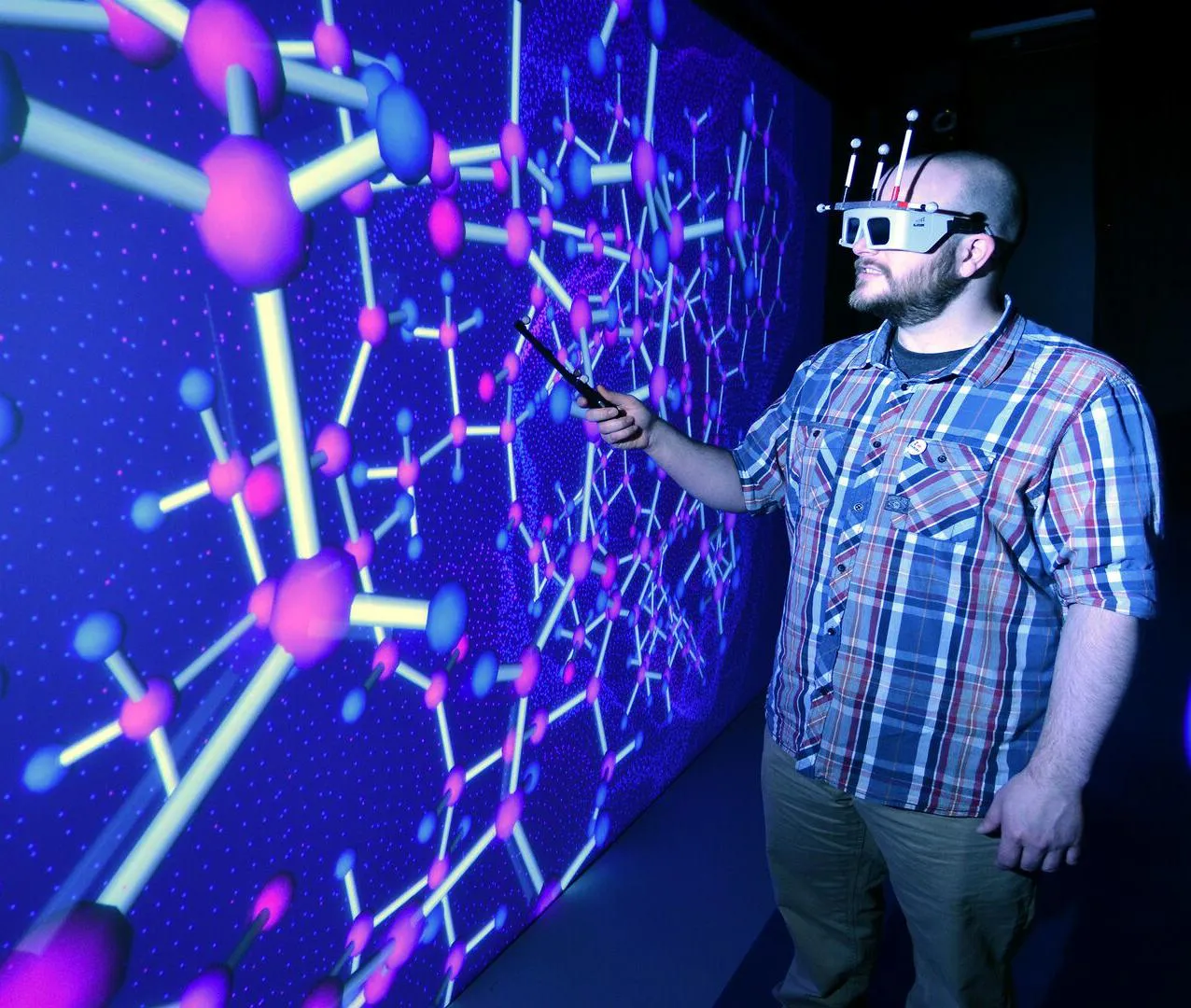
Our facilities

Future prospects
Want to protect digital systems, stop cyber crime or design secure software? Or work as an ethical hacker, cyber analyst or cloud security specialist? You’ll open up all these careers and more with the Computer Science and Cyber Security degree at Hull.
Graduate careers include cyber security analysis, ethical hacking, secure software development, digital forensics and threat intelligence. Our graduates work across government, finance, healthcare and technology sectors in roles such as penetration tester, security architect, cybercrime investigator and cryptographer. Some go on to further study at MSc or PhD level, while others progress into specialist security roles or help build safer digital systems across industry.
Take your career to the next level
Like what you’ve seen? Then it’s time to apply.
Make your application online now, and our admissions team will get back to you as soon as possible to make you an offer.
Not ready to apply yet?
We regularly deliver virtual and on-campus events to help you discover your perfect postgraduate course, whether it’s a subject you already love or something completely different. Our events are an opportunity for you to chat to tutors and current students and find out about the career options a postgraduate degree could lead to.
You may also be interested in...
MSc Advanced Computer Science
Postgraduate Taught
Developing applications; working with real software: you'll make great advances on your existing skills and knowledge.
MSc Computer Science for Games Programming
Postgraduate Taught
An inspiring, challenging course with a track record of producing graduate programmers ready for the games industry.
MSc Artificial Intelligence and Data Science
Postgraduate Taught
Discover and develop key competencies in areas such as machine learning and big data on this MSc in Artificial Intelligence & Data Science.
MSc Artificial Intelligence for Engineering
Postgraduate Taught
Develop key competencies in machine learning and data tailored to Engineering on this MSc at the University of Hull. Apply now.
MSc Business Analytics and Artificial Intelligence
Postgraduate Taught
Become a thriving professional in today's data driven world on this MSc in Business Analytics and Artificial Intelligence. Apply now.
All modules on this course page are subject to availability and this list may change at any time.