Beneath the surface
Understanding skin’s microbial defences to advance wound treatment and tackle drug-resistant infections
Project summary
The Challenge
Chronic wounds devastate 2.2 million UK lives. Current treatments are often ineffective, with wound management costing the NHS £8.3 billion a year.
The Approach
We’re investigating how age and diabetes cause poor healing by uncovering how the skin interacts with its microbial defence system – the microbiome.
The Outcome
We’re delivering breakthrough insights into how the microbiome maintains healthy skin, driving the development of more effective wound care.
Institutes and centres

Lead academics
Project funded by




Project Partners



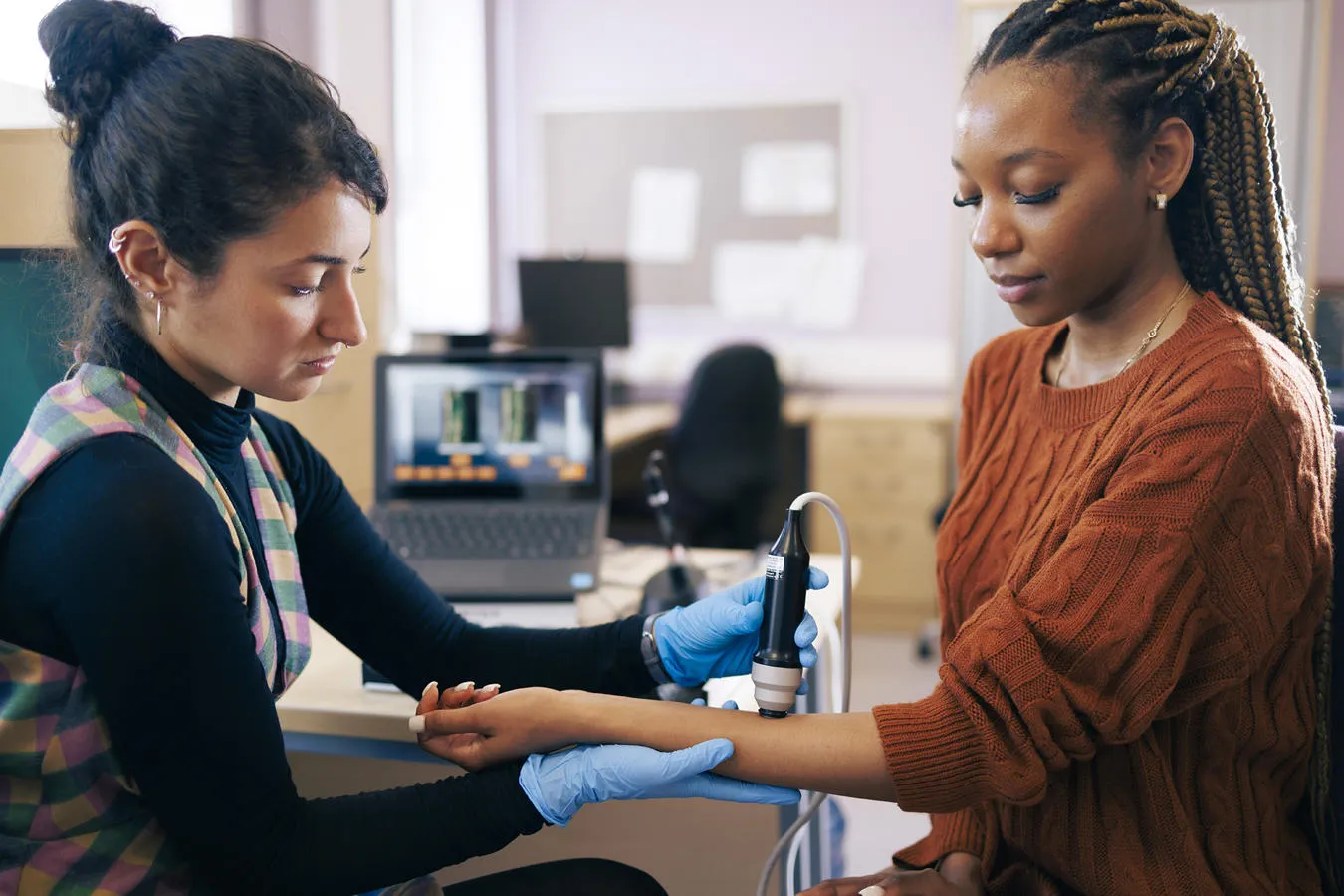
We’re transforming wound management and the fight against infectious diseases
Wound management costs the NHS almost as much as cancer and diabetes. Shedding light on how our skin’s microbiome protects us, our researchers are advancing wound treatment and tackling antimicrobial resistance.
The Challenge
Living with chronic wounds significantly reduces quality of life for 2.2 million people across the UK. Patients often experience pain, odour, social isolation and depression.

1 in 4 people living with diabetes develop a chronic wound
Current treatments are ineffective, resulting in high NHS costs and increased risk of drastic interventions such as lower-limb amputation – a procedure with a high mortality rate.
Skin is our largest and most intricate organ, protecting us from harmful germs through sophisticated defence systems and complex microbial communities. Yet research into how the skin microbiome works is relatively in its infancy.
Rising antimicrobial resistance further complicates wound care, demanding innovative solutions to replace broad-spectrum antibiotics. With an ageing population and growing diabetes rates, the need to push the boundaries of knowledge and develop effective wound treatments is critical.
The Approach
Working with industry, cutting-edge technologies and leading clinicians – specialising in infection, vascular and plastic surgery – our pioneering approach is shedding new light on how changes to the skin’s microbiome are linked to poor wound healing.
Focusing on how specific skin bacteria interact with each other and wound cells, we’re driving knowledge beyond bacterial composition to understand infection risk and the microbial factors that contribute to poor wound outcomes. We’re delving deeper into microbiome profiling and microbial whole-genome sequencing – as well as using spatial transcriptomics to understand how wound cells respond – using advanced technologies such as PromethION and Xenium.
Our approach is revealing how cellular differences in aged and diabetic skin are changing the way different bacterial species behave, and how these changes increase the risk of poor healing outcomes, infection and antimicrobial resistance.
The research team
The research team
Dr Holly Wilkinson, Senior Lecturer – Wound Healing and Microbiome, University of Hull
Prof Matthew Hardman, Director, Wound Innovation Institute, University of Hull
Dr Michelle Rudden, Lecturer in Microbiology, University of Hull
Clinical research leads
Mr Paolo Matteucci, Honorary Senior Clinical Lecturer, Hull York Medical School
Mr George Smith, Senior Lecturer, Hull York Medical School
Prof Gavin Barlow, Professor of Infection, Hull York Medical School
The Impact
Advancing insights into how our skin’s defence system works, our research has the potential to transform chronic wound care, tackle microbial resistance and fight infection.
Understanding healthy skin microbiome, how it breaks down and how it can be restored is crucial. By identifying the specific alterations that lead to skin problems, our research will lead us towards new therapies to treat and prevent chronic wounds.Dr Holly Wilkinson
Senior Lecturer – Wound Healing and Microbiome, University of Hull
Our researchers uncovered why older people are more prone to developing non-healing wounds and subsequent infections, revealing distinct differences in the skin microbiome between those aged under 30 and those over 65.
We’ve identified the association between chronic wounds and the presence of Staphylococcus aureus bacteria in the skin microbiome, and how these bacteria can be targeted to improve healing outcomes5. Demonstrating how wound pathogens can be treated in isolation opens the door to potential new targeted therapies, paving the way for reduced use of broad-spectrum antibiotics in chronic wound care.
We’re shaping the development of treatments to protect patients with diabetes against amputations, by investigating how bacteria cause infections and slow healing in foot ulcers in people with type 2 diabetes.
Building on our innovative research approach, we’re also creating in-lab models that accurately represent human skin and wound microbiome, helping replace the use of animals in research.
Aimed at turning scientific discoveries into patient care, our research has the potential to improve quality of life for millions of people suffering with chronic wounds and alleviate a significant NHS cost burden.