


Take your first steps towards a rewarding career as a life-saving paramedic with this degree from the University of Hull.
With this hands-on course, you'll learn to treat and stabilise patients at the scene of an accident or emergency – in those crucial minutes when your knowledge and ability can be the difference between life and death.
And you'll be eligible for registration as a paramedic with the Health and Care Professions Council (HCPC) when you graduate.

4th in the UK
for Research Quality
The Complete University Guide, 2027
7th in the UK
for Student Satisfaction
The Complete University Guide, 2027
7th in the UK
for Teaching Quality
The Times Good University Guide 2027
This course is accredited by


Receive £5k a year
or more through the NHS Learning Support Fund1

State-of-the-art facilities
to develop life-saving skills

Course approved
by the Health and Care Professions Council

Practice life-saving skills
in our simulated ambulance on campus

Learn in our £28-million
Allam Medical Centre

Yorkshire Ambulance Service
placement opportunities
About this course
This course is part of a national drive to produce better-qualified paramedics, which involves making the profession degree-only and offering paramedic science students a payment of at least £5,000 a year to support your studies1.
This doesn't need to be paid back and is in addition to any financial support received through your student loan.
At Hull, you’ll learn front-line care through a combination of classroom theory and clinical practice, in line with the College of Paramedic recommendations, and you’ll be fully supported by paramedic academics, practice educators and mentors throughout your studies.
Your classroom-based learning takes place in our award-winning Allam Medical Building, which offers state-of-the-art simulated practice on campus, with placements offered with the Yorkshire Ambulance Service and other healthcare partners.
This comprehensive approach to your training gives you the confidence, skills and experience to thrive as a medical professional and become a paramedic.
Discover more about health placements - learn why they matter, explore potential destinations, and hear first-hand feedback from fellow health students.
Don’t have the qualifications you need for this course? Our part-time, flexible University Certificate in Health and Social Care Practice has no formal entry requirements - and can open the door to a career as a nurse, midwife, operating department practitioner, paramedic, or social worker.
What's the difference between life and death? You.
Module options
Each year, you’ll study modules worth a certain number of credits, and you need 120 credits per year. Most modules are 20 credits – so you’ll study six modules each year. Some longer modules, such as a dissertation, are worth more. In these cases, you’ll study fewer modules - but the number of credits will always add up to 120. Some modules are compulsory, some are optional, so you can build a course that’s right for you.
No filters selected
Clinical Practice Education 1
From non-technical leadership and communication skills to the practical skills associated with cardiac arrests and trauma, this module will help to prepare you for your future career.
compulsory
40 credits
Introduction to Evidence-Based Practice
You'll be discussing research, reviews and guidelines, learning how to assess each to best influence your care for patients.
compulsory
20 credits
Anatomy and Physiology
Develop your knowledge of human anatomy and physiology, exploring homeostasis whilst evolving your understanding of key systems, their interactions and interdependence.
compulsory
20 credits
Foundations of Professional Practice
Explore the wider social determinants of health and how these affect health and social care policy. Issues relating to health economics and provisions of healthcare will be discussed.
compulsory
20 credits
Applied Anatomy and Physiology
Develop a comprehensive understanding of how the human body functions under normal conditions. Armed with this knowledge, you will be equipped to conduct thorough patient assessments, make accurate diagnoses, and tailor interventions based on individual patient needs.
compulsory
20 credits
Introduction to Pre-hospital Care
With an emphasis on emergency scene management, this module instils essential skills such as quick decision-making, prioritisation, and resource management, preparing you for the unpredictable and dynamic nature of emergency situations.
compulsory
20 credits
Pathophysiology
You'll examine the pathophysiology of shock, heart failure, myocardial infarction and respiratory failure.
compulsory
20 credits
Research Methods
Prepare and complete a small action research project to develop skills that will help you across your studies. It's hands-on learning about research methodology, ethical approval, data analysis and formulating research questions.
compulsory
20 credits
Clinical Assessment and Examination for Paramedics
Develop the knowledge and strategies to look after your mental health and manage the psychological demands of acute healthcare practice. You’ll explore self-care, resilience and mental health literacy and how they support your professional practice.
Examine the causes and signs of stress, burnout and fatigue, alongside practical strategies for emotional regulation, work-life balance and managing shift work. You’ll also explore mental health first aid, peer support, reflective practice and how to respond to the emotional impact of critical incidents.
You’ll examine workplace culture, stigma and the importance of accessing support services, including how personal wellbeing contributes to professional practice and patient safety.
compulsory
20 credits
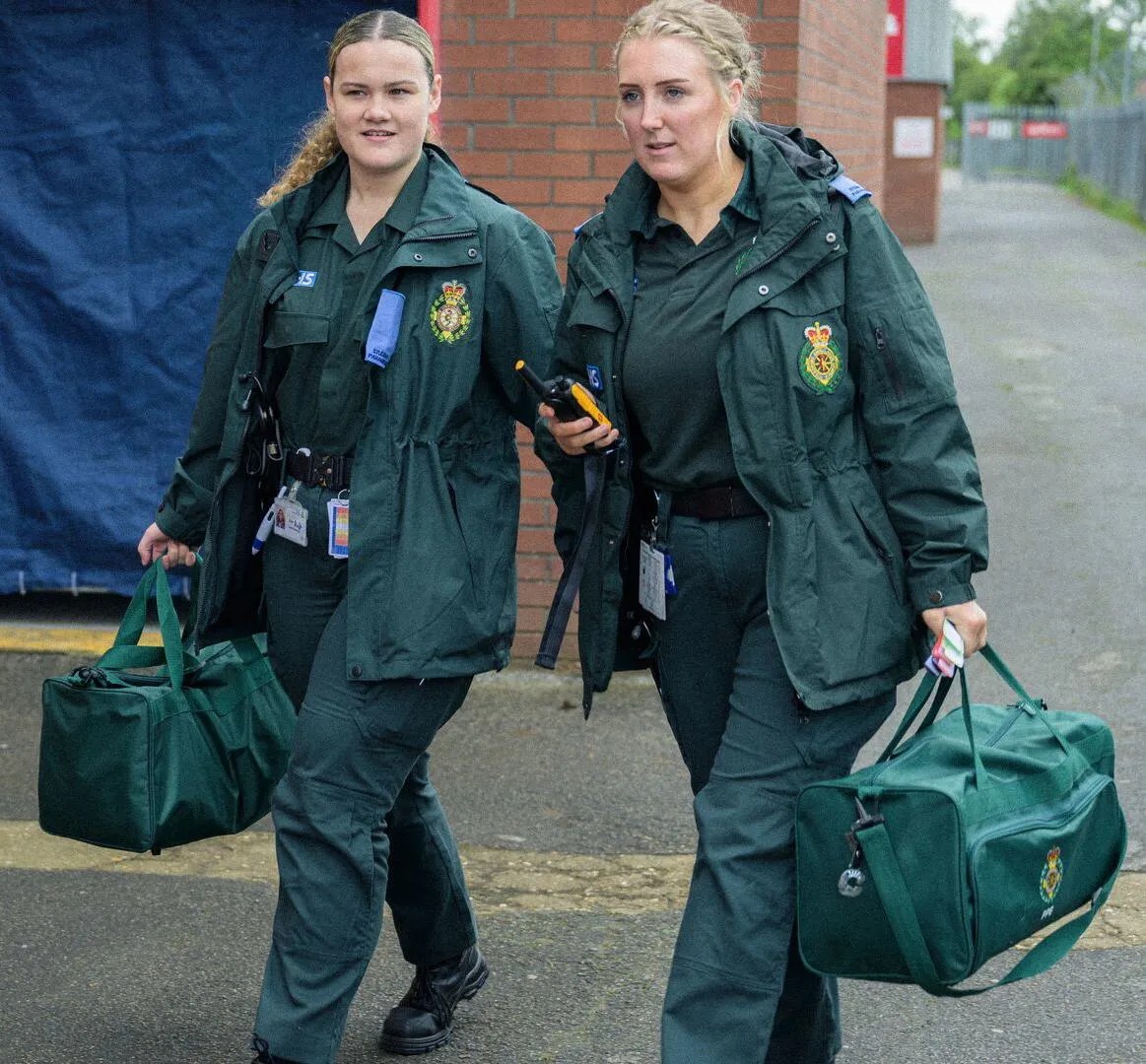
How do you give the best care? Look after yourself.
 Featured module
- compulsory
- 20 credits
Develop the knowledge and strategies to look after your mental health and manage the psychological demands of acute healthcare practice. You’ll explore self-care, resilience and mental health literacy and how they support your professional practice.
Examine the causes and signs of stress, burnout and fatigue, alongside practical strategies for emotional regulation, work-life balance and managing shift work. You’ll also explore mental health first aid, peer support, reflective practice and how to respond to the emotional impact of critical incidents.
You’ll examine workplace culture, stigma and the importance of accessing support services, including how personal wellbeing contributes to professional practice and patient safety.
Our facilities

Watchlist
Degrees that live up to life
Course montage
1 min
BSc Paramedic Science
Course overview
1 min
Simulating success: Paramedic Science
Course Highlight
2 mins
Training for success
Course Highlight
2 mins
Our healthcare family
Course Highlight
4 mins
Featured academics
Our staff combine teaching and clinical practice with the opportunity to be involved in high-quality research projects.
Their expertise sees them consult with regulatory bodies and government to drive improvement in healthcare and their research is recognised internationally for its quality.

Timothy Butterill
Programme Director
Tim is the Programme Director for Paramedic Science at Hull with a background in paramedic pre-hospital care, major trauma and Advanced Clinical Practice Education. Tim also teaches on several modules on the course.
Entry Requirements
What do I need?
This course has a range of tariffs for entry. Use the interactive slider to choose a number of points and see the course entry requirements.

Slide to set your points
A levels
BBB
BTEC
DDM
Equivalent qualifications and grades are accepted.
How to apply for this course
Most importantly, you need ambition. Together with our support and opportunities, you can go further than you ever thought possible.
Our typical offer for this course is 120 UCAS points. But there’s no ceiling on ambition.
Points must be obtained from 3 A levels or other equivalent qualifications.
Remember, we look at your whole application – not just grades. Achievements, work experience, extracurricular activities: they all count here. We also consider qualifications and experience from the UK and worldwide that may not exactly match those listed.
Not sure if you’ll meet the entry requirements?
Talk to our Admissions team today. We’ll look at your circumstances, give you personalised guidance and help you understand your options, one of which could be a Foundation Year.
Fees & Funding
How much is it?
Tuition fees for 2028 entry have not been confirmed. Please use 2027-28 information as a guide.
For UK students, our standard course fee is £10,050 per year. Keep in mind that some courses are longer - for example, spending your third year abroad will make your degree four years in total.
Standard Tuition Fee
£10,050 / year
The amount you pay may increase each year, in line with inflation - but capped to the Retail Price Index.
How do I pay for it?
Home students studying this course may receive a payment of at least £5,000 a year. This doesn't need to be paid back and is in addition to any financial support received through your student loan.
You can take out a tuition fee loan to cover the full cost of your course. One you’ve successfully applied for this, you don’t need to do anything else – the money is sent straight to us.
You can also take out a maintenance loan of up to £10,544 a year to cover your living costs, depending on your household income.
Remember, you won’t start paying your loans back until you’ve left University and earn more than £25,000 per year.
See our full fees and finance information for more details and to find out what support we can offer.

Future prospects
Want to become a paramedic? This course is fully approved by the Health and Care Professions Council (HCPC) and you’ll be eligible to register with the HCPC as a paramedic when you graduate.
We work closely with the Yorkshire Ambulance Service and introduced this degree to address the shortage of fully qualified paramedics locally and nationally, so the employment prospects couldn’t be better.
Learn more about BSc Paramedic Science
Become part of the next generation of futuremakers
Like what you've seen? Then it's time to apply.
The standard way is to apply through UCAS. This will give you the chance to showcase your skills qualities and passion for the subject, as well as providing us with your academic qualifications.
Not ready to apply yet?
Visit our next Open Day, and see all that the University of Hull has to offer. Talk to our lecturers about your subject, find out what university is really like from our current students, and take a tour of our beautiful campus and amazing facilities.
You may also be interested in...
BSc (Hons) Operating Department Practice
Undergraduate
Designed in partnership with the NHS and independent services to help ODPs acquire the knowledge and skills to undertake more complex tasks.
B990
BSc (Hons) Midwifery
Undergraduate
Gain the skills and self-confidence to become a qualified midwife and provide a safe and competent experience for the childbearing woman and her baby.
B720
BSc (Hons) Adult Nursing
Undergraduate
Learn the necessary skills to deliver high-quality healthcare by applying for our research-led, patient-centred BSc Adult Nursing degree course.
B740
BSc (Hons) Child Nursing
Undergraduate
Our dedicated children's nursing team support students through this course which is divided equally between class-based activities and clinical placements.
B730
BSc (Hons) Learning Disability Nursing
Undergraduate
Help people with learning difficulties in their daily life with our BSc Learning Disability Nursing degree. Apply to start making a difference today.
B761
BSc (Hons) Mental Health Nursing
Undergraduate
Gain the necessary skills and knowledge to deliver high-quality mental health care by applying for our patient-focused BSc Mental Health Nursing degree.
B760
Available to all undergraduate students studying Nursing, Midwifery, Paramedic Science or Physiotherapy. You don't need to pay this back, and you'll get it as well as your student loan.
All modules presented on this course page are subject to availability and this list may change at any time.