Ultrasound: healing and hearing overlooked patients
Innovative wound treatments using shockwave therapy
Project summary
The Challenge
The sobering reality is that the five-year mortality rate associated with diabetic foot complications surpasses even that of most cancers.
The Approach
We’re investigating innovative approaches using shockwave therapy to accelerate the healing and improve the life of those affected with diabetes related foot ulcers.
The Outcome
Our research is demonstrating the effectiveness of new approaches leading to better health outcomes and improved quality of life.
Institutes and centres

Lead academics
Louise Hitchman
Project funded by

Project Partners

Addressing critical gaps in wound care
Often overlooked and underestimated, diabetes related foot ulcers substantially impact on patients’ outcomes and their quality of life. Our researchers are trialling innovative new therapies that could inform future treatment pathways.
The Challenge
An estimated 4.9 million people in the UK have diabetes, and diabetic foot ulcers affect 25% of those individuals. Over 50% of these ulcers don't heal within one year, which predisposes individuals to get infections which could lead to major lower limb amputations. Alarmingly, the five-year mortality rate following a major lower limb amputation is higher than that of most cancers.

Upto 90,000 people in any given week have a foot ulcer associated with diabetes*
Not just wounds on the foot; these ulcers serve as a stark marker of an advanced stage of disease. Those affected may be unable to walk and may be in pain. It has a huge impact on their quality of life. Many people have to take long periods off work or give up their jobs entirely, severely impacting their finances and relationships. Our research aims to transform the lives of those affected.
The Approach
A ground-breaking research project named SOLEFUL, is investigating shockwave therapy as a means to enhance the healing of diabetic foot ulcers. The study aims to shed light on the optimal use of shockwave therapy in the NHS.
Diabetes affects millions of people and massively impacts their quality of life. Our work to identify innovative new treatments using ultrasound to promote healing aims to transform the lives of many patients who have too often felt unheard.Louise Hitchman
Vascular Surgery Registrar and NIHR Research Fellow
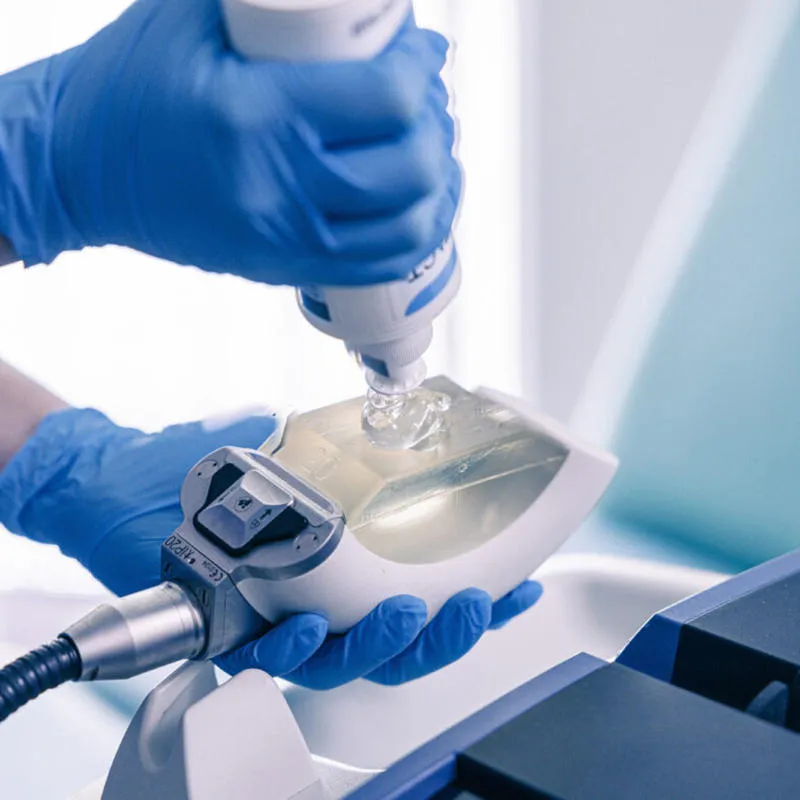
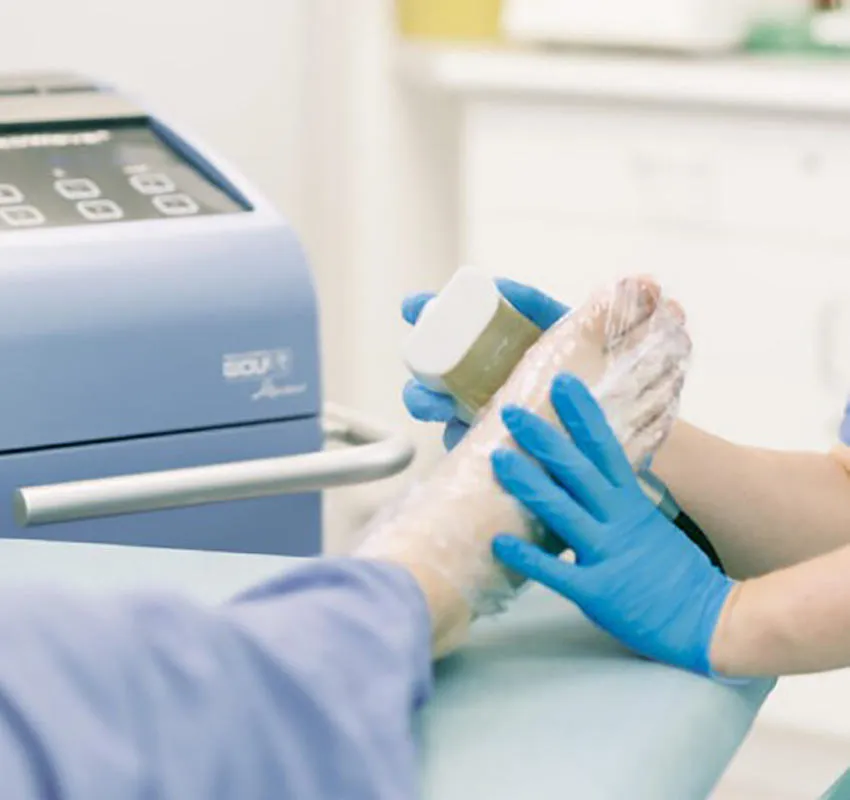
Shockwave therapy is the use of high-frequency sound waves to stimulate healing in the wound. The therapy induces cellular vibrations, resembling a controlled local inflammation, triggering the release of chemicals that promote cell formation and blood vessel growth and ultimately aid wound healing.
The research has involved a feasibility study to assess the tolerability and acceptability of shockwave therapy for patients, laboratory experiments to determine optimal doses, pilot randomised control trial comparing low-dose shockwave therapy, high-dose shockwave therapy and a placebo shockwave therapy group acting as the control and an economic evaluation. The pilot trial aims to assess the scalability of conducting the research in a larger trial.
The research team
Ms Louise Hitchman, NIHR Research Fellow and Vascular Surgery Registrar
Professor Ian Chetter, Professor of Vascular Surgery, University of Hull
Associate Professor David Russell, consultant vascular surgeon and honorary clinical associate professor associated with the Hull York Medical School.
Dr Maureen Twiddy, post-doctoral health services researcher
Professor Cynthia Iglesias, Professor of Health Economics, SAINTS Centre for Doctoral Training
Academic Vascular Research Unit, Hull University Teaching Hospitals NHS Foundation Trust
York Surgical Trials Unit, University of York
The Impact
Working with colleagues in the Biomedical Institute for Multimorbidity at Hull York Medical School, the team were able to establish that higher doses of shockwave therapy accelerated the reduction in wound size and promoted the growth of blood vessels which improve healing.In the pilot trial 64 percent of patients receiving higher dose therapy healed within six months compared with 42 per cent of patients in the placebo group.
Patients in the trial welcomed the holistic approach and personalised care provided throughout the study. The support, including regular check-ins fostered a sense of benefit and reassurance among participants. The economic evaluation found high dose shockwave therapy was better value for money than low dose shockwave therapy or normal care alone and studies evaluating shockwave therapy and measuring quality of life, with the maximum cost of £2.5 million, would be value for money.
The SOLEFUL pilot project has laid the foundation for new clinical studies, with the potential to establish new treatment pathways and bring relief to thousands of patients each year.
Publications
L. Hitchman, F. Siracusa, R. Lathan, B. Ravindhran, J. Long, G. Smith, M. Sidapra, I. C. Chetter
International Wound Journal, March 2026
L. Hitchman, R. Lathan, B. Ravindhran, M. Sidapra, J. Long, A. Cowling, A. Keding, J. Watson, C. Iglesias, G. Smith, M. Twiddy, D. Russell, I. C. Chetter
International Wound Journal, November 2025
L. Hitchman, C. Iglesias, D. Russell, G. Smith, M. Twiddy, I. C. Chetter
International Wound Journal, March 2025
Extracorporeal shockwave therapy for diabetic foot ulcers: a feasibility study
Louise Hitchman, Joshua P Totty, George E Smith, Daniel Carradice, Ian C Chetter
Journal of Wound Care, Volume 32, Number 3, March 2023
Louise Hitchman, Joshua Totty, George E Smith, Daniel Carradice, Maureen Twiddy, Cynthia Iglesias, David Russell, Ian C Chetter
International Wound Journal, August 2023
Hitchman L, Mesri M, Smith GE, Twiddy M, Iglesias C, Russell D, Chetter IC
Journal of Vascular Societies GB & Ireland, January 2023