A step in the right direction
Driving preventative solutions for diabetic foot ulcers through biomechanics
Project summary
The Challenge
A common and severe complication of diabetes, diabetic foot ulcers are a huge NHS cost burden with limited preventative strategies, focused on pressure.
The Approach
We’re uncovering deeper insight into how diabetic foot ulcers develop, working towards affordable clinical measurement tools and innovating risk-reducing solutions.
The Outcome
Improving understanding of diabetic foot ulcer biomechanics, we’re paving the way for precise measurement of individual risk and enhanced protective approaches.
Institutes and centres

Lead academics
Project funded by


Project Partners

Revealing biomechanical insight, unlocking preventative solutions
Diabetic foot ulcers are a major and escalating health challenge. By building a fuller picture of the biomechanics involved, we’re advancing protective orthotic approaches to reduce patients’ ulcer risk.
Images courtesy of Steeper
The Challenge
Highly prevalent in patients with diabetes, diabetic foot ulcers are slow to heal and complex to treat. Demanding care from many different practitioners, they put significant financial pressure on the NHS. Diabetic foot ulcers and associated amputations cost almost £1billion a year and nearly 1% of England’s entire healthcare budget.
Diabetic foot ulcers have a major impact on patients’ quality of life and put them at high risk of infection, recurrence of ulcers and severe outcomes such as amputation.

The risk of mortality 5 years after developing a diabetic foot ulcer is estimated to be around 40%.
International Wound Journal, Vol 13, Issue 5Research in this field often centres on foot pressure as a key biomechanical driver of tissue damage that can lead to a diabetic foot ulcer. The biomechanics of shear stress – frictional forces – in these ulcers are challenging to investigate and critically under researched. As a result, there is no clinically accepted way to measure shear, and preventative solutions do not protect against this significant contributing factor in diabetic foot ulcers.
With diabetes rates increasing, diabetic foot ulcers are a large and growing problem globally. The need to develop affordable and effective preventative approaches is urgent.
The Approach
Combining expertise in orthotics and prosthetics practice, mechanical engineering and medical engineering, our research is delving deeper into how diabetic foot ulcers develop, how risks can be measured, and how they can be prevented.
So many individual factors contribute to the development of diabetic foot ulcers. People aren’t identical, and that’s what makes this so complex. What works in principle doesn’t always work for each person. I want to bridge that gap.Dr Sarah Crossland
Lecturer in Medical Engineering, University of Hull
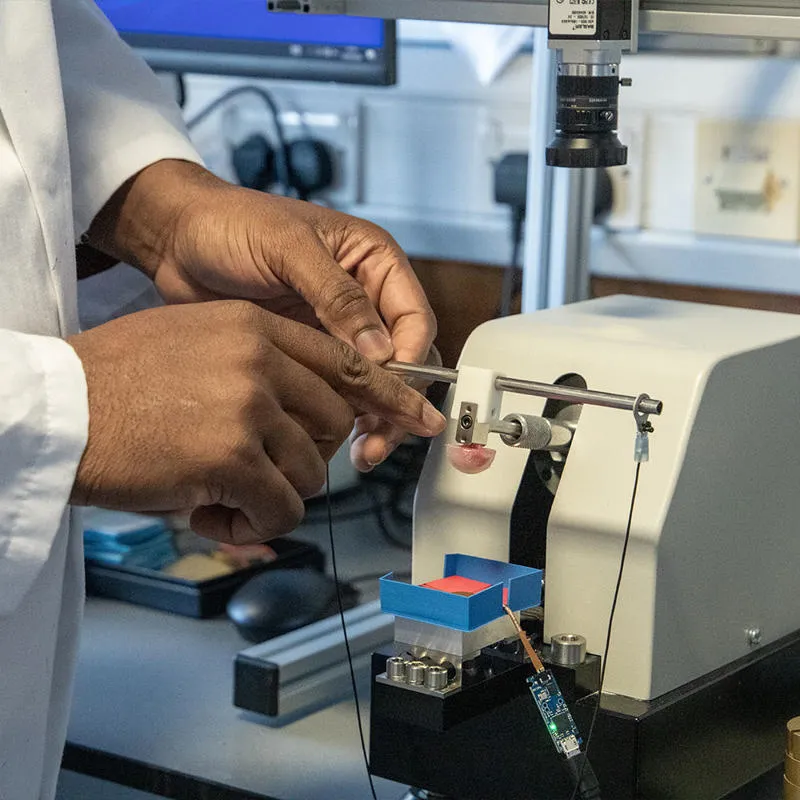
By incorporating shear forces as well as pressure, our research takes a comprehensive approach to identifying the tissue strain that contributes to skin breakdown and diabetic foot ulcers development. We’re exploring low-cost approaches to measuring shear stress, working towards developing a clinical tool that can identify ulcer risk in patients.
Collaborating with industry, we’re analysing materials used in therapeutic insoles to enhance their effectiveness. Investigating how different materials respond to friction and pressure, we’re generating data to support bespoke insole prescriptions.
Taking an innovative approach to improving current off-the-shelf insoles for people with diabetes, we’re also exploring how low-cost, customisable insoles could be developed to better protect against DFUs by responding to individual stress and pressure patterns.
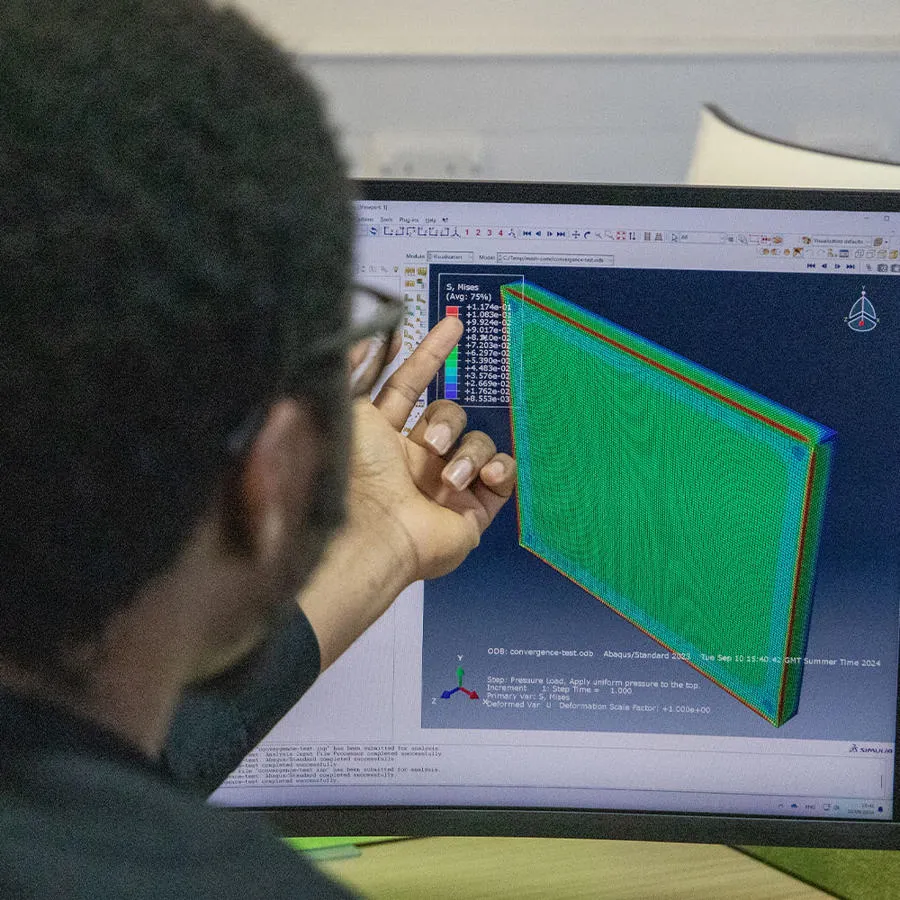
With advanced technology including 3D imaging, high-performance computing and additive manufacturing in our Wound Innovation Institute, we’re taking a full pipeline approach to preventing diabetic foot ulcers. This includes exploring more complete assessments of body biomechanics by:
- tracking multiple measurement techniques at once
- simulating realistic skin models
- manufacturing potential solutions
- recreating representative environments to test prototypes
- refining those solutions before testing on patients.
The research team
Dr Sarah Crossland, Lecturer in Medical Engineering, University of Hull
Dr Louise France, Lecturer in Medical and Mechanical Engineering, University of Hull
The Impact
By better understanding the unique biomechanics involved, my hope is that I can optimise existing interventions and develop new approaches to reduce the major impacts diabetic foot ulcers have on patients’ lives.Dr Sarah Crossland
Lecturer in Medical Engineering, University of Hull
Deepening understanding of the biomechanical characteristics of how, where and why skin is at risk of breaking down in patients with diabetes, we’re driving the development of preventative orthotic solutions for diabetic foot ulcers
By researching a fuller picture of the biomechanics involved, we’re moving closer towards developing clinical measurement tools that can pinpoint the risk of these ulcers in individual patients. Being able to identify these risk points, and what is causing them, paves the way towards more targeted and effective preventative interventions.
We’re enhancing orthotic approaches to protecting patients’ feet by innovating potential new clinical products. Working with industry, we’re also improving the effectiveness of currently available therapeutic insoles and exploring the feasibility of 3D-printing as a faster route to customised protective clinical products.
Moving towards low-cost, clinically viable measurement and customised preventative solutions, our research has the potential to reduce the prevalence of diabetic foot ulcers, enhancing quality of life for patients with diabetes and alleviating a significant NHS cost burden.