 Available in Clearing


Crime begins in the mind. As do responses to it. Gain a thorough understanding of the human mind, while also discovering the theoretical and policy issues relating to crime.
Hull’s been teaching Psychology since 1928, and was one of the first to teach Criminology over 50 years ago. We remain at the forefront today, researching the latest challenges the world faces. Dementia, trauma, violent crime, social justice, cybercrime, and intelligence.
And we combine this cutting-edge research with industry-standard facilities. A brain stimulation lab, a crime scene training facility, and much more…

95% of students
in work or further study 18 months after graduating
HESA Graduate Outcomes, 2026

Joint 4th in the UK
for Value Added Score
The Guardian University Rankings, 2026
3rd in the North of England
for 'How often does your course challenge you to achieve your best work'
Sociology, National Student Survey (NSS), 2026, HEIs only
This course is accredited by


Investigate criminal offences
in our campus crime scene room

Field trips
to courts, prisons and police stations

Accredited
by British Psychological Society1

Boost your CV
with a placement or by studying abroad

Explore the mind
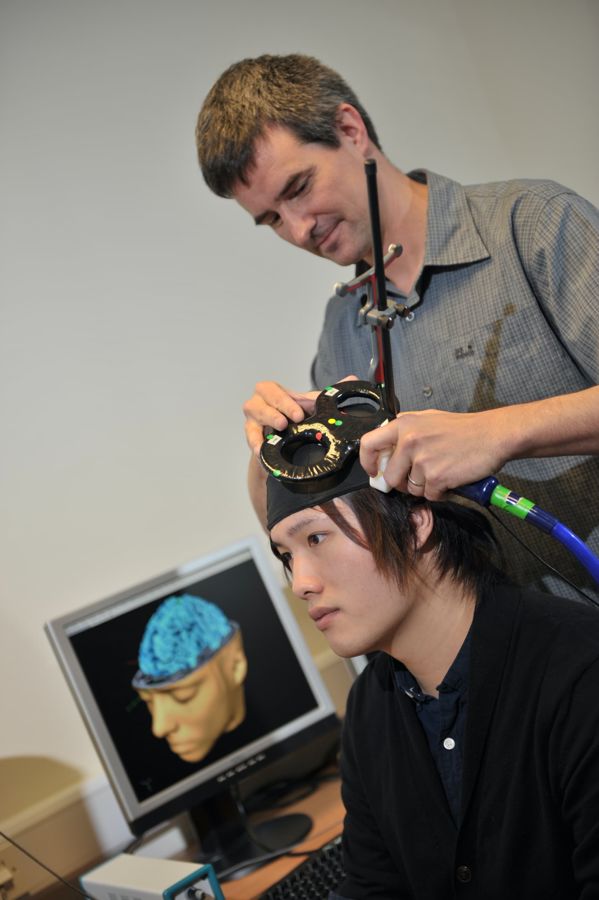
in our Brain Stimulation Laboratory

Study human responses to sounds
in our Audiometric Lab

Study areas of cognitive psychology
in our Eye-Tracking Lab

Study the fascinating world
of infant development in our Baby Lab
About this course
One of the aims of this course is to give you the skills to gather, analyse and evaluate data about people’s behaviour and thoughts. In understanding how crime is dealt with, you’ll draw on disciplines such as social policy, sociology, psychology and law.
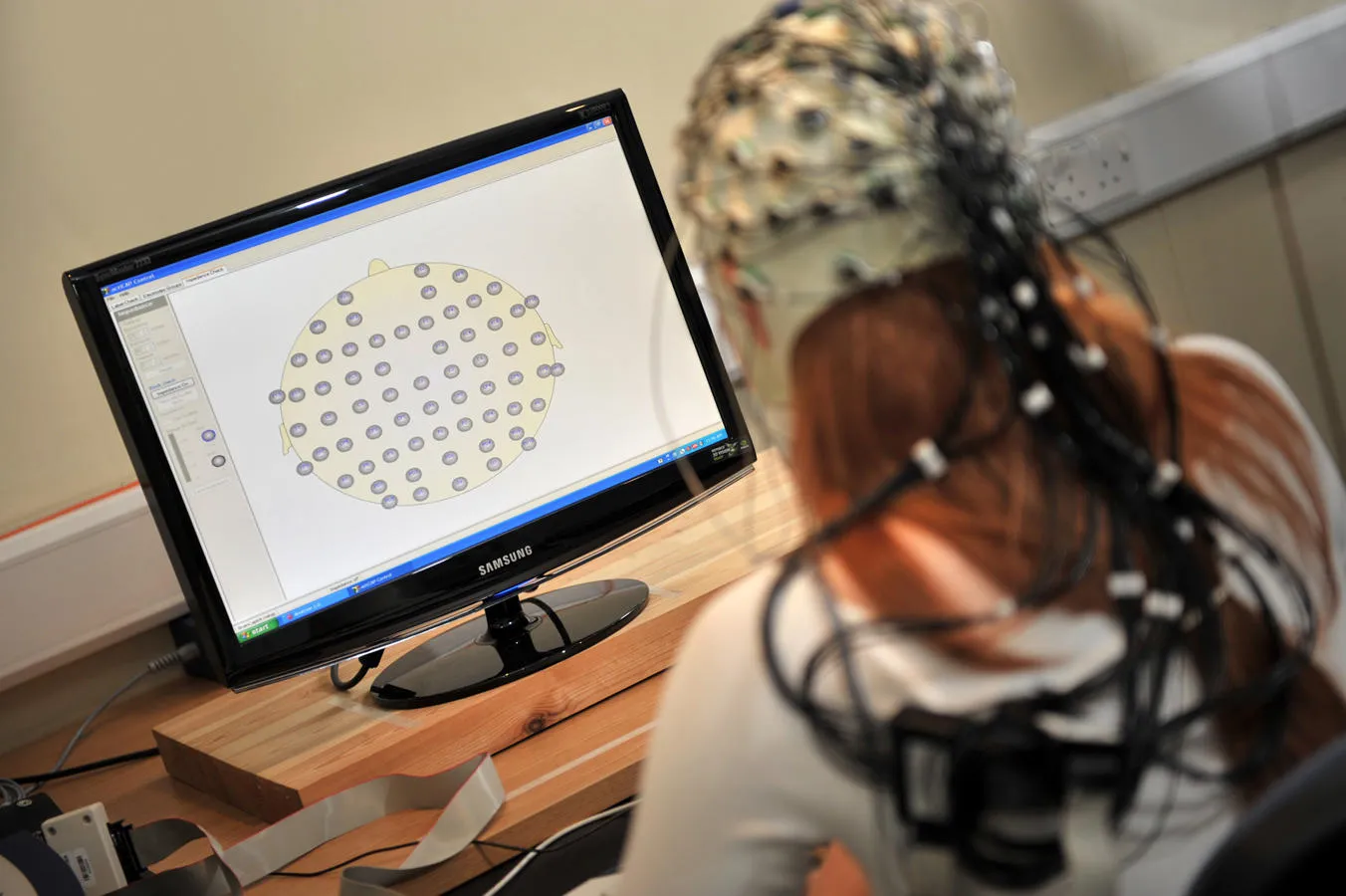
You'll benefit from the latest psychology facilities. Electroencephalography (EEG) equipment for measuring brain activity. A brain stimulation lab. An eye-tracking laboratory. And a baby lab.
Put what you learn into practice in our replica crime scene facility right here on campus. A recent addition to the University, it provides detailed and realistic crime scenes for you to explore. Get hands on: collect evidence, explore criminal activity, and see the world of forensic science brought to life.
Thanks to our links with criminal justice agencies, you’ll get to develop your learning through work placements and experience-enhancing visits.
You can also study for a semester abroad. Our growing portfolio includes partners across Europe, the USA, Canada and Australia.
This programme is accredited by the British Psychological Society. Graduate with a 2:2 or above and you are entitled to become a graduate member of the society, putting you on the pathway to qualifying as a Chartered Psychologist.
Changing the world starts with making sense of it
Foundation year
A foundation year at the University of Hull gives you a solid grounding of knowledge and boosts your academic skills, so you can progress on to your chosen programme with confidence.
The foundation course you enrol on may not be an exact match to your chosen degree, but don’t worry. Our foundation courses combine content from multiple related courses in the same subject area, giving you more flexibility and choice about the degree path you take.
For example, if you apply for a Music Foundation Year, you’ll join our Media Foundation course. So, if you decide to switch - say, from Music to Graphic Design - you can do so without restarting your foundation year.
Module options
Each year, you’ll study modules worth a certain number of credits, and you need 120 credits per year. Most modules are 20 credits – so you’ll study six modules each year. Some longer modules, such as a dissertation, are worth more. In these cases, you’ll study fewer modules - but the number of credits will always add up to 120. Some modules are compulsory, some are optional, so you can build a course that’s right for you.
No filters selected
Preparing for Learning in Higher Education
This module is designed to give you the best possible start to your university studies, making sure you have all the essential skills you need to succeed. Through lectures and workshops we will teach you how to write in an academic style, how to find quality sources, and how to reference work, culminating in writing up a mini-research project.
core
20 credits
Group Challenge
In a group, you'll formulate questions that can be tested by scientific investigations and take part in weekly workshops with academics.
core
20 credits
Foundation in Data Analysis
Develop a strong foundation in data collection and analysis. This module will introduce you to qualitative and quantitative data and how to analyse it; the collection of primary and secondary data; the production of high-quality graphics; and report writing.
core
20 credits
Introduction to Biological Sciences 1
This module will provide you with the basic biological science knowledge that will enable you to transition successfully into the certificate stage of your chosen programme of studies. You will gain basic knowledge of cell biology, biological molecules, energy processes like respiration, neurobiology and many other topics. Alongside the theoretical knowledge, you will also have the opportunity to learn how to use a microscope and how to collect data in the laboratory, in a specialist sport science facility or using psychological techniques. You will also learn how to present and write about those data professionally. The teaching team for this module consists of lecturers in the disciplines connected to your programmes of study, so there will be a strong connection to your chosen subject area.
compulsory
20 credits
Introduction to Psychology
Module information coming soon.
compulsory
20 credits
Foundation Maths Skills
This module delivers core mathematics skills at level two and three to give a solid basis for future studies. You will study the following topics: manipulation of numerical data and converting between different units of measurement; exponentials and logarithms; and standard form and problems involving ratio, proportion and percentages.
optional
20 credits
Foundation Mathematics 1
This module delivers core mathematics skills to build a solid basis for future studies. You will study the following topics: factors, multiples, indices, fractions and standard form; algebra, linear and quadratic equations; averages and spread; functions, exponentials and logarithms; and right-angled triangles and trigonometry.
optional
20 credits
Foundation Mathematics A
You will study pure mathematics topics, including proof, algebra, trigonometry, differentiation, integration, exponentials, logarithms, sequences and series. The applied topic is probability and statistics.
optional
20 credits
Exploring Social Psychology
Would you inflict pain on another person if instructed to do so by an authority figure? How likely are people to conform to group pressure? What makes a friend act aggressively or donate money to charity? This module considers what effect the environment has on human behaviour and explores how psychological theories can be applied to your everyday life. If you’ve ever wondered why your friend is acting in a certain way, this module will provide some clues to the answer.
compulsory
10 credits
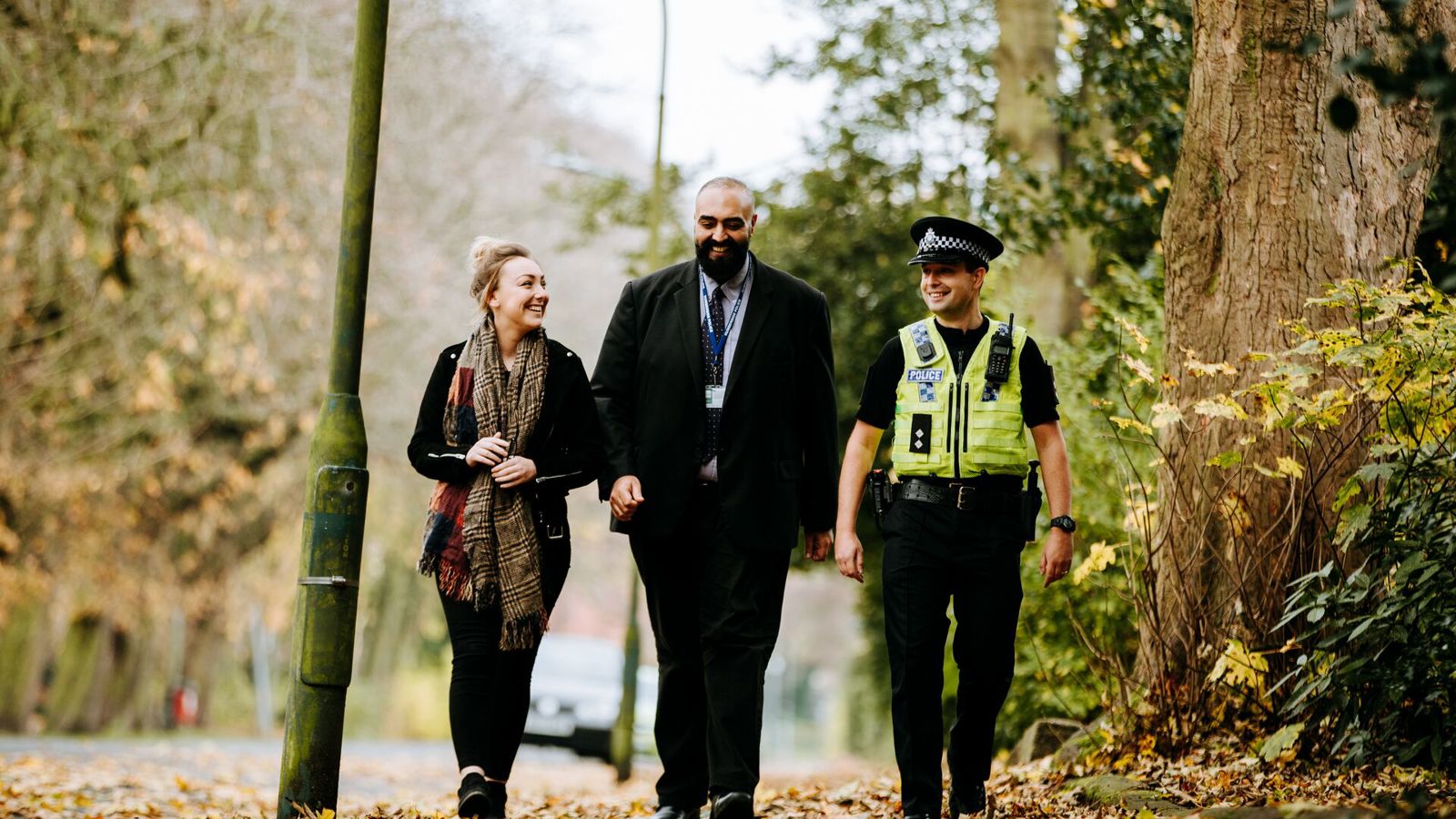
Are we all equal in the eyes of the police? It depends on who you ask.
 Featured module
- optional
- 20 credits
Want to truly understand policing? Then this module is for you.
You'll explore policing theories and key functions, like crime control and order maintenance.
You'll examine contemporary policing in England and Wales, comparing practices from other societies.
You'll practice your skills on hands-on assessments, including crime scene simulations and real-world datasets. So you can see first-hand the practical and political challenges the police face.
Along the way, you'll gain insights and engage with real-world issues that will set you apart in the field.
Our facilities

Watchlist
Degrees that live up to life
Course montage
1 min
Dr Shane Lindsay
Course overview
3 mins
Your course in their words
Student Story
2 mins
Your course in their words | Anya Chadwick
Student Story
2 mins
Studying minds - Inspiring careers
Graduate story
2 mins
Why choose Psychology at Hull?
Student Story
2 mins
Life on campus
University life
2 mins
Where can Psychology take you?
Student Story
13 mins
Featured academics
You learn from professional psychologists and criminologists. In a friendly, supportive department with strong links to criminal justice agencies and the private sector. So everything you learn is up to date and industry-relevant.

Professor Iain Brennan
Professor of Criminology
Iain's research focuses on violence prevention including weapon-carrying and domestic abuse. He’s an adviser to the Home Office, Youth Endowment Fund, College of Policing, National Police Chiefs' Council, and many police forces across the UK.

Dr Bernice Wright
Lecturer
Bernice’s research areas include mental health, cognitive psychology, neuropsychology, and individual differences.
Entry Requirements
What do I need?
At Hull, you're a name, not a number. It's not just about the grades - we'll look at your whole application.
If you're not eligible for direct entry to this course, we may recommend a foundation year as an alternative route to studying for a degree.
To discuss your options, send us an enquiry or call us from 8am on Results Day on 01482 466100.
Every year, hundreds of students join the University of Hull through Clearing for all sorts of reasons and go on to achieve great things. Learn more about Clearing.
Qualification types
We accept a wide range of qualifications and combinations of qualifications, including A levels, BTECs and other accepted qualifications.
We don’t just see what you’re like on paper, we see you. All of you. Your achievements, work experience, music and sport qualifications and the projects you’ve been involved in. We want to hear it all.
Fees & Funding
How much is it?
Tuition fees for 2027 entry have not been confirmed. Please use 2026-27 information as a guide.
For UK students, our standard course fee is £9,790 per year. Keep in mind that some courses are longer - for example, spending your third year abroad will make your degree four years in total.
If you choose to study a foundation year as part of your course, the fee is £9,790.
Thinking about a year in industry? This is £1,955 for UK students.
How do I pay for it?
You can take out a tuition fee loan to cover the full cost of your course. Once you’ve successfully applied for this, you don’t need to do anything else – the money is sent straight to us.
You can also take out a maintenance loan of up to £10,544 a year to cover your living costs, depending on your household income.
Remember, you won’t start paying your loans back until you’ve left university and earn more than £25,000 per year.
See our full fees and funding information for more details and to find out what support we can offer.
Foundation Year Fee
£9,790
Standard Tuition Fee
£9,790 / year
The amount you pay may increase each year, in line with inflation - but capped to the Retail Price Index.

Future prospects
With this degree, you'll be equipped with skills for a variety of careers. As a scientist, your analytical and problem-solving abilities and experience in research will be sought after by employers. You can pursue a career as a counsellor or psychologist in a clinical or forensic field, or as a prison, probation or victim support officer. Our graduates even go on to work as teachers, marketers and HR professionals in the public or private sectors.
Thanks to our facilities and work experience opportunities, you’ll graduate with an edge over the competition. In fact, 95% of our Psychology students are in work or further study 15 months after graduating3.
Become part of the next generation of futuremakers
Like what you've seen? Then it's time to apply.
The standard way is to apply through UCAS. This will give you the chance to showcase your skills qualities and passion for the subject, as well as providing us with your academic qualifications.
Not ready to apply yet?
Visit our next Open Day, and see all that the University of Hull has to offer. Talk to our lecturers about your subject, find out what university is really like from our current students, and take a tour of our beautiful campus and amazing facilities.
You may also be interested in...
BSc (Hons) Psychology
Undergraduate
British Psychological Society accredited course, encompassing topics such as memory, social relationships, child development and brain functions.
C800
BSc (Hons) Psychology with Sports Psychology
Undergraduate
Study the mind, behaviour and performance on our BSc (Hons) Psychology with Sports Psychology degree at the University of Hull. Apply now.
C803
BSc (Hons) Psychology with Education
Undergraduate
Study psychology and gain practical teaching experience with our BSc Psychology with Education degree - ideal for future teachers and educators.
C805
BSc (Hons) Psychology and Business
Undergraduate
Explore how people think, decide, and behave in the business world with our BSc Psychology with Business degree - perfect for future leaders and managers.
C804
BA (Hons) Criminology with Psychology
Undergraduate
Alongside gaining a thorough understanding of crime and criminal justice, you'll also explore human behaviour, performance and decision making.
M9C8
BA (Hons) Criminology
Undergraduate
Explore the diverse factors that cause crime with our BA Criminology degree. Apply today and study at a leading centre for criminology.
M930
If you graduate with at least a 2:2 and pass your empirical psychology project, you can become a graduate member of the British Psychological Society (BPS). This is an essential step towards becoming a Chartered Psychologist.
All modules on this course page are subject to availability and this list may change at any time.