


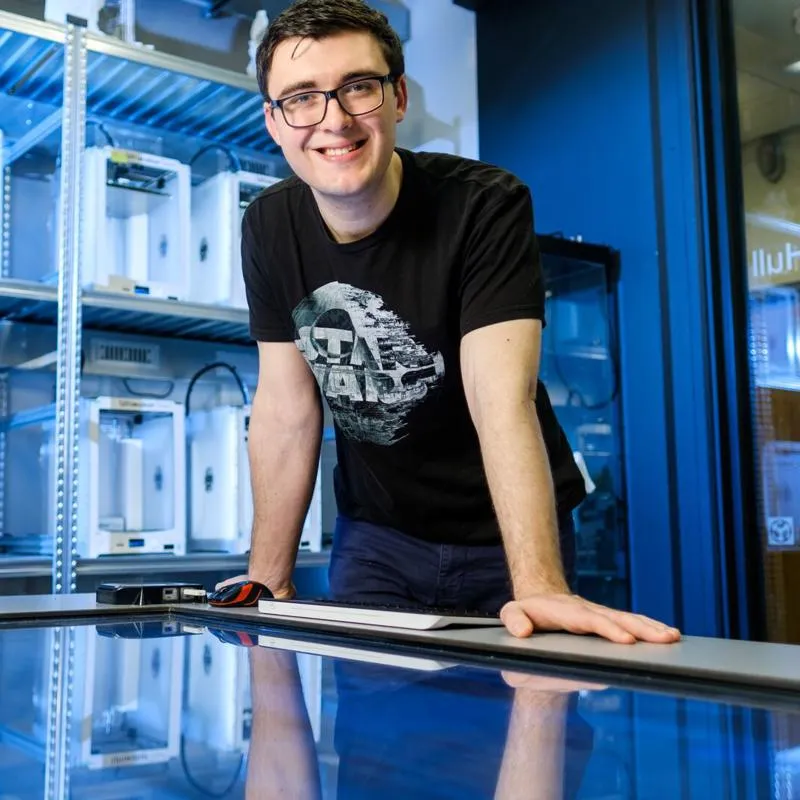
Cyber attacks are increasing. Data breaches make headlines. AI is changing how digital threats are launched and defended. Now more than ever, organisations need skilled cyber professionals. That’s where you come in...
You’ll study computer science and cyber security in a practice-led, industry-aligned environment, developing the skills to secure systems, investigate digital crime and defend critical infrastructure.
From ethical hacking and cloud security to AI-driven threat detection, you’ll gain hands-on experience shaped by real-world challenges and strong industry links - preparing you for a career protecting the digital world.
About this course
Cyber security is one of the fastest-growing fields globally, offering careers with purpose, challenge, and exceptional employability. Our portfolio of undergraduate and postgraduate programmes is practice-led and industry-aligned, designed to meet the UK’s growing demand for cyber professionals.
You’ll gain technical depth in areas such as secure systems, ethical hacking, cloud security, and digital forensics, alongside core computer science concepts and strong ethical foundations. Recognising the increasing prevalence of AI in cyber security for both attack and defence, our programmes explore how artificial intelligence is transforming threat detection, incident response, and adversarial tactics - preparing graduates to address emerging risks in an AI-driven digital landscape.
With modules shaped by the industry needs and informed by cutting-edge research in trustworthy AI and secure software engineering, you’ll graduate ready to protect infrastructures and respond to emerging cyber risks. Whether your interest lies in ethical hacking, secure software development, or defending AI-driven systems, cyber security offers a career with purpose, challenge, and exceptional employability. Cyber security graduates are in demand across every sector - and our programmes are built to make you job-ready from day one.
The UK continues to experience a significant shortage of cyber professionals, particularly in cloud security, secure software development, and governance. This means excellent prospects for graduates entering the field. Hull’s regional partnerships and industry links ensure real-world projects and placement opportunities, preparing you for roles in government, fintech, health, and beyond.
At the frontline of the cyber age
Module options
Our five undergraduate Computer Science courses share the same compulsory modules in the first year. This gives you a foundation of knowledge across the whole subject area and the chance to explore what really interests you.

Filters
Programming Portfolio
Gain the practical knowledge to design, implement and test algorithms. The module uses lectures to deliver concepts, a practice lab to apply the programming concepts learnt by developing programs to solve problems. You will take part in hands-on practical assessments, which will enable you to acquire extensive programming skills in an industry standard programming language. We will support you whether you are new to programming or have existing skills.
core
40 credits
Algorithms and Data Structures
Start to think like a computer. This module explores logic, data storage and algorithms with the use of practical demonstrations and activities. Operating in parallel with programming-focused modules, we will develop a toolkit of key concepts from a theoretical (non-code) perspective, facilitating a better understanding of these fundamentals. Topics to expect include pseudocode, state machines, essential keywords, common data structures, sort algorithms and search algorithms. You will learn methods to analyse and compare algorithms and their constituent parts in order that you may better design, evaluate and develop effective, efficient and performant software solutions.
compulsory
20 credits
Computational Thinking
This module, Computational Thinking, is essential for developing computer-based solutions. This module will enable you to develop your knowledge and understanding of the key mathematical underpinnings of computer science, to aid you in problem solving and programming. The development of your competence in logic, mathematics and statistics will also provide evidence of your numeracy and more advanced skills and is valued by employers.
compulsory
20 credits
Architectures, Operating Systems and the Cloud
In this module you will explore the fundamental properties of computers that allow them to execute programs. You will learn about how computers are made to work in hardware and simulation (virtual machines). A collection of virtual machines is a cloud, and this module allows you to get experience with the development of your own cloud using appropriate platforms.
compulsory
20 credits
Professional Development
Employers want much more than discipline-specific skills. This module sets you up to grow your professional skills and awareness, when working both individually and as part of a team. Develop your appreciation of the challenges within the sector, and how technology can help to solve worldwide issues. Begin a personal portfolio that you will add to over your degree. Work as part of a team to produce a design prototype, demonstrating your personal professional development. Through researching your discipline, you will understand the range of career roles available and what you need to do to progress in them.
compulsory
20 credits
Design, Develop, Deploy
Our flagship software development module. You'll use contemporary software development tool chains to experience authentic software creation and deployment, applying techniques such as agile project management, test-driven development and continuous integration and deployment.
core
40 credits
Artificial Intelligence
Data is one of the 21st century’s most valuable commodities. In this module you will learn how to analyse, validate and interpret it to inform decision making. You will implement artificial intelligence techniques to solve a real world problem. Nationally, there is a widely recognised shortage of qualified Artificial Intelligence (AI) and data scientists to meet the needs of industry.
compulsory
20 credits
Databases and Networks
You'll be introduced to the core components of any online information system that drives the information we use today. Learn how modern applications fetch data from servers and how that information can be stored and retrieved efficiently. You will solve a real-world problem by developing a networked database.
compulsory
20 credits
Connected Devices and IoT
Everything is connected. Whether components of a robot, smart homes or cities, many sensors and subsystems must work together and communicate with each other flawlessly and at high speed to achieve their goals. This module will give you a practical introduction to the options available and the tools and techniques needed to make multiple software and hardware systems integrate together. You’ll examine the abilities of wired and wireless communication systems, learn where and when particular systems are appropriate, learn about the Internet of Things and implement examples.
compulsory
20 credits
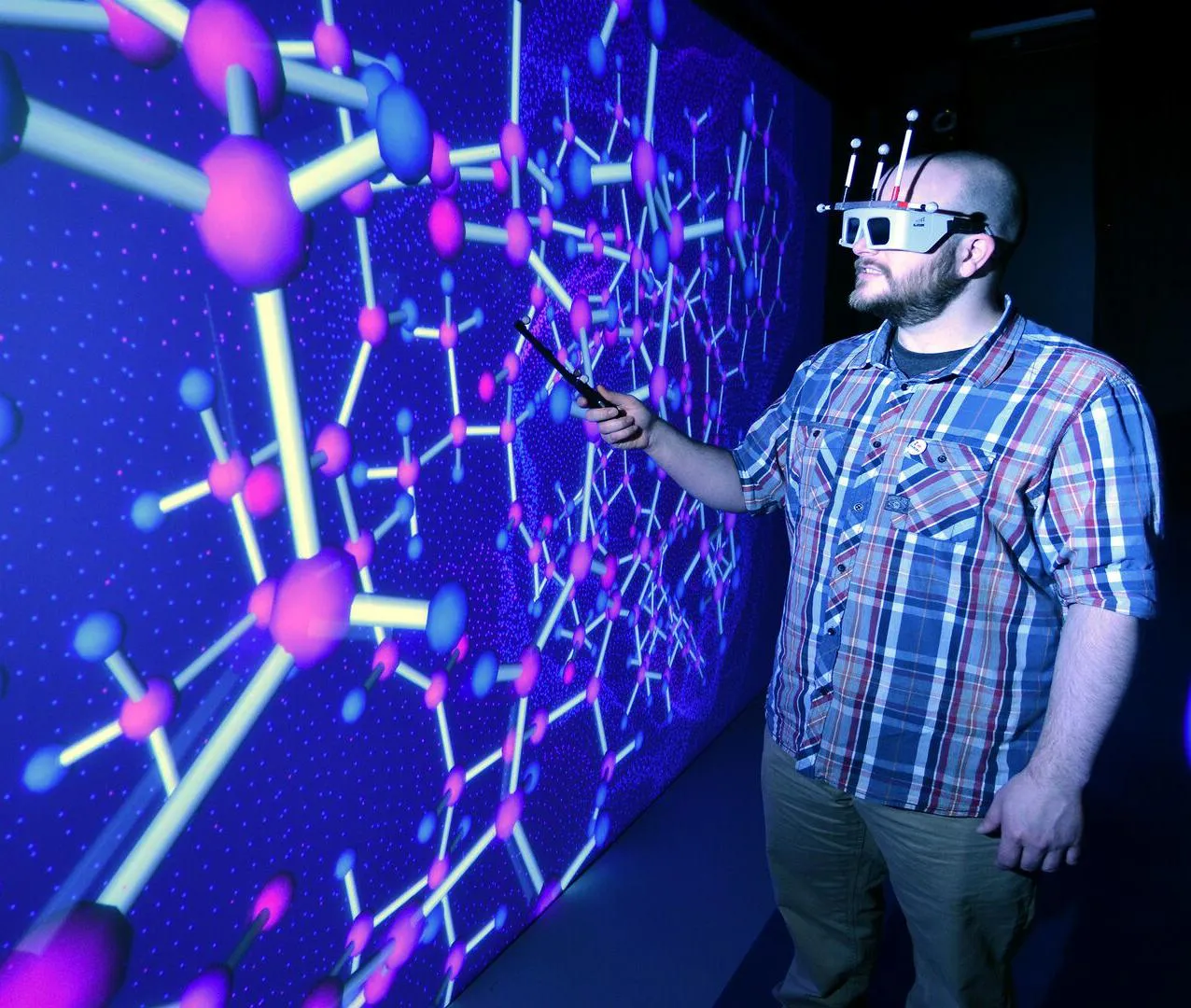
Our facilities

Watchlist
BSc Computer Science
Course overview
3 mins
MEng Computer Science
Course overview
2 mins
Rand Nessif
Unsame Stories
2 mins
See our incredible labs
Course Highlight
2 mins
Featured academics
You’ll be taught by talented researchers whose specialist areas include cyber security, dependable and secure intelligent systems, computational science, robotics and artificial intelligence, and simulation and visualisation.

Brian Tompsett
Lecturer
Brian is an experienced computer scientist and software engineer with a career spanning over 50 years. He has worked within industry and academia in the UK and the US. He leads the Software Engineering degree programme.

Dr John Dixon
Lecturer in Computer Science
John is a computer science researcher, lecturer and software engineer and developer. He specialises in networking, connected services and distributed systems, C# and .NET. He’s developed mission-critical solutions for the fire and rescue services.
Entry Requirements
What do I need?
This course is currently available through Clearing, which means our entry requirements are a bit different to what they would normally be.
At Hull, you're a name not a number. During Clearing, we look at all of your qualifications and experience, not just your academic grades. We may be able to offer you a place whatever your situation. Get started by completing our eligibility checker, and find out immediately if you could study at the University of Hull.
Have questions? Our admissions team will be happy to help.
Fees & Funding
How much is it?

Future prospects
Want to protect digital systems, stop cyber crime or design secure software? Or work as an ethical hacker, cyber analyst or cloud security specialist? You’ll open up all these careers and more with the Computer Science and Cyber Security degree at Hull.
Graduate careers include cyber security analysis, ethical hacking, secure software development, digital forensics and threat intelligence. Our graduates work across government, finance, healthcare and technology sectors in roles such as penetration tester, security architect, cybercrime investigator and cryptographer. Some go on to further study at MSc or PhD level, while others progress into specialist security roles or help build safer digital systems across industry.
Become part of the next generation of futuremakers
Like what you've seen? Then it's time to apply.
The standard way is to apply through UCAS. This will give you the chance to showcase your skills qualities and passion for the subject, as well as providing us with your academic qualifications.
Not ready to apply yet?
Visit our next Open Day, and see all that the University of Hull has to offer. Talk to our lecturers about your subject, find out what university is really like from our current students, and take a tour of our beautiful campus and amazing facilities.
You may also be interested in...
90% employability (Computer Science) UK domicile full-time first degree leavers; Higher Education Graduate Outcomes statistics, for the academic year 2022/23, published by the Higher Education Statistics Agency June 2025.
All modules presented on this course page are subject to availability and this list may change at any time.