 Available in Clearing



Explore pure and applied mathematics on this accredited course, and get a grounding in probability, statistics, numerical programming and more.
You’ll work on projects that will challenge your abilities across the field of mathematics and develop skills that are appealing to a number of employers.
Students with good A level results, or equivalent, may be eligible for our Gillian Stead Scholarship – worth up to £6,300 over three years1.

3rd in the UK
for Satisfied with Teaching
The Guardian University Rankings, 2026
3rd in the UK
for Satisfied with Feedback
The Guardian University Rankings, 2026
This course is accredited by


Your first step to
Chartered Mathematician status

Get up to £6,300
for achieving good A level results1

State of the art facilities
in our £4.5 million DAIM centre

Develop your skills
using powerful software such as Python

Industry-standard facilities,
backed by leading tech companies

Fully refurbished
Superlab
About this course
We start with a core programme covering the foundations of mathematics and its applications. As the course progresses you can tailor your modules by specialising in areas that interest you.
You'll learn in small groups as part of our close-knit mathematical community under renowned researchers whose specialisms include fluid dynamics, mathematical biology, statistics, data science and industrial applications of mathematics. You’ll also have regular tutorials throughout your degree, where you can raise questions and explore concepts in discussion with your peers. In short, this is a maths degree with a personal feel.
This course is accredited by the Institute of Mathematics and its Applications (IMA), which puts you on the pathway towards Chartered Mathematician status. But you’ll gain the foundation for any career requiring a strong mathematical background, such as in science and technology, banking and finance, data science, government, and more.
This research-informed degree also provides an ideal foundation for progression into further study, such as a Masters or PhD, in mathematics, data science or even an unrelated subject. One way we ensure this is by providing the opportunity to undertake a BSc research project. In your final year, you will explore a mathematical topic of your choice and develop written, presentation and independent research skills. Our BSc students have even had papers published in peer-reviewed journals based on their BSc project work.
Together, we can make the world add up
Foundation year
A foundation year at the University of Hull gives you a solid grounding of knowledge and boosts your academic skills, so you can progress on to your chosen programme with confidence.
The foundation course you enrol on may not be an exact match to your chosen degree, but don’t worry. Our foundation courses combine content from multiple related courses in the same subject area, giving you more flexibility and choice about the degree path you take.
For example, if you apply for a Music Foundation Year, you’ll join our Media Foundation course. So, if you decide to switch - say, from Music to Graphic Design - you can do so without restarting your foundation year.
Module options
Each year, you’ll study modules worth a certain number of credits, and you need 120 credits per year. Most modules are 20 credits – so you’ll study six modules each year. Some longer modules, such as a dissertation, are worth more. In these cases, you’ll study fewer modules - but the number of credits will always add up to 120. Some modules are compulsory, some are optional, so you can build a course that’s right for you.
No filters selected
Preparing for Learning in Higher Education
This module is designed to give you the best possible start to your university studies, making sure you have all the essential skills you need to succeed. Through lectures and workshops we will teach you how to write in an academic style, how to find quality sources, and how to reference work, culminating in writing up a mini-research project.
core
20 credits
Foundation Mathematics A
You will study pure mathematics topics, including proof, algebra, trigonometry, differentiation, integration, exponentials, logarithms, sequences and series. The applied topic is probability and statistics.
core
20 credits
Foundation Mathematics B
This module extends the knowledge gained in the Foundation Mathematics A - pure mathematics topics. You will also study functions and vectors. The applied topic is mechanics.
core
20 credits
Introduction to Physics 1
This is the first of two foundation year modules that prepare you for studying physics or mathematics at degree level. You will study the basics of mechanics, properties of matter, electricity and magnetism.
core
20 credits
Introduction to Physics 2
This is the second of two foundation year modules that prepare you for studying physics or mathematics at degree level. You will study the basics of oscillations, waves, and quantum and nuclear physics.
core
20 credits
Group Challenge
In a group, you'll formulate questions that can be tested by scientific investigations and take part in weekly workshops with academics.
compulsory
20 credits
Calculus
You'll study, for a function of a single real variable, the limit processes of differentiation and integration using logic and the language of set theory.
compulsory
20 credits
Linear Algebra
This module delivers essential core mathematics. You’ll explore vectors, matrices, vector spaces, linear equation systems and dimension.
compulsory
20 credits
Introduction to Programming in Python
In this module, you are introduced to the Python language, commonly used in the technology sector. As part of this course, you will learn fundamental programming concepts such as variable definition, function writing, and Boolean logic. The curriculum extends to practical skills in handling large datasets using the Pandas module and creating striking data visualisations with packages like Seaborn. These skills are then applied to numerical and Fourier analysis, essential tools for a career as a data scientist.
compulsory
20 credits

Using abstract maths to solve real-world problems
 Featured module
- core
- 20 credits
How can mathematics help us understand living systems – from population changes to the spread of pandemics? This module introduces the powerful field of mathematical biology.
You’ll learn how to build and analyse mathematical models that explain real biological phenomena, exploring topics such as population dynamics, interacting species, and epidemiology. No prior biology knowledge is required – just curiosity and a willingness to apply mathematical thinking to real-world challenges.
By focusing on model construction, development, and analysis, you’ll gain valuable skills used across scientific research and data-driven careers.
Use mathematics to explore the living world and develop modelling skills that open doors to exciting research and career opportunities.
Our facilities


Watchlist
BSc Mathematics
Course overview
2 mins
Katie Smith - Maths - Student Story
Student Story
1 min
Life on campus
University life
2 mins
Accommodation at Hull
University life
2 mins
Featured academics
At Hull, you will be part of a small community of like-minded mathematicians.
The research interests of our staff include fluid dynamics, mathematical biology, mathematical finance, statistics, optimisation and industrial applications of mathematics.
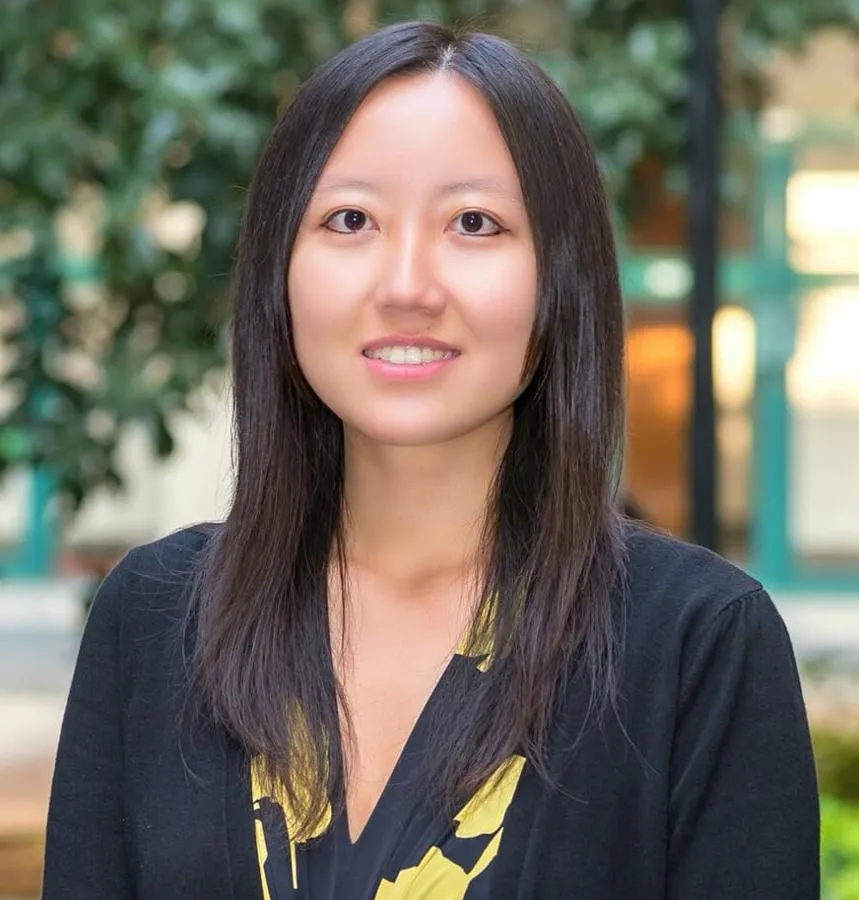
Dr Jie Yang
Lecturer
Jie joined the University of Hull in 2021 as a Lecturer in Applied Mathematics. She has a PhD in Systems Biology and her principal research interests involve the use of applied mathematics for biological applications.

Dr John Fry
Lecturer
John is a senior lecturer in applied mathematics with extensive experience from a number of business schools and mathematics departments in the UK. His research interests include econophysics, mathematical finance, statistics and sports modelling.
Entry Requirements
What do I need?
At Hull, you're a name, not a number. It's not just about the grades - we'll look at your whole application.
If you're not eligible for direct entry to this course, we may recommend a foundation year as an alternative route to studying for a degree.
To discuss your options, send us an enquiry or call us from 8am on Results Day on 01482 466100.
Every year, hundreds of students join the University of Hull through Clearing for all sorts of reasons and go on to achieve great things. Learn more about Clearing.
Qualification types
We accept a wide range of qualifications and combinations of qualifications, including A levels, BTECs and other accepted qualifications.
We don’t just see what you’re like on paper, we see you. All of you. Your achievements, work experience, music and sport qualifications and the projects you’ve been involved in. We want to hear it all.
Fees & Funding
How much is it?
Tuition fees for 2027 entry have not been confirmed. Please use 2026-27 information as a guide.
For UK students, our standard course fee is £9,790 per year. Keep in mind that some courses are longer - for example, spending your third year abroad will make your degree four years in total.
If you choose to study a foundation year as part of your course, the fee is £9,790.
How do I pay for it?
You can take out a tuition fee loan to cover the full cost of your course. Once you’ve successfully applied for this, you don’t need to do anything else – the money is sent straight to us.
You can also take out a maintenance loan of up to £10,544 a year to cover your living costs, depending on your household income.
Remember, you won’t start paying your loans back until you’ve left university and earn more than £25,000 per year.
See our full fees and funding information for more details and to find out what support we can offer.
Foundation Year Fee
£9,790
Standard Tuition Fee
£9,790 / year
The amount you pay may increase each year, in line with inflation - but capped to the Retail Price Index.

Future prospects
Our career-focused maths degree will help you gain skills that are in high demand with employers and open doors to a career in banking and finance, IT, the Civil Service, HM Revenue and Customs, management, and more.
At the end of the BSc, you could transfer onto our one-year taught mathematics MSc, which lets you access careers that require a postgraduate degree.
Become part of the next generation of futuremakers
Like what you've seen? Then it's time to apply.
The standard way is to apply through UCAS. This will give you the chance to showcase your skills qualities and passion for the subject, as well as providing us with your academic qualifications.
Not ready to apply yet?
Visit our next Open Day, and see all that the University of Hull has to offer. Talk to our lecturers about your subject, find out what university is really like from our current students, and take a tour of our beautiful campus and amazing facilities.
You may also be interested in...
BSc (Hons) Secondary Teaching Studies (Mathematics)
Undergraduate
This degree is a direct route into entry-level secondary school teaching. You'll benefit from our excellent links with Primary Partnership schools.
X134
BSc (Hons) Physics
Undergraduate
Explore the world at sub-atomic or cosmological level. Apply to gain a deeper knowledge of physics and discover new concepts. MPhys, BSc or FY formats.
F300
BSc (Hons) Physics with Astrophysics
Undergraduate
Learn to understand the underlying laws that govern the universe, from a sub-atomic to a cosmological scale. Available in MPhys and BSc formats.
F3F5
BSc (Hons) Computer Science
Undergraduate
AI, VR, 3D: the new normal. Not just for tech, but for every industry. Want to help develop the next big thing? Start here…
G400
128 UCAS points (including 48 points in Maths) qualifies you for the Gillian Stead Bursary: £2,100 for first year students from the UK or the EU. Subject to results, you'll get a further £2,100 in each year of your degree.
All modules presented on this course page are subject to availability and this list may change at any time.