


Build on your professional experience to gain an honours degree while developing the advanced skills employers value most in electrical engineering.
This part-time top-up degree builds on your existing experience, combining academic learning with practical application to help you develop the skills and confidence needed for senior roles.
Developed with the Humberside Engineering Training Association (HETA) and regional employers, the programme covers embedded systems, robotics, smart grids, and IoT applications, giving you the opportunity to tackle real workplace challenges from day one.

1st in the UK
for Learning Resources
National Student Survey (NSS) 2026, HEIs only
1st in the UK
for 'How often does your course challenge you to achieve your best work'
National Student Survey (NSS) 2026, HEIs only

State of the art
robotics and 3D printing labs

Build a racing car
with Hull Electric Racing Team

Train using
the latest techniques and industry-standard equipment

Practicing engineers and researchers
teach on this course

Developed with local employers
and Humberside Engineering Training Association (HETA)
About this course
At the University of Hull, you’ll study in modern facilities with access to expert support, cutting-edge labs, and a community of like-minded professionals working across the Humber’s thriving industrial sectors - from renewable energy to advanced manufacturing.
Beyond your studies, get hands-on with the Robotics Society or join the Hull Electric Racing Team (HERT) to design, build, and race a single-seater car at Silverstone.
Whether you’re aiming for promotion or new opportunities, this degree gives you the skills, experience, and confidence to succeed. Plus, your final year individual project can be linked to your current role, giving you the chance to solve genuine engineering problems and make an immediate impact.
Plug into the power of our connections
Module options
Each year, you’ll study modules worth a certain number of credits, and you need 120 credits per year. Most modules are 20 credits – so you’ll study six modules each year. Some longer modules, such as a dissertation, are worth more. In these cases, you’ll study fewer modules - but the number of credits will always add up to 120. Some modules are compulsory, some are optional, so you can build a course that’s right for you.
No filters selected
Embedded Systems
Design and program embedded systems through practical work covering microcontroller interfacing, embedded C programming, real-time techniques, IoT applications, and structured software development.
core
20 credits
Management of Projects, People and Organisations
Understand and apply the principles of project and organisational management, including project planning, scheduling, risk, and quality control and get experience in leadership, motivation, and management of changes within teams and organisations.
core
20 credits
Robotic Systems and Sensors
Explore robot systems, kinematics, dynamics, and control through hands-on workshops using Webots software, plus sensor technologies including temperature, pressure, optical, and distance sensors.
core
20 credits
Smart Grids
Study modern power system operation including smart meters, renewable integration, SCADA systems, microgrids, energy storage solutions, and the challenges of distributed generation.
core
20 credits
Engineering Individual Project
Apply and extend your knowledge through a substantial individual project, which may involve product prototyping, industrial case studies, modelling, or experimental work, often linked directly to your workplace.
core
40 credits
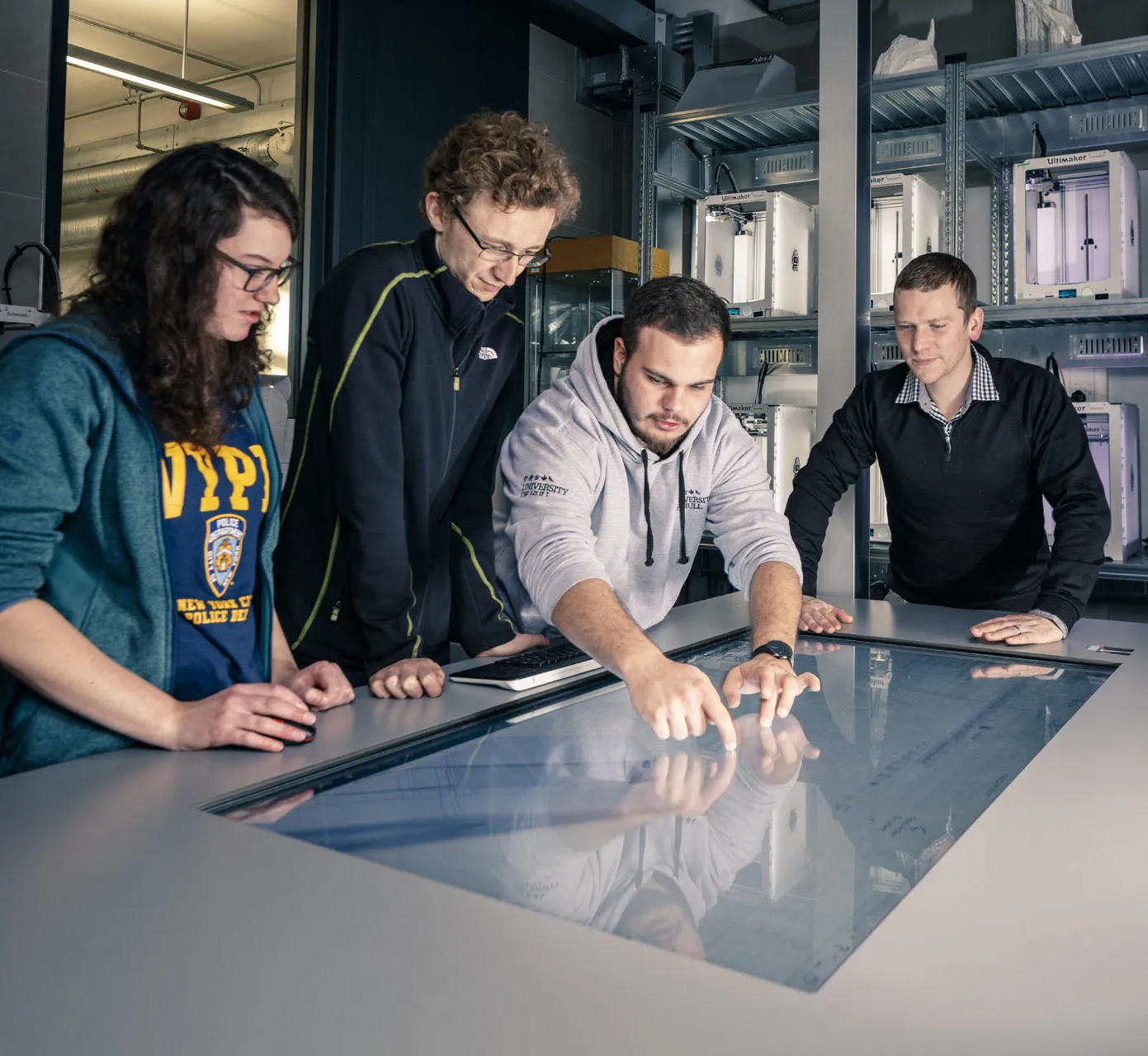
Learn how to power tomorrow, today
 Featured module
- compulsory
- 20 credits
How will we power the future in a smarter, more sustainable way? This module explores the technologies and systems behind modern smart electrical energy networks.
You’ll gain an in-depth understanding of how electricity is generated, transmitted, distributed, and controlled within today’s evolving power systems. Along the way, you’ll examine key technologies such as energy storage, HVDC transmission, and FACTS that help improve system stability, reliability, and flexibility.
Using industry-relevant tools like MATLAB/Simulink, you’ll develop practical skills in modelling, simulation, and system analysis.
Build the knowledge and technical expertise to help design the smart energy systems of tomorrow.
Facilities

Playlist
BEng Electrical and Electronic Engineering
Course overview
2 mins
Who's shaping your future? Engineering at Hull
Course Highlight
3 mins
Engineering a freer future
Course Highlight
2 mins
Teaching Facilities
University life
2 mins
The Gold Standard for Teaching
University life
1 min
Life on campus
University life
2 mins
Featured academics
Our research-active staff have years of experience and invaluable industry contacts. So you can be sure you’re learning the most advanced ideas in this field.
We also pride ourselves on the friendly, supportive atmosphere we create for our students.

Dr. Mustafa Abdelrahman
Lecturer in Electrical and Electronic Engineering
Mustafa specialises in control and automation. His research centres on floating offshore wind, wave energy conversion, and robust adaptive control for renewable energy. He applies this expertise in teaching robotics, automation, and process control.
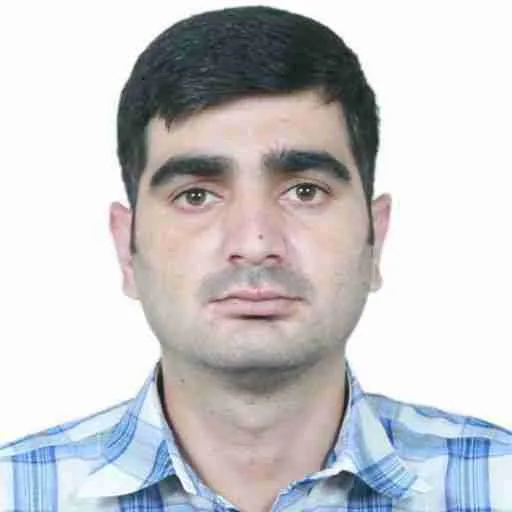
Dr. Ahsan Raza Khan
Lecturer in Engineering
Dr. Ahsan Raza Khan specialises in edge computing, federated learning, and AI-driven solutions for next-generation communication and energy systems.
Entry Requirements
How to apply for this course
At Hull, you're a name, not a number. It's not just about the grades - we'll look at your whole application.
If you're not eligible for direct entry to this course, we may recommend a foundation year as an alternative route to studying for a degree.
To discuss your options, send us an enquiry or call us from 8am on Results Day on 01482 466100.
Every year, hundreds of students join the University of Hull through Clearing for all sorts of reasons and go on to achieve great things. Learn more about Clearing.
Qualification types
We accept a wide range of qualifications and combinations of qualifications, including A levels, BTECs and other accepted qualifications.
We don’t just see what you’re like on paper, we see you. All of you. Your achievements, work experience, music and sport qualifications and the projects you’ve been involved in. We want to hear it all.
Fees & Funding
How much is it?
Future prospects
Electrical and electronic systems never stand still - and neither will your career.
The analytical, mathematical and problem-solving skills you’ll develop are in high demand across a wide range of industries.
Graduates go on to work in companies designing, developing and manufacturing cutting-edge technologies; as technical specialists in marketing or consultancy roles; in research and innovation within universities or government; in patent and standards offices; and as professional Chartered Engineers shaping the future of the field.
Become part of the next generation of futuremakers
Like what you’ve seen? Then it’s time to apply.
The standard way to apply is through UCAS. This will give you the chance to showcase your skills, qualities and passion for the subject, as well as providing us with your academic qualifications.
Not ready to apply yet?
Visit our next Open Day, and see all that the University of Hull has to offer. Talk to our lecturers about your subject, find out what university is really like from our current students, and take a tour of our beautiful campus and amazing facilities.
You may also be interested in...
BEng (Hons) Electrical and Electronic Engineering
Undergraduate
Tailor your degree through a wide variety of work placements or by choosing one of our optional pathways in youth work, special needs & inclusion or TESOL.
H604
BEng (Hons) Mechanical Engineering (Top-Up)
Undergraduate
Learn innovative problem-solving skills on a BEng (Hons) Mechanical Engineering degree, accredited by the IET and IMechE. Apply today.
H300
BEng (Hons) Chemical Engineering
Undergraduate
Further your knowledge and boost career prospects by applying for our BEng Chemical Engineering degree, and learn alongside industry leaders.
H810
BEng (Hons) Civil Engineering
Undergraduate
Ready to shape the future? Our Civil Engineering degree course is designed for hands-on learners eager to innovate sustainable infrastructure. Apply now.
H201
BEng (Hons) Biomedical Engineering
Undergraduate
This accredited biomedical science degree equips you with the knowledge to work at the cutting edge of health research, driving innovation that saves lives
H160
All modules on this course page are subject to availability and this list may change at any time.