



Crime begins in the mind. Learn to understand both.
This course is designed to help you understand the mind in the context of criminal activity and decision making. Our strong links with criminal justice agencies give us unique insight into the world of criminology – so everything you learn is shaped by the latest industry knowledge and techniques.
You’ll get hands-on experience in our replica crime scene, the chance to apply for a placement with Humberside Police, and develop in-demand skills on this career-focused degree.
Then graduate ready to work in this life-changing industry.

95% of students
in work or further study 18 months after graduating
Psychology, HESA Graduate Outcomes, 2026

Joint 2nd in the UK
for Value Added Score
Criminology, The Guardian University Rankings, 2027

Investigate criminal offences
in our campus crime scene room

Explore the mind
in our Brain Stimulation Laboratory

Annual
Crime and Social Justice careers event

Over 50 years experience
in delivering Criminology programmes

Boost your CV
with a Humberside Police placement
About this course
Explore the psychological origins of crime. The decisions offenders make when committing a crime. And the role of psychology in crime detection, the legal process, as well as the rehabilitation of offenders.
You’ll be taught by expert staff that specialise in current criminology and criminal justice issues within one of the UK’s leading centres in this field.
We’re one of the few universities in the UK to have a replica crime scene training facility on campus. So you can get to grips with collecting evidence, exploring criminal activity and see the world of forensic science brought to life.
You’ll put the theory into practice on field trips to courts, police stations and prisons, as well as policing projects and placements. All thanks to our close partnerships with local, regional and national criminal justice agencies.
You’ll get the chance to apply for a semester-long placement with Humberside Police. And meet significant regional and national employers at our annual Careers in Criminal Justice Fair.
Then graduate with practical experience that gives you an edge over the competition.
How do you stand up to injustice? Together.
Module options
Each year, you’ll study modules worth a certain number of credits, and you need 120 credits per year. Most modules are 20 credits – so you’ll study six modules each year. Some longer modules, such as a dissertation, are worth more. In these cases, you’ll study fewer modules - but the number of credits will always add up to 120. Some modules are compulsory, some are optional, so you can build a course that’s right for you.
No filters selected
Becoming a Criminologist
This is a foundational 40 credit module designed to introduce Criminology as a discipline in the 21st century and support you in an inclusive learning environment as you transition to higher education. You will learn about the practical and theoretical foundations you need to reach your potential for the years ahead. You will have the opportunity to use our Crime Scene Room to bring theory and practice together. Students are also supported in their academic and study skills, digital literacy, and teamwork to inform future studies.
core
40 credits
Criminal Justice Institutions
Ready to explore the criminal justice system? This module covers the theories, processes and justifications for handling individuals suspected of crimes.
You’ll examine the roles of the Police, CPS and Courts: the key agencies in investigation, prosecution and conviction.
Along the way, you'll tackle issues like miscarriages of justice, victims' rights, and the pursuit of equality in the system.
You’ll also gain the skills to critically analyse and make a real impact in the field, with guest speakers sharing real-world insights from each stage of the criminal justice process.
Your journey into the heart of justice starts here.
core
20 credits
Exploring Social Psychology
Would you inflict pain on another person if instructed to do so by an authority figure? How likely are people to conform to group pressure? What makes a friend act aggressively or donate money to charity? This module considers what effect the environment has on human behaviour and explores how psychological theories can be applied to your everyday life. If you’ve ever wondered why your friend is acting in a certain way, this module will provide some clues to the answer.
core
10 credits
Social Research in Practice
The module takes an integrative approach to research ethics and design. It's a foundation for skills in understanding research and practical skills for conducting independent research.
core
20 credits
Criminology in Late Modernity
Examine how current criminological theory explains recent developments in crime and crime control, drawing from postmodern criminology, cultural criminology and masculinities.
core
20 credits
Assessing Individual Differences
Why do people act the way they do? Find out on this module as you unlock the real-world power of psychology.
Many of our daily activities are influenced by social psychological theories. From medical decision-making to consumer behaviour to environmental attitudes. Together, we'll explore how these theories explain everyday behaviours and attitudes.
You’ll dive into cutting-edge research and learn how social psychology tackles real challenges. With a focus on practical applications, this module will equip you with the knowledge to apply social psychology in any career. Giving you a competitive edge when you graduate.
core
20 credits
Current Challenges in Criminology
Explore current insecurities and examine how private troubles and public issues are linked. You'll develop your ability to link academic theory and findings to real-world situations like modernity, globalisation and its (broken) promise; colonial legacies and neo-colonial realities; and migration and dislocation.
core
40 credits
Offending and Victimisation
Why do burglars choose some houses and not others? Does alcohol make people violent? How do offenders think about their chances of getting caught? How does being a victim affect mental health and how does childhood adversity affect crime as an adult? This module focuses on the individual, as a victim, an offender, or both. It explores how people make decisions to commit crime and how being a victim of crime affects behaviour.
core
20 credits
Think You Know Policing?
Want to truly understand policing? Then this module is for you.
You'll explore policing theories and key functions, like crime control and order maintenance.
You'll examine contemporary policing in England and Wales, comparing practices from other societies.
You'll practice your skills on hands-on assessments, including crime scene simulations and real-world datasets. So you can see first-hand the practical and political challenges the police face.
Along the way, you'll gain insights and engage with real-world issues that will set you apart in the field.
core
20 credits
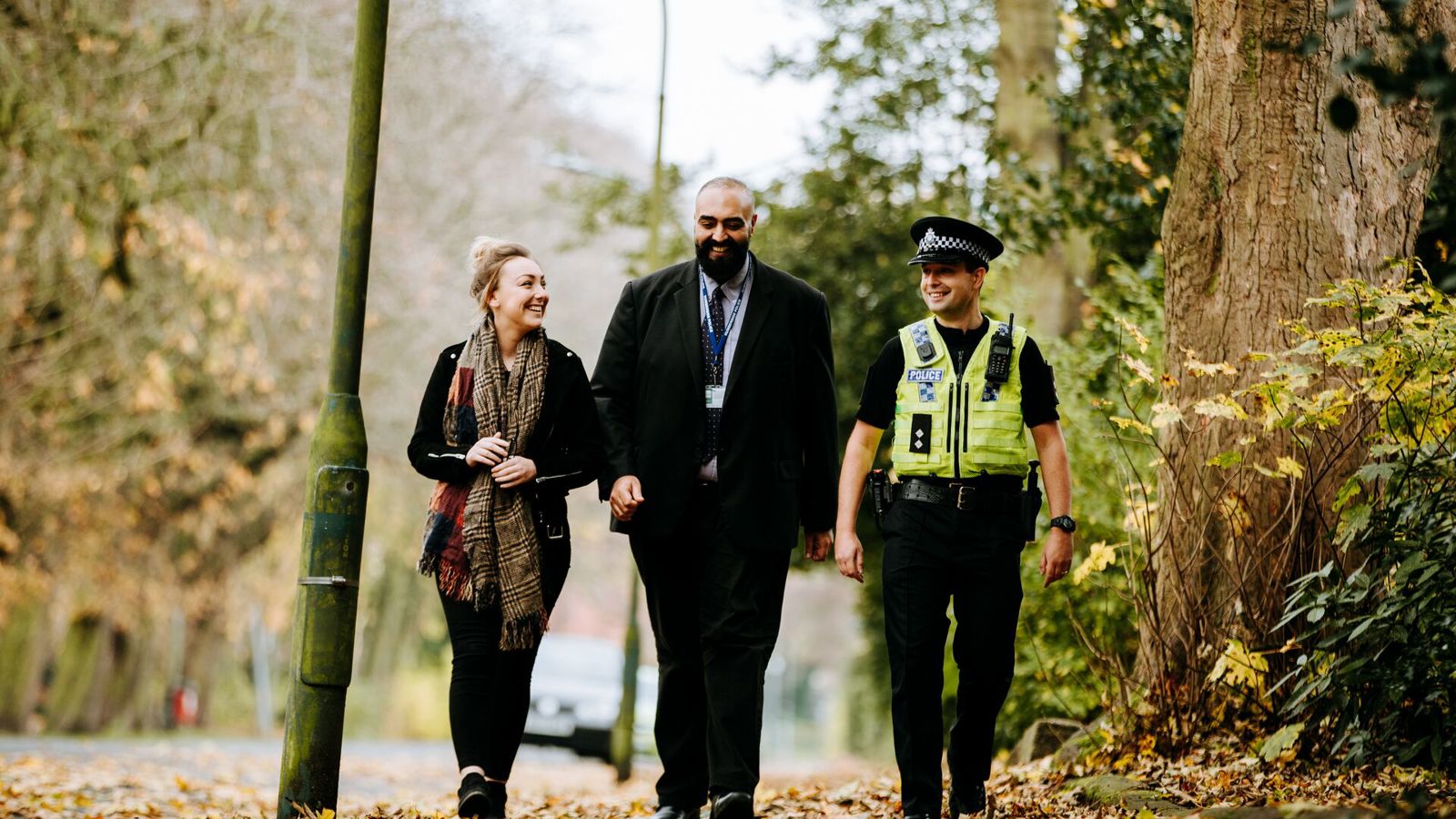
Are we all equal in the eyes of the police? It depends on who you ask.
 Featured module
- optional
- 20 credits
Want to truly understand policing? Then this module is for you.
You'll explore policing theories and key functions, like crime control and order maintenance.
You'll examine contemporary policing in England and Wales, comparing practices from other societies.
You'll practice your skills on hands-on assessments, including crime scene simulations and real-world datasets. So you can see first-hand the practical and political challenges the police face.
Along the way, you'll gain insights and engage with real-world issues that will set you apart in the field.
Our facilities
Watchlist
Dr Helen Nichols
Course overview
2 mins
Your course in their words
Student Story
2 mins
Fred Gough - Criminology student story
Student Story
2 mins
Police Placement
Course Highlight
2 mins
Life on campus
University life
2 mins
Featured academics
We were one of the first to teach criminology degrees over 50 years ago.
We’re still at the forefront today with research leaders on issues such as violent crime, social justice and desistance, prisons and restorative justice, cybercrime, and intelligence.

Dr Helen Nichols
Reader in Criminology
Helen’s research focuses on the experience and impact of contemporary adult male imprisonment. She has published a book on the subject and continues to actively research in the field of penology, currently exploring the wellbeing of prison governors.
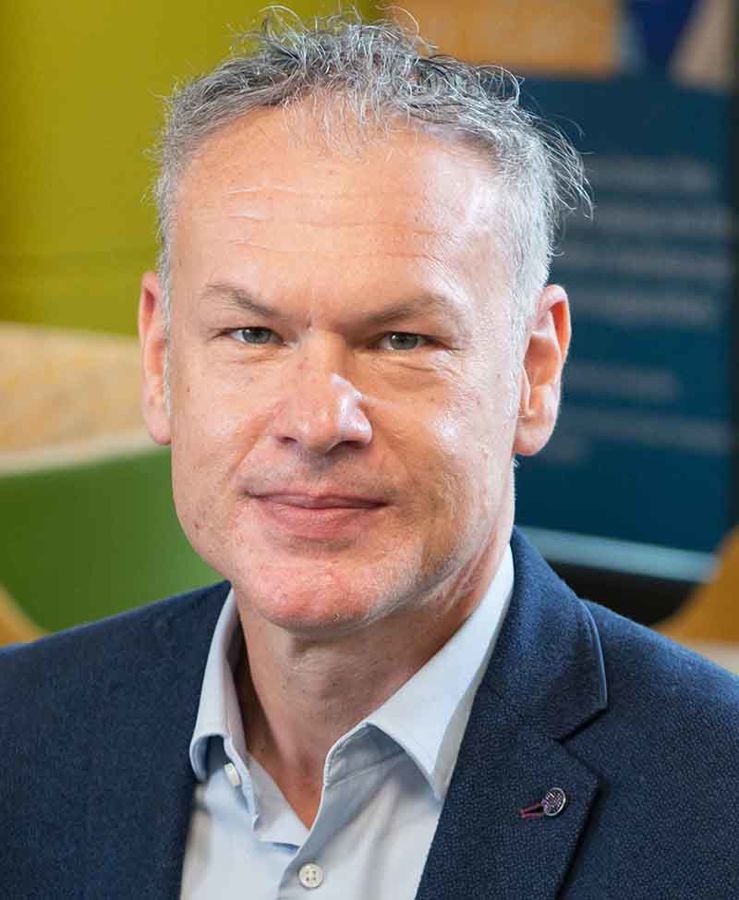
Professor Igor Schindler
Professor
Before earning his PhD, Igor worked as a clinical neuropsychologist in the Clinical Neuropsychology Research Group (EKN) in Munich. His main research interests focus on multisensory brain processes supporting our interactions with the environment.
Entry Requirements
What do I need?
This course has a range of tariffs for entry. Use the interactive slider to choose a number of points and see the course entry requirements.

Slide to set your points
A levels
BBC
BTEC
DMM
Equivalent qualifications and grades are accepted.
How to apply for this course
Most importantly, you need ambition. Together with our support and opportunities, you can go further than you ever thought possible.
Our typical offer for this course is 96–112 UCAS points. Our contextual offer is 96 points. But there’s no ceiling on ambition.
At least 80 points must come from A levels, BTEC, or other equivalent qualifications.
Remember, we look at your whole application – not just grades. Achievements, work experience, extracurricular activities: they all count here. We also consider qualifications and experience from the UK and worldwide that may not exactly match those listed.
Not sure if you’ll meet the entry requirements?
Talk to our Admissions team today. We’ll look at your circumstances, give you personalised guidance and help you understand your options, one of which could be a Foundation Year.
Fees & Funding
How much is it?
Tuition fees for 2028 entry have not been confirmed. Please use 2027-28 information as a guide.
For UK students, our standard course fee is £10,050 per year. Keep in mind that some courses are longer - for example, spending your third year abroad will make your degree four years in total.
If you choose to study a foundation year as part of your course, the fee is £5,760.
Standard Tuition Fee
£10,050 / year
The amount you pay may increase each year, in line with inflation - but capped to the Retail Price Index.
How do I pay for it?
You can take out a tuition fee loan to cover the full cost of your course. Once you’ve successfully applied for this, you don’t need to do anything else – the money is sent straight to us.
You can also take out a maintenance loan of up to £10,544 a year to cover your living costs, depending on your household income.
Remember, you won’t start paying your loans back until you’ve left university and earn more than £25,000 per year.
See our full fees and funding information for more details and to find out what support we can offer.

Future prospects
The knowledge and skills you’ll gain on a Criminology degree at Hull are genuinely career enhancing.
Through placements, work experience and a diverse course of study and research, you’ll gain the key skills that are in demand across a wide range of careers.
Helping witnesses cope with the emotional impact of giving evidence in court, supporting vulnerable young people and their families, and helping offenders lead law-abiding lives after release from prison, are all jobs our graduates have gone on to do.
You could go onto roles within social justice, the police force, HM Prison Service, the Probation Service, legal professions, social work, the charity sector or the Civil Service.
Become part of the next generation of futuremakers
Like what you've seen? Then it's time to apply.
The standard way is to apply through UCAS. This will give you the chance to showcase your skills qualities and passion for the subject, as well as providing us with your academic qualifications.
Not ready to apply yet?
Visit our next Open Day, and see all that the University of Hull has to offer. Talk to our lecturers about your subject, find out what university is really like from our current students, and take a tour of our beautiful campus and amazing facilities.
You may also be interested in...
BA (Hons) Criminology
Undergraduate
Explore the diverse factors that cause crime with our BA Criminology degree. Apply today and study at a leading centre for criminology.
M930
BA (Hons) Criminology with Law
Undergraduate
Combining criminology with law, you'll focus on the connection between crime and criminal justice while gaining a sound understanding of the legal system.
M9M1
BA (Hons) Criminology with Forensic Science
Undergraduate
Explore the laboratory and field techniques of the forensic scientist alongside the causes and solutions to crime on this fascinating degree.
M9F4
BA (Hons) Criminology and Sociology
Undergraduate
Through this combination of subjects, you'll explore the diverse social, cultural, economic and political factors which can cause crime.
LM39
LLB (Hons) Law with Criminology
Undergraduate
Complete a qualifying law degree while also developing an understanding of aspects of criminology and criminal justice.
M1M2
All modules on this course page are subject to availability and this list may change at any time.