




Study at a University with a proud heritage in gaming – on a course that will set you up for a career in this multi-billion-pound industry.
You’ll be taught an inspiring combination of computer science and games programming, learning within industry-standard facilities.
The skills, experience and technical expertise you’ll gain are highly sought after by employers. No wonder we’ve been providing the games industry with quality graduates for 30 years.

93% of students
in work or further study 18 months after graduating
HESA Graduate Outcomes, 2026

1st in Yorkshire
for Assessment and Feedback
Computer Games and Animation, National Student Survey (NSS) 2026, HEIs only
Joint 3rd in the UK
for Career after 15 months
The Guardian University Rankings, 2027
This course is accredited by


Get paid
on an optional placement year in industry

Five specialist labs
including high spec machines, dedicated for Computer Science students

Compete in events
like Hull’s unique “Three Thing Game", or the UK and Ireland Programming Competition

Over 900 game titles
worked on by our graduates

Integrated Masters option.
Undergraduate and Postgraduate study combined

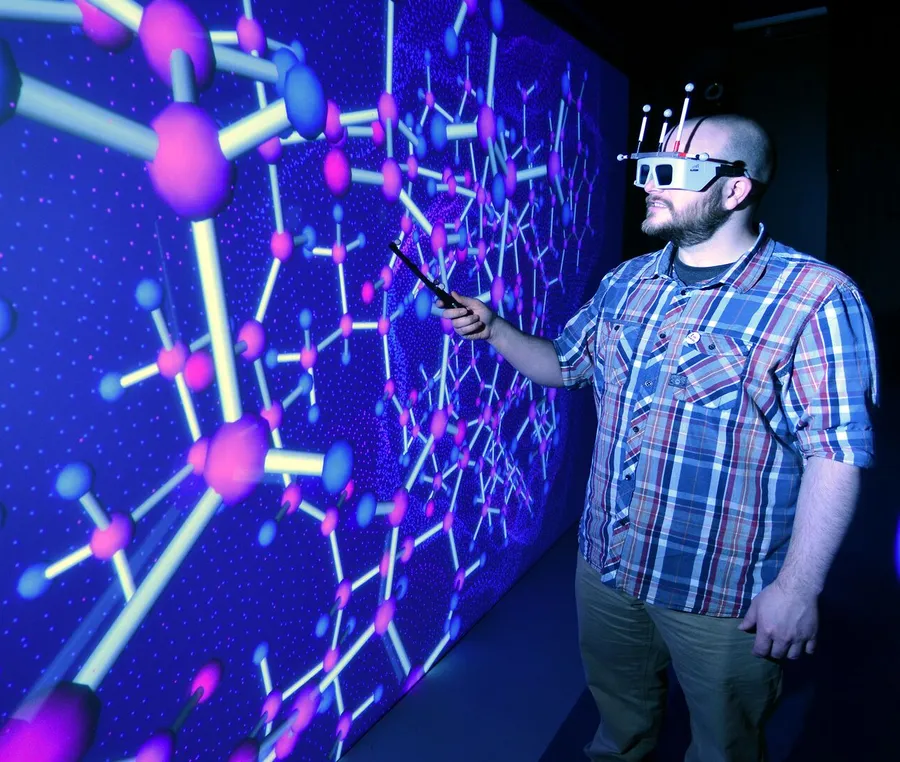
Experience HIVE’s
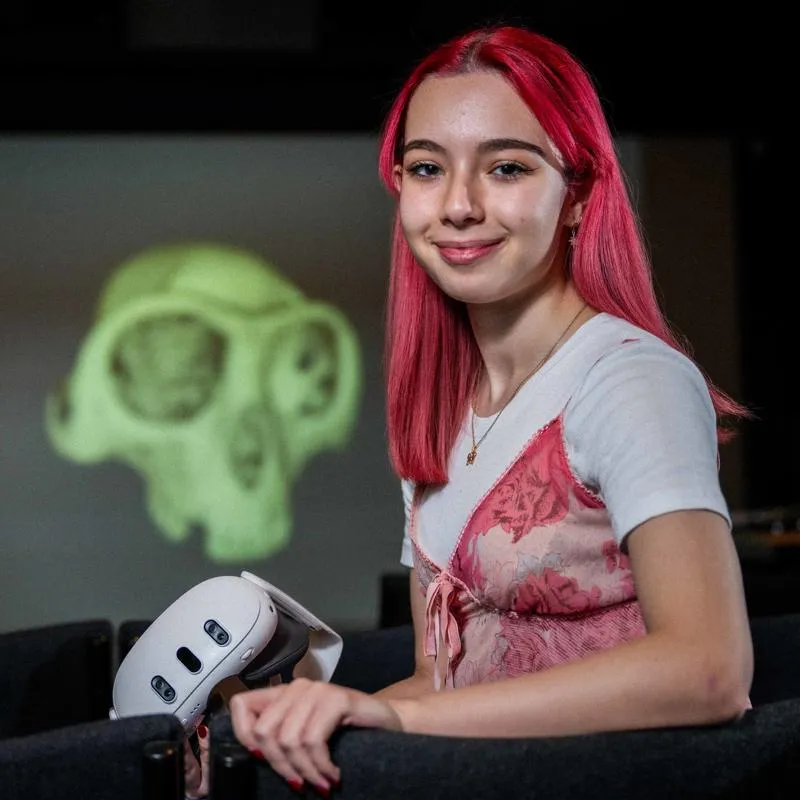
immersive visualisation technology

British Computer Society accredited

Robotics Lab
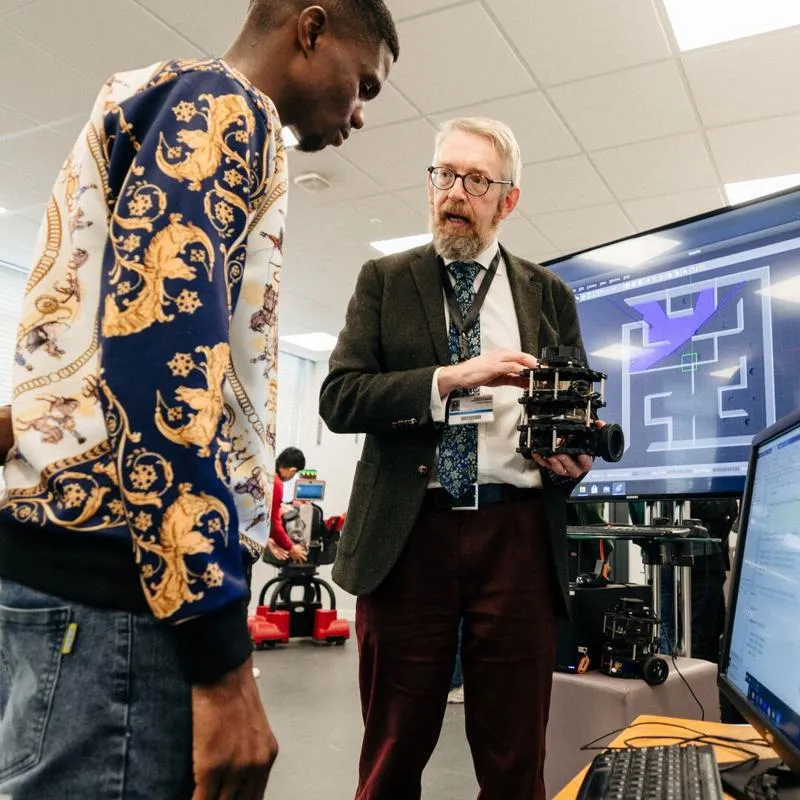
with humanoids, Nano robots and drones

Industry standard facilities
like our Turing and Superlab
About this course
Gain a solid grounding in computer science, set within the context of games programming on this British Computer Society accredited degree.1
You’ll get to focus on parallel and concurrent programming, artificial intelligence, graphics and games architectures. Then in your third year, you’ll have the chance to complete a large project in an area of your choice.
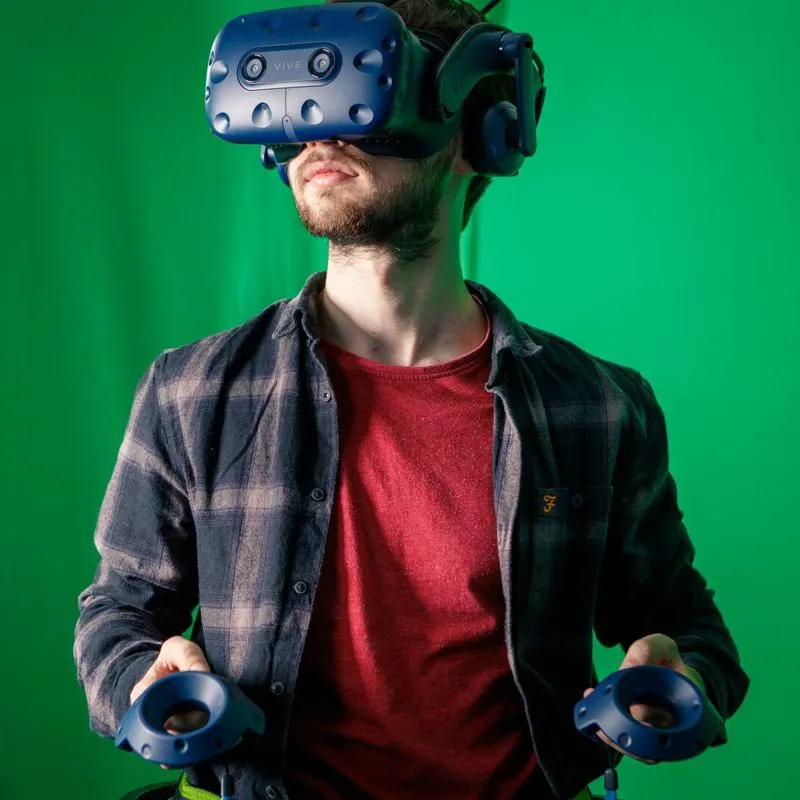
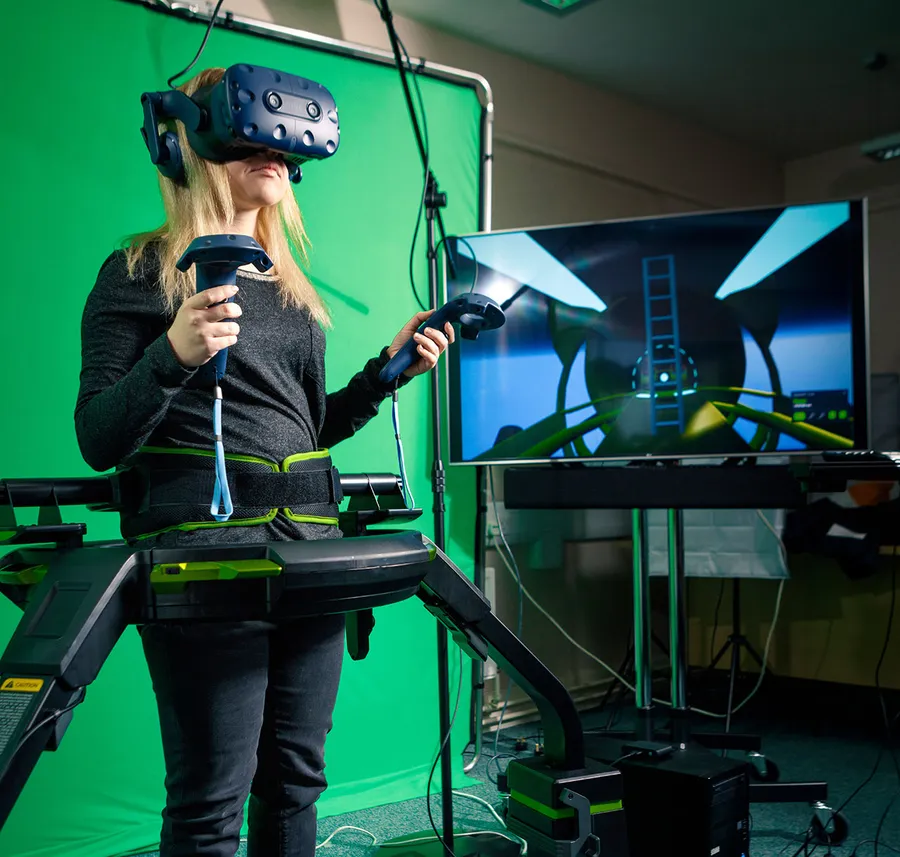
Our facilities are kitted out with latest industry-standard equipment, including high-performance workstations, gigabit networking, 3D printers, robots, a 3D immersive cube, motion capture, AR, VR and MR.
Pursue your interest in gaming beyond the lecture theatre with our societies and extra-curricular opportunities such as games jams, hackathons and programming competitions. You could compete in international events like the Microsoft Imagine Cup. Or rise to the challenge of creating a computer game over a weekend in our Three Thing Game.
You’ll benefit from our strong links with companies like EA, Sony and Black Marble with frequent talks by experts in the trade. Many of them our own graduates working around the world. And gain outstanding tech industry experience on a paid placement year with the likes of BT, BAE Systems, Microsoft or IBM.
We take fun and games seriously.
Year abroad
Study Abroad programmes take place over a full academic year. This extends a standard undergraduate degree from three to four years, with study abroad taking place in year three. Once you've completed your study abroad year, you'll return to complete the final year of your degree at the University of Hull.
There are many reasons to undertake a study abroad year. For one, you’ll make unforgettable memories with a whole range of countries to choose from. But more than that, you’ll boost your confidence and your contacts. And you’ll gain skills that will make employers take notice of you: curiosity, sociability, adaptability, and intercultural awareness.
Module options
Our five undergraduate Computer Science courses share the same compulsory modules in the first year. This gives you a foundation of knowledge across the whole subject area and the chance to explore what really interests you. You're then better placed to choose your modules in the later years of our BSc Computer Science, or switch to a different pathway to specialise in games programming, software engineering, robotics or AI.
No filters selected
Programming Portfolio
Core tools: C#
Whether you've never written a line of code or you've been tinkering for years, this module meets you where you are. You'll learn to think like a programmer — breaking problems down, writing clean logic, and building working software in C#. By the end of the year you'll have moved from your very first program to designing with classes, objects and inheritance.
You'll explore:
- Core programming building blocks — variables, loops, functions and data types
- Searching, sorting and working with arrays, stacks and queues
- Object-oriented programming — classes, inheritance and encapsulation
- Reading, writing and managing code like a professional, using source control
core
40 credits
Algorithms and Data Structures
Every great piece of software starts with a great idea for how to solve the problem — that's what this module teaches you to find. You'll step away from the screen and learn to think in code before you write it, exploring the algorithms and data structures that separate software that merely works from software that works brilliantly.
You'll explore:
- Pseudocode and state machines for planning before you program
- Core data structures, and how to choose the right one for the job
- Sorting and searching algorithms, and how to measure their efficiency
- Design thinking that carries into every other module on your degree
compulsory
20 credits
Computational Thinking
Core tools: programming platforms and mathematical software
Computing is bigger than any one programming language — this module is about how to think as a computer scientist. Drawing on a genuinely global history of innovation, you'll build the mathematical and logical foundations that everything else on your degree rests on.
You'll explore:
- Abstraction and computational methods
- The maths behind computing — algebra, number systems and statistics
- Logic, Boolean algebra and set theory
- Vectors and matrices, and their uses in graphics, AI and data
- Practical aspects of how computers handle different number types and the way that mathematical libraries and tools can help to do the actual calculations
compulsory
20 credits
Databases and the Cloud
Core tools: C#, Microsoft SQL Server
Modern software rarely stores its data on just one machine anymore — this module shows you how databases and the cloud work together to make that possible. You'll learn how cloud computing and virtualisation actually work, then design and build real databases, from relational systems through to NoSQL, before bringing the two together to build a working application backed by a database hosted in the cloud.
You'll explore:
- Designing and implementing relational and NoSQL databases
- Virtualisation, containers, and the cloud service models behind them — IaaS, PaaS and SaaS
- Connecting a real application to a cloud-hosted database
- Cloud security, reliability and disaster recover
compulsory
20 credits
Professional Development
A computer science degree is about more than code — this module helps you build the career to go with it. You'll explore the ethical, legal, social and sustainability challenges facing the sector, and the professional skills that set graduates apart. A hands-on team project puts those skills into practice straight away, while you start building a portfolio that showcases your work.
You'll explore:
- Sector challenges — ethics, diversity, sustainability and cybersecurity
- Communication, research and self-presentation skills
- Real teamwork on a programme-specific group project
- Building your own professional portfolio
compulsory
20 credits
Advanced Programming
Core tools: C++ C++ powers everything from games engines to spacecraft — this module shows you why, from the inside out. You'll push beyond the basics of object-oriented programming and get close to the machine, exploring what's really happening between your code and the processor.
You'll explore:
- Templates and the Standard Template Library
- Composition and inheritance in advanced data structures
- Pointers, memory management and the “gang of three”
- Assembly language and debugging at the processor level
compulsory
20 credits
eXtended Reality Development
Core tools: 3d Headsets, Unity
Step into worlds that don't exist yet — this module teaches you how to build them. Grounded in the science of human perception, you'll explore what makes virtual and mixed reality genuinely convincing, then get hands-on with hardware and software tools used to build believable XR experiences.
You'll explore:
- The human visual, auditory, and vestibular systems that create presence
- VR and MR hardware and display technologies
- Designing XR applications for cost-effective, believable immersion
- Evaluating and measuring user experience in XR environments
compulsory
20 credits
Graphics Programming
Core tools: Shaders
Ever wondered how a game engine turns numbers into the world on your screen? This module shows you. Using a professional, industry-standard game engine, you'll learn the mathematics and pipeline behind real-time 3D graphics, and get hands-on writing your own shaders.
You'll explore:
- The evolution from fixed-function to programmable graphics pipelines
- Coordinate systems, vectors, matrices and transformations
- Building and animating 3D models and camera systems
- Writing custom shaders and using frame debugging tools
compulsory
20 credits
Artificial Intelligence
Learn to build the kind of intelligent systems that are reshaping every industry and understand the ethics behind them. You'll get a practical grounding in how AI actually works, from the history of the field to the algorithms powering it today, building your own solutions to real problemsolving challenges along the way.
You'll explore:
- The history and ethics and trustworthy of artificial intelligence
- Pathfinding and problem-solving search algorithms
- Supervised and unsupervised learning, and neural networks
- Reasoning under uncertainty with Bayesian methods, and an introduction to reinforcement learning
- A brief introduction of fairness, explainability and AI Safety
compulsory
20 credits

Whose job is it to bring virtual worlds to life? Yours.
 Featured module
- optional
- 20 credits
Behind every great game is a great engine — learn how to build one. You'll explore the software architectures that power modern game engines, from component-based systems like Entity-Component-System through to the hardware considerations that shape how games run on console, PC and mobile.
You'll explore:
- Comparing and evaluating game engine architectures
- Entity-Component-System and modular design
- CPU architecture, bottlenecks and performance
- The asset pipeline and platform considerations
Our facilities

Watchlist
BSc Computer Science for Games Programming
Course overview
2 mins
See our incredible labs
Course Highlight
2 mins
Rand Nessif
Unsame Stories
2 mins
Featured academics
You’ll be taught by talented researchers whose specialist areas include computational science; computer gamification; dependable intelligent systems; robotics and artificial intelligence; and simulation and visualisation.


Dr Simon Grey
Lecturer
One of our Computer Science lecturers, Simon specialises in games, graphics and physical simulation. He’s passionate about games programming and games design and a big fan of our extra-curricular game jams and coding competitions.


Warren Viant
Lecturer
Warren’s work in computer systems simulation and modelling includes research for British Aerospace, a range of computer-assisted medical systems projects and the creation of a Virtual Incident Command training system for the Fire and Rescue Service.
Entry requirements
What do I need?
This course has a range of tariffs for entry. Use the interactive slider to choose a number of points and see the course entry requirements.

Slide to set your points
A levels
BBC
BTEC
DMM
Equivalent qualifications and grades are accepted.
How to apply for this course
Most importantly, you need ambition. Together with our support and opportunities, you can go further than you ever thought possible.
Our typical offer for this course is 96–112 UCAS points. Our contextual offer is 96 points. But there’s no ceiling on ambition.
At least 80 points must come from A levels, BTEC, or other equivalent qualifications.
Remember, we look at your whole application – not just grades. Achievements, work experience, extracurricular activities: they all count here. We also consider qualifications and experience from the UK and worldwide that may not exactly match those listed.
Not sure if you’ll meet the entry requirements?
Talk to our Admissions team today. We’ll look at your circumstances, give you personalised guidance and help you understand your options, one of which could be a Foundation Year.
Fees & funding
How much is it?
Tuition fees for 2028 entry have not been confirmed. Please use 2027-28 information as a guide.
For UK students, our standard course fee is £10,050 per year. Keep in mind that some courses are longer - for example, spending your third year abroad will make your degree four years in total.
If you choose to study a foundation year as part of your course, the fee is £10,050.
Thinking about a year in industry? This is £2,010 for UK students.
Planning a year abroad? This costs £1,505 for UK students.
Standard Tuition Fee
£10,050 / year
Year Abroad Fee
£1,505
The amount you pay may increase each year, in line with inflation - but capped to the Retail Price Index.
How do I pay for it?
You can take out a tuition fee loan to cover the full cost of your course. Once you’ve successfully applied for this, you don’t need to do anything else – the money is sent straight to us.
You can also take out a maintenance loan of up to £10,544 a year to cover your living costs, depending on your household income.
Remember, you won’t start paying your loans back until you’ve left university and earn more than £25,000 per year.
See our full fees and funding information for more details and to find out what support we can offer.

Future prospects
You’ll leave us prepared for a career in the multibillion-pound games industry. Many of our graduates are company directors and technical leads in the business. This relationship with industry enhances our course content, keeping it current. It also means there’s an extensive network of Hull graduates working in the games industry across the world for you to tap into.
Graduate careers include games developer, mobile app developer, software engineer, IT security specialist, computer systems analyst and web developer.
Our graduates have been recruited by the likes of Codemasters, Criterion (Electronic Arts), Eutechnyx, Rare (Microsoft), Sony and Bohemia Interactive, with over 750 published titles to their name. Some of our Computer Science graduates move on to further study with an MSc or PhD, while others have gone on to set up and grow their own tech businesses.
Become part of the next generation of futuremakers
Like what you've seen? Then it's time to apply.
The standard way is to apply through UCAS. This will give you the chance to showcase your skills qualities and passion for the subject, as well as providing us with your academic qualifications.
Not ready to apply yet?
Visit our next Open Day, and see all that the University of Hull has to offer. Talk to our lecturers about your subject, find out what university is really like from our current students, and take a tour of our beautiful campus and amazing facilities.
You may also be interested in...
BSc (Hons) Computer Science
Undergraduate
AI, VR, 3D: the new normal. Not just for tech, but for every industry. Want to help develop the next big thing? Start here…
G400
BSc (Hons) Software Engineering
Undergraduate
Specialise in software development on this British Computer Society accredited BSc degree at the University of Hull. Apply now.
G600
BSc (Hons) Artificial Intelligence
Undergraduate
Explore how artificial intelligence is rapidly transforming the way we live in this career-driven degree at the University of Hull. Apply now.
G700
BSc (Hons) Robotics and Artificial Intelligence
Undergraduate
See how robots and AI are transforming our lives and access industry-standard facilities on Hull's BSc / MEng Robotics and Artificial Intelligence degree.
HI40
Accredited by BCS, The Chartered Institute for IT, for the purposes of fully meeting the academic requirement for registration as a Chartered IT Professional, and partially meeting the academic requirement for a Chartered Engineer (for MEng, fully meeting the requirement for a Chartered Engineer).
All modules presented on this course page are subject to availability and this list may change at any time.