



Technology moves fast. Learn the engineering skills to stay ahead.
From the apps in our pockets to the systems behind global businesses, software is the engine of the modern world. Organisations need engineers who can turn complex ideas into reliable, scalable solutions. Demand for those skills has never been greater.

Real projects
build software for clients

Work experience
build your CV

AI tools
use cutting-edge technology

DevOps skills
learn industry standard techniques

Industry links
with real employers

Expert teaching
learn from specialists
About this course
Great software doesn't just power technology, it powers progress. This MSc Software Engineering is designed for graduates who want to deepen their technical expertise, master modern development practices and build the complex software systems that businesses and society rely on every day.
You'll explore advanced software development, systems architecture, project management, quality assurance, DevOps and cyber security, while gaining hands-on experience with industry-standard tools and emerging technologies. You'll learn how to evaluate technical solutions, make informed design decisions and deliver reliable software that performs at scale.
A key part of the course is working on real projects for real clients through our in-house commercial software development unit. Combined with research-led teaching from academics who have worked with organisations including BAE Systems, Jaguar Land Rover and Huawei, you'll graduate with the technical expertise, practical experience and professional skills needed to succeed in the fast-moving world of software engineering.

Degrees that live up to life- Computer Science
1 min
Module options
For a full Masters degree, you'll study 180 credits over the duration of your course. Some programmes offer a Postgraduate Diploma (PGDip) qualification or a Postgraduate Certificate (PGCert) qualification. For a PGDip, you'll study 120 credits, and for a PGCert, you'll study 60 credits.
No filters selected
Dependable Reactive Real-time Systems
Complex new technological systems including robotic and autonomous systems are employed in tasks that have high dependability requirements, i.e. require the system to be safe and perform its tasks uninterrupted by failures. Dependability, therefore, is a property that must be designed well. These systems are typically reactive, i.e. they respond to changes in the environment, and use concurrency and parallelism to achieve their tasks.
The module focuses on these specific aspects of dependable, reactive, and real-time design, and introduces students to the appropriate concepts and design methods. It focuses on design of single systems and goes further to discuss specific challenges encountered today in the design of cooperative and multi-robot systems, i.e. system teams and swarms that use collaborative and social intelligence to carry out tasks beyond the competency of a single system.
compulsory
20 credits
Component Based Software Engineering Practice
Modern large scale software development can be improved through utilising advanced approaches such as component based development. Reliable and secure software can be supported through managed programming environments. This module will be your chance to look deeper at these virtual machines beneath and see what makes it all work, and to develop solutions utilising component libraries.
compulsory
20 credits
Trustworthy Computing
This module introduces the key principles and techniques for building secure, reliable, and privacy-preserving computing systems. It examines the nature of security risks in modern IT systems, including how vulnerabilities arise and why they occur.
Students will explore fundamental concepts such as trust, authentication, and access control, together with the principles of cryptography and common cryptographic algorithms. The module also covers language-based security and the role of virtual machines in supporting system security.
A strong emphasis is placed on secure software development, highlighting the relationship between coding flaws, system correctness, and security. Students will learn how software errors can lead to vulnerabilities and undermine trust in a system.
In addition, the module addresses security policies and approaches for securing distributed systems, as well as ethical, legal, and professional considerations.
By the end of the module, students will understand how to design systems that are both functionally correct and secure, ensuring they can be trusted in real-world applications.
compulsory
20 credits
Cutting Edge Concepts
This module enables review of cutting-edge and emerging concepts and methods across the spectrum of computer science. We will meet as a reading group to select, review and discuss academic publications of high quality, that take topics beyond the curriculum and into the current state of the art; students will learn how to read and review academic materials critically.
compulsory
20 credits
Commercial Development Practice
Undertake a project-based placement within Commercial Development Practice, the School of Computer Science’s software development initiative. You will work as part of a development team on software for an external commercial client or an internally defined product. You will experience the software lifecycle from requirements gathering and design through to implementation, testing and documentation. With academic support, you will also develop skills in Agile working, project management, client communication, teamwork, commercial awareness and professional practice.
core
40 credits
MSc Dissertation
Your MSc Dissertation is your chance to spend a full third of your study time working on a topic of interest to you, and producing something major as a result. You can design your own project, working with a member of staff to develop an idea. Perhaps you will develop an AI program, do some research in virtual reality, or build a new robot butler – the choice is yours.
With regular support from a supervisor, you’ll learn to create, undertake, evaluate and report on a significant individual project which you’ll be proud to show off to an employer or perhaps provide a stepping stone into further research.
core
60 credits
Our academics
You will be taught and supported by academics with expertise in software engineering, software project management, commercial software development, DevOps, cyber security, quality assurance and AI-enabled software development. Their teaching is informed by cutting-edge research and experience developing innovative and mission-critical software solutions for industry.


Dhaval Thakker
Professor of Artificial Intelligence(AI) and Internet of Things(IoT)
Entry Requirements
What do I need?
When it comes to applying for this Postgraduate Taught degree, you'll need an Undergraduate degree (or equivalent). For this course, you'll need a 2:2 from a relevant bachelor's degree.
The programme is designed for graduates who have studied a subject that is relevant to this course.
If you’re an undergraduate student at Hull, you’re guaranteed a fast-track route to this postgraduate degree, as long as you meet the entry requirements.
In order to ensure our students have a rich learning and student experience, most of our programmes have a mix of domestic and international students. We reserve the right to close applications early to either group if application volumes suggest that this blend cannot be achieved.
Typical offer
2:2 in a relevant subject area
A minimum 2:2 Bachelor's Honours Degree (or international equivalent) in Computer Science or Software Engineering with at least 40 credits (or equivalent) of a high-level objected oriented programming language such as Java, C++ or C#.
Fees & Funding
How much is it?
Tuition fees for 2028 entry have not been confirmed. Please use 2027-28 information as a guide.
The cost of a Masters course typically reflects a combination of factors such as the level of expertise offered, access to specialist facilities, industry engagement, and academic support. It also considers the course’s duration, intensity, and resources provided—from expert-led seminars to hands-on learning opportunities.
How do I pay for it?
UK students can take out a Masters Loan to help with tuition fees and living costs. For 2025 entry, they provide up to £12,858 for full-time and part-time taught and research Masters courses in all the subject areas. Find out more about Postgraduate Loans.
Scholarships
We offer a number of awards, bursaries and scholarships for eligible students. They’re awarded for a variety of reasons including academic achievement and/or to help those on lower incomes.
Scholarships and bursaries are separate to student loans. And the best bit is, you don’t pay a penny back.

Alumni Postgraduate Scholarship
University of Hull undergraduates progressing to a taught masters course may receive a 20% discount on the cost of their tuition fees.
Find out if you’re eligible by visiting the University of Hull Alumni Postgraduate Scholarship page.

See more Scholarships
We offer a range of scholarships and awards to students at the university to help with their financial load.
To view all of our scholarships and determine whether you're eligible, please visit our Scholarships and Awards page.
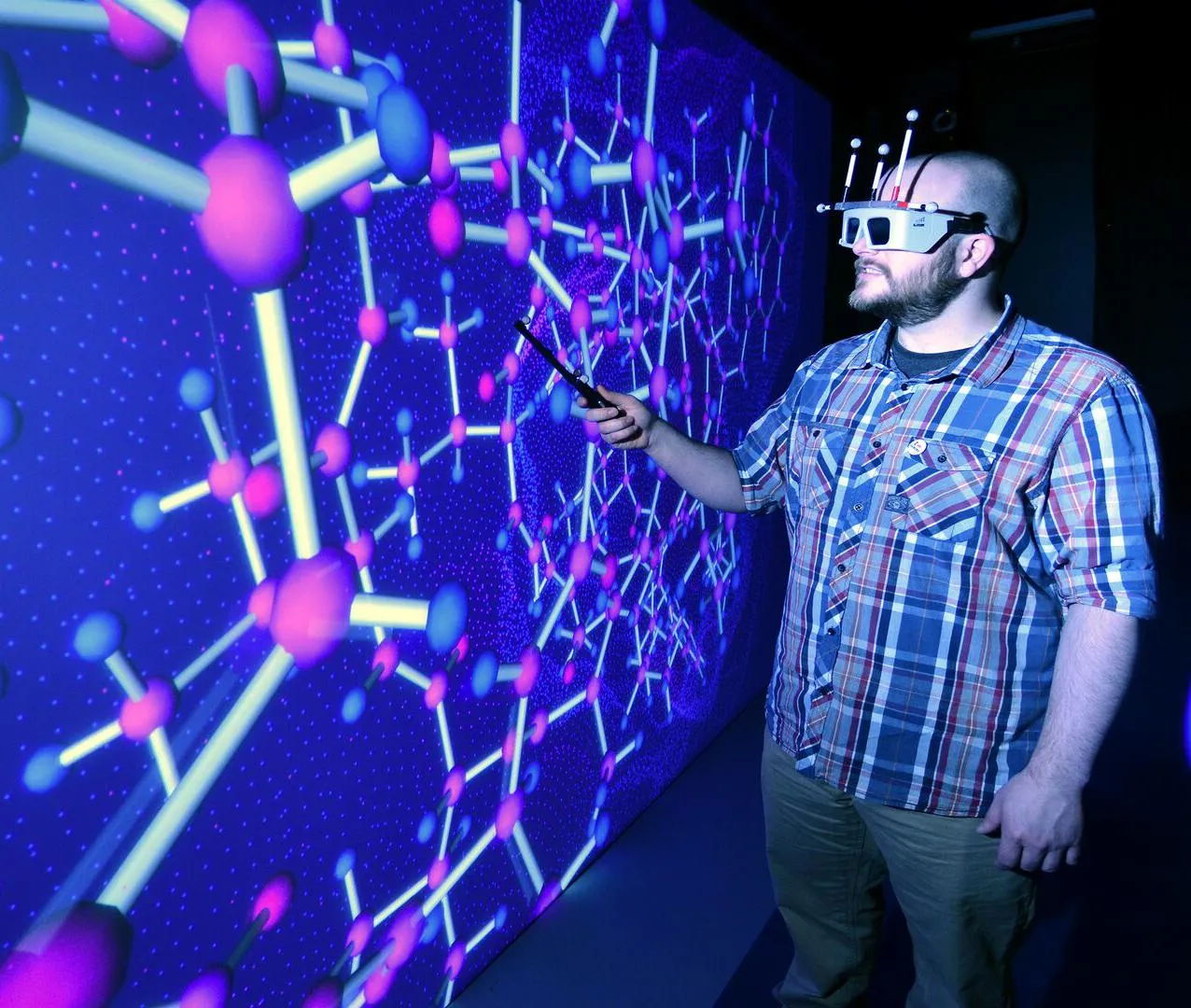
Our facilities

Future Prospects
An MSc in Software Engineering opens the door to a wide range of careers across the technology sector. Graduates may pursue roles such as software engineer, full-stack developer, cloud engineer, DevOps engineer, site reliability engineer, AI or machine learning engineer, cybersecurity specialist, solutions architect, technical consultant or research engineer. The programme also provides a strong foundation for careers in software project management and digital leadership. For those with entrepreneurial ambitions, you'll have the opportunity to develop your own technology venture with support from the University of Hull's Enterprise Centre.
Take your career to the next level
Like what you’ve seen? Then it’s time to apply.
Make your application online now, and our admissions team will get back to you as soon as possible to make you an offer.
Not ready to apply yet?
We regularly deliver virtual and on-campus events to help you discover your perfect postgraduate course, whether it’s a subject you already love or something completely different. Our events are an opportunity for you to chat to tutors and current students and find out about the career options a postgraduate degree could lead to.
You may also be interested in...
MSc Advanced Computer Science
Postgraduate Taught
Developing applications; working with real software: you'll make great advances on your existing skills and knowledge.
MSc Computer Science for Games Programming
Postgraduate Taught
An inspiring, challenging course with a track record of producing graduate programmers ready for the games industry.
All modules on this course page are subject to availability and this list may change at any time.