


This is your chance to make a real difference to the next generation of thinkers, makers and dreamers.
Our innovative two-year degrees provide an opportunity to gain a first degree while focusing on your future ambition of becoming a teacher. This course is ideal if you're convinced you want to teach Physics to secondary school children, if you're thinking of changing your career, or if you're looking to gain a specialist first degree.
You’ll explore curriculum, learning, teaching and what inspires young people to grow and flourish, with a focus on Physics as a subject specialism.

Joint 1st in the UK
for Value Added Score
The Guardian University Rankings, 2027

Kick-start your career
with an accelerated two-year degree

Learn hands on
with a work-based placement

Forest School
certification opportunity

600+ education partners
for real-world learning

Work alongside specialists
from the Faculty of Science and Engineering
About this course
Be part of the lasting impact that education has on people's lives on this accelerated route towards a PGCE or taking on a teaching role in schools.
You’ll learn about children’s and young people’s development and needs. And explore education theory, research, policy and practice.
Opportunities to reflect on professional practice include a work-based module at the end of your first year. As well as visits to diverse learning environments such as mainstream and special schools, alternative provision, galleries and museums. You can also study towards an accredited Forest School certification, so you can lead children’s learning outdoors.
Our extensive network of 600+ charities, education-related organisations and schools gives you invaluable learning experiences such as guest lectures and professional practice observations. As well as opportunities to take your placement in the UK or overseas.
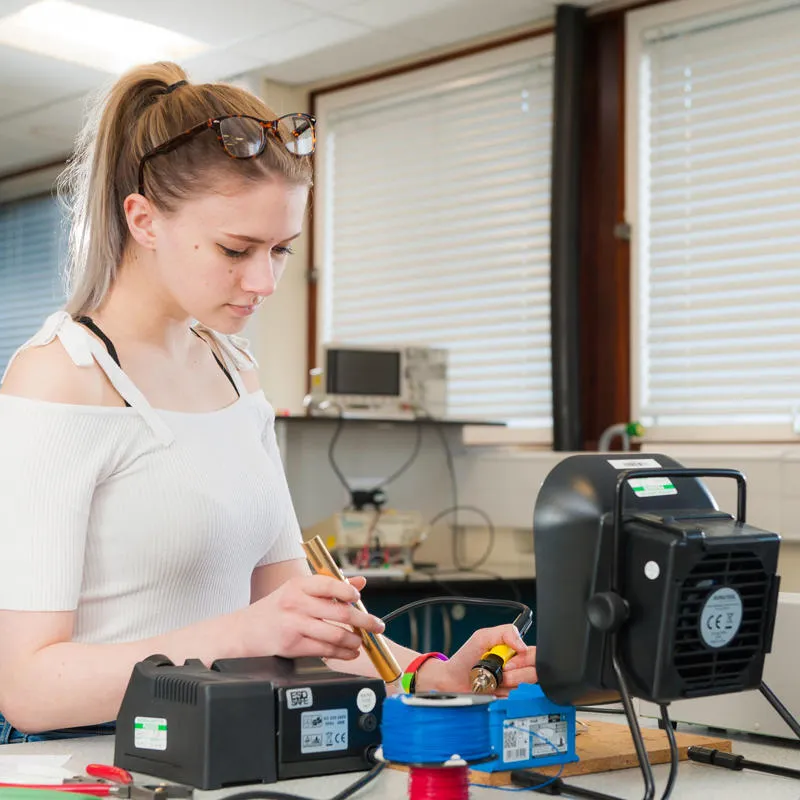
Working with Physics specialists in the Faculty of Science and Engineering, you’ll explore a range of topics relevant to the school curriculum. This provides the chance to develop subject knowledge relevant to the secondary school classroom as well as exploring Physics concepts at degree level.
Expand your universe
Module options
The course consists of 180 credits per year. Most modules are 20 credits, meaning you'll study nine modules each year. Some longer modules, such as a dissertation, are worth more (e.g. 40 credits). In these cases, you’ll study fewer modules - but the number of credits will always add up to 180 credits.
No filters selected
Introduction to Education
What does education really look like beyond your own school experience? This module opens new perspectives on how education works, with a particular focus on secondary schools.
Starting with your own experiences, you’ll explore what education means, how it differs from schooling, and how its purpose has evolved over time. You’ll examine how education is shaped locally, nationally, and globally- through the English National Curriculum and a range of alternative approaches, including SEND provision, Montessori, and other progressive models.
With regular school visits, you’ll see secondary education in action, exploring how teachers plan, support diverse learners, and respond to issues such as inclusion, safeguarding, and sustainability. You’ll also consider education from different viewpoints - including students, teachers, families, and wider society.
Broaden your perspective, build your academic skills, and take your first step towards a career in secondary education.
core
20 credits
Education Theory
This module explores the “Big Questions” in Education, drawing on key thinkers and theorists from across many periods of history and diverse locations across the globe. It will prepare you for undertaking your own research later in the degree, and provide broad horizons to challenge some of your preconceptions and expectations about education.
core
20 credits
Reflective Practice 1
What if you could gain real classroom experience while developing the skills to become a reflective educator? This module gives you the opportunity to take part in an extended paid or voluntary work placement and bring your learning to life.
Whether you choose a local school, an alternative setting, or even an international experience, you’ll immerse yourself in environments that support children’s learning and development. Along the way, you’ll observe teaching in action and explore how theory, policy, and pedagogy shape real educational practice.
A key focus of the module is reflection. You’ll learn how to use professional reflective models to critically evaluate your experiences, developing the mindset and skills needed to grow as a thoughtful, adaptable practitioner.
Gain valuable experience, think like a professional, and take a confident step towards your future in teaching.
core
40 credits
Education Specialism
Following focused input from your lecturers, this module provides the opportunity to explore a particular topic of interest to you, supported by a tutor. Whether you want to learn more about child development, pedagogy, approaches to behavior management or an aspect of the school curriculum, you will be supported to develop critical insights into real life practice.
core
20 credits
Classical and Quantum Physics
Explore Newton's Laws and extend them to simple fluid dynamics, then study the experimental and theoretical foundations of Quantum Mechanics.
optional
20 credits
Mathematics for Physicists
Develop your maths abilities to solve physics problems and formulate the outcome of your experiments in the lab.
optional
20 credits
Electromagnetism and Differential Equations
Discover electrostatics and magnetostatics and apply your knowledge of them to real-world scenarios. You'll further develop your maths skills, delving into the realm of differential equations and their applications, which extend well beyond physics.
optional
20 credits
Astronomy and Optics
Undertake a journey to unveil some of the most fascinating wonders of the cosmos, from the physics that regulates the dance of planetary systems to the formation and evolution of stars, galaxies and the large-scale structure of the Universe. You'll explore the physics of the optical systems that enable astronomical observations.
optional
20 credits
Reflective Practice 2
In this module you will hone your skills in reflective practice, reflecting on contributions from a variety of speakers and experts in addition to visits to a range of learning settings for children of different ages. This will include both formal and informal learning settings.
core
20 credits

When do school visits start? Now.
 Featured module
- core
- 20 credits
What does education really look like beyond your own school experience? This module opens new perspectives on how education works, with a particular focus on secondary schools.
Starting with your own experiences, you’ll explore what education means, how it differs from schooling, and how its purpose has evolved over time. You’ll examine how education is shaped locally, nationally, and globally- through the English National Curriculum and a range of alternative approaches, including SEND provision, Montessori, and other progressive models.
With regular school visits, you’ll see secondary education in action, exploring how teachers plan, support diverse learners, and respond to issues such as inclusion, safeguarding, and sustainability. You’ll also consider education from different viewpoints - including students, teachers, families, and wider society.
Broaden your perspective, build your academic skills, and take your first step towards a career in secondary education.
Our facilities
Watchlist
Michelle Wormald
Course overview
2 mins
A degree that goes beyond the classroom
Course montage
1 min
Rewilding Reading
Course Highlight
9 mins
Life on campus
University life
2 mins
The Gold Standard for Teaching
University life
1 min
Featured academics
You'll benefit from the outstanding support of academic staff who are experienced education practitioners.
Our research is driven by the belief that education can challenge inequalities and injustices in society, and seeks social and educational change to enhance fairness, equity and social justice.
Shelley Hindley
Lecturer
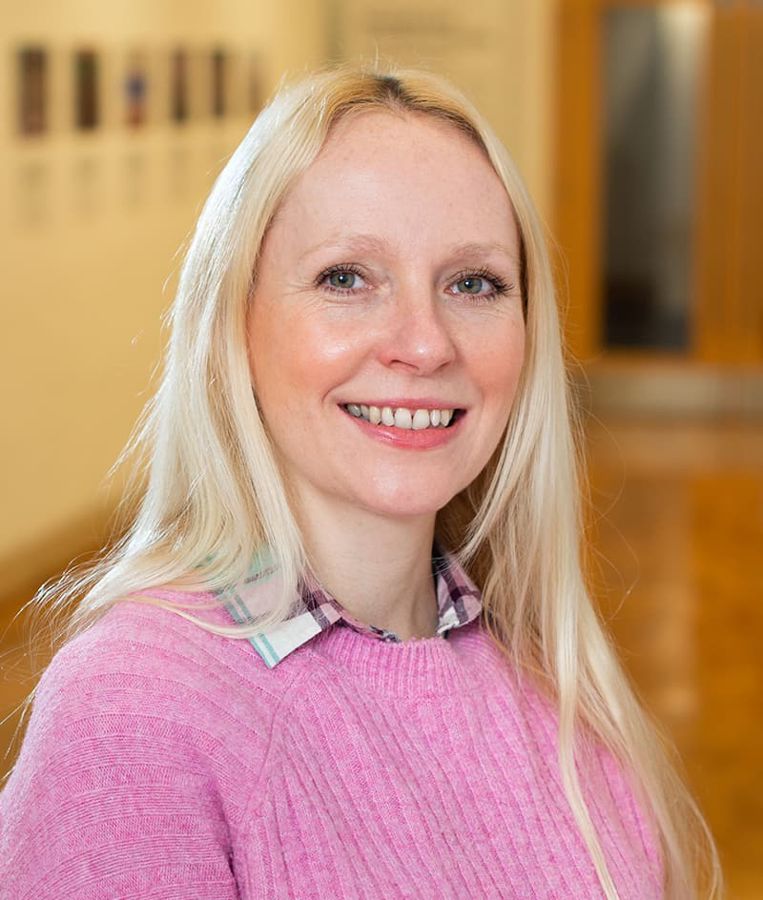
Shelley has 10 years experience in secondary schools including as Head of French and Head of German. She was an assessor for the General Teaching Council’s Teaching and Learning Academy and co-led Teacher Effectiveness Enhancement Programme courses.

Holly Smith
Lecturer
Holly has over 10 years’ experience teaching in secondary schools. Her research interests include reading for pleasure and drama as an engagement tool for learning.
Entry Requirements
What do I need?
This course has a range of tariffs for entry. Use the interactive slider to choose a number of points and see the course entry requirements.

Slide to set your points
A levels
BBC
BTEC
DMM
Equivalent qualifications and grades are accepted.
How to apply for this course
Most importantly, you need ambition. Together with our support and opportunities, you can go further than you ever thought possible.
Our typical offer for this course is 96–112 UCAS points. Our contextual offer is 96 points. But there’s no ceiling on ambition.
At least 80 points must come from A levels, BTEC, or other equivalent qualifications.
Remember, we look at your whole application – not just grades. Achievements, work experience, extracurricular activities: they all count here. We also consider qualifications and experience from the UK and worldwide that may not exactly match those listed.
Not sure if you’ll meet the entry requirements?
Talk to our Admissions team today. We’ll look at your circumstances, give you personalised guidance and help you understand your options, one of which could be a Foundation Year.
Fees & Funding
How much is it?
Tuition fees for 2028 entry have not been confirmed. Please use 2027-28 information as a guide.
The fee for our accelerated learning course is £12,060 per year.
This intensive programme is structured around three trimesters per year, rather than the usual two, enabling you to complete your degree faster and start making a meaningful impact sooner.
If you choose to study a foundation year as part of your course, the fee is £5,760.
Standard Tuition Fee
£12,060 / year
The amount you pay may increase each year, in line with inflation - but capped to the Retail Price Index.
How do I pay for it?
You can take out a tuition fee loan to cover the full cost of your course. Once you've successfully applied for this, you don't need to do anything else - the money is sent straight to us. You can also take out a maintenance loan to cover your living costs.
As accelerated degree students will be studying throughout the year and not just during standard academic terms, the maximum amount of Maintenance Loan you can apply for is higher than that available to students studying a standard three-year degree. You can find out more about the Long Courses Loan and how much you're eligble for on the gov.uk website.
Future prospects
After you graduate, you can go on to start initial teacher training leading to Qualified Teacher Status (e.g. PGCE), with current bursaries for postgraduate teacher training reaching up to £29,000 depending on the subject.
Graduates also pursue other postgraduate studies, work as home education tutors, education consultants, teach abroad, or take up educational roles in the arts, heritage or local government sectors.
Become part of the next generation of futuremakers
Like what you've seen? Then it's time to apply.
The standard way is to apply through UCAS. This will give you the chance to showcase your skills qualities and passion for the subject, as well as providing us with your academic qualifications.
Not ready to apply yet?
Visit our next Open Day, and see all that the University of Hull has to offer. Talk to our lecturers about your subject, find out what university is really like from our current students, and take a tour of our beautiful campus and amazing facilities.
You may also be interested in...
BSc (Hons) Physics
Undergraduate
Explore the world at sub-atomic or cosmological level. Apply to gain a deeper knowledge of physics and discover new concepts. MPhys, BSc or FY formats.
F300
BSc (Hons) Secondary Teaching Studies (Biology)
Undergraduate
This degree is a direct route into entry-level secondary school teaching. You'll benefit from our excellent links with Primary Partnership schools.
X136
BSc (Hons) Secondary Teaching Studies (Mathematics)
Undergraduate
This degree is a direct route into entry-level secondary school teaching. You'll benefit from our excellent links with Primary Partnership schools.
X134
BSc (Hons) Physics with Astrophysics
Undergraduate
Learn to understand the underlying laws that govern the universe, from a sub-atomic to a cosmological scale. Available in MPhys and BSc formats.
F3F5
BSc (Hons) Theoretical Physics
Undergraduate
Your mathematical skills will be enhanced to a high level giving you in-depth knowledge of the subject matter. Available in MPhys and BSc formats.
F340
BSc (Hons) Secondary Teaching Studies (Computer Science)
Undergraduate
This degree is a direct route into entry-level secondary school teaching. You'll benefit from our excellent links with Primary Partnership schools.
X130
All modules presented on this course page are subject to availability and this list may change at any time.