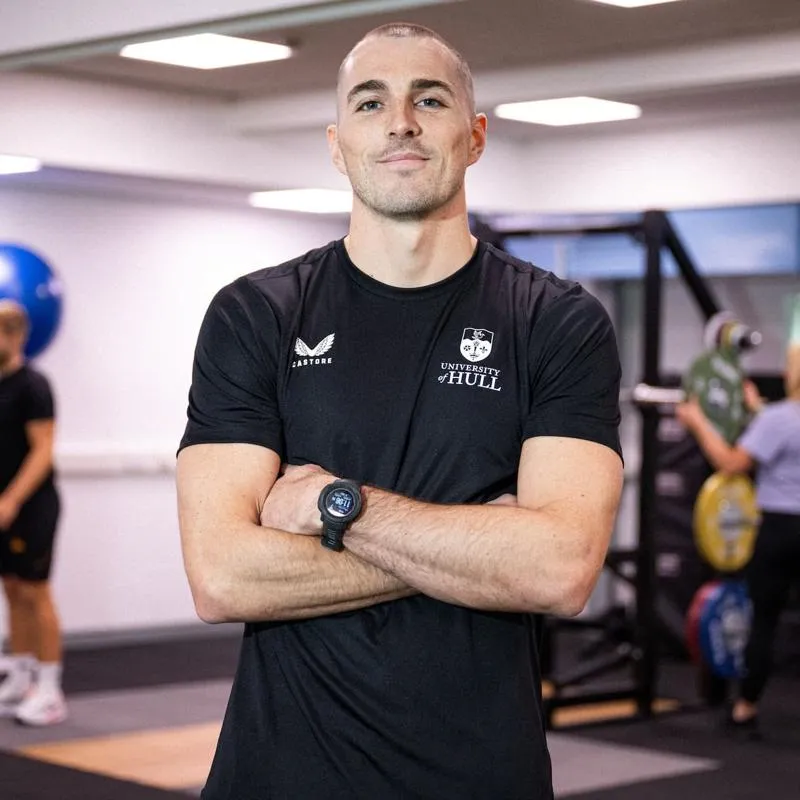



Study the human mind through the lens of sport, from motivation and mental toughness to team dynamics and peak performance.
Hull has been at the forefront of Psychology since 1928. Now, we’re combining that legacy with cutting-edge research in sport and exercise psychology, working with discipline expert and elite teams like Hull FC, Hull City and Hull KR.
Our experts are tackling today’s big questions: How do athletes thrive under pressure? What drives peak performance? How can mental strategies boost resilience?
If you're passionate about sport and curious about the mind, this is where it all starts.

95% of students
in work or further study 18 months after graduating
HESA Graduate Outcomes, 2026
This course is accredited by



Accredited
by British Psychological Society1

Benefit from your own supervisor
and study group

Direct links
to local sports teams, the NHS, and nutritional health providers

Study areas of cognitive psychology
in our Eye-Tracking Lab

Explore the mind
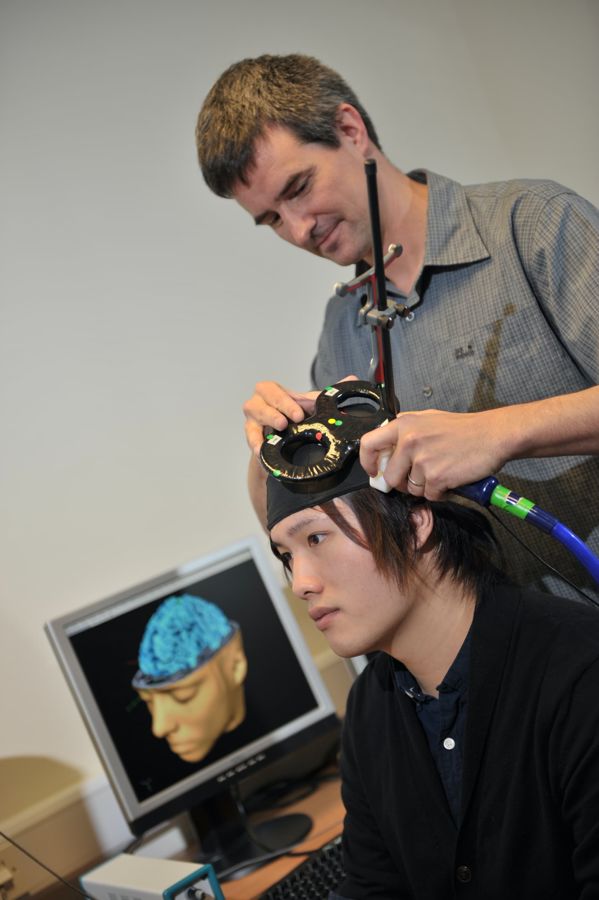
in our Brain Stimulation Laboratory

Study the fascinating world
of infant development in our Baby Lab

Combined expertise
across two schools

Study human responses to sounds
in our Audiometric Lab

Placement year available
to boost your CV
About this course
Combine your curiosity about the mind with your passion for sport. On this BPS-accredited degree, you’ll explore how psychology helps athletes perform at their best - and how the same principles apply to everyday life.
You’ll study all the core areas of psychology, like cognition, development, neuroscience, and social behaviour - giving you a solid grounding in how people think, feel, and act. Alongside that, you’ll take dedicated sport psychology modules each year, where you’ll apply this knowledge to real sporting environments.
You’ll look at what drives motivation, how athletes handle pressure, how teams build cohesion, and how psychology can help overcome injury, burnout and performance anxiety. Topics range from memory and mental health to child development, personality, and how the brain changes as we age.
From your first year, you’ll also gain practical skills in psychological research: designing experiments, analysing data, and developing your critical thinking. As you progress, you’ll work more independently, including a final-year research project in an area you’re passionate about.
You’ll learn from expert psychologists, including those who work with elite athletes, and benefit from our links with local professional clubs like Hull FC, Hull KR and Hull City. Whether you're into coaching, sport science, or psychology more broadly, you’ll graduate with the skills and knowledge to make a real difference in high-performance settings and beyond.
Unlock potential by understanding performance
Module options
Each year, you’ll study modules worth a certain number of credits, and you need 120 credits per year. Most modules are 20 credits – so you’ll study six modules each year. Some longer modules, such as a dissertation, are worth more. In these cases, you’ll study fewer modules - but the number of credits will always add up to 120. Some modules are compulsory, some are optional, so you can build a course that’s right for you.
No filters selected
Introducing Cognitive Psychology
How does your mind work? How do you see, hear, feel, and think? How do you make sense of the world and yourself? In this module, you'll discover the secrets of cognitive psychology - the science of the mind and behaviour. Learn how researchers use experiments and theories to understand the mental processes that shape our lives, explore topics like perception, attention, memory, language, and reasoning and see how they relate to your everyday experiences. This module will help you develop the skills and knowledge you need to become a critical thinker in the modern world.
core
10 credits
Beginning Scientific Exploration
This module will introduce you to the process of psychological research. You will develop skills in quantitative data processing and presentation of descriptive statistics.
core
20 credits
Statistical Thinking in Practice
Develop your research skills further with a focus on how we infer things about the world using data. This module gives you practical experience of research methods.
core
20 credits
Exploring Social Psychology
Would you inflict pain on another person if instructed to do so by an authority figure? How likely are people to conform to group pressure? What makes a friend act aggressively or donate money to charity? This module considers what effect the environment has on human behaviour and explores how psychological theories can be applied to your everyday life. If you’ve ever wondered why your friend is acting in a certain way, this module will provide some clues to the answer.
core
10 credits
The Developing Child
Delve into the fascinating world of the infant mind. You will cover a range of psychological processes, from the early building blocks of our cognitive skills, to how we form attachments and begin to create relationships. We will explore these processes from their very beginnings in the womb, through infancy, childhood, and adolescence.
core
10 credits
Unique Minds: Theory and Testing
You may have encountered personality and intelligence tests in educational or occupational settings, but have you ever wondered how these tests were developed? This module explores the complexities of intelligence and personality conceptualisation and testing and gives an insight into why people are unique. By engaging with a range of theories and psychometrics, you will be able to assess the controversies and ethical dilemmas of personality and intelligence testing.
core
10 credits
Brain and Behaviour 1
Explore the relationship between the brain and human behaviour, including how we sense the world, how we act in the world and how we think and feel about the world.
core
20 credits
Introduction to Exercise and Training
Through a mix of both theoretical and practical sessions, you'll develop your knowledge and experience of a number of different exercise and training modalities that a strength and conditioning coach could utilise in an effort to affect and improve performance. This module will also help you to develop as a coach, explaining the principles of good coaching, communication and delivery to a diverse range of athletes and non-athletes alike.
core
20 credits
Experiments Unlocked
Discover experimental designs involving multiple conditions and independent variables. You'll learn how to analyse data generated by these more complex designs.
compulsory
20 credits
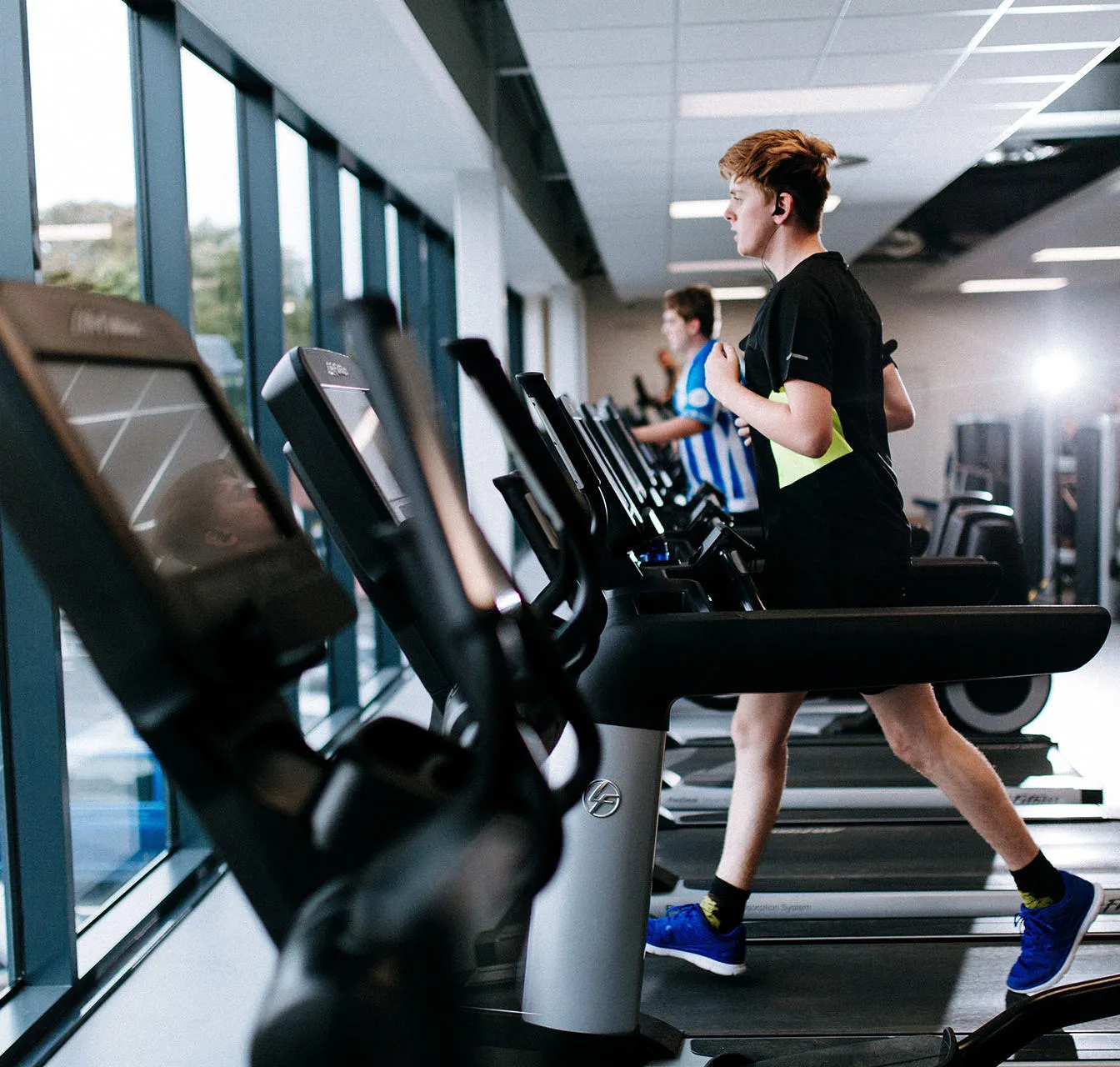
Where does a winning performance start? In the mind.
 Featured module
- compulsory
- 20 credits
What gives athletes the mental edge to perform under pressure? This module introduces the fascinating world of sport and exercise psychology, exploring how the mind influences performance, motivation, and wellbeing.
You’ll examine key psychological concepts such as confidence, concentration, stress, motivation, and goal setting, while learning techniques used to improve performance in sport and exercise settings. You’ll also explore the relationship between exercise and mental wellbeing, and what drives people to stay active and committed.
As a foundation for more advanced study, this module will help you understand how psychology can unlock performance potential both on and off the field.
Discover the psychology behind performance and develop the knowledge to help people perform at their best.
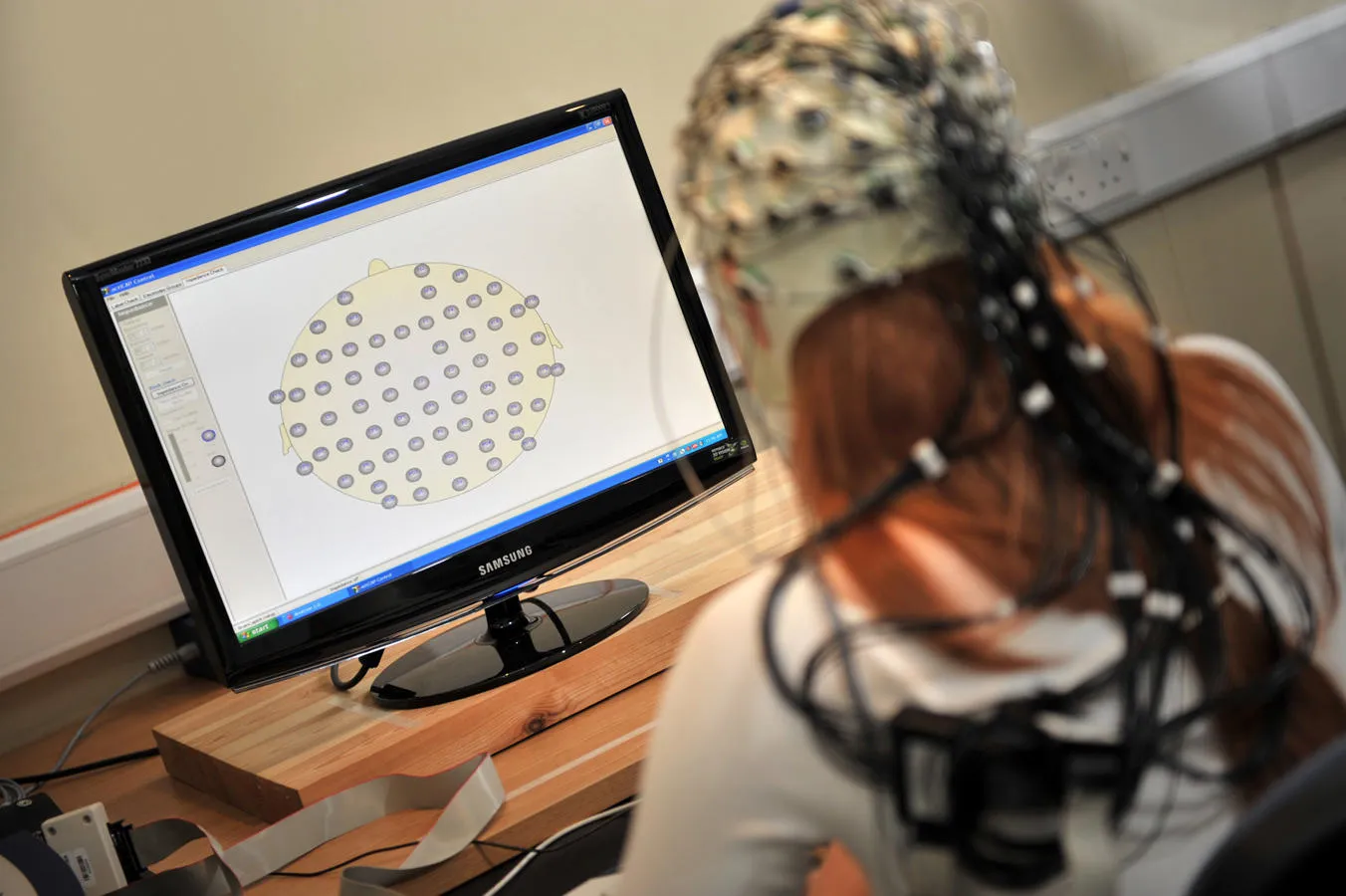
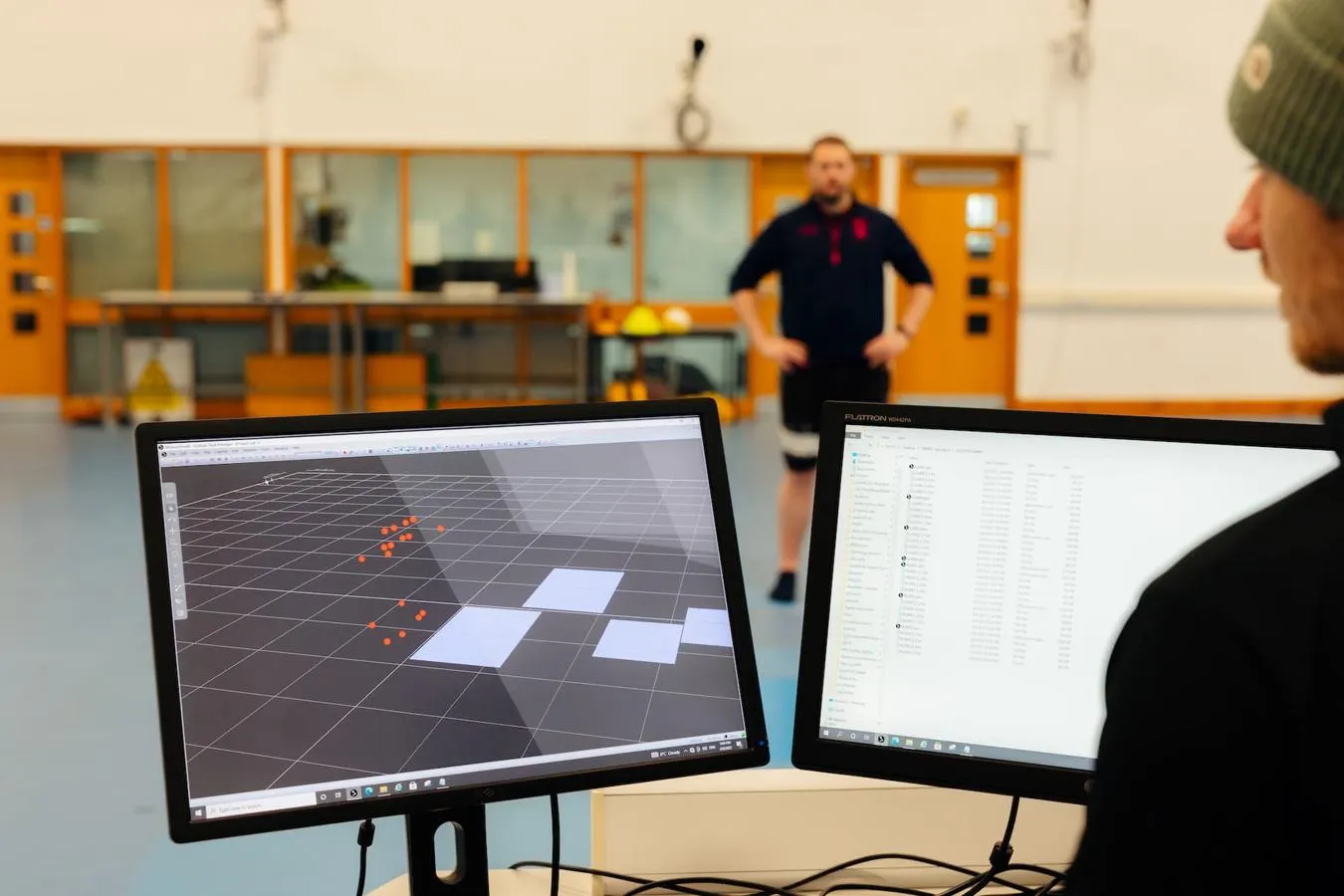
Our facilities
Playlist
Dr Michael Lupton
Course overview
2 mins
Degrees that live up to life
Course montage
1 min
Dr Bernice Wright
Course overview
3 mins
Your course in their words
Student Story
2 mins
Why choose Psychology at Hull?
Student Story
2 mins
Facilities
Course Highlight
3 mins
Where can Psychology take you?
Student Story
13 mins
Degrees that live up to life
Course montage
1 min
Featured academics
Our academics are at the forefront of psychology research, shaping understanding of behaviour, wellbeing, and recovery. With specialist expertise in sport psychology, they explore the factors behind sporting excellence and resilience, and advance approaches that support performance and recovery from injury.
On the Psychology with Sport Psychology BSc, you’ll learn directly from these leading researchers and gain insights into the latest developments transforming psychology and sport.
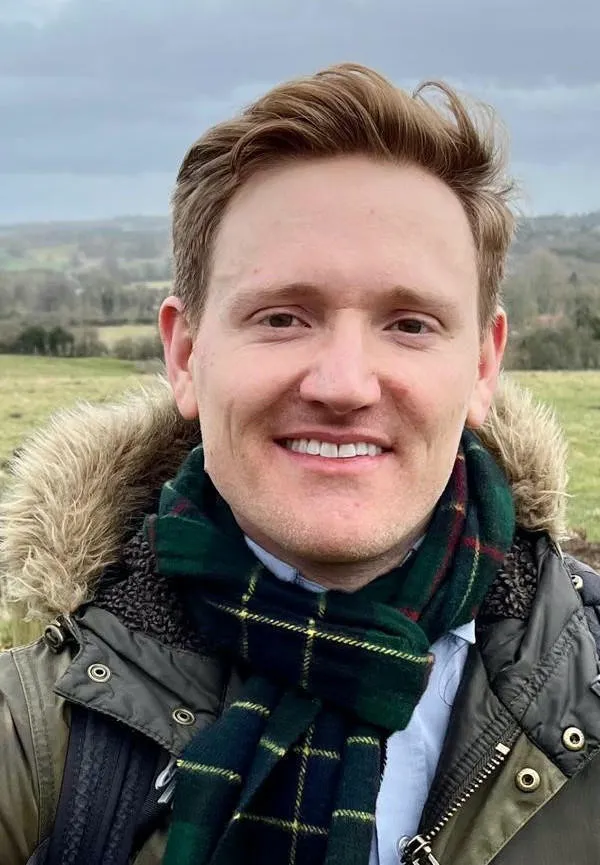
Dr Blake Morton
Lecturer of Psychology
Blake is a lecturer specialising in animal and human behaviour, focussing on global environmental issues, whose work attracts media attention including the BBC, The Guardian, TIME, and National Geographic internationally.

Professor Adam Nicholls
Leader of the Sport Psychology and Coaching Group
Adam is a professor of psychology. The main focus of his research relates to the psycho-social factors that predict doping among adolescent athletes, along with coping and emotions among athletes.
Entry Requirements
How to apply for this course
At Hull, you're a name, not a number. It's not just about the grades - we'll look at your whole application.
If you're not eligible for direct entry to this course, we may recommend a foundation year as an alternative route to studying for a degree.
To discuss your options, send us an enquiry or call us from 8am on Results Day on 01482 466100.
Every year, hundreds of students join the University of Hull through Clearing for all sorts of reasons and go on to achieve great things. Learn more about Clearing.
Qualification types
We accept a wide range of qualifications and combinations of qualifications, including A levels, BTECs and other accepted qualifications.
We don’t just see what you’re like on paper, we see you. All of you. Your achievements, work experience, music and sport qualifications and the projects you’ve been involved in. We want to hear it all.
Fees & Funding
How much is it?
Future prospects
A degree in Psychology with Sports Psychology gives you the skills to support performance, wellbeing and behaviour change in sport, exercise and beyond. Graduates can progress into careers in sports and exercise psychology, coaching, analysis, teaching, wellbeing, health promotion or personal training, as well as wider opportunities in education, health and business.
Graduates from Hull sport degrees have gone on to careers such as Director of Football, Head of Sport Science, and performance specialists working within professional clubs, the Premier League and international teams. With career support and industry connections throughout your studies, you’ll be well prepared to take your next step.
Become part of the next generation of futuremakers
Like what you've seen? Then it's time to apply.
The standard way is to apply through UCAS. This will give you the chance to showcase your skills qualities and passion for the subject, as well as providing us with your academic qualifications.
Not ready to apply yet?
Visit our next Open Day, and see all that the University of Hull has to offer. Talk to our lecturers about your subject, find out what university is really like from our current students, and take a tour of our beautiful campus and amazing facilities.
You may also be interested in...
BSc (Hons) Psychology
Undergraduate
British Psychological Society accredited course, encompassing topics such as memory, social relationships, child development and brain functions.
C800
BSc (Hons) Psychology with Criminology
Undergraduate
Accredited by the British Psychological Society, this degree combines the interrelated disciplines of psychology and criminology.
C8M9
BSc (Hons) Psychology with Education
Undergraduate
Study psychology and gain practical teaching experience with our BSc Psychology with Education degree - ideal for future teachers and educators.
C805
BSc (Hons) Psychology and Business
Undergraduate
Explore how people think, decide, and behave in the business world with our BSc Psychology with Business degree - perfect for future leaders and managers.
C804
BSc (Hons) Sports Coaching and Performance Science
Undergraduate
Learn theoretical knowledge from expert coaches with our BSc Sports Coaching & Performance Science degree. Apply today for real-life coaching experience.
CB69
BSc (Hons) Sport and Exercise Science
Undergraduate
Access world-class health & performance equipment with our BSc Sport & Exercise Science degree. Apply today to begin applying the theory in the real-world.
C610
If you graduate with at least a 2:2 and pass your empirical psychology project, you can become a graduate member of the British Psychological Society (BPS). This is an essential step towards becoming a Chartered Psychologist.
All modules presented on this course page are subject to availability and this list may change at any time.