



Study the human mind through the lens of sport, from motivation and mental toughness to team dynamics and peak performance.
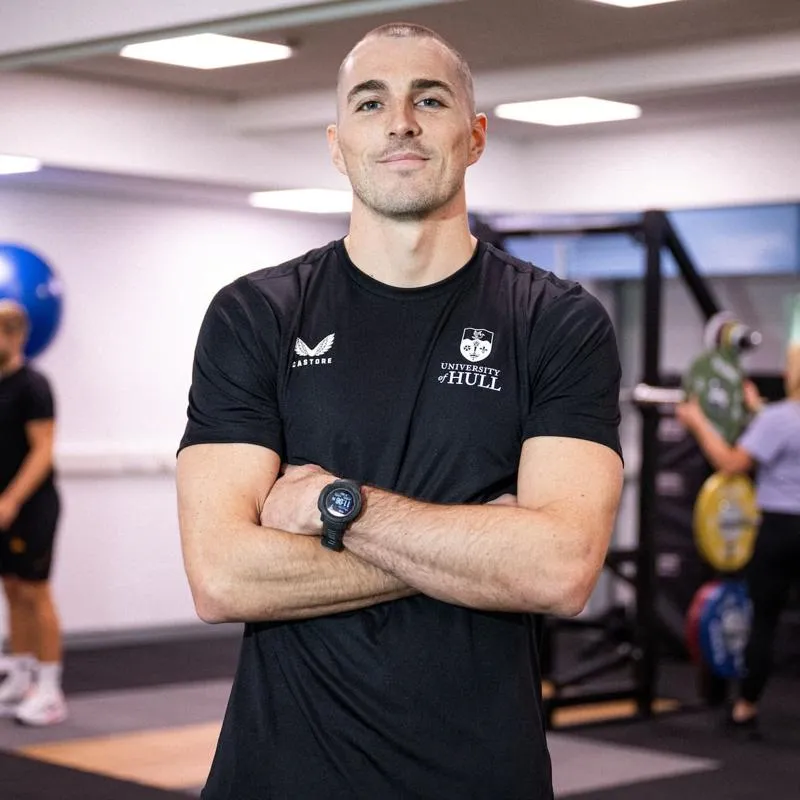
Hull has been at the forefront of Psychology since 1928. Now, we’re combining that legacy with cutting-edge research in sport and exercise psychology, working with discipline expert and elite teams like Hull FC, Hull City and Hull KR.
Our experts are tackling today’s big questions: How do athletes thrive under pressure? What drives peak performance? How can mental strategies boost resilience?
If you're passionate about sport and curious about the mind, this is where it all starts.

95% of students
in work or further study 18 months after graduating
HESA Graduate Outcomes, 2026
This course is accredited by



Accredited
by British Psychological Society1

Benefit from your own supervisor
and study group

Direct links
to local sports teams, the NHS, and nutritional health providers

Study areas of cognitive psychology
in our Eye-Tracking Lab

Explore the mind
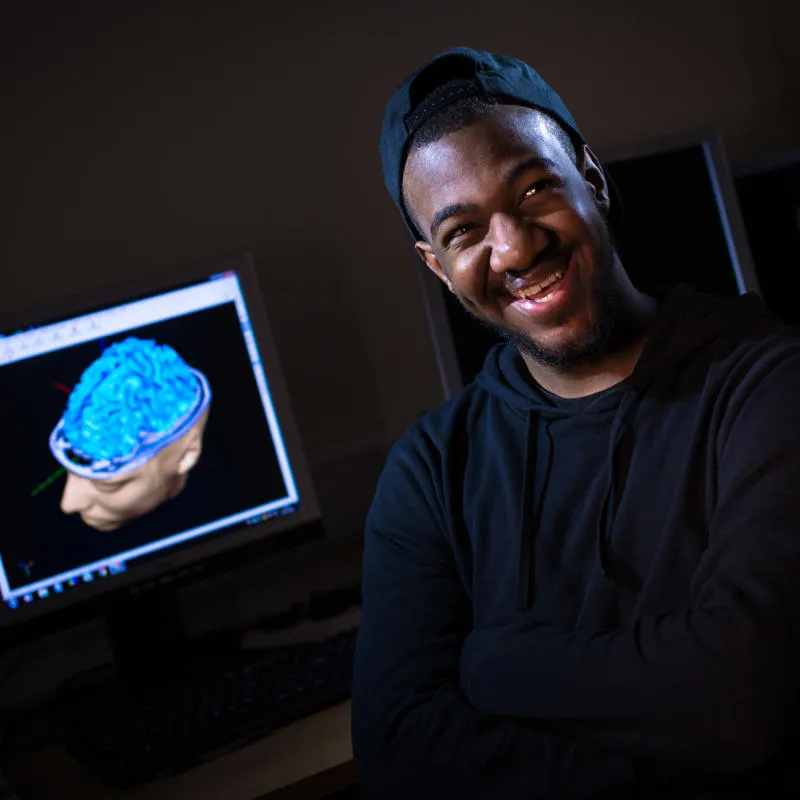
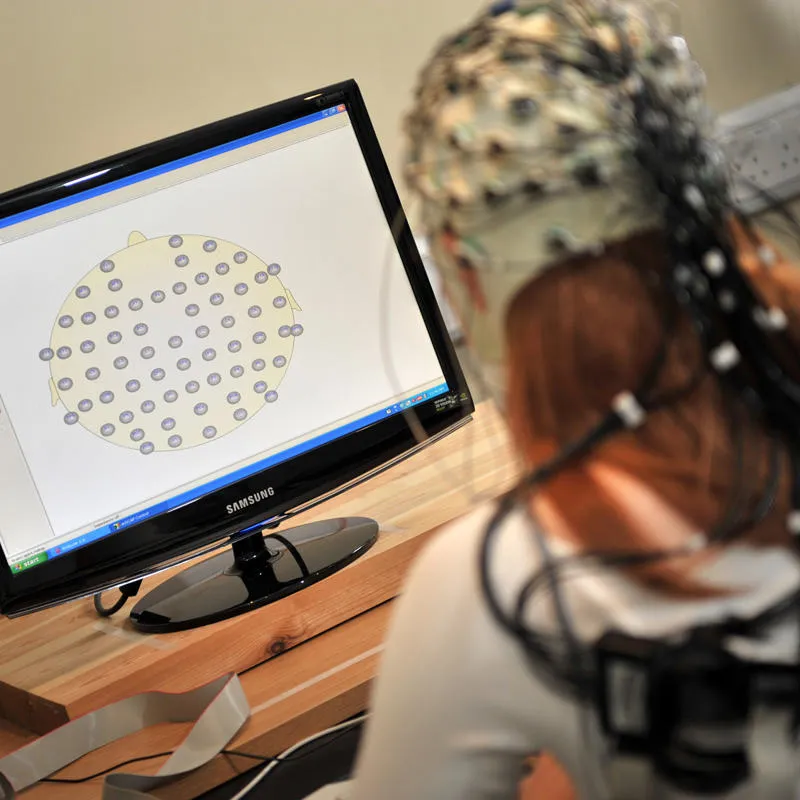
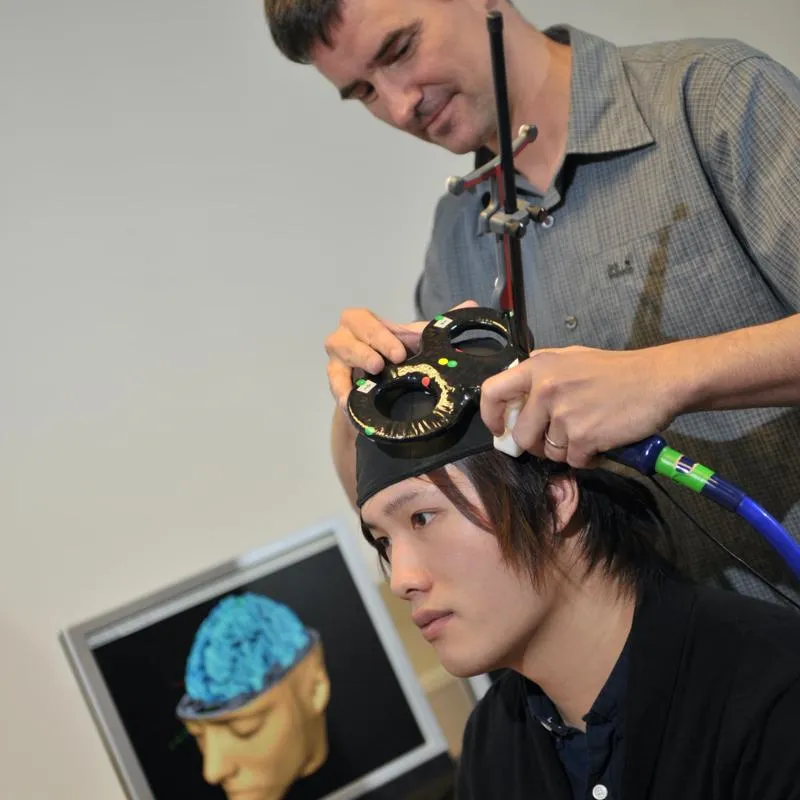
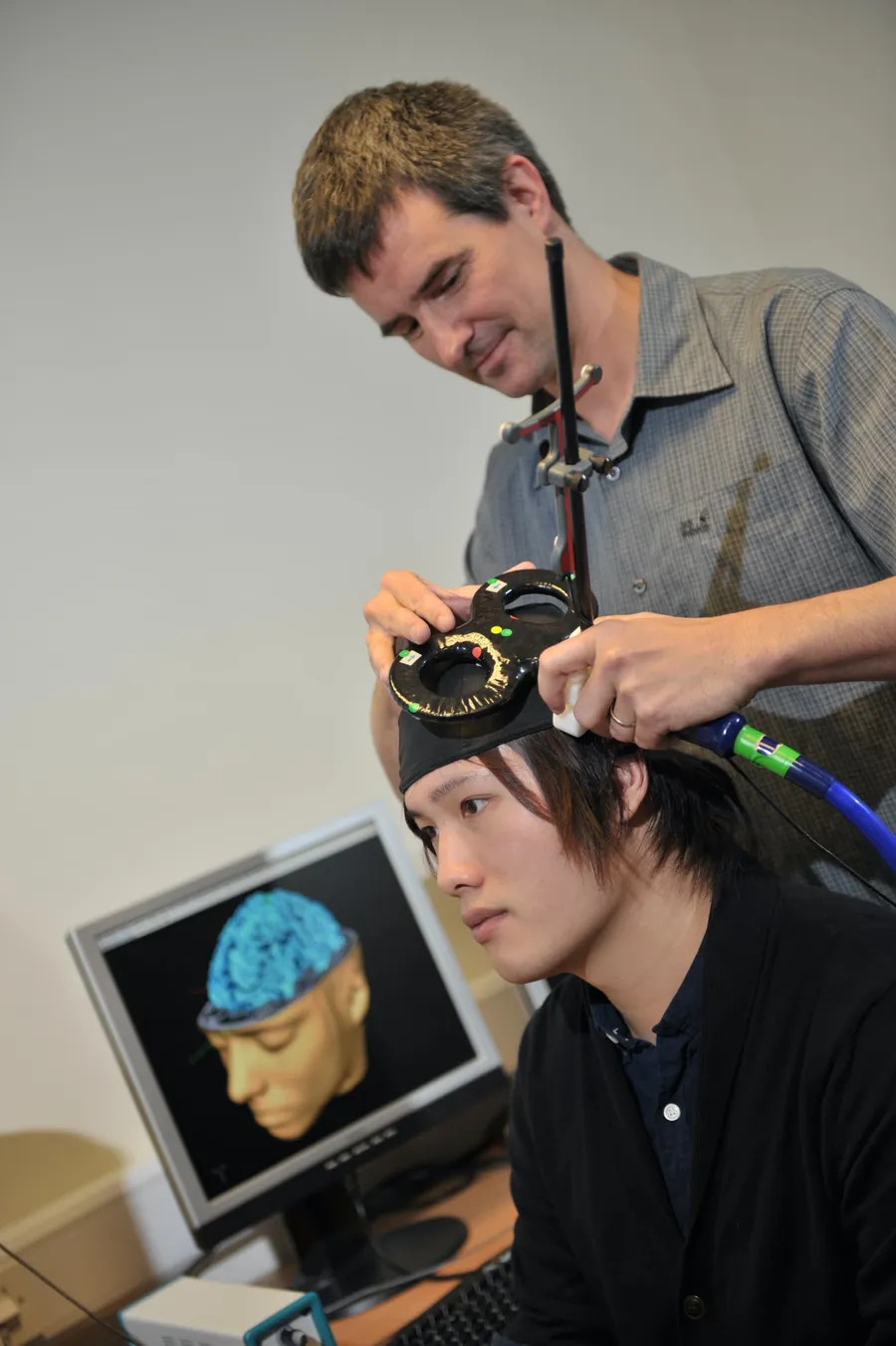
in our Brain Stimulation Laboratory

Study the fascinating world
of infant development in our Baby Lab

Combined expertise
across two schools

Study human responses to sounds
in our Audiometric Lab

Placement year available
to boost your CV
About this course
Combine your curiosity about the mind with your passion for sport. On this BPS-accredited degree, you’ll explore how psychology helps athletes perform at their best - and how the same principles apply to everyday life.
You’ll study all the core areas of psychology, like cognition, development, neuroscience, and social behaviour - giving you a solid grounding in how people think, feel, and act. Alongside that, you’ll take dedicated sport psychology modules each year, where you’ll apply this knowledge to real sporting environments.
You’ll look at what drives motivation, how athletes handle pressure, how teams build cohesion, and how psychology can help overcome injury, burnout and performance anxiety. Topics range from memory and mental health to child development, personality, and how the brain changes as we age.
From your first year, you’ll also gain practical skills in psychological research: designing experiments, analysing data, and developing your critical thinking. As you progress, you’ll work more independently, including a final-year research project in an area you’re passionate about.
You’ll learn from expert psychologists, including those who work with elite athletes, and benefit from our links with local professional clubs like Hull FC, Hull KR and Hull City. Whether you're into coaching, sport science, or psychology more broadly, you’ll graduate with the skills and knowledge to make a real difference in high-performance settings and beyond.
Unlock potential by understanding performance
Foundation year
A foundation year at the University of Hull gives you a solid grounding of knowledge and boosts your academic skills, so you can progress on to your chosen programme with confidence.
The foundation course you enrol on may not be an exact match to your chosen degree, but don’t worry. Our foundation courses combine content from multiple related courses in the same subject area, giving you more flexibility and choice about the degree path you take.
For example, if you apply for a Music Foundation Year, you’ll join our Media Foundation course. So, if you decide to switch - say, from Music to Graphic Design - you can do so without restarting your foundation year.
Module options
Each year, you’ll study modules worth a certain number of credits, and you need 120 credits per year. Most modules are 20 credits – so you’ll study six modules each year. Some longer modules, such as a dissertation, are worth more. In these cases, you’ll study fewer modules - but the number of credits will always add up to 120. Some modules are compulsory, some are optional, so you can build a course that’s right for you.
No filters selected
Preparing for Learning in Higher Education
This module is designed to give you the best possible start to your university studies, making sure you have all the essential skills you need to succeed. Through lectures and workshops we will teach you how to write in an academic style, how to find quality sources, and how to reference work, culminating in writing up a mini-research project.
core
20 credits
Group Challenge
In a group, you'll formulate questions that can be tested by scientific investigations and take part in weekly workshops with academics.
core
20 credits
Foundation in Data Analysis
Develop a strong foundation in data collection and analysis. This module will introduce you to qualitative and quantitative data and how to analyse it; the collection of primary and secondary data; the production of high-quality graphics; and report writing.
core
20 credits
Introduction to Biological Sciences 1
This module will provide you with the basic biological science knowledge that will enable you to transition successfully into the certificate stage of your chosen programme of studies. You will gain basic knowledge of cell biology, biological molecules, energy processes like respiration, neurobiology and many other topics. Alongside the theoretical knowledge, you will also have the opportunity to learn how to use a microscope and how to collect data in the laboratory, in a specialist sport science facility or using psychological techniques. You will also learn how to present and write about those data professionally. The teaching team for this module consists of lecturers in the disciplines connected to your programmes of study, so there will be a strong connection to your chosen subject area.
compulsory
20 credits
Introduction to Psychology
Module information coming soon.
compulsory
20 credits
Foundation Maths Skills
This module delivers core mathematics skills at level two and three to give a solid basis for future studies. You will study the following topics: manipulation of numerical data and converting between different units of measurement; exponentials and logarithms; and standard form and problems involving ratio, proportion and percentages.
optional
20 credits
Foundation Mathematics 1
This module delivers core mathematics skills to build a solid basis for future studies. You will study the following topics: factors, multiples, indices, fractions and standard form; algebra, linear and quadratic equations; averages and spread; functions, exponentials and logarithms; and right-angled triangles and trigonometry.
optional
20 credits
Foundation Mathematics A
You will study pure mathematics topics, including proof, algebra, trigonometry, differentiation, integration, exponentials, logarithms, sequences and series. The applied topic is probability and statistics.
optional
20 credits
Introducing Cognitive Psychology
How does your mind work? How do you see, hear, feel, and think? How do you make sense of the world and yourself? In this module, you'll discover the secrets of cognitive psychology - the science of the mind and behaviour. Learn how researchers use experiments and theories to understand the mental processes that shape our lives, explore topics like perception, attention, memory, language, and reasoning and see how they relate to your everyday experiences. This module will help you develop the skills and knowledge you need to become a critical thinker in the modern world.
core
10 credits

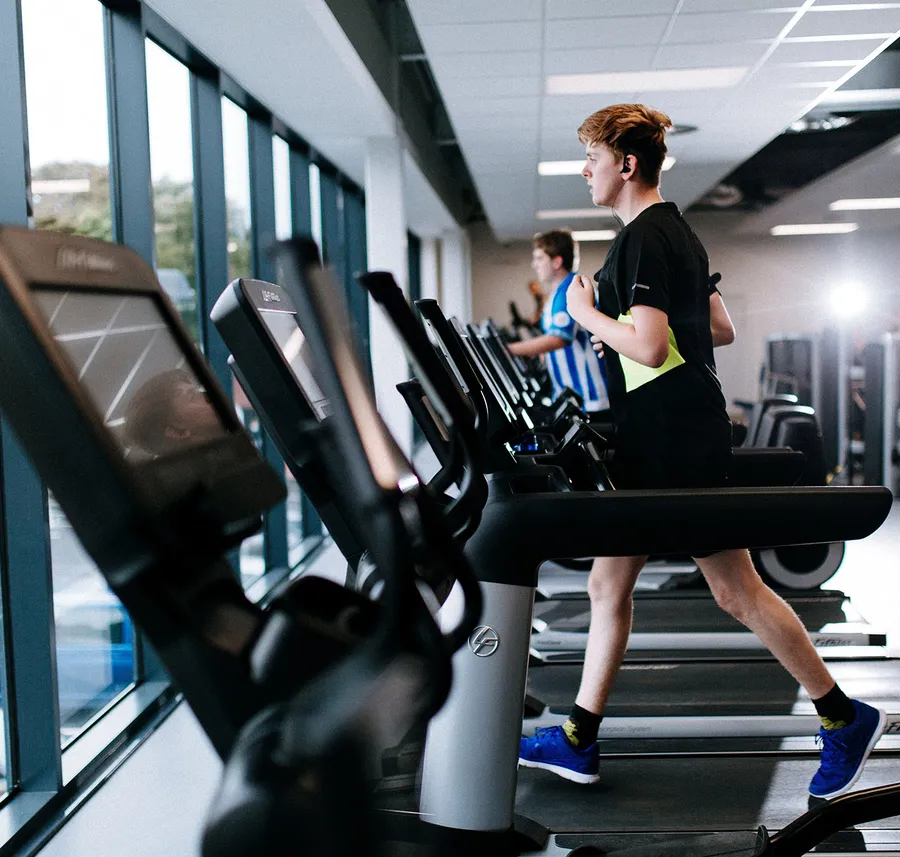
Where does a winning performance start? In the mind.
 Featured module
- compulsory
- 20 credits
What gives athletes the mental edge to perform under pressure? This module introduces the fascinating world of sport and exercise psychology, exploring how the mind influences performance, motivation, and wellbeing.
You’ll examine key psychological concepts such as confidence, concentration, stress, motivation, and goal setting, while learning techniques used to improve performance in sport and exercise settings. You’ll also explore the relationship between exercise and mental wellbeing, and what drives people to stay active and committed.
As a foundation for more advanced study, this module will help you understand how psychology can unlock performance potential both on and off the field.
Discover the psychology behind performance and develop the knowledge to help people perform at their best.
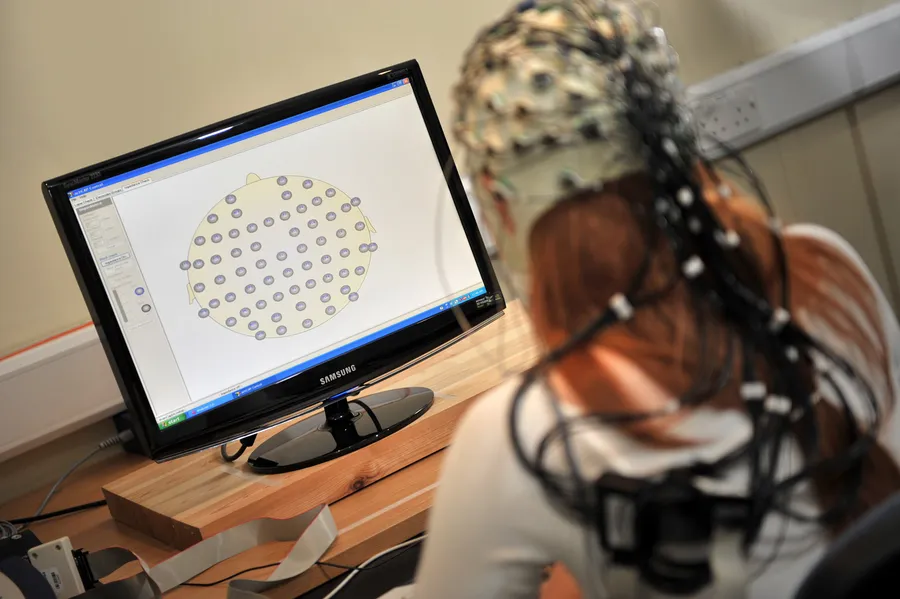
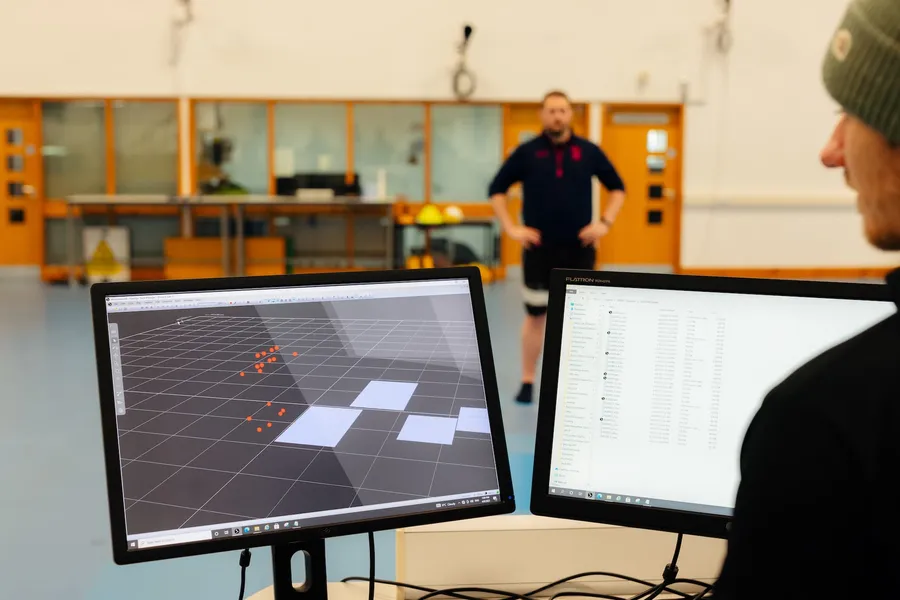
Our facilities



Playlist
Dr Michael Lupton
Course overview
2 mins
Degrees that live up to life
Course montage
1 min
Dr Bernice Wright
Course overview
3 mins
Your course in their words
Student Story
2 mins
Why choose Psychology at Hull?
Student Story
2 mins
Facilities
Course Highlight
3 mins
Where can Psychology take you?
Student Story
13 mins
Degrees that live up to life
Course montage
1 min
Featured academics
Our academics are at the forefront of psychology research, shaping understanding of behaviour, wellbeing, and recovery. With specialist expertise in sport psychology, they explore the factors behind sporting excellence and resilience, and advance approaches that support performance and recovery from injury.
On the Psychology with Sport Psychology BSc, you’ll learn directly from these leading researchers and gain insights into the latest developments transforming psychology and sport.


Dr Blake Morton
Lecturer of Psychology
Blake is a lecturer specialising in animal and human behaviour, focussing on global environmental issues, whose work attracts media attention including the BBC, The Guardian, TIME, and National Geographic internationally.


Professor Adam Nicholls
Leader of the Sport Psychology and Coaching Group
Adam is a professor of psychology. The main focus of his research relates to the psycho-social factors that predict doping among adolescent athletes, along with coping and emotions among athletes.
Entry requirements
What do I need?
This course has a range of tariffs for entry. Use the interactive slider to choose a number of points and see the course entry requirements.

Slide to set your points
A levels
EEE
BTEC
PPP
Equivalent qualifications and grades are accepted.
How to apply for this course
Most importantly, you need ambition. Together with our support and opportunities, you can go further than you ever thought possible.
Our typical offer for this course is 48 UCAS points from level 3 qualifications (A levels, BTEC, or other equivalent qualifications).
If you don’t have level 3 qualifications, we welcome you to apply for an advisory meeting with our Admissions team. We’ll look at your circumstances, give you personalised guidance, and help you understand your entry options.
Remember, we look at your whole application – not just grades. Achievements, work experience, extracurricular activities: they all count here. So remember to tell us what makes you tick in your personal statement.
We also consider qualifications and experience from the UK and worldwide that may not exactly match those listed.
Have questions? Talk to our Admissions team today.
Fees & funding
How much is it?
Tuition fees for 2028 entry have not been confirmed. Please use 2027-28 information as a guide.
For UK students, our standard course fee is £10,050 per year. Keep in mind that some courses are longer - for example, spending your third year abroad will make your degree four years in total.
If you choose to study a foundation year as part of your course, the fee is £10,050.
Standard Tuition Fee
£10,050 / year
Foundation Year Fee
£10,050
The amount you pay may increase each year, in line with inflation - but capped to the Retail Price Index.
How do I pay for it?
You can take out a tuition fee loan to cover the full cost of your course. Once you’ve successfully applied for this, you don’t need to do anything else – the money is sent straight to us.
You can also take out a maintenance loan of up to £10,544 a year to cover your living costs, depending on your household income.
Remember, you won’t start paying your loans back until you’ve left university and earn more than £25,000 per year.
See our full fees and funding information for more details and to find out what support we can offer.

Future prospects
A degree in Psychology with Sports Psychology gives you the skills to support performance, wellbeing and behaviour change in sport, exercise and beyond. Graduates can progress into careers in sports and exercise psychology, coaching, analysis, teaching, wellbeing, health promotion or personal training, as well as wider opportunities in education, health and business.
Graduates from Hull sport degrees have gone on to careers such as Director of Football, Head of Sport Science, and performance specialists working within professional clubs, the Premier League and international teams. With career support and industry connections throughout your studies, you’ll be well prepared to take your next step.
Become part of the next generation of futuremakers
Like what you've seen? Then it's time to apply.
The standard way is to apply through UCAS. This will give you the chance to showcase your skills qualities and passion for the subject, as well as providing us with your academic qualifications.
Not ready to apply yet?
Visit our next Open Day, and see all that the University of Hull has to offer. Talk to our lecturers about your subject, find out what university is really like from our current students, and take a tour of our beautiful campus and amazing facilities.
You may also be interested in...
BSc (Hons) Psychology
Undergraduate
British Psychological Society accredited course, encompassing topics such as memory, social relationships, child development and brain functions.
C800
BSc (Hons) Psychology with Criminology
Undergraduate
Accredited by the British Psychological Society, this degree combines the interrelated disciplines of psychology and criminology.
C8M9
BSc (Hons) Psychology with Education
Undergraduate
Study psychology and gain practical teaching experience with our BSc Psychology with Education degree - ideal for future teachers and educators.
C805
BSc (Hons) Psychology and Business
Undergraduate
Explore how people think, decide, and behave in the business world with our BSc Psychology with Business degree - perfect for future leaders and managers.
C804
BSc (Hons) Sports Coaching and Performance Science
Undergraduate
Learn theoretical knowledge from expert coaches with our BSc Sports Coaching & Performance Science degree. Apply today for real-life coaching experience.
CB69
BSc (Hons) Sport and Exercise Science
Undergraduate
Access world-class health & performance equipment with our BSc Sport & Exercise Science degree. Apply today to begin applying the theory in the real-world.
C610
If you graduate with at least a 2:2 and pass your empirical psychology project, you can become a graduate member of the British Psychological Society (BPS). This is an essential step towards becoming a Chartered Psychologist.
All modules presented on this course page are subject to availability and this list may change at any time.