

Sea levels are rising. Icebergs are melting. Species are facing extinction. Now more than ever, we need to protect our precious marine resources. That’s where you come in…
You’ll be studying at the centre of one of the UK’s most important aquatic habitats with the North Sea, internationally recognised research facilities – including The Deep – and the rest of the Yorkshire Nature Triangle on your doorstep.
Plus, this course is accredited by The Institution of Environmental Sciences (IES) so you’ll have a pathway to become a Chartered Environmentalist or Chartered Scientist when you graduate.

95% of students
in work or further study 18 months after graduating
HESA Graduate Outcomes, 2026

Joint 3rd in the UK
for Value Added Score
Biology, The Guardian University Rankings, 2026
2nd in the North of England
for 'To what extent have you had the chance to explore ideas and concepts in depth'
National Student Survey (NSS) 2026, HEIs only
10th in the UK
for 'During your studies, how free did you feel to express your ideas, opinions and beliefs'
National Student Survey (NSS) 2026, HEIs only
This course is accredited by


Award-winning
academics teach on this course1

Your first step
to becoming a Chartered Scientist

Dive in
and train to become a PADI-certified diver2

Course accredited
by The Institution of Environmental Sciences

Field trips
in the UK and overseas3

Integrated Masters option
with combined Undergraduate and Postgraduate level study

Tropical Aquarium
home to a vast range of tropical fish and marine species

Flume Laboratory
for studying the bodies of water that dominate our planet
About this course
Study life beneath the waves on this exciting, accredited course that includes optional, subsidised scuba dive training.2
During your first two years with us, you’ll complete a broad and varied programme to give you a thorough foundation in essential marine biology studies. You’ll learn all aspects of the marine environment, from the diversity of marine organisms to the impact of ocean acidification and climate change.
In year three, you’ll then have the chance to specialise in the areas you’re most interested in and get involved in research that’s making a difference to our world and the people on it.
We’re constantly reviewing our optional modules – so everything you learn reflects the cutting edge of the subject and the latest research by our award-winning staff – and you’ll have plenty of opportunities to get hands-on.
Our field trips here are exceptional – both at home and overseas. Recently, our students got the chance to work in far-flung places like Brazil and Egypt.
On top of this, we offer part-funded PADI advanced scuba dive training as part of your degree.
Start a field trip that never ends
Integrated Masters
Integrated masters degrees are four-year programmes that include a postgraduate year, giving you the chance to deepen your knowledge and graduate with a higher-level qualification - like an MEng, MPhys, MSci - instead of a standard BA, BSc or BEng.
The final year is set at masters level and offers advanced skills, specialist modules, and often a significant research project or industry-focused experience. It’s ideal if you're aiming for a career in research, want to stand out in a competitive job market, or are thinking about progressing to a PhD. You’ll finish your degree more qualified, more confident, and more prepared for what’s next.
Module options
Each year, you’ll study modules worth a certain number of credits, and you need 120 credits per year. Most modules are 20 credits – so you’ll study six modules each year. Some longer modules, such as a dissertation, are worth more. In these cases, you’ll study fewer modules - but the number of credits will always add up to 120. Some modules are compulsory, some are optional, so you can build a course that’s right for you.
No filters selected
Adaptation to the Marine Environment
Life in the ocean is complex and varied, with a bewildering diversity of organisms adapted for life in an ever-changing realm from the deepest trenches to the intertidal zone. Over time, organisms have evolved a range of mechanisms for coping with these conditions, adapting to life in the deepest oceans, rapidly changing intertidal areas and heavily exploited shallow seas. Here we explore how organisms have adapted to key environmental factors and consider how they will cope with future challenges under a climate change scenario
compulsory
20 credits
Diversity of Life
Through practical workshops, this module introduces you to the diversity of life and the fascinating adaptations that enable organisms to inhabit nearly all conceivable ecological niches.
compulsory
20 credits
Marine Biology: An Introduction
From space, the planet is blue. Marine life has evolved into a myriad of forms living in some of the most extreme habitats on the planet; from great depths to battered coasts. This introduction to marine biology explores the marine environment, the diversity of life within it and how to conserve it.
compulsory
20 credits
Evolution
Why did sex evolve? Why do we die? What is a species? How can evolutionary medicine help us? This module will provide you with an understanding of how life on earth came to be what it is, from genes to species. Without evolution, nothing in biology makes sense.
compulsory
20 credits
Environmental Problems and Solutions
Discover the fundamental principles of environmental systems and the interconnectedness of humankind with the environment.
compulsory
20 credits
Ecology (with optional Dive Training)
Ecology is the study of interactions among living organisms and their environment, and is the basis for nature conservation and understanding human impact on the planet. Gain an understanding of ecological theory, applied ecology, and the collection and analysis of ecological data. You can choose to complete integrated PADI Advanced Open Water training, with an opportunity to develop specialist diving skills relevant to ecological science.
compulsory
20 credits
Geographic Information Systems
he fourth industrial revolution is underway: finding, downloading, transforming and visualising data are key skills for graduates in the environmental sciences. This module introduces students to key concepts about spatial data and gives a hands-on practical course in using industry-leading GIS software to produce report-quality maps and to present spatial data analysis.
compulsory
20 credits
Coastal Seas
How to be a proper marine biologist! Here we explore the coastal and shallow sea environment during a 7-day residential field course (or equivalent) - living, eating and drinking marine biology.
You will learn how to collect robust data from the marine environment, undertake your own project and develop your identifications skills. We focus on hands-on learning to understand some of the key concepts and challenges of marine biology and develop some of the essential skills needed for a job in the field.
compulsory
20 credits
Oceanography
Study physical and chemical oceanography and marine ecosystems such as tropical marine systems, deep sea and hydrothermal vents.
compulsory
20 credits
Our facilities
Watchlist
Dr Nicky Dobson
Course overview
2 mins
Marine Biology field trip
Course Highlight
1 min
Hannah Lightley
Course Highlight
2 mins
Featured academics
You learn from the best: a small, friendly department that does world-leading research.
In fact, Hull is the only university in the world to have three winners in the Royal Society of Biology’s Higher Education Bioscience Teacher of the Year Awards.
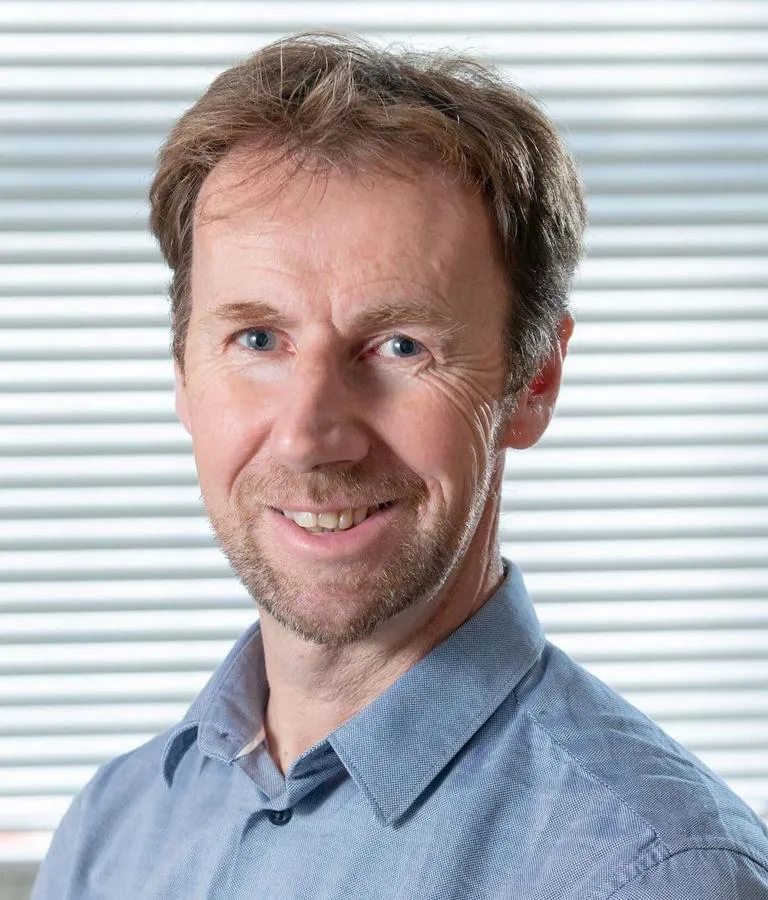
Professor Rodney Forster
Professor
Rodney is a Fellow of the Royal Society for Biology and a current member of the Defra Ocean Processes Evidence Group. His teaching and research interests include intertidal ecology, ocean colour, underwater optics and primary production.
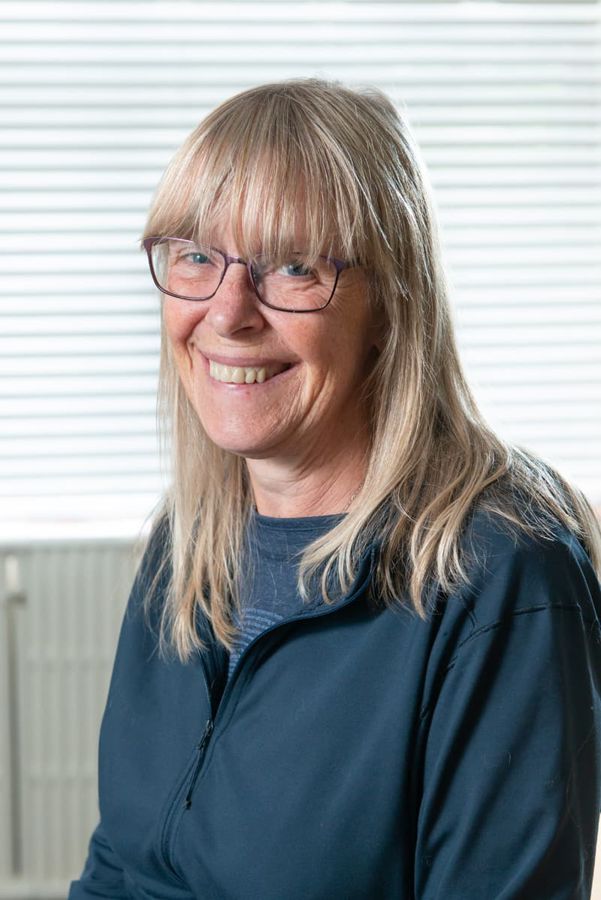
Dr Sue Hull
Senior Lecturer in Marine Biology and Ecology / Programme Director, Marine Biology
Sue is an intertidal marine ecologist and programme director for Marine Biology at Hull. She jointly won the CIRIA Award for Innovation in 2019 for her work on sea defences and is part of a research cluster looking at birds in the Humber Estuary.
Entry Requirements
What do I need?
This course has a range of tariffs for entry. Use the interactive slider to choose a number of points and see the course entry requirements.

Slide to set your points
A levels
BBB
BTEC
DDM
Equivalent qualifications and grades are accepted.
How to apply for this course
Most importantly, you need ambition. Together with our support and opportunities, you can go further than you ever thought possible.
Our typical offer for this course is 104-120 UCAS points. Our contextual offer is 96 points. But there’s no ceiling on ambition.
At least 80 points must come from A levels, BTEC, or other equivalent qualifications.
Remember, we look at your whole application – not just grades. Achievements, work experience, extracurricular activities: they all count here. We also consider qualifications and experience from the UK and worldwide that may not exactly match those listed.
Not sure if you’ll meet the entry requirements?
Talk to our Admissions team today. We’ll look at your circumstances, give you personalised guidance and help you understand your options, one of which could be a Foundation Year.
Fees & Funding
How much is it?
Tuition fees for 2028 entry have not been confirmed. Please use 2027-28 information as a guide.
For UK students, our standard course fee is £10,050 per year. Keep in mind that some courses are longer - for example, spending your third year abroad will make your degree four years in total.
If you choose to study a foundation year as part of your course, the fee is £10,050.
Thinking about a year in industry? This is £2,010 for UK students.
Planning a year abroad? This costs £1,505 for UK students.
Standard Tuition Fee
£10,050 / year
The amount you pay may increase each year, in line with inflation - but capped to the Retail Price Index.
How do I pay for it?
You can take out a tuition fee loan to cover the full cost of your course. Once you’ve successfully applied for this, you don’t need to do anything else – the money is sent straight to us.
You can also take out a maintenance loan of up to £10,544 a year to cover your living costs, depending on your household income.
Remember, you won’t start paying your loans back until you’ve left university and earn more than £25,000 per year.
See our full fees and funding information for more details and to find out what support we can offer.
Future prospects
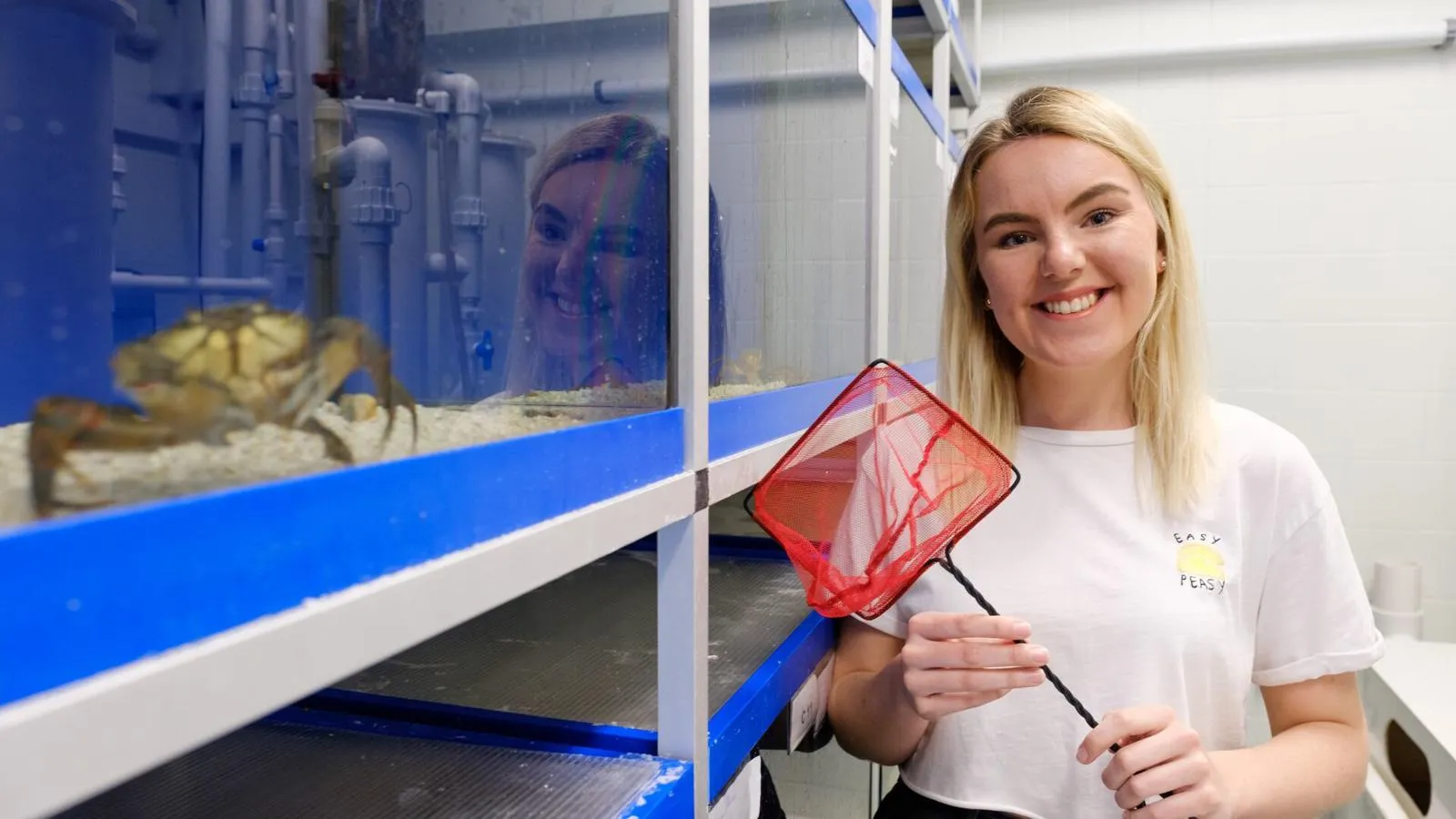
The field and lab skills you'll learn will open up a wide range of careers, such as being a scientific officer with organisations such as the Environment Agency, local councils or fisheries agencies.
Many of our graduates pursue careers in environmental consultancy or if you’re more focused on conservation, you can pursue a career with a wildlife trust or conservation organisation.
There’s also the option to move on to postgraduate study. Like our MSc in Environmental Change Management and Monitoring, a PhD, research Masters or teacher training.
Become part of the next generation of futuremakers
Like what you’ve seen? Then it’s time to apply.
The standard way to apply is through UCAS. This will give you the chance to showcase your skills, qualities and passion for the subject, as well as providing us with your academic qualifications.
Not ready to apply yet?
Visit our next Open Day, and see all that the University of Hull has to offer. Talk to our lecturers about your subject, find out what university is really like from our current students, and take a tour of our beautiful campus and amazing facilities.
You may also be interested in...
BSc (Hons) Biology
Undergraduate
Develop professional skills in industry-standard labs and enjoy field trips abroad on a BSc Biology degree at the University of Hull. Apply now.
C100
BSc (Hons) Biochemistry
Undergraduate
Explore the fascinating interface between biology and chemistry that leads to the complexity of life.
C700
Our friendly, supportive lecturers include winners of the Royal Society of Biology’s 'Higher Education Bioscience Teacher of the Year Award'.
Choose subsidised dive training as part of our Ecology module and become a PADI-certified Advanced Open Water Diver (extra fee may be payable).
Most overseas field trips run in the summer between the second and third year. There is an extra charge but the trips are subsidised. Destinations are subject to change.
All modules on this course page are subject to availability and this list may change at any time. All field trips on this course page are indicative and locations may change at any time