 Available in Clearing


Education is a powerful tool for social change.
This degree goes beyond the classroom, exploring how education can challenge inequalities, empower communities, and drive social change. You'll dive into both formal and informal education, uncovering its transformative potential to create a fairer, more just society.
Learning is hands-on and immersive. From practice placements and field trips to study visits and project-based learning, you’ll gain real-world experience that brings your studies to life. With a flexible mix of optional and compulsory modules, you can shape your degree around your passions, giving you the freedom to explore what excites you most. Plus, with opportunities to study or work abroad, you’ll expand your global perspective and build an impressive foundation for a career in education, community work, and beyond.

Joint 1st in the UK
for Value Added Score
The Guardian University Rankings, 2026

Learn hands on
with a work-based placement

Forest School
certification opportunity

600+ education partners
for real-world learning

Optional pathways:
SENDI, TESOL and JNC-qualified YCW

Early years
simulated learning environment
About this course
Gain the skills you need for the complex and ever-evolving educational landscape.
This degree explores education’s role in shaping society, focusing on inclusion, social justice, and lifelong learning. You’ll examine formal and informal education within cultural, societal, and political contexts, gaining insight into the impact of power, inequality, and alternative approaches to education.
Hands-on experience is at the heart of this course. You’ll take part in fieldwork, project-based learning, and professional placements in each year of study, with opportunities to work in schools, community settings, and alternative education environments. Students are typically on campus just two days per week, allowing flexibility for work, placements, and independent study. You can also study abroad for a semester or complete an international placement in your second year.
Your studies will cover a range of engaging topics, including education’s potential to drive social change, ethical dilemmas, and equality, diversity, and inclusion. Optional modules allow you to specialise in areas such as neurodiversity, youth work, special educational needs, or English language teaching. You’ll also have the chance to gain an accredited Forest School certification, equipping you to work outdoors with children while considering diverse learning needs.
By connecting theory with real-world practice, this degree prepares you for a range of careers in education, community work, policy, and beyond.
Want to change lives? Start with yours.
Foundation year
A foundation year at the University of Hull gives you a solid grounding of knowledge and boosts your academic skills, so you can progress on to your chosen programme with confidence.
The foundation course you enrol on may not be an exact match to your chosen degree, but don’t worry. Our foundation courses combine content from multiple related courses in the same subject area, giving you more flexibility and choice about the degree path you take.
For example, if you apply for a Music Foundation Year, you’ll join our Media Foundation course. So, if you decide to switch - say, from Music to Graphic Design - you can do so without restarting your foundation year.
Module options
Each year, you’ll study modules worth a certain number of credits, and you need 120 credits per year. Most modules are 20 credits – so you’ll study six modules each year. Some longer modules, such as a dissertation, are worth more. In these cases, you’ll study fewer modules - but the number of credits will always add up to 120. Some modules are compulsory, some are optional, so you can build a course that’s right for you.
No filters selected
Preparing for Learning in Higher Education
This module is designed to give you the best possible start to your university studies, making sure you have all the essential skills you need to succeed. Through lectures and workshops we will teach you how to write in an academic style, how to find quality sources, and how to reference work, culminating in writing up a mini-research project.
core
20 credits
Introduction to Education
This module sets the scene for the programme, starting with your own background and experience and exploring what education means, how it differs from schooling and key concepts and approaches. It will also help you to develop the academic skills necessary for your degree programme.
core
20 credits
Research in the Humanities, Social Sciences and Education
This module will equip you with the necessary skills to conduct and analyse research in a specific interest, supported by academics within your subject. You'll navigate through the research process, from identifying an area of interest to presenting findings to your peers.
core
20 credits
Group Challenge (Humanities)
Formulate and execute a group led enquiry into texts, cultural artefacts, film, music or dance. You'll explore their topics in groups at supervised workshops and develop questions on the cultural object relates to the living world of human experience, as well as developing your own methods to answer these questions.
compulsory
20 credits
Foundation in Data Analysis
Develop a strong foundation in data collection and analysis. This module will introduce you to qualitative and quantitative data and how to analyse it; the collection of primary and secondary data; the production of high-quality graphics; and report writing.
compulsory
20 credits
Academic Writing Skills
Developing confidence in expression, oral as well as written, is a key feature of this module, which aims to familiarise you with university submission and assessment procedures. This is a clear building block towards your degree programme and places you at a distinct advantage when you move into the following year.
compulsory
20 credits
Education, Power and Knowledge
This module offers you the opportunity to make a difference, through education, from the beginning of your studies. As agents of educational change, you will explore the issues you are passionate about, alongside fellow students and academics. You will examine how mainstream education has been shaped through agendas of power and how knowledge contributes to maintaining or disrupting current educational provision. This module then introduces you to alternate approaches to education, and to the direct action of educators and learners to do education differently. These approaches can act as drivers of social change to challenge poverty and inequity to enable education to create opportunities to develop flourishing communities at local, national and global contexts
compulsory
20 credits
Equality, Diversity and Inclusion
This engaging module provides foundation knowledge and skills that will enable you to develop understanding and analysis of social inequalities and the nature of discrimination in contemporary society. There will be opportunities to explore key equality legislation and policy. The module will explore the ethical and political rationale for developing equitable, diverse, and inclusive practices as part of an agenda for social justice and social change.
compulsory
20 credits
Learning Across the Lifespan
This module aims to build your understanding of theories of human development and learning in different phases of the lifespan.
It prepares you to think of ways to support learning by introducing you to a range of theories which may complement or be in tension with one another.
In developing an understanding of this underlying theoretical knowledge, you will have an awareness of different interventions across a range of situations and contexts.
‘Thinking with’ theories will help you understand theories in a situational way, bearing in mind that theories can be combined in various ways.
compulsory
20 credits
Our facilities
Watchlist
Dr Patricia Shaw
Course overview
2 mins
Rewilding Reading
Course Highlight
9 mins
Your course in their words
Student Story
2 mins
Featured academics
You'll benefit from the outstanding support of academic staff who are experienced education practitioners.
Our research is driven by the belief that education can challenge inequalities and injustices in society, and seeks social and educational change to enhance fairness, equity and social justice.

Dr Gill Hughes
Senior Lecturer
Gill’s research interests include social justice, community participation and engagement. She’s part of the British Science Association’s Ideas Fund project which enables the public to collaborate with researchers to address mental wellbeing.
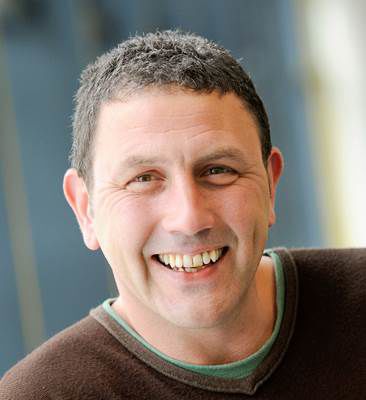
Tim Rudd
Lecturer
Tim is an experienced researcher and lecturer in education with extensive experience as the former CEO of live lab.
Entry Requirements
What do I need?
At Hull, you're a name, not a number. It's not just about the grades - we'll look at your whole application.
If you're not eligible for direct entry to this course, we may recommend a foundation year as an alternative route to studying for a degree.
To discuss your options, send us an enquiry or call us from 8am on Results Day on 01482 466100.
Every year, hundreds of students join the University of Hull through Clearing for all sorts of reasons and go on to achieve great things. Learn more about Clearing.
Qualification types
We accept a wide range of qualifications and combinations of qualifications, including A levels, BTECs and other accepted qualifications.
We don’t just see what you’re like on paper, we see you. All of you. Your achievements, work experience, music and sport qualifications and the projects you’ve been involved in. We want to hear it all.
Fees & Funding
How much is it?
Tuition fees for 2027 entry have not been confirmed. Please use 2026-27 information as a guide.
For UK students, our standard course fee is £9,790 per year. Keep in mind that some courses are longer - for example, spending your third year abroad will make your degree four years in total.
If you choose to study a foundation year as part of your course, the fee is £5,760.
How do I pay for it?
You can take out a tuition fee loan to cover the full cost of your course. Once you’ve successfully applied for this, you don’t need to do anything else – the money is sent straight to us.
You can also take out a maintenance loan of up to £10,544 a year to cover your living costs, depending on your household income.
Remember, you won’t start paying your loans back until you’ve left university and earn more than £25,000 per year.
See our full fees and funding information for more details and to find out what support we can offer.
Foundation Year Fee
£5,760
Standard Tuition Fee
£9,790 / year
The amount you pay may increase each year, in line with inflation - but capped to the Retail Price Index.

Future prospects
Graduates of this course move into impactful roles such as Education Welfare Officer, Pastoral Care Officer, Employability Tutor, and Training Consultant. Others take on positions like Social Action Leader, Project Coordinator, and Statutory Advocate, making a real difference in communities and educational settings.
The course also provides a strong foundation for postgraduate study, for example our MA Social Justice and Community Engagement or MA SENDI degrees, opening doors to advanced roles in education and beyond. You could also go on to further study with this recognised route to PGCE.
Become part of the next generation of futuremakers
Like what you've seen? Then it's time to apply.
The standard way is to apply through UCAS. This will give you the chance to showcase your skills qualities and passion for the subject, as well as providing us with your academic qualifications.
Not ready to apply yet?
Visit our next Open Day, and see all that the University of Hull has to offer. Talk to our lecturers about your subject, find out what university is really like from our current students, and take a tour of our beautiful campus and amazing facilities.
You may also be interested in...
BA (Hons) Education Studies (Special Educational Needs, Disability and Inclusion)
Undergraduate
Gain the skills to work with special educational needs children and inspire the next generation with a degree at the University of Hull. Apply now.
X301
BA (Hons) Education Studies (Teaching English to Speakers of Other Languages)
Undergraduate
Develop the expertise to teach English and empower learners worldwide with our BA TESOL degree at the University of Hull. Apply now.
X303
BA (Hons) Education Studies (Youth and Community Work)
Undergraduate
Inspire the next generation and make a difference in young lives with a BA Youth and Community Work degree at the University of Hull. Apply now.
X305
BEd (Hons) Education and Childhood Studies (1 year top-up)
Undergraduate
Top up your foundation degree on a course that combines academic theory with fun and creative ways to encourage young children to participate in learning.
X321
BA (Hons) Primary Teaching Studies
Undergraduate
This degree is a direct route into entry-level primary school teaching. You'll benefit from our excellent links with Primary Partnership schools.
X125
BA (Hons) Working with Children, Young People and Families
Undergraduate
Get the skills you need to work in health, education, social care and beyond, with this 2-year BA degree at the University of Hull. Apply now.
L592
All modules on this course page are subject to availability and this list may change at any time.