


There's a good reason why the Artistic Directors of the National Theatre and the Royal Court, plus Britain's foremost living playwright, are all Hull Drama graduates.
Because when you join Hull, you join a close-knit community of like-minded performers, producers, designers, writers, technicians and theatre makers that will help you to realise your full potential.
As one of the oldest Drama departments in the UK, this is a place – and a University – with a strong commitment to the performing arts, where you'll learn the skills to be a well-balanced theatre maker while you develop your talents in a specialism you love.

1st in the UK
for 'How often do teaching staff make the subject engaging'
Drama, National Student Survey (NSS) 2026, HEIs only

Industry links
with global arts organisations

3rd oldest
department for drama in the UK

World-class
400-seat performance venue

Create an acting showreel
alongside film and media students
Grade II-listed
flexible use theatre space

Teaching and theatre production
space, complete with a sound and light control room
About this course
As well as exploring the theories behind performance, you learn on the job in ensemble settings and practical projects. We teach you how to be a well-balanced theatre maker, while you develop your talents in a specialism you love. Whether it's as a performer, designer, creative technician, producer, writer or teacher.
You get exclusive access to our Gulbenkian Centre: a purpose-built theatre with studios and workshop areas. Every week, you get the chance to make theatre. From classical to experimental, by way of digital, educational and participatory performance. You also take part in at least two major productions each year. And you form a small theatre company in your final year.
You can tap into our close links with arts organisations, too, like leading theatre companies Hull Truck and Middle Child. And we’ll continue to support your career even after you graduate. Our artist-in-residence opportunities and regular networking events are always open to our alumni.
The final curtain is just the beginning
Module options
Each year, you’ll study modules worth a certain number of credits, and you need 120 credits per year. Most modules are 20 credits – so you’ll study six modules each year. Some longer modules, such as a dissertation, are worth more. In these cases, you’ll study fewer modules - but the number of credits will always add up to 120. Some modules are compulsory, some are optional, so you can build a course that’s right for you.
No filters selected
Introductory Performance Techniques
Develop practical and theoretical skills in theatre making. You'll work with your peers to create short devised performances, responding to plays from classical, Renaissance and contemporary theatre.
compulsory
20 credits
Production Project
In this module you will be introduced to the processes and expectations of production practice. You will have an opportunity to shape your first production to consolidate the experience you have gained before coming to university.
compulsory
20 credits
Introductory Production Technique
This module builds your skills in areas of specialism like lighting, sound, stage management, design and scenic construction, wardrobe, and theatre and performance technologies.
compulsory
20 credits
Approaches to Theatre Discourse
What intellectual and conceptual skills do we need to develop to become well rounded creative practitioners? How can discursive modes of enquiry like reading, discussing and presenting to peers inform our understanding of drama? How might we communicate our ideas to others? In this module you will explore the creative and cultural context of performance by engaging in critical, contextual and historical material.
compulsory
20 credits
Approaches to Theatre Exploration
How do processes of making theatre inform our understanding of drama? Can we develop the same kinds of insights by doing as we can by reading? Are ‘embodied’ insights qualitatively different, and how might they be communicated? In this module you will explore the creative and cultural context of performance by engaging in processes of production.
compulsory
20 credits
Industry Case Study
In this module you will learn about industry and company structures. You will be introduced to the Arts Council England funding model (on which we base many of our project proposals) and production processes and structures.
compulsory
20 credits
Theatre Practice: Research and Development
How should I plan for a major creative project? In this module you will bring together specialist skills that you have developed in techniques modules with culture making skills that you have looked at in Performance Perspectives modules to propose and plan a production project that you will complete next semester.
compulsory
20 credits
Theatre Practice: Production
In this module you'll work with other students to create a fully resourced production project, in line with the proposal that you developed in the Research and Development module.
compulsory
20 credits
Performance Perspectives: Contexts and Criticism
What intellectual and conceptual skills do we need to develop to become well rounded creative practitioners? What use is context and criticism if you are only interested in making performance? Examine frameworks for understanding performance from a range of perspectives. You'll explore theatre historiography, cultural theory, sociopolitical analysis and aesthetics.
compulsory
20 credits
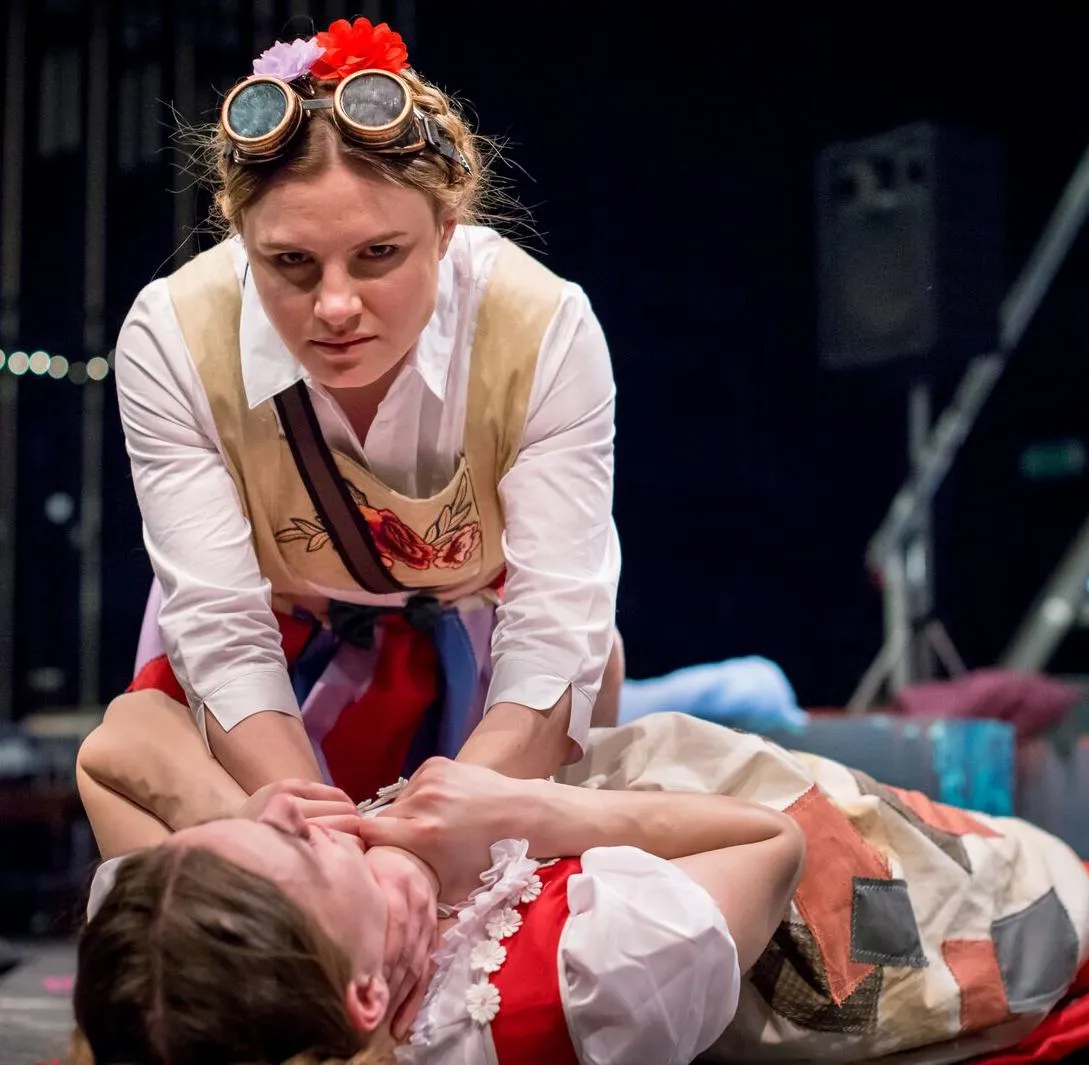
Are you festival-ready? You will be.
 Featured module
- compulsory
- 20 credits
Ready to bring your vision to life on a professional stage? This module is your final opportunity to create and deliver a large-scale performance project.
Working independently and collaboratively, you’ll develop a fully realised production based on your earlier research and ideas. From concept to performance, you’ll shape every aspect of your work – artistic, technical, and practical – culminating in a live public performance as part of a festival.
You’ll also reflect on your creative process and outcomes, analysing your work and development as a practitioner.
Showcase your talent, push creative boundaries, and take your final step towards a career in the creative industries.
Our facilities
Watchlist
Pavel Drabek
Course overview
2 mins
Alumnus James Graham
Student Story
2 mins
The Gold Standard for Teaching
University life
1 min
Life on campus
University life
2 mins
Featured academics
From directing plays to working on virtual theatre resources, our staff are active in the industry.
They bring their passion, energy and experience into everything you learn. And they’ll always encourage you to pursue your own creative ideas and interests.
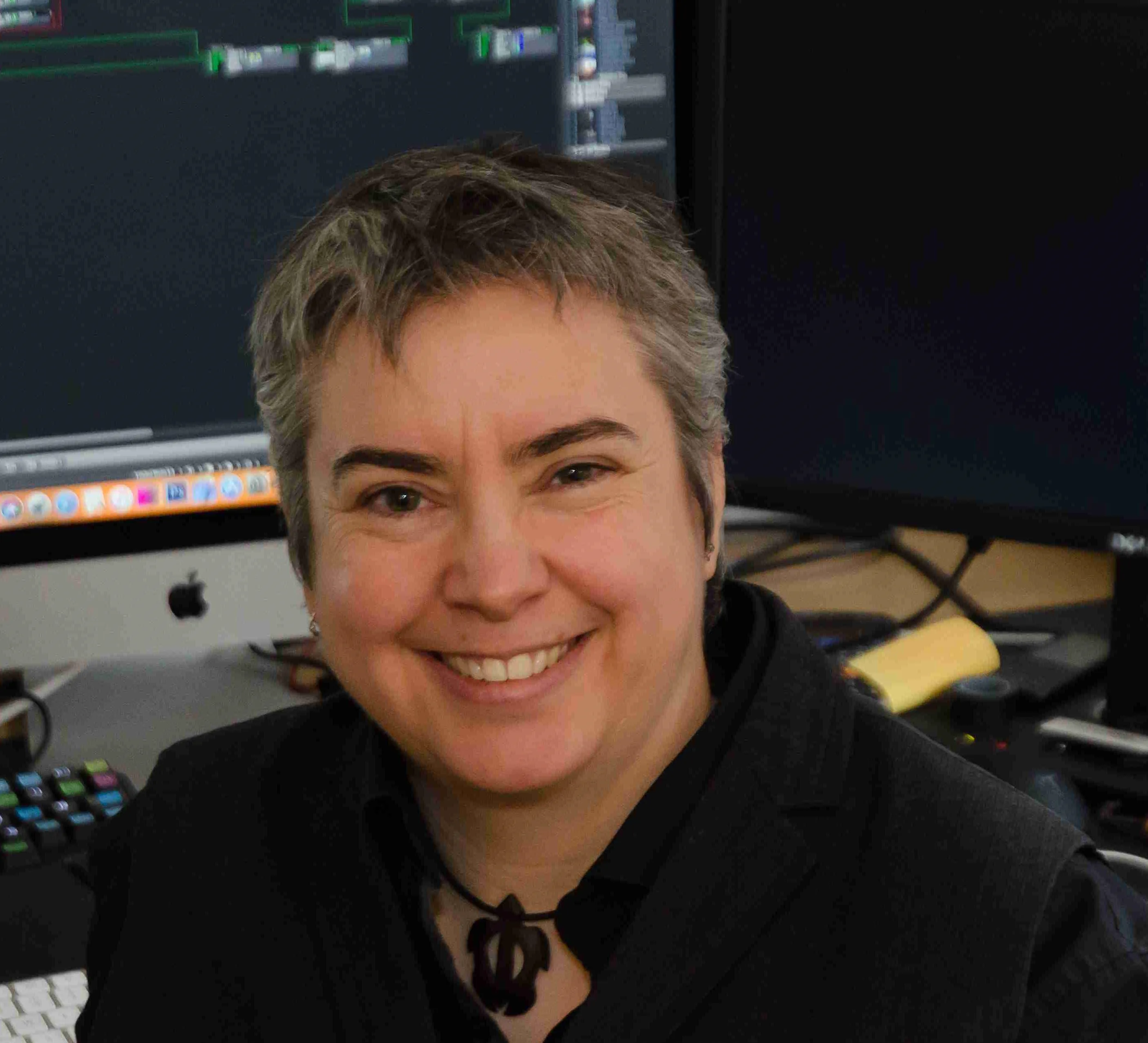
Dr Cat Fergusson-Baugh
Lecturer / Director of Drama
Cat has been a digital researcher & practitioner at Hull since 2007, specialising in theatre history, XR & digital performance. Cat's work spans Channel 4, Prague Quadrennial and projects from Drury Lane reconstructions to Oculus and binaural audio.
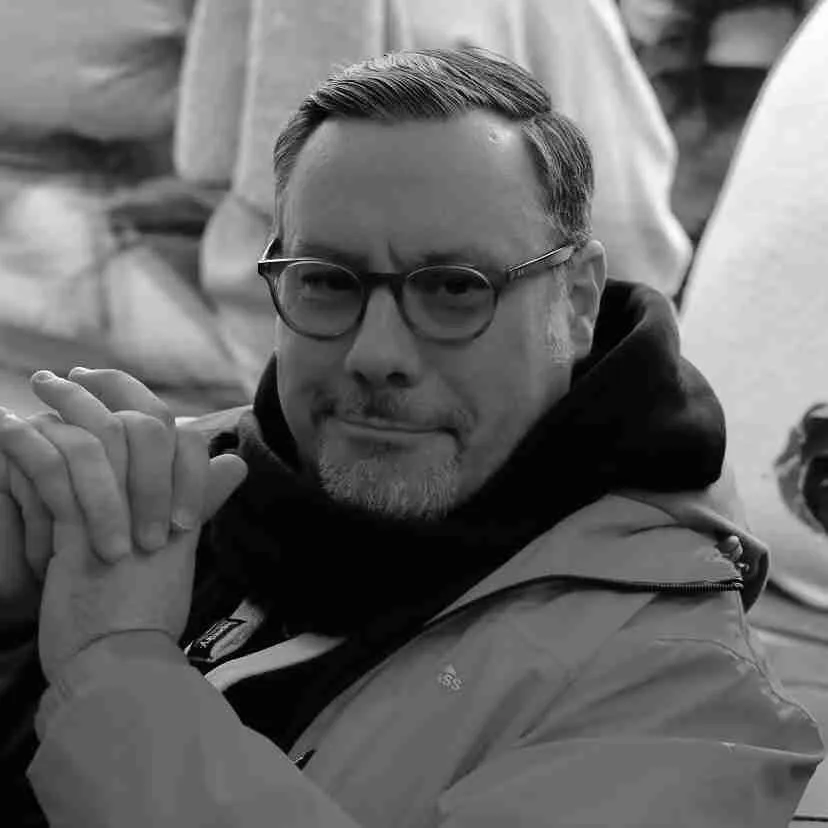
Dr Christian Billing
Reader in Drama (School of the Arts)
Dr. Christian Billing is Reader in Drama and Theatre Practice in the School of the Arts. His recent Eco Arts research has featured in numerous exhibitions, performances, in a BBC radio feature and in other broadcast media.
Entry Requirements
What do I need?
This course has a range of tariffs for entry. Use the interactive slider to choose a number of points and see the course entry requirements.

Slide to set your points
A levels
BBC
BTEC
DMM
Equivalent qualifications and grades are accepted.
How to apply for this course
Most importantly, you need ambition. Together with our support and opportunities, you can go further than you ever thought possible.
Our typical offer for this course is 96–112 UCAS points. Our contextual offer is 96 points. But there’s no ceiling on ambition.
At least 80 points must come from A levels, BTEC, or other equivalent qualifications.
Remember, we look at your whole application – not just grades. Achievements, work experience, extracurricular activities: they all count here. We also consider qualifications and experience from the UK and worldwide that may not exactly match those listed.
Not sure if you’ll meet the entry requirements?
Talk to our Admissions team today. We’ll look at your circumstances, give you personalised guidance and help you understand your options, one of which could be a Foundation Year.
Fees & Funding
How much is it?
Tuition fees for 2028 entry have not been confirmed. Please use 2027-28 information as a guide.
For UK students, our standard course fee is £10,050 per year. Keep in mind that some courses are longer - for example, spending your third year abroad will make your degree four years in total.
If you choose to study a foundation year as part of your course, the fee is £10,050.
Standard Tuition Fee
£10,050 / year
The amount you pay may increase each year, in line with inflation - but capped to the Retail Price Index.
How do I pay for it?
You can take out a tuition fee loan to cover the full cost of your course. Once you’ve successfully applied for this, you don’t need to do anything else – the money is sent straight to us.
You can also take out a maintenance loan of up to £10,544 a year to cover your living costs, depending on your household income.
Remember, you won’t start paying your loans back until you’ve left university and earn more than £25,000 per year.
See our full fees and funding information for more details and to find out what support we can offer.
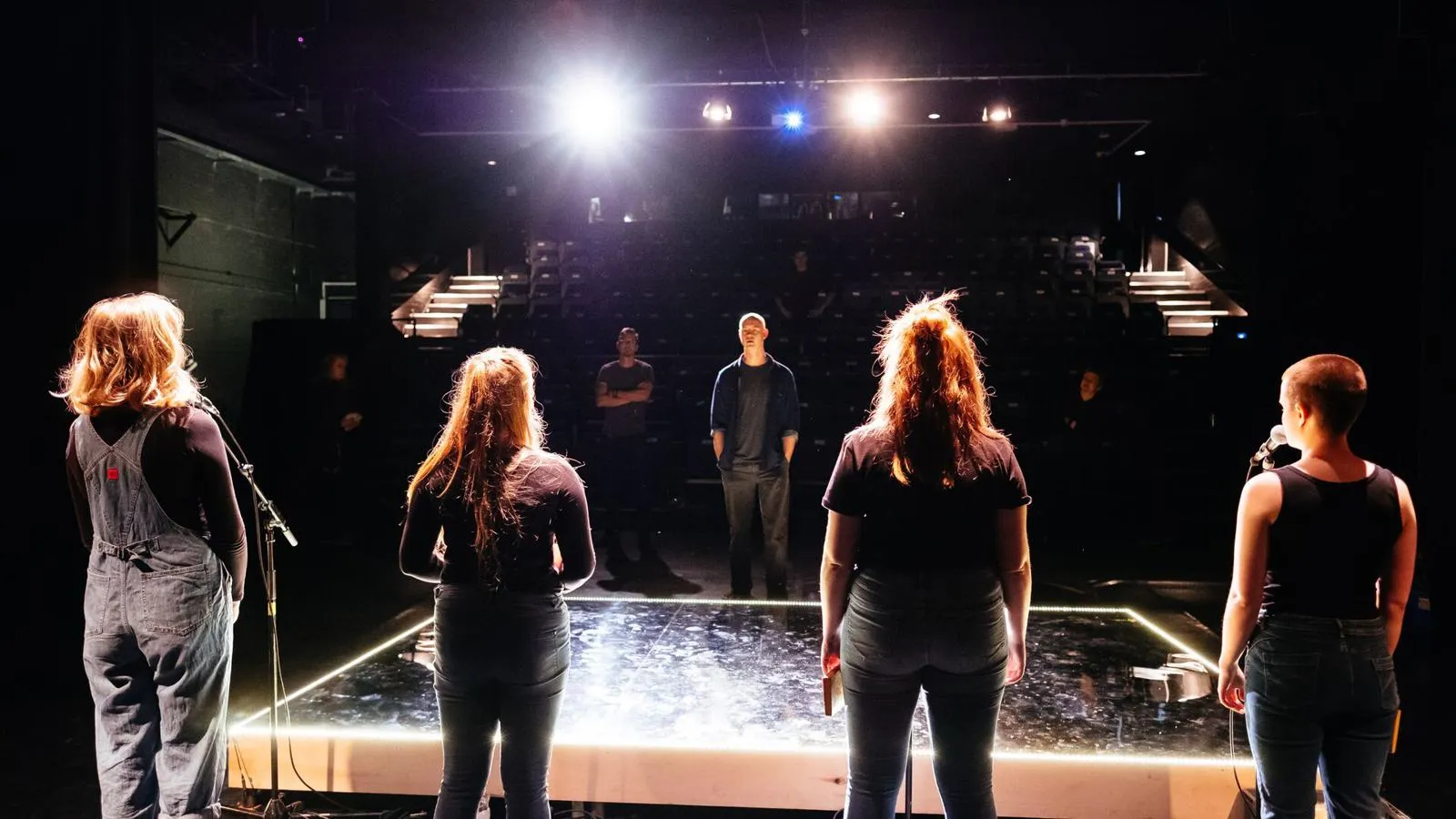
Future prospects
Our students go on to work for some of the world’s most prestigious theatres and companies: the Artistic Directors of both the The Royal Court Theatre and the National Theatre are Hull Drama graduates, and our alumni have also gone on to work at the Royal Shakespeare Company, the Royal Opera House, the Bouffes du Nord in Paris, and more. Many go into broadcasting for the BBC, Channel 4 and Sky.
Our alumni are illustrious. James Graham OBE, Olivier Award-winning playwright, graduated from Hull in 2003. His writing credits include This House (National Theatre), Sherwood (BBC One), and Brexit: The Uncivil War (Channel 4). Other Hull graduates include Indhu Rubasingham (Artistic Director of the National Theatre) David Byrne (Artistic Director of the Royal Court), theatre director Marianne Elliott, musical director Martin Lowe, and award-winning sound designer, Paul Arditti.
Become part of the next generation of futuremakers
Like what you've seen? Then it's time to apply.
The standard way is to apply through UCAS. This will give you the chance to showcase your skills qualities and passion for the subject, as well as providing us with your academic qualifications.
Not ready to apply yet?
Visit our next Open Day, and see all that the University of Hull has to offer. Talk to our lecturers about your subject, find out what university is really like from our current students, and take a tour of our beautiful campus and amazing facilities.
You may also be interested in...
BA (Hons) Acting
Undergraduate
Join a vibrant performance culture in unique facilities in the 3rd oldest Drama department in the UK, delivered in collaboration with Middle Child Theatre.
W410
BA (Hons) Film
Undergraduate
Ideal for those passionate about film, and want to develop a deeper understanding of its history and culture, alongside practical filmmaking experience.
W631
All modules presented on this course page are subject to availability and this list may change at any time.