 Available in Clearing




Discover the social, cultural, economic and political factors that lead to crime.
Drawing from real-world examples, you’ll explore the effects of crime on society and how society responds to crime. Our strong links with criminal justice agencies give us unique insight into the world of criminology – so everything you learn is shaped by the latest industry knowledge and techniques.
Get hands-on experience of crime scene investigation, the chance to apply for a Humberside Police placement, and develop in-demand skills. And graduate ready to work in this life-changing industry.

Joint 4th in the UK
for Value Added Score
Criminology, The Guardian University Rankings, 2026
3rd in the North of England
for 'How often does your course challenge you to achieve your best work'
Sociology, National Student Survey (NSS), 2026, HEIs only

Investigate criminal offences
in our campus crime scene room

Boost your CV
with a Humberside Police placement

Annual
Crime and Social Justice careers event

Over 50 years experience
in delivering Criminology programmes
About this course
Criminology and Sociology combine to help us understand how crime happens within social contexts.
You’ll consider your own attitudes to crime, criminals and victims. Explore the relationship between the individual and society, the concept of deviance and how offenders are punished. And be taught by expert staff that specialise in current criminology and criminal justice issues.
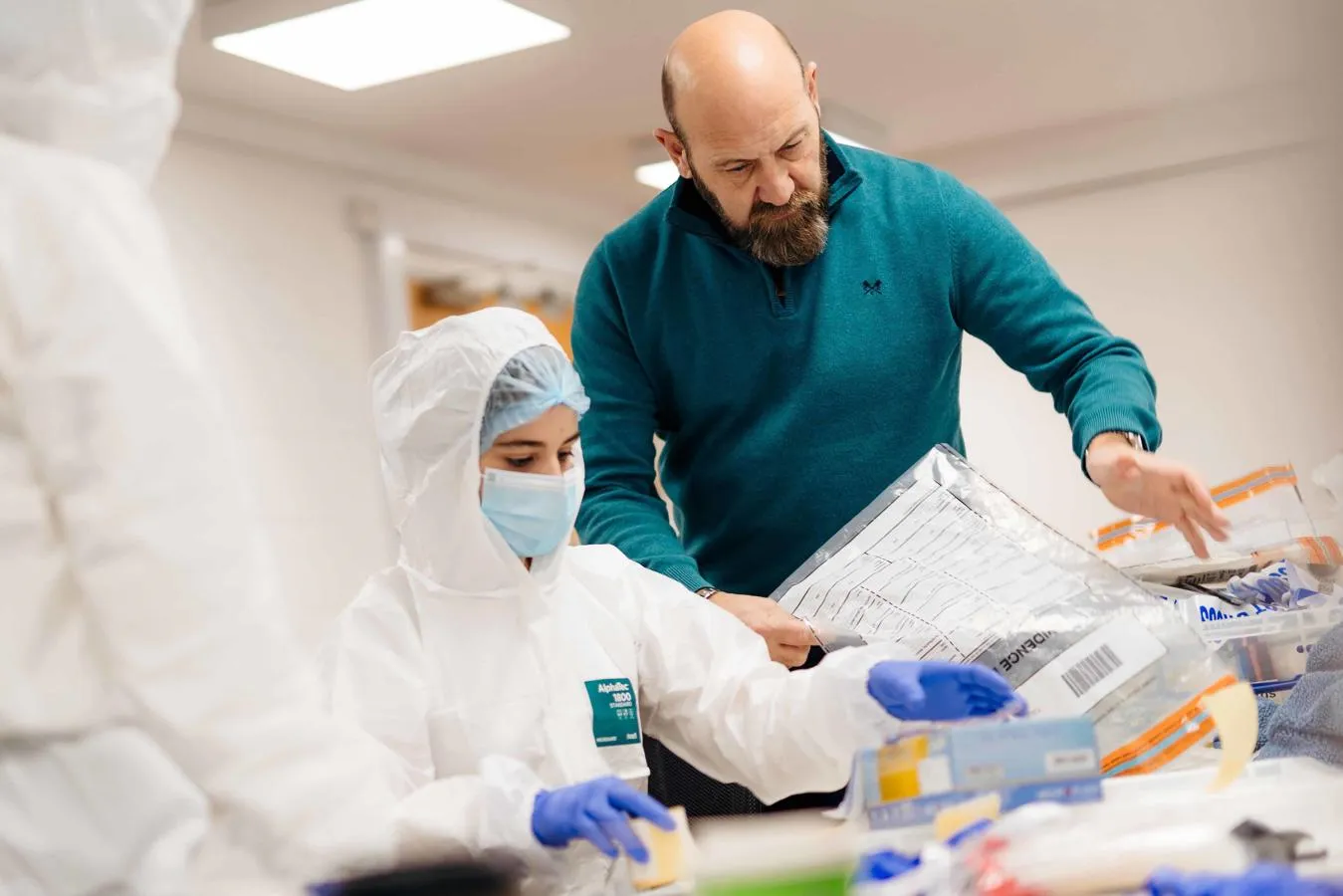
We’re one of the few universities in the UK to have a replica crime scene training facility on campus. So you can get to grips with collecting evidence, exploring criminal activity and see the world of forensic science brought to life.
You’ll put the theory into practice on field trips to courts, police stations and prisons, as well as policing projects and placements. All thanks to our close partnerships with local, regional and national criminal justice agencies.
You’ll get the chance to apply for a semester-long placement with Humberside Police. And can also meet significant regional and national employers at our annual Careers in Criminal Justice Fair.
Then graduate with practical experience that gives you an edge over the competition.
How do you stand up to injustice? Together.
Foundation year
A foundation year at the University of Hull gives you a solid grounding of knowledge and boosts your academic skills, so you can progress on to your chosen programme with confidence.
The foundation course you enrol on may not be an exact match to your chosen degree, but don’t worry. Our foundation courses combine content from multiple related courses in the same subject area, giving you more flexibility and choice about the degree path you take.
For example, if you apply for a Music Foundation Year, you’ll join our Media Foundation course. So, if you decide to switch - say, from Music to Graphic Design - you can do so without restarting your foundation year.
Module options
Each year, you’ll study modules worth a certain number of credits, and you need 120 credits per year. Most modules are 20 credits – so you’ll study six modules each year. Some longer modules, such as a dissertation, are worth more. In these cases, you’ll study fewer modules - but the number of credits will always add up to 120. Some modules are compulsory, some are optional, so you can build a course that’s right for you.
No filters selected
Preparing for Learning in Higher Education
This module is designed to give you the best possible start to your university studies, making sure you have all the essential skills you need to succeed. Through lectures and workshops we will teach you how to write in an academic style, how to find quality sources, and how to reference work, culminating in writing up a mini-research project.
compulsory
20 credits
Introduction to Social Science
This module is designed to provide you with an understanding of the key concepts underpinning research in the social sciences, including the value of appropriately used sources and data.
compulsory
20 credits
Research in the Humanities, Social Sciences and Education
This module will equip you with the necessary skills to conduct and analyse research in a specific interest, supported by academics within your subject. You'll navigate through the research process, from identifying an area of interest to presenting findings to your peers.
compulsory
20 credits
Group Challenge (Humanities)
Formulate and execute a group led enquiry into texts, cultural artefacts, film, music or dance. You'll explore their topics in groups at supervised workshops and develop questions on the cultural object relates to the living world of human experience, as well as developing your own methods to answer these questions.
compulsory
20 credits
Foundation in Data Analysis
Develop a strong foundation in data collection and analysis. This module will introduce you to qualitative and quantitative data and how to analyse it; the collection of primary and secondary data; the production of high-quality graphics; and report writing.
compulsory
20 credits
Academic Writing Skills
Developing confidence in expression, oral as well as written, is a key feature of this module, which aims to familiarise you with university submission and assessment procedures. This is a clear building block towards your degree programme and places you at a distinct advantage when you move into the following year.
compulsory
20 credits
Becoming a Criminologist
This is a foundational 40 credit module designed to introduce Criminology as a discipline in the 21st century and support you in an inclusive learning environment as you transition to higher education. You will learn about the practical and theoretical foundations you need to reach your potential for the years ahead. You will have the opportunity to use our Crime Scene Room to bring theory and practice together. Students are also supported in their academic and study skills, digital literacy, and teamwork to inform future studies.
compulsory
40 credits
Global Issues - Local Impact
The world is facing a number of global challenges that no country by itself is able to tackle. Disarmament and international peace, energy poverty, food and water resources, and climate change are just some of today's challenges. You'll learn about these global issues and how they affect people's lives in local communities.
compulsory
20 credits
Crime, Deviance and Society
Look back to the origins of criminology by focusing upon the concepts and study of deviance. You'll trace how crime and deviance have been - and continue to be - deeply intertwined.
compulsory
20 credits

When death teaches us about life
 Featured module
- optional
- 20 credits
Why does society remain so fascinated by murder - and how do we make sense of this most serious crime? This module introduces you to a range of perspectives on murder from legal, social, and cultural viewpoints.
You’ll explore how murder has been defined in law, how criminologists and society have attempted to explain it, and how responses to this crime have evolved over time. You’ll also examine how “murder most foul,” as Shakespeare described it, is represented in media and popular culture.
Through critical analysis of real cases, theories, and cultural portrayals, you’ll develop a deeper understanding of how society interprets and responds to extreme violence.
Uncover the realities behind the headlines and explore the complex forces that shape society’s response to murder.
Our facilities
Playlist
Dr Helen Nichols
Course overview
2 mins
Your course in their words
Student Story
2 mins
Fred Gough - Criminology student story
Student Story
2 mins
Police Placement
Course Highlight
2 mins
Life on campus
University life
2 mins
Featured academics
We were one of the first to teach criminology degrees over 50 years ago.
We’re still at the forefront today with research leaders on issues such as violent crime, social justice and desistance, prisons and restorative justice, cybercrime, and intelligence.

Dr Helen Nichols
Reader in Criminology
Helen’s research focuses on the experience and impact of contemporary adult male imprisonment. She has published a book on the subject and continues to actively research in the field of penology, currently exploring the wellbeing of prison governors.

Dr Alice Rizzuti
Lecturer
Alice’s expertise is in food crime and the involvements of organised crime and mafia-type groups as well as green criminology. She was a Research Associate for the CRIME - Countering Regional Italian Mafia’s Expansion – project.
Entry Requirements
What do I need?
At Hull, you're a name, not a number. It's not just about the grades - we'll look at your whole application.
If you're not eligible for direct entry to this course, we may recommend a foundation year as an alternative route to studying for a degree.
To discuss your options, send us an enquiry or call us from 8am on Results Day on 01482 466100.
Every year, hundreds of students join the University of Hull through Clearing for all sorts of reasons and go on to achieve great things. Learn more about Clearing.
Qualification types
We accept a wide range of qualifications and combinations of qualifications, including A levels, BTECs and other accepted qualifications.
We don’t just see what you’re like on paper, we see you. All of you. Your achievements, work experience, music and sport qualifications and the projects you’ve been involved in. We want to hear it all.
Fees & Funding
How much is it?
Tuition fees for 2027 entry have not been confirmed. Please use 2026-27 information as a guide.
For UK students, our standard course fee is £9,790 per year. Keep in mind that some courses are longer - for example, spending your third year abroad will make your degree four years in total.
If you choose to study a foundation year as part of your course, the fee is £5,760.
How do I pay for it?
You can take out a tuition fee loan to cover the full cost of your course. Once you’ve successfully applied for this, you don’t need to do anything else – the money is sent straight to us.
You can also take out a maintenance loan of up to £10,544 a year to cover your living costs, depending on your household income.
Remember, you won’t start paying your loans back until you’ve left university and earn more than £25,000 per year.
See our full fees and funding information for more details and to find out what support we can offer.
Foundation Year Fee
£5,760
Standard Tuition Fee
£9,790 / year
The amount you pay may increase each year, in line with inflation - but capped to the Retail Price Index.
Future prospects
Demand for Criminologists with insight into the impact of crime on society is higher than ever.
The knowledge and skills gained on our Criminology degrees are genuinely career enhancing. Through placements, work experience and a diverse course of study and research, you’ll gain the key skills that are in demand across a wide range of careers.
You could go onto roles within the police force, HM Prison Service, the Probation Service, legal professions, social work, the charity sector or the Civil Service.
Become part of the next generation of futuremakers
Like what you've seen? Then it's time to apply.
The standard way is to apply through UCAS. This will give you the chance to showcase your skills qualities and passion for the subject, as well as providing us with your academic qualifications.
Not ready to apply yet?
Visit our next Open Day, and see all that the University of Hull has to offer. Talk to our lecturers about your subject, find out what university is really like from our current students, and take a tour of our beautiful campus and amazing facilities.
You may also be interested in...
BA (Hons) Criminology
Undergraduate
Explore the diverse factors that cause crime with our BA Criminology degree. Apply today and study at a leading centre for criminology.
M930
BA (Hons) Criminology with Law
Undergraduate
Combining criminology with law, you'll focus on the connection between crime and criminal justice while gaining a sound understanding of the legal system.
M9M1
BA (Hons) Criminology with Psychology
Undergraduate
Alongside gaining a thorough understanding of crime and criminal justice, you'll also explore human behaviour, performance and decision making.
M9C8
BA (Hons) Criminology with Forensic Science
Undergraduate
Explore the laboratory and field techniques of the forensic scientist alongside the causes and solutions to crime on this fascinating degree.
M9F4
All modules on this course page are subject to availability and this list may change at any time.