





The skills, experience and technical expertise you’ll gain on a Computer Science degree at Hull put you in high demand when it’s time to enter the job market in this fast-moving industry.
Gain a rock-solid grounding in the fundamentals of computing, information science and informatics. Learn to problem solve using logical thinking. Develop programming and professional skills. Then choose from specialist modules to tailor your learning to the career and computer science jobs you want.

93% of students
in work or further study 18 months after graduating
HESA Graduate Outcomes, 2026

1st in the UK
for 'To what extent are students' opinions about the course valued by staff'
Artificial Intelligence, National Student Survey (NSS) 2026, HEIs only
5th in the UK
for 'How good are teaching staff at explaining things'
Computer Science, National Student Survey (NSS) 2026, HEIs only
5th in the UK
for 'How easy is it to access subject specific resources (e.g., equipment, facilities, software) when you need them'
Computer Science, National Student Survey (NSS) 2026, HEIs only
This course is accredited by


Get paid
on an optional placement year in industry

Five specialist labs
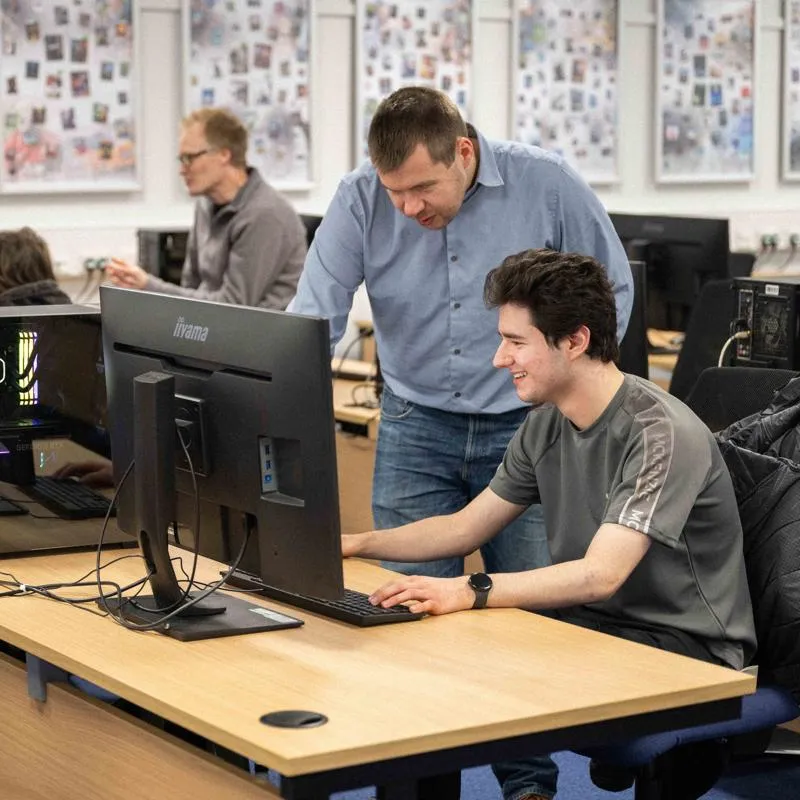
including high spec machines, dedicated for Computer Science students

We're naturally artificial.
Gain real-world skills on a degree with AI at its core

Industry standard facilities
like our Turing and Superlab

Compete in events
like Hull’s unique “Three Thing Game", or the UK and Ireland Programming Competition

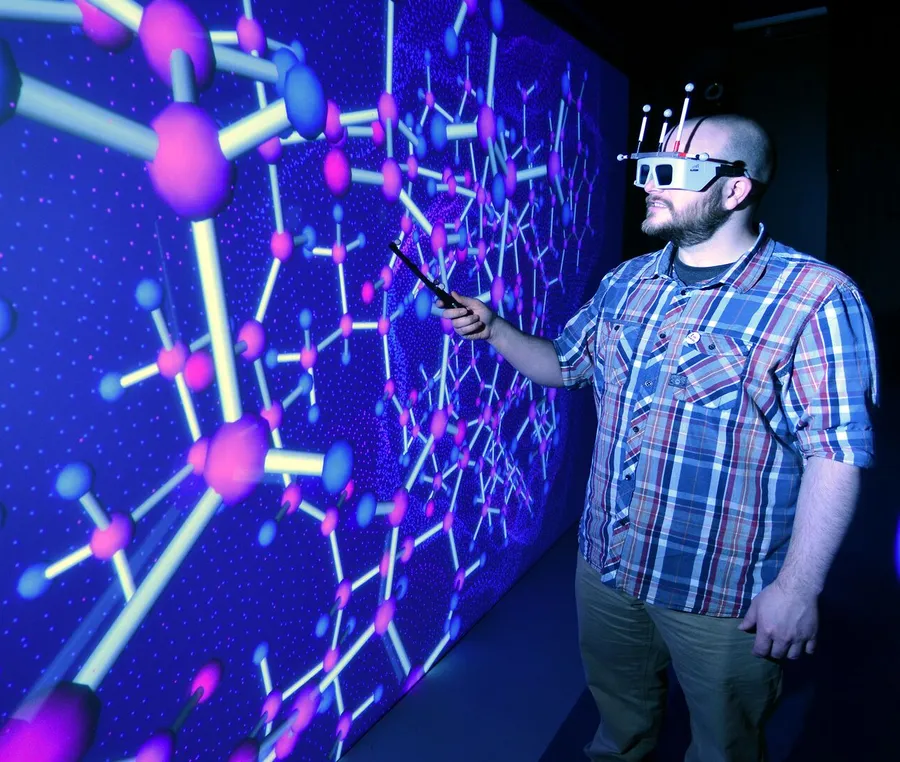
Experience HIVE’s
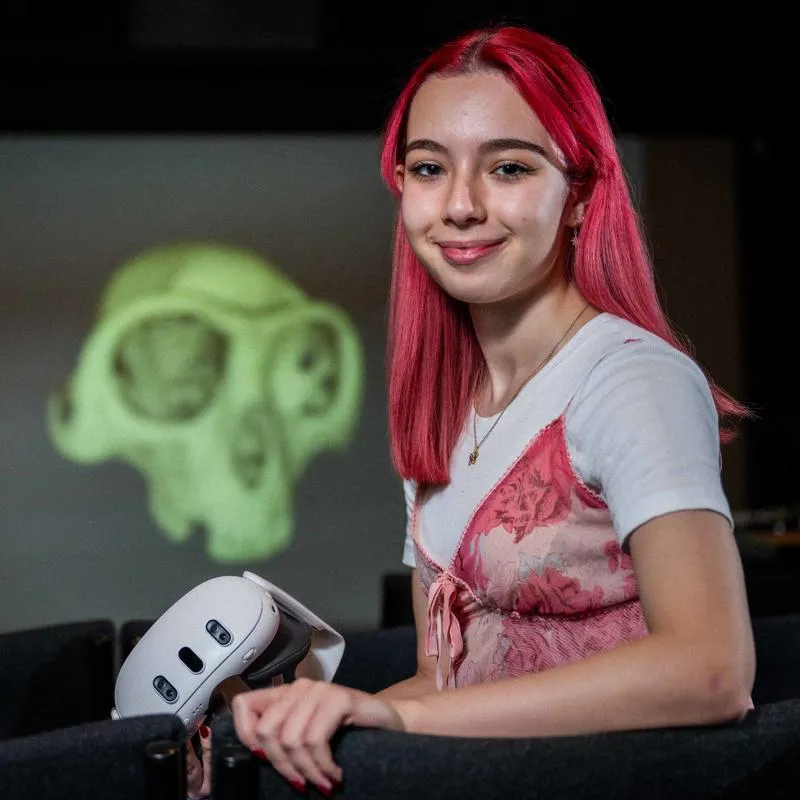
immersive visualisation technology

Fully refurbished
Superlab

Integrated Masters option.
Undergraduate and Postgraduate study combined
Robotics Lab
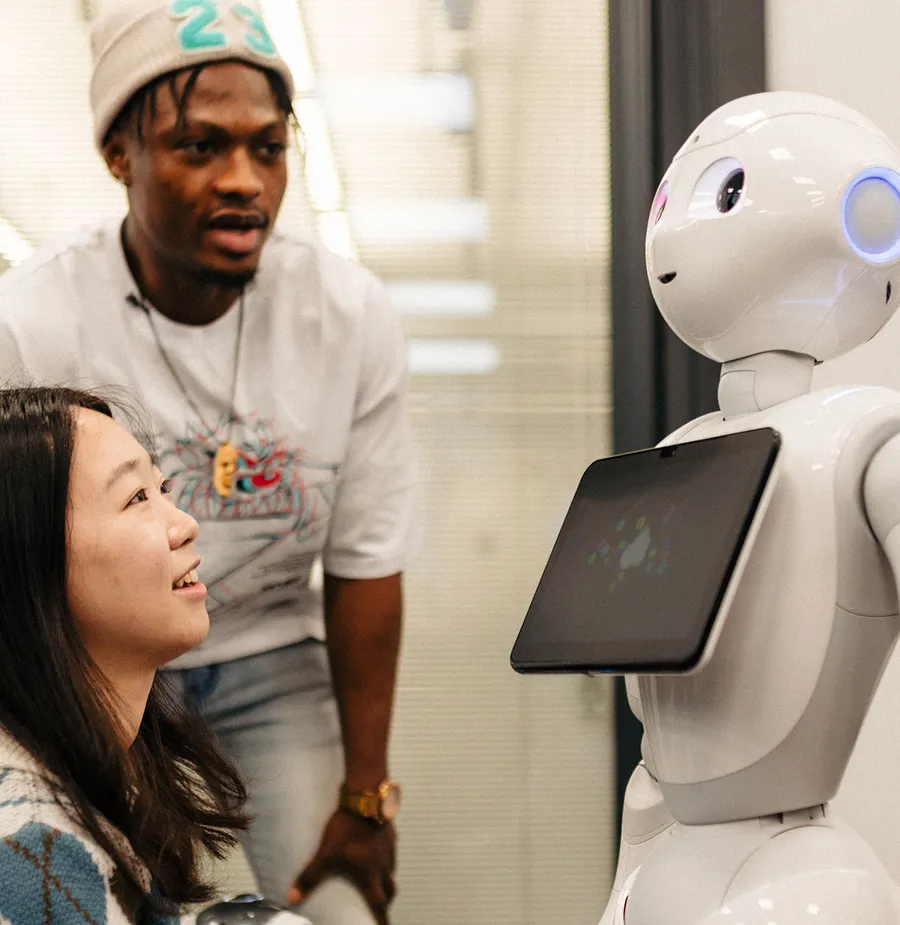
with humanoids, Nano robots and drones
About this course
Discover the rapidly evolving technological advances and exciting challenges of computer science on this British Computer Society accredited degree.1
Gain a thorough understanding of the computing essentials before choosing from specialist modules including advanced programming, computer vision and mixed reality development.
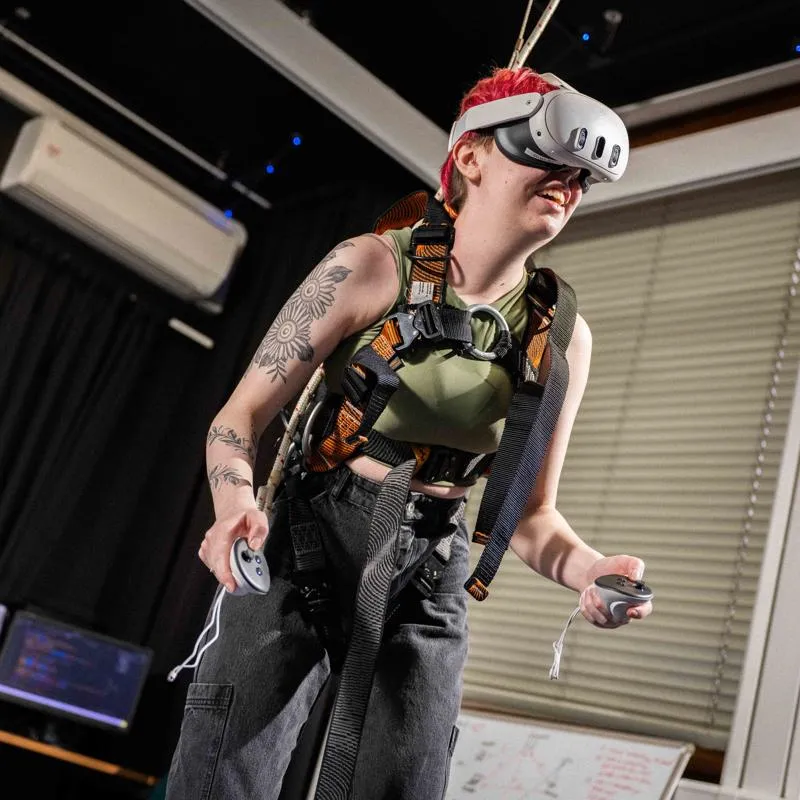
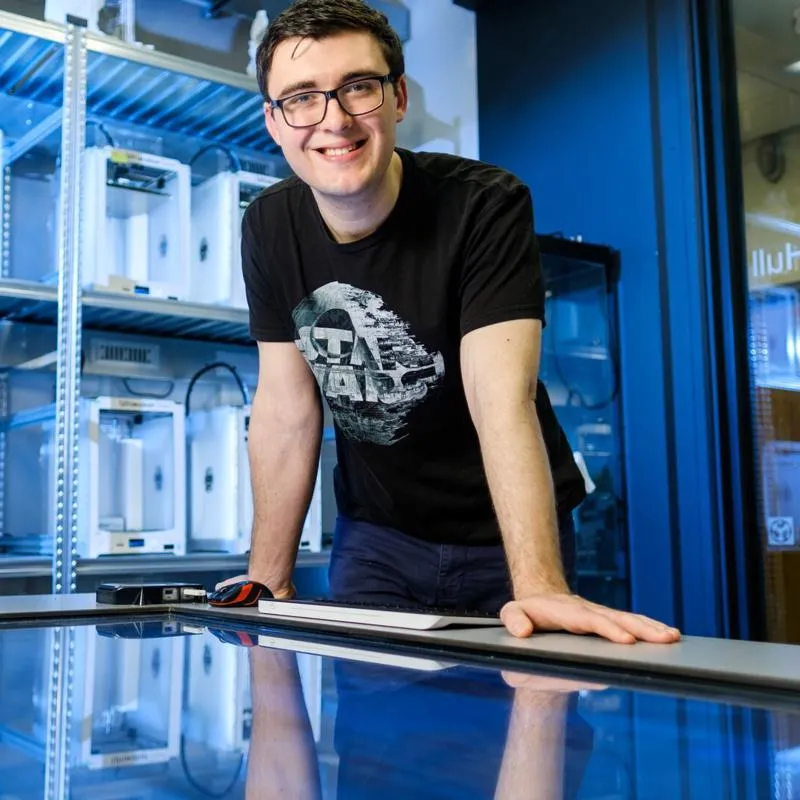
You’ll have access to the latest industry-standard equipment, including high-performance workstations, gigabit networking, 3D printers, robots, a 3D immersive cube, motion capture, AR, VR and MR.
Gain paid experience, build contacts and test your skills in the real world with a placement year at companies such as BT, BAE Systems, Microsoft or IBM. Similar to an apprenticeship, your placement gives you hands-on industry experience - but it’s fully integrated with your degree, so you also benefit from academic learning, student life, and the career flexibility that comes with a university qualification.
You’ll benefit from our strong links with companies like EA, Sony and Black Marble with frequent talks by experts in the trade. And you could compete in international events like the Microsoft Imagine Cup. Or rise to the challenge of creating a computer game over a weekend in our Three Thing Game.
You’ll leave as a well-rounded computer science graduate complete with a standout CV.
Immerse yourself in tomorrow’s world today.
Module options
Our five undergraduate Computer Science courses share the same compulsory modules in the first year. This gives you a foundation of knowledge across the whole subject area and the chance to explore what really interests you. You're then better placed to choose your modules in the later years of our BSc Computer Science, or switch to a different pathway to specialise in games programming, software engineering, robotics or AI.
No filters selected
Programming Portfolio
Core tools: C#
Whether you've never written a line of code or you've been tinkering for years, this module meets you where you are. You'll learn to think like a programmer — breaking problems down, writing clean logic, and building working software in C#. By the end of the year you'll have moved from your very first program to designing with classes, objects and inheritance.
You'll explore:
- Core programming building blocks — variables, loops, functions and data types
- Searching, sorting and working with arrays, stacks and queues
- Object-oriented programming — classes, inheritance and encapsulation
- Reading, writing and managing code like a professional, using source control
core
40 credits
Computational Thinking
Core tools: programming platforms and mathematical software
Computing is bigger than any one programming language — this module is about how to think as a computer scientist. Drawing on a genuinely global history of innovation, you'll build the mathematical and logical foundations that everything else on your degree rests on.
You'll explore:
- Abstraction and computational methods
- The maths behind computing — algebra, number systems and statistics
- Logic, Boolean algebra and set theory
- Vectors and matrices, and their uses in graphics, AI and data
- Practical aspects of how computers handle different number types and the way that mathematical libraries and tools can help to do the actual calculations
compulsory
20 credits
Algorithms and Data Structures
Every great piece of software starts with a great idea for how to solve the problem — that's what this module teaches you to find. You'll step away from the screen and learn to think in code before you write it, exploring the algorithms and data structures that separate software that merely works from software that works brilliantly.
You'll explore:
- Pseudocode and state machines for planning before you program
- Core data structures, and how to choose the right one for the job
- Sorting and searching algorithms, and how to measure their efficiency
- Design thinking that carries into every other module on your degree
compulsory
20 credits
Databases and the Cloud
Core tools: C#, Microsoft SQL Server
Modern software rarely stores its data on just one machine anymore — this module shows you how databases and the cloud work together to make that possible. You'll learn how cloud computing and virtualisation actually work, then design and build real databases, from relational systems through to NoSQL, before bringing the two together to build a working application backed by a database hosted in the cloud.
You'll explore:
- Designing and implementing relational and NoSQL databases
- Virtualisation, containers, and the cloud service models behind them — IaaS, PaaS and SaaS
- Connecting a real application to a cloud-hosted database
- Cloud security, reliability and disaster recover
compulsory
20 credits
Professional Development
A computer science degree is about more than code — this module helps you build the career to go with it. You'll explore the ethical, legal, social and sustainability challenges facing the sector, and the professional skills that set graduates apart. A hands-on team project puts those skills into practice straight away, while you start building a portfolio that showcases your work.
You'll explore:
- Sector challenges — ethics, diversity, sustainability and cybersecurity
- Communication, research and self-presentation skills
- Real teamwork on a programme-specific group project
- Building your own professional portfolio
compulsory
20 credits
Design, Develop, Deploy
This is where you learn to build software the way the industry actually builds it — from first idea to live deployment. As the backbone module of your second year, you'll work through the entire software development lifecycle, solo and as part of a team, picking up the methodologies and tools employers expect you to know.
You'll explore:
- Agile, iterative and waterfall development approaches
- Gathering and modelling real-world requirements
- Test-driven and behaviour-driven development
- Version control, CI/CD and cloud deployment with GitHub Actions
core
40 credits
Artificial Intelligence
Learn to build the kind of intelligent systems that are reshaping every industry and understand the ethics behind them. You'll get a practical grounding in how AI actually works, from the history of the field to the algorithms powering it today, building your own solutions to real problemsolving challenges along the way.
You'll explore:
- The history and ethics and trustworthy of artificial intelligence
- Pathfinding and problem-solving search algorithms
- Supervised and unsupervised learning, and neural networks
- Reasoning under uncertainty with Bayesian methods, and an introduction to reinforcement learning
- A brief introduction of fairness, explainability and AI Safety
compulsory
20 credits
Advanced Programming
Core tools: C++ C++ powers everything from games engines to spacecraft — this module shows you why, from the inside out. You'll push beyond the basics of object-oriented programming and get close to the machine, exploring what's really happening between your code and the processor.
You'll explore:
- Templates and the Standard Template Library
- Composition and inheritance in advanced data structures
- Pointers, memory management and the “gang of three”
- Assembly language and debugging at the processor level
optional
20 credits
eXtended Reality Development
Core tools: 3d Headsets, Unity
Step into worlds that don't exist yet — this module teaches you how to build them. Grounded in the science of human perception, you'll explore what makes virtual and mixed reality genuinely convincing, then get hands-on with hardware and software tools used to build believable XR experiences.
You'll explore:
- The human visual, auditory, and vestibular systems that create presence
- VR and MR hardware and display technologies
- Designing XR applications for cost-effective, believable immersion
- Evaluating and measuring user experience in XR environments
optional
20 credits

What does it take to keep software alive? You.
 Featured module
- core
- 40 credits
Learn how successful software products move from idea to deployment. You’ll explore the software development lifecycle and design, develop and deploy software solutions, both individually and as part of a team.
Explore software development methodologies, including waterfall and agile approaches, alongside requirements gathering, stakeholder research and the legal and ethical considerations involved in developing software.
You’ll put this into practice through real software projects, using industry-standard tools and techniques for software design, testing, version control and agile project management, including Scrum and Kanban. You’ll also examine deployment and maintenance practices, including cloud infrastructure, DevOps and continuous integration.
Our facilities

Watchlist
BSc Computer Science
Course overview
3 mins
MEng Computer Science
Course overview
2 mins
Rand Nessif
Unsame Stories
2 mins
See our incredible labs
Course Highlight
2 mins
Featured academics
Enjoy unmatched flexibility in our Computer Science programme, supported by experts from across all areas of the subject, so you can customise your degree around your interests and career goals.
You’ll be taught by talented researchers whose specialist areas include computational science; computer gamification; dependable intelligent systems; robotics and artificial intelligence; and simulation and visualisation.

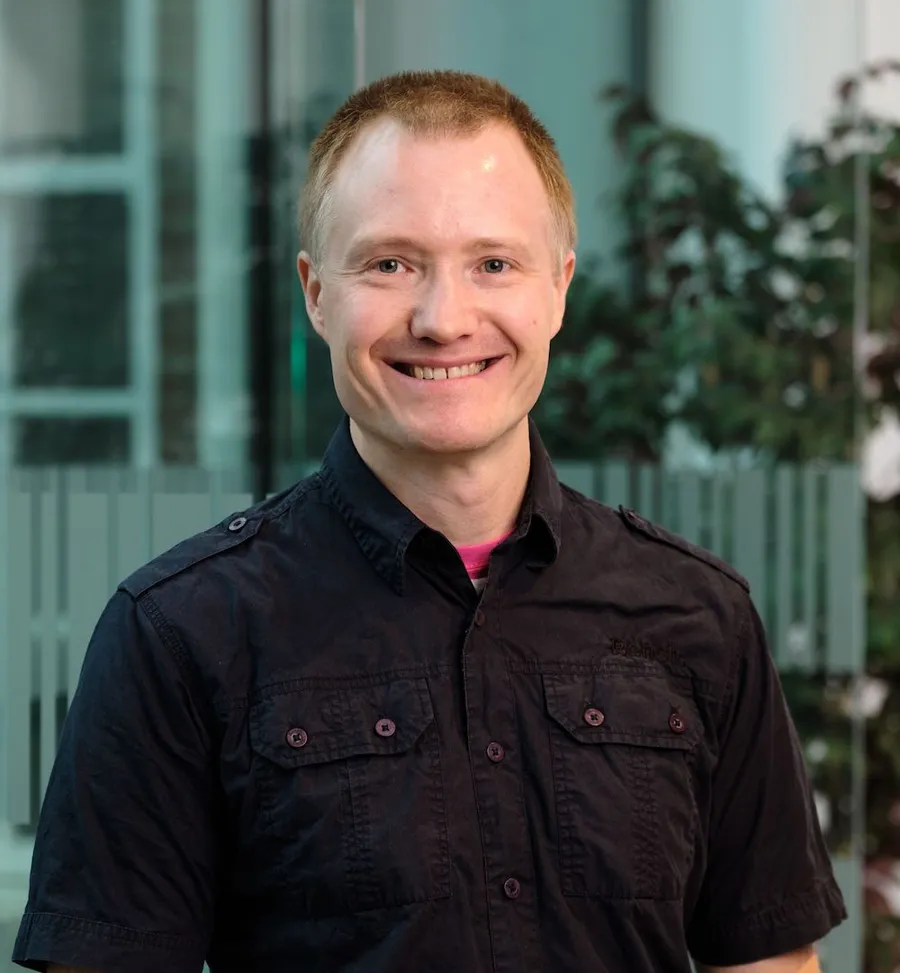
Dr David Parker
Lecturer in Computer Science
David loves using software to solve problems and oversees many of our game jams and programming competitions such as the Three Thing Game and the Global Game Jam. His research focuses on improving characteristics of safety-critical systems.


Dr John Dixon
Lecturer in Computer Science
John is a computer science researcher, lecturer and software engineer and developer. He specialises in networking, connected services and distributed systems, C# and .NET. He’s developed mission-critical solutions for the fire and rescue services.
Entry requirements
How to apply for this course
At Hull, you're a name, not a number. It's not just about the grades - we'll look at your whole application.
If you're not eligible for direct entry to this course, we may recommend a foundation year as an alternative route to studying for a degree.
To discuss your options, send us an enquiry or call us from 8am on Results Day on 01482 466100.
Every year, hundreds of students join the University of Hull through Clearing for all sorts of reasons and go on to achieve great things. Learn more about Clearing.
Qualification types
We accept a wide range of qualifications and combinations of qualifications, including A levels, BTECs and other accepted qualifications.
We don’t just see what you’re like on paper, we see you. All of you. Your achievements, work experience, music and sport qualifications and the projects you’ve been involved in. We want to hear it all.
Fees & funding
How much is it?


Future prospects
What can you do with a computer science degree? It depends.. do you want to create the next generation of software? Or develop apps or computer games for a living? Or set up your own tech business? You’ll open up all these careers and more with a Computer Science degree at Hull.
Graduate careers include computing, video games, teaching or the business, financial and public sectors. Many of our graduates go on to work for industry giants such as Sony, Microsoft, Electronic Arts, Rockstar Games, Dell, Fujitsu and Capita as well as not-for-profit businesses and public sector organisations. Some move on to further study with an MSc or PhD. And some have gone on to set up and grow their own tech businesses.
Become part of the next generation of futuremakers
Like what you've seen? Then it's time to apply.
The standard way is to apply through UCAS. This will give you the chance to showcase your skills, qualities and passion for the subject, as well as providing us with your academic qualifications.
Not ready to apply yet?
Visit our next Open Day, and see all that the University of Hull has to offer. Talk to our lecturers about your subject, find out what university is really like from our current students, and take a tour of our beautiful campus and amazing facilities.
You may also be interested in...
BSc (Hons) Artificial Intelligence
Undergraduate
Explore how artificial intelligence is rapidly transforming the way we live in this career-driven degree at the University of Hull. Apply now.
G700
BSc (Hons) Computer Science for Games Programming
Undergraduate
Learn how to develop games for a living. Then step inside them in our 3D immersive cube. All while training to be a chartered IT professional.
G495
BSc (Hons) Robotics and Artificial Intelligence
Undergraduate
See how robots and AI are transforming our lives and access industry-standard facilities on Hull's BSc / MEng Robotics and Artificial Intelligence degree.
HI40
BSc (Hons) Software Engineering
Undergraduate
Specialise in software development on this British Computer Society accredited BSc degree at the University of Hull. Apply now.
G600
Accredited by BCS, The Chartered Institute for IT, for the purposes of fully meeting the academic requirement for registration as a Chartered IT Professional, and partially meeting the academic requirement for a Chartered Engineer (for MEng, fully meeting the requirement for a Chartered Engineer).
All modules presented on this course page are subject to availability and this list may change at any time.