SHEroic Journeys
Vietnamese Women’s eco-trekking tales for climate action
Project summary
The Challenge
Climate pressures and tourism growth run the risk of displacing ethnic minority women in Northern Vietnam, despite their vital cultural knowledge and sustainable practices.
The Approach
Creative, participatory interventions to amplify women’s stories through co produced art, museum exhibitions, and dialogue with policymakers, NGOs and tour operators.
The Outcome
Women’s voices are elevated, strengthening sustainable tourism dialogue, and showcasing their climate resilience knowledge to influence policy and practice.
Lead academics
Project funded by

Project Partners
Loughborough University
Vietnam National University
Vietnamese Women’s Museum
Sustainable SHeroes
We're amplifying climate‑resilience stories from Vietnamese ethnic minority women, to help shape fairer, more sustainable tourism.
The Challenge
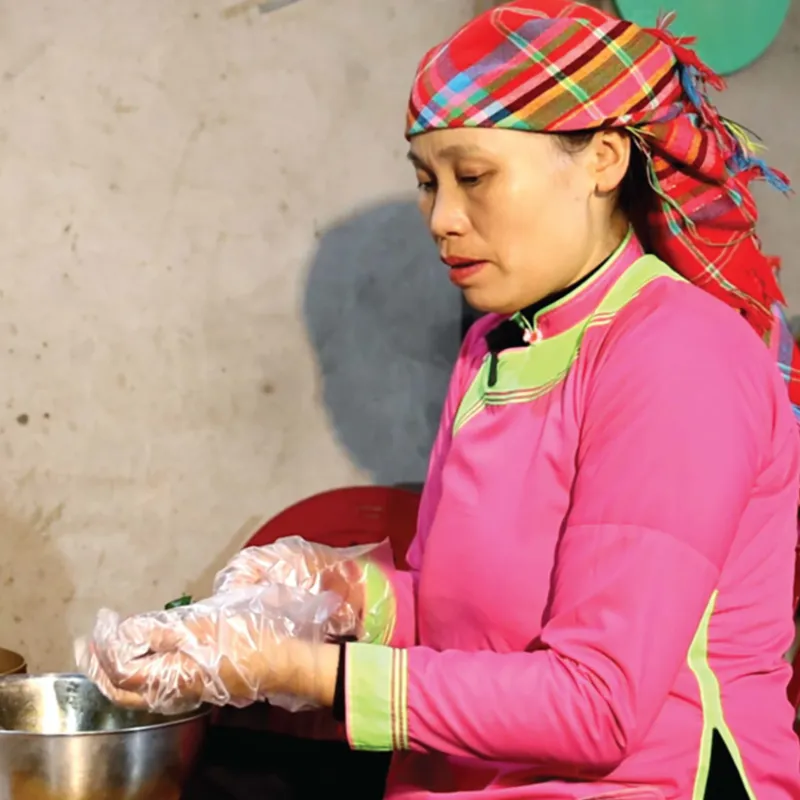
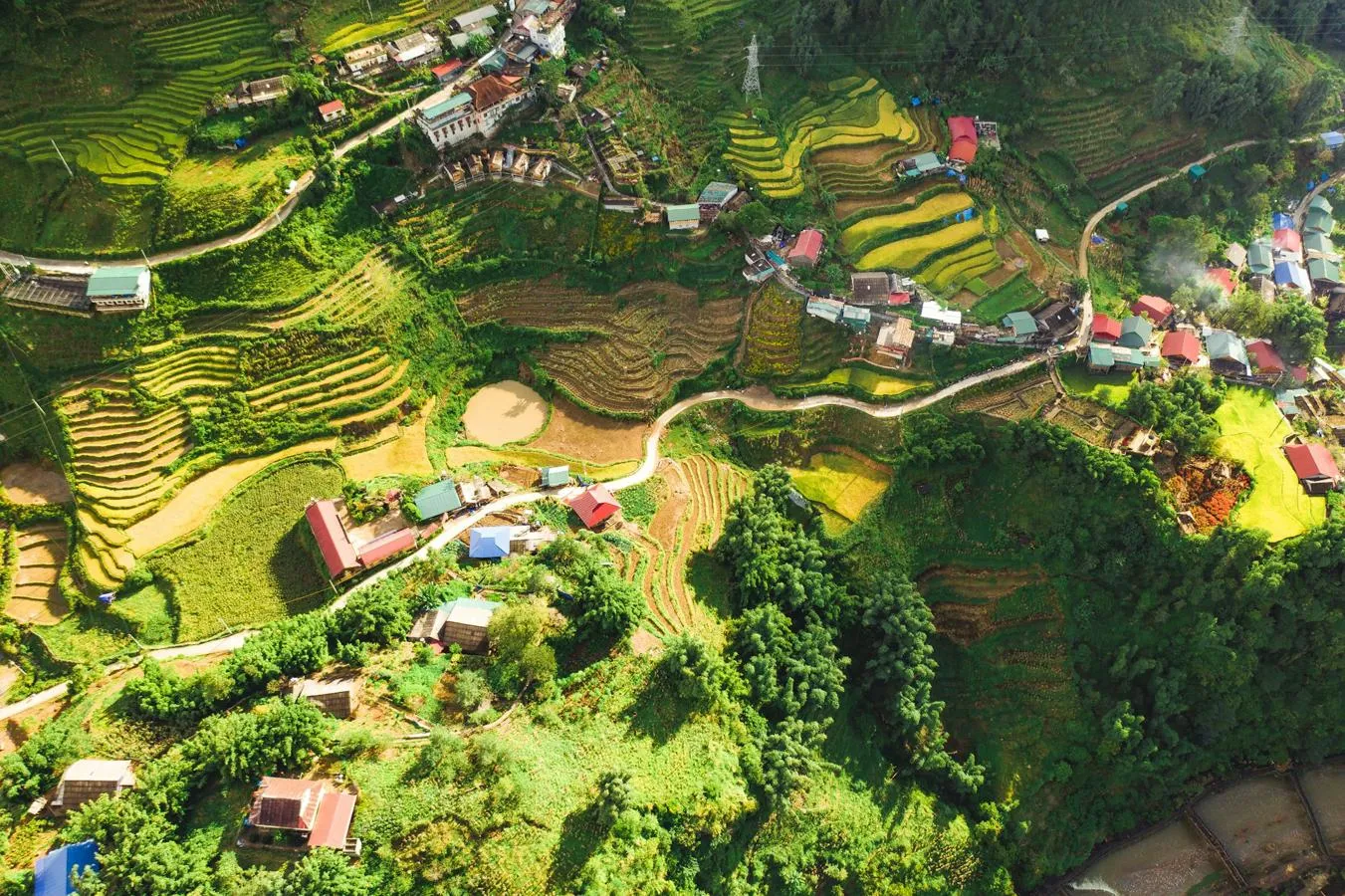
Northern Vietnam’s Lào Cai province – home to the Hoang Lien National Park and rich ethnic minority heritage – has undergone rapid transformation as tourism has expanded. While early tourism was community-led, mass tourism has increasingly marginalised the ethnic minority women who host homestays, guide treks, teach traditional crafts, and steward the forested landscapes that attract visitors.
Women reported declining incomes, competition from mass-produced imports, and reduced access to forest resources due to new conservation rules. Climate change has intensified these pressures: landslides, unpredictable rainfall, declining cardamom harvests, and water scarcity are reshaping livelihoods and visitor experiences. Yet these same women hold deep ecological knowledge and sustainable practices – insights rarely heard by policymakers or tourism operators.
I have lived here for more than 20 years and have observed clear environmental changes, especially in the weather. The climate is hotter, rivers and streams are drying up.Mrs. Nguyễn Thị Hiệp
Project participant from Tả Van Commune
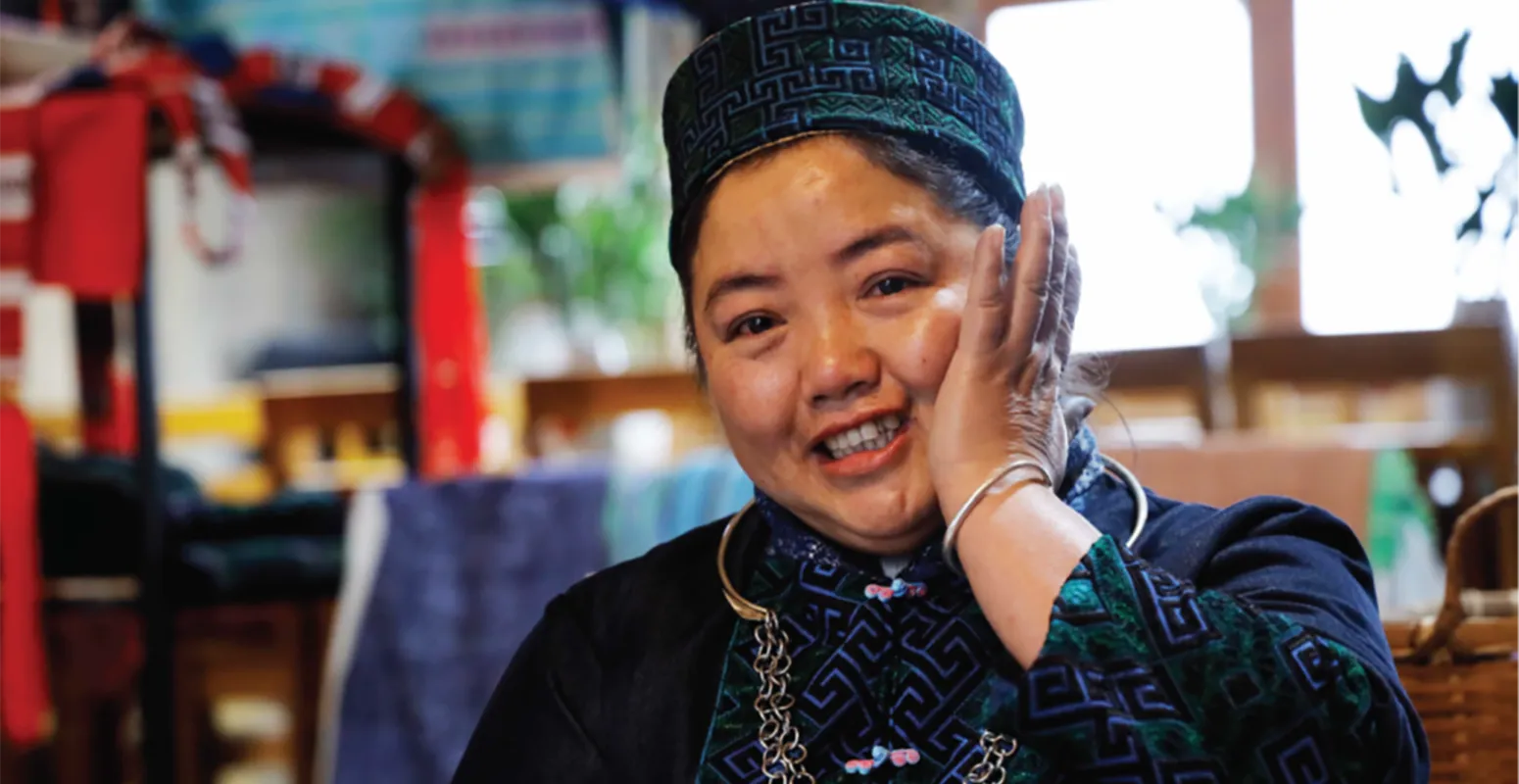
The challenge was to work alongside these women and create a platform where they could share their stories, shape tourism futures, and be recognised as climate resilient innovators rather than marginalised service providers.
SHEroic Journeys participant, Mrs. Nguyễn Thị Hiệp
The Approach
The SHEroic Journeys project used a creative, participatory action research model grounded in principles of inclusive decision-making, intergenerational learning and storytelling.
We wanted to explore how we could use a creative storytelling approach to share the women’s stories of sustainability, supporting their role as agents of change, while helping to preserve their heritage and livelihoods.Professor Lisa Jones
Project lead
The research team, including an embedded artist-in-residence and local community workers, focused on three villages at different stages of tourism development:
- Bản Hồ – once thriving but now struggling to attract visitors.
- Tả Van – heavily commercialised, with concerns about cultural erosion.
- Hoàng Liên – at the beginning of its tourism journey, seeking sustainable growth.
The research team
Prof Lisa Jones, University of Hull
Dr Katie Parsons, Loughborough University
Dr Hue Le, CRES-VNU
Ms. Thu T. Vo, CRES-VNU
Ms. Tam Pham, CRES-VNU
Xuan Nguyen, The Fish Journey (artist in residence)
Nhung Le, Vietnamese Women's Museum
Thuy, Vietnamese Women's Museum
Women from each village participated as co-researchers, compensated for their time and expertise. Activities included:
- Documenting lived experiences of environmental change.
- Sharing traditional textile, farming, and homestay practices.
- Reflecting on tensions between conservation efforts, climate impacts, and livelihoods.
- Preparing stories, case studies, and artefacts for a public exhibition.
- Cocreating artworks with an artist-in-residence (tapestry, weaving and batik, and painting).
In the past, my family only farmed rice. But here the climate is cold, and we can only grow one crop per year. I had to find another direction to improve our life ... but the question is how to make it different and sustainable.Mrs. Sần Thị Lan
Project participant from Tả Van Commune
A landmark exhibition and policy dialogue
The Vietnamese Women’s Museum collaborated closely, gathering photographs, video interviews, and tourist reflections to enrich the exhibition narrative. The project culminates in a major exhibition launch in Hanoi on 27 March, featuring:
- Five curated spaces telling different parts of the women’s journeys.
- A replica homestay, textile displays, and co‑produced artworks.
- QR‑linked digital stories and videos created with the museum.
- A panel bringing together national park representatives, women leaders, and tour operators to discuss sustainable tourism futures.
The exhibition and associated activities are programmed as a catalyst to get people talking and working out some of the challenges together.
The Impact
The project reframes climate change through lived experience rather than technical language. Women describe shifting seasons, changing soils, and altered forest access – stories that resonate strongly with visitors and policymakers.
Their sustainable practices – growing their own fibres, using every part of raised animals, adapting crops – offer powerful models of climate resilient living.
My dream in the future is a peaceful life. I want a house in the middle of my rice fields, surrounded by my family, where everyone cares and supports each other. I also hope to preserve the lifestyle and traditional cultural identity of my village.Mrs. Vàng
Project participant from Tả Van Commune
Although ongoing, the project is already generating significant benefits:
For the women participants:
- Visibility and recognition as cultural and environmental knowledge holders.
- New platforms to share their stories with policymakers, NGOs, and tourism companies.
- Strengthened networks across villages – meeting together for the first time at the exhibition.
- Economic empowerment, through improved understanding of tourist expectations and opportunities for more equitable partnerships.
For tourism and policy stakeholders:
- A deeper understanding of the realities women face – from climate-driven landslides to new tax pressures.
- A creative, human-centred evidence base to inform sustainable tourism strategies.
- Dialogue between groups who rarely meet, helping to balance conservation, livelihoods, and visitor demand.
For the UK and wider research community:
The project demonstrates how creative storytelling and participatory research can:
- Elevate least heard and underserved voices in environmental decision-making.
- Provide transferable methods for UK-based community climate engagement.
- Strengthen international partnerships
Trailer for the SHEroic exhibition
2 mins