Connecting Histories, Connecting Heritage
Understanding Early Modern Cities and Their Afterlives.

Project summary
The Challenge
Global challenges, such as climate change, can feel distant from our lives. Addressing these issues takes a strong sense of shared responsibility and global citizenship.
The Approach
We're combining research with digital humanities, immersive technologies and community engagement to uncover links in urban landscapes and reshape how we think about heritage.
The Outcome
By revealing the global histories hidden in familiar places, we're developing new approaches to heritage that promote inclusion, sustainability and a sense of interconnection.
Institutes and centres

Lead academics
Prof Christina Anderson
Project funded by


Project Partners







The Challenge
Many people struggle to see how global challenges relate to their own lives and communities. This can make it difficult to build support for collective action on issues such as climate change, sustainability, and social justice.
At the same time, heritage is often interpreted through national or local perspectives, overlooking the international connections that have shaped communities over centuries.
There is a growing need for inclusive approaches to heritage that acknowledge these shared histories and help communities engage with global issues through the places they know best.
The Approach
Our research investigates the processes through which early modern cities were created and transformed by international networks.
Drawing on a collection of more than 8,000 notary acts documenting the activities of Flemish merchants around the world during the sixteenth and seventeenth centuries, the project combines historical research with innovative digital technologies.
Key strands of the research include:
- Creating a publicly accessible digital database of archival records.
- Visualising the global networks that connected 16th-century Antwerp to other regions of the world.
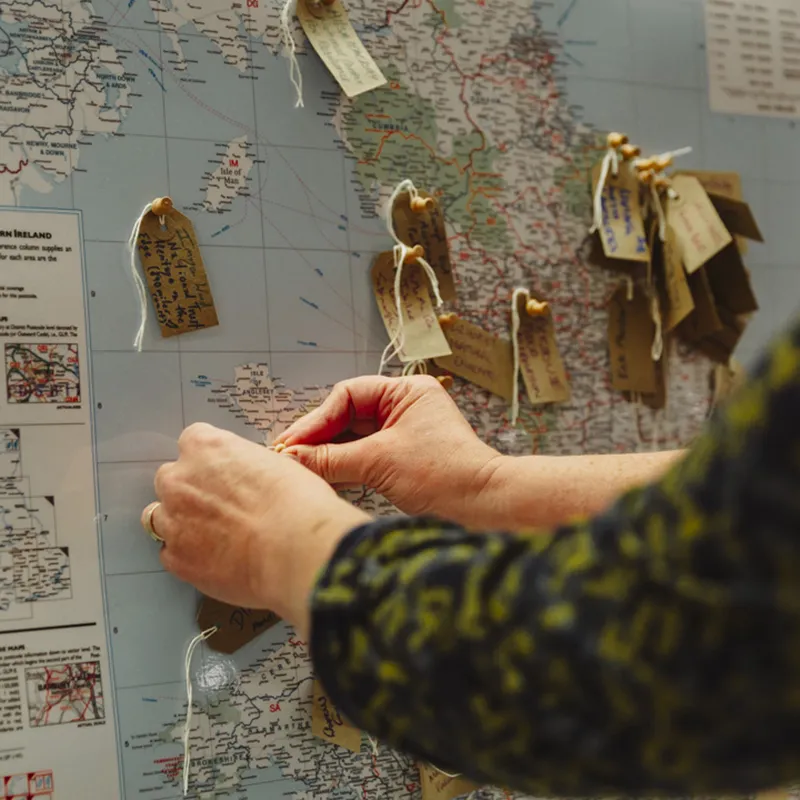
- Developing interactive digital maps that allow users to explore these connections within the city's landscape.
- Creating immersive experiences that connect places in Antwerp with linked sites overseas.
- Working with heritage organisations, museums, and community partners to develop new approaches to public engagement and interpretation.
One flagship example is the development of a virtual reality experience linking Huis van Aken, a 16th-century palace in Antwerp, with Engenho São Jorge dos Erasmos, a sugar mill in Brazil now in ruins, helping visitors explore the historical connections between European urban wealth and the locations from which goods and commodities originated and were shipped through global trade networks.
As the project develops, additional case studies from other parts of the world will expand our understanding of how interconnected urban histories have shaped communities across the world.
The full research team
Principal Investigator: Prof. Christina M. Anderson, UKRI Future Leaders Fellow, University of Hull
Senior Postdoctoral Research Fellow: Dr Rogier Van Kooten
Postdoctoral Research Fellow: Dr Sanne Hermans
Project Partners
-
Museum aan de Stroom (MAS), Antwerp
-
Engenho São Jorge dos Erasmos, University of São Paulo
-
ICOMOS UK
-
University of Antwerp
-
Delegation of Flanders UK
The Impact
By uncovering the global connections embedded within urban landscapes, CHCH is helping people see how their local communities are linked to wider world histories.
The project is developing innovative tools that make complex historical research accessible to public audiences through digital visualisation, interactive mapping and immersive experiences. It is also creating new models for transnational heritage practice that place collaboration, inclusion and community engagement at their core
By uncovering historic connections in urban landscapes, we can better understand our shared roots, see ourselves as global citizens and help tackle major challenges by recognising how deeply interconnected our communities and histories are.Professor. Christina M. Anderson
Principal Investigator and UKRI Future Leaders Fellow