Blowing the whistle on bad sports
We're working with athletes and sports bodies to uncover whistle blowing motivations and help to normalise the practice.
Project summary
The Challenge
Doping undermines the principle of fair competition in sport and can cause serious physical and mental health issues.
The Approach
Working with athletes and sports bodies in nine European nations to uncover whistle blowing motivations and develop educational materials to normalise the practice.
The Outcome
We’re contributing to fairer competition, Improved athlete health and wellbeing and stronger trust in sporting institutions.
Lead academics
Project funded by
Project Partners





Creating safer, fairer sporting cultures
By normalising whistleblowing and reducing stigma, we’re helping athletes confidently report doping violations, strengthening fair competition and improving trust in sporting institutions across Europe.
The Challenge
The use of performance enhancing drugs, or ‘doping’, undermines open and fair competition – one of the key principles of sport. Athletes who use banned substances gain an unfair advantage, while those who compete clean face both competitive and psychological disadvantages. Doping remains one of the most persistent threats to fair play in sport. It also carries serious health risks, including long-term damage to the liver, heart, kidneys, and reproductive system, as well as links to depression, anxiety and premature death.

The World Anti-Doping Agency typically reports that 1-2% of athletes commit doping offences on a yearly basis
Efforts made to tackle doping by National Anti-Doping Organisations (NADOs) have limited success. One study reported that up to 57.1% of elite athletes admitted to a doping offence in the previous year of completing an anonymous assessment. Clearly many instances of doping remain undetected.
An alternative approach to identify athletes who dope is to encourage fellow athletes, coaches, or sporting personnel to whistle blow. However, many athletes and coaches hesitate to report suspected doping violations. Fear of retaliation, uncertainty about what constitutes a violation, and a lack of clear reporting mechanisms all contribute to a culture of silence.
The Approach
The University of Hull-led Win‑Dop project, co‑funded by the European Union, brought together nine organisations across seven European countries to promote whistleblowing as a supported and beneficial practice in sport.
Athletes are still taking banned substances. Current testing regimes are not enough to turn the tide. Whistleblowing offers another means of detecting doping and has potential to have a greater impact on the removal of bad sports than testing alone.Professor Adam Nicholls
Recognising that whistleblowing in sports currently occurs at low levels, the team set out to understand the reasons why athletes decide to engage in this practice. They made a particular focus on uncovering the psychological factors that predict whether athletes, coaches, and other sporting personnel (e.g. doctors, physiotherapists, nutritionists etc) will report a doping offence or remain quiet.
A systematic review undertaken by the team showed that:
- Education about whistleblowing improves confidence and an individual’s perception of their responsibility to report
- Organisations should empower, educate, protect, support, and reward those who blow the whistle, with the ethical standing of an organisation a major factor
- The introduction of policies and procedures to protect whistleblowers, including anonymised or protective identity reporting, increases an individual's propensity to report wrongdoing.
Following the systematic review, a semi-structured interview was developed and used to structure in-depth sessions with five athletes from each partner country. The researchers also examined the extent to which European National Anti-Doping Organisations (NADOs) engage in best practices on whistle blowing.
The findings from all three studies were used to inform the development of educational materials with clear, accessible explanations of:
- What constitutes doping (e.g. the presence or use of banned substances, tampering with samples, trafficking, evading tests)
- The health and ethical consequences of doping
- What whistleblowing means in a sporting context – specifically, reporting suspected anti‑doping rule violations.
A series of animations were created and embedded into a presentation deck with the aim of shifting cultural attitudes, in order to normalise whistleblowing. The materials were designed to be used by sporting organisations in project partner countries, to encourage open discussions about doping and reporting. They framed whistleblowing as an act of integrity rather than betrayal and highlighted its role in protecting clean athletes.
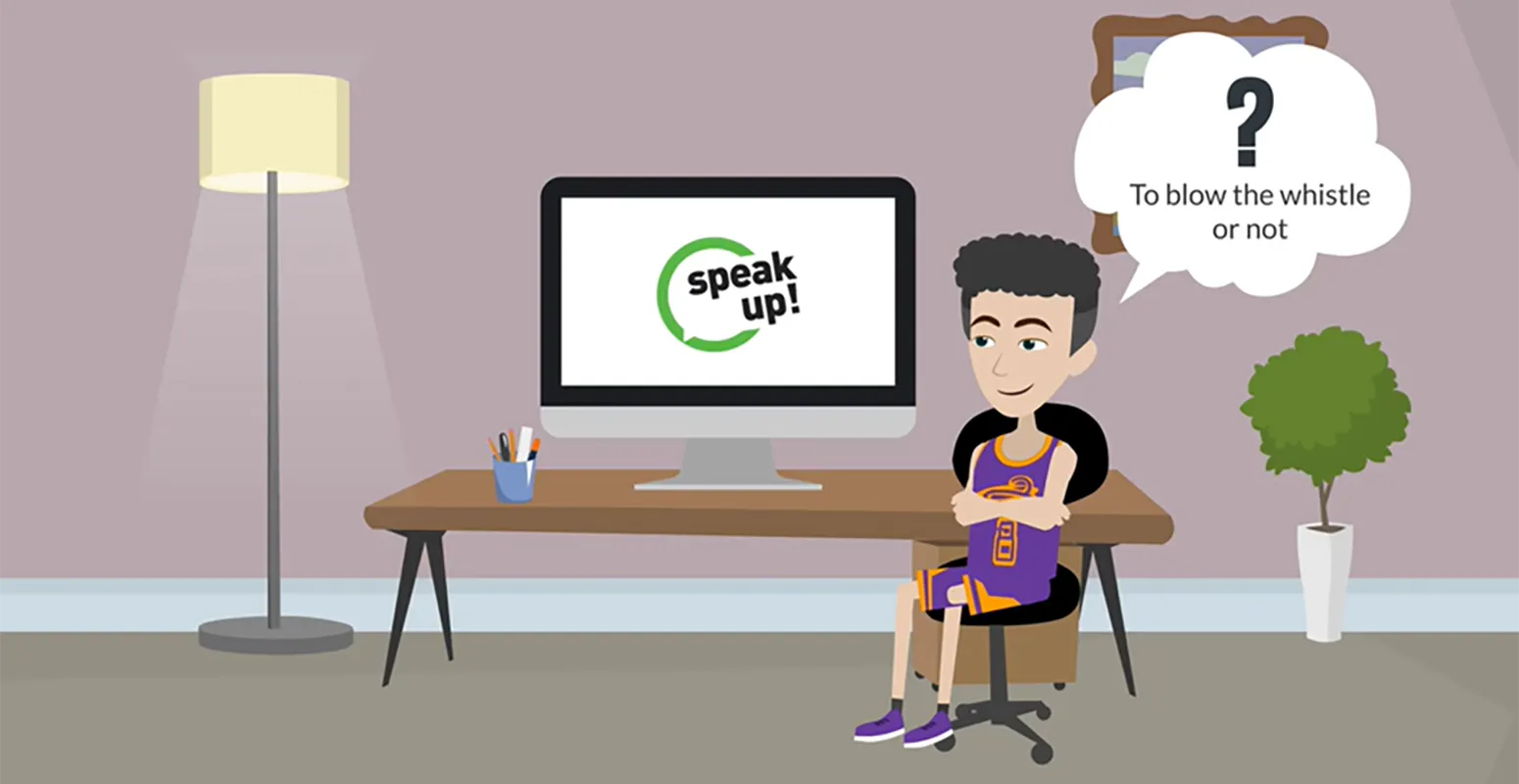
The benefits of whistleblowing
1 min
The Impact
With partners from seven countries, the project shared best practices and developed consistent messaging across Europe. This collaboration ensured that athletes and coaches – regardless of their national system – received aligned guidance on recognising and reporting doping.
We can teach coaches to create environments that support clean play in sports. Helping to educate and empower athletes and support staff to call out violations when they see them.Professor Adam Nicholls
The educational materials created by the Win-Dop team helped athletes and coaches recognise both doping violations and their responsibility to report them. The presentation and animations have been rolled-out to over 8,000 athletes on the talent pathway in Serbia, with plans to expand the scope of the roll-out within Cyprus.
By normalising whistleblowing and providing accessible information, the project helped reduce the fear and stigma that often prevent individuals from speaking up. With more informed and confident whistle‑blowers, sporting organisations are better equipped to detect and address doping offences. This contributes to fairer competition, Improved athlete health and wellbeing and stronger trust in sporting institutions.
The cross‑national collaboration created a foundation for ongoing cooperation, ensuring that the progress made by Win‑Dop can continue to influence policy, education, and reporting systems across Europe.
Publications and outputs
Snitches Get Stitches and End Up in Ditches: A Systematic Review of the Factors Associated with Whistleblowing Intentions
Adam Nicholls et al, Frontiers in Psychology
Athletes’ beliefs about whistleblowing doping misconduct from six European countries: A social cognitive perspective
Adam Nicholls, John Toner et al, Emerging Trends in Drugs, Addictions, and Health (Elsevier)
Visit the WinDop website to explore the project further.
Next steps
Building on the success of Win-Dop, we’re empowering athletes to speak out against abusive practices in sport.
The International Olympic Committee funded project, led by Dr John Toner, addresses increasing instances of bullying and abuse in the training regimes of competitive sports. The project will explore how whistleblowing channels and policies might deter or encourage athletes to speak out against abusive or coercive behaviours.
The research team will seek to help the IOC, and governing bodies of sport, to understand how barriers to the reporting of abusive behaviours might be broken down and to develop teaching and other materials to enhance the likelihood of whistleblowing.