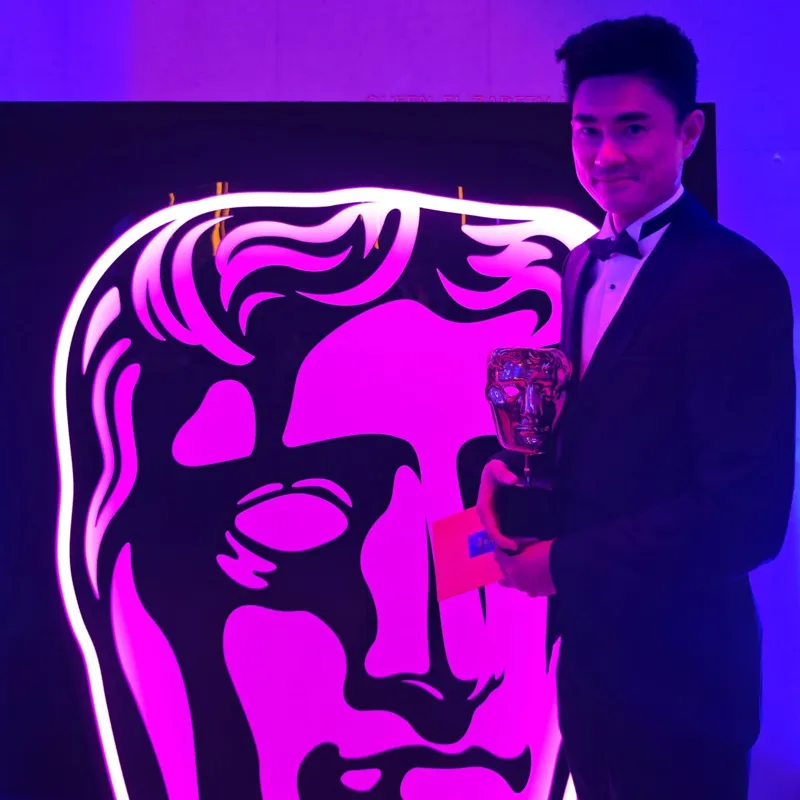
You’re Technical Director at Ninja Theory where Sengua's Saga: Hellblade II won a BAFTA this year for Technical Achievement. How does it feel?
I feel incredibly proud of the team that made it possible. Game development is full of highs and lows, and the day-to-day effort often involves solving the tiniest issues or hunting down the rarest bugs. Those final pushes can be tough, but when you see everything come together, it's immensely gratifying.
What I'm most proud of with Hellblade II is the performance and the stability we achieved. It's easy to overlook the invisible work that goes into making a game run smoothly, but for us, delivering that seamless experience mattered deeply. This includes the smooth transitions of animations, cameras, and the fine details that the team put into the game. Those touches that players might not always consciously notice, but which create immersion and emotional impact.
Could you give us an example of some of the tools you’ve created that have aided the technical side of the game?
The tools and systems that supported the game were very much a collective effort across the studio. One that particularly stands out is Self-Play. As the name suggests, it's a system that literally plays the game from start to finish. This allowed us to collect performance data and, crucially, reproduce elusive bugs and issues that would otherwise have been incredibly difficult to track down.
One of the things I love most about this industry is that no two games are ever the same. Even when working on a sequel, you’re not just repeating the past, you’re improving features, rethinking designs, and adapting to new creative visions.
You said that every game has different challenges. Is there one challenge in your career that stands out the most?
One of the things I love most about this industry is that no two games are ever the same. Even when working on a sequel, you’re not just repeating the past, you’re improving features, rethinking designs, and adapting to new creative visions. That constant change keeps work exciting.
A challenge that still stands out to me is from early in my career, when I was a junior programmer working on Enslaved: Odyssey to the West. I was tasked with implementing the cloud/hoverboard feature for the protagonist, Monkey. It was one of the first systems I ever owned, and it exposed me to so many aspects of game development: character movement, visual effects, sound design, animation and, most importantly, collaboration. I worked closely with animators, artists, sound designers, game designers, and quality assurance to bring that feature to life. It taught me the true nature of game development: that it’s about bringing together a wide range of disciplines to realise a shared vision.
Game development is full of highs and lows, and the day-to-day effort often involves solving the tiniest issues or hunting down the rarest bugs. Those final pushes can be tough, but when you see everything come together, it's immensely gratifying.”
Two of the people you manage are University of Hull graduates. How does it feel to work with fellow Hull grads?
It's fantastic! There's something special about knowing we share that common foundation, even if our time at Hull didn’t overlap. In fact, I didn't realise at first that one of them was also a Hull graduate!
Do you have any words of advice for the next generation of Hull graduates to succeed in the world of video games?
Sure thing! I started my career as a gameplay programmer, so my first piece of advice is: think and feel like a player for the game you’re making. At the heart of it all, one of the reasons we’re here – if not the reason – is our love for playing video games. But it's important not to project your own biases too heavily. Every game is different, with its own target audience. So approach game development with empathy. Put yourself in the shoes of the player the game is designed for. Think and feel the game like they do.