




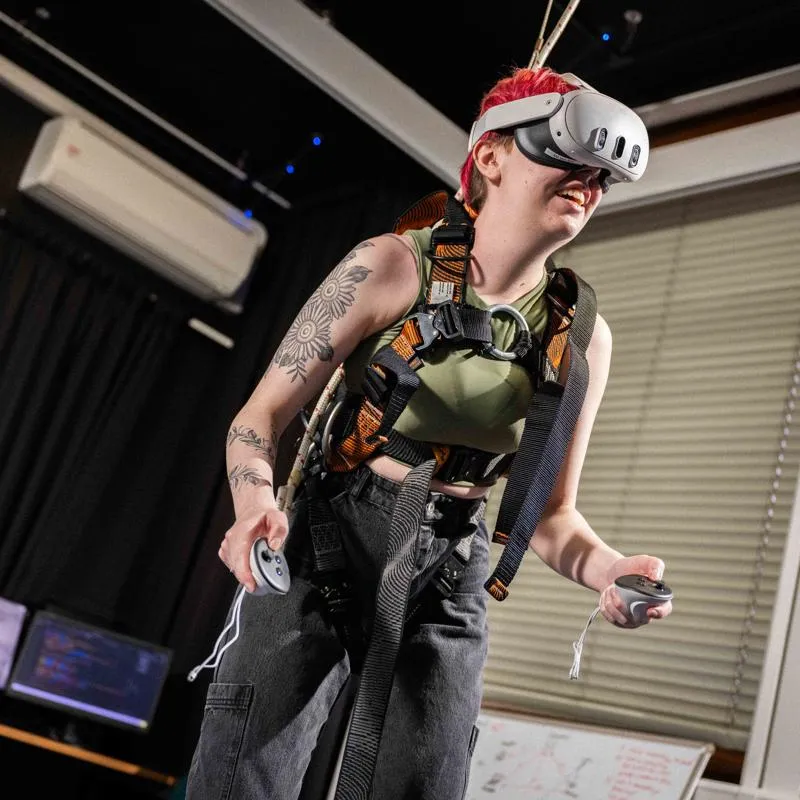
The world is ever changing. And it needs skilled, hands-on people to keep it turning. That’s where you come in.
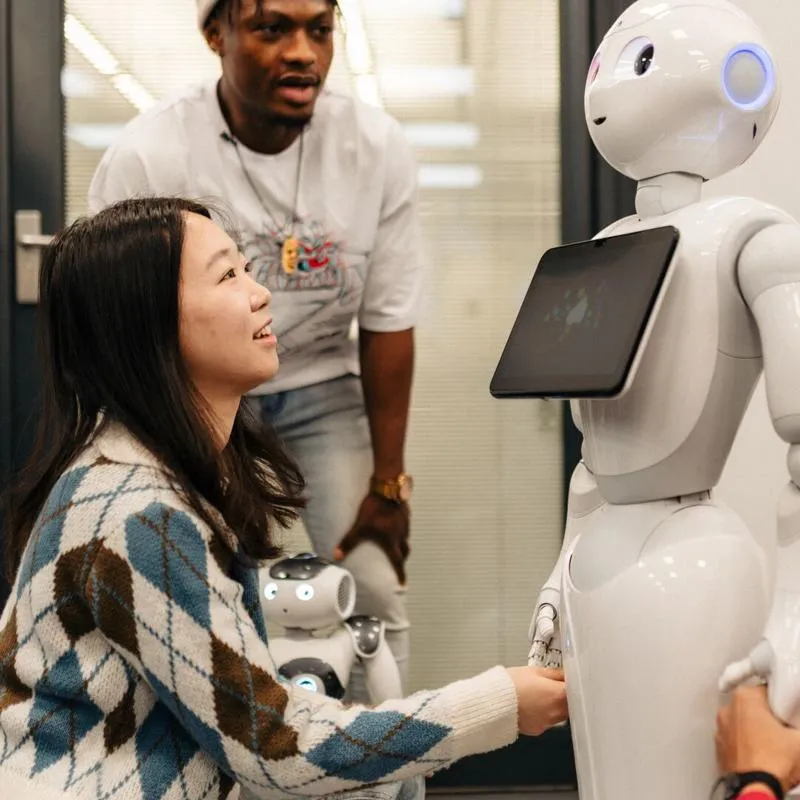
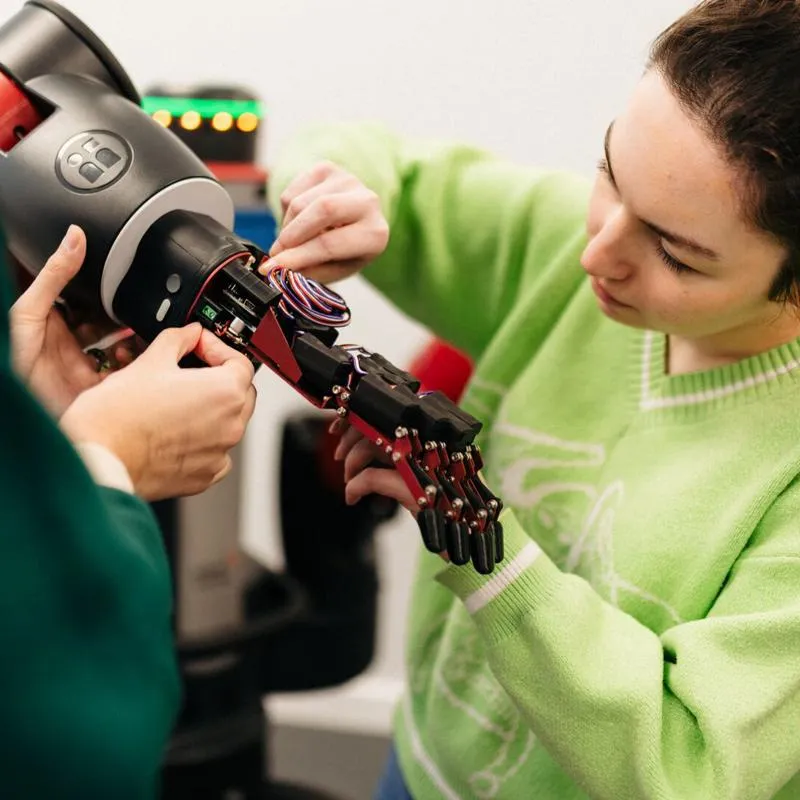
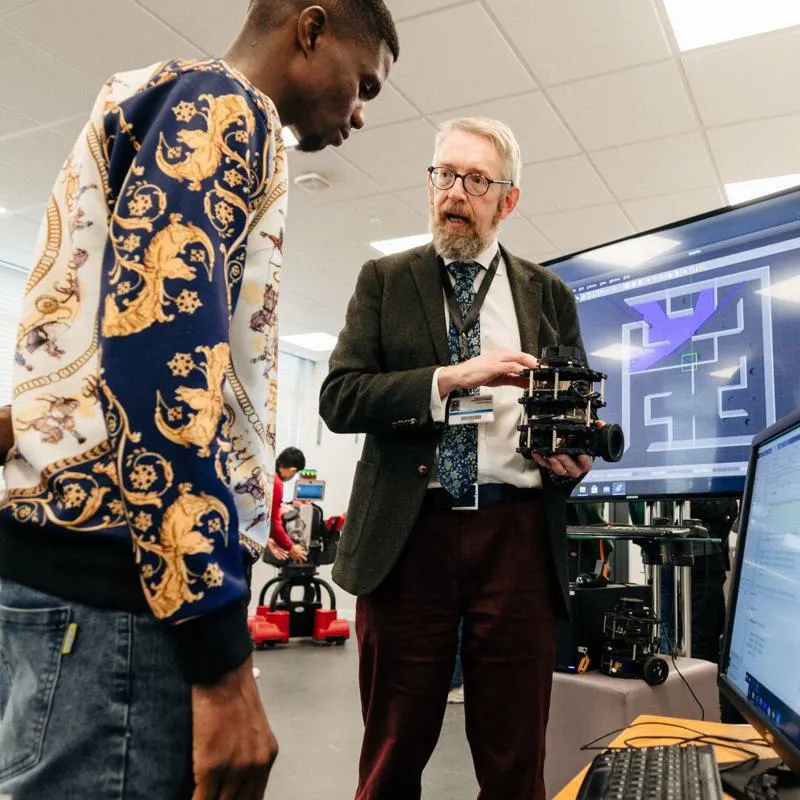
Learn to programme and construct robotic systems that can interact with the real world on this hands-on course. You’ll discover how robots and Artificial Intelligence (AI) are transforming our lives. And access industry-standard facilities such as our robotics lab with DJI Drones, Turtlebot3 mobile robots and humanoids like Baxter, Nao and Pepper.
You can boost your CV by taking a paid placement year and gaining outstanding tech industry experience as a recognised part of your degree.

93% of students
in work or further study 18 months after graduating
HESA Graduate Outcomes, 2026

1st in the UK
for 'To what extent are students' opinions about the course valued by staff'
Artificial Intelligence, National Student Survey (NSS), 2026, HEIs only
7th in the UK
for Student Satisfaction
The Complete University Guide, 2027

Get paid
on an optional placement year in industry

Five specialist labs
including high spec machines, dedicated for Computer Science students

Compete in events
like Hull’s unique “Three Thing Game", or the UK and Ireland Programming Competition

Digitally fabricate
3D models and prototypes

Experience HIVE’s
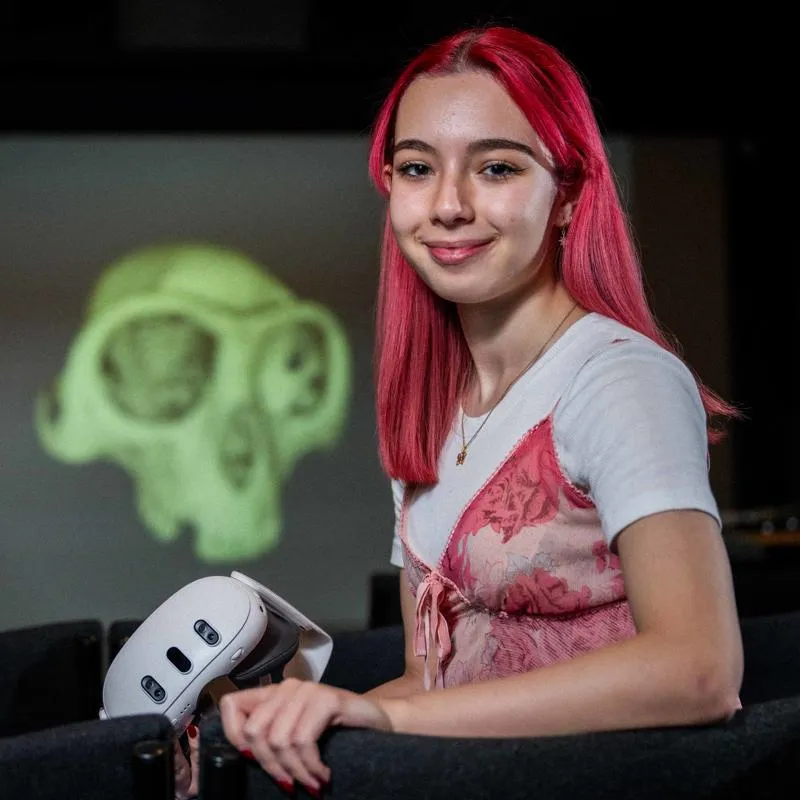
immersive visualisation technology

Integrated Masters option.
Undergraduate and Postgraduate study combined

Robotics Lab
with humanoids, Nano robots and drones

Industry standard facilities
like our Turing and Superlab
About this course
Robots and AI are the present and the future, transforming the way we live and work.
This course gives you a solid background in computer science and programming. You’ll gain experience of the AI tools that give robots the ability to autonomously operate in the real world. Develop advanced skills in Python, an industry-standard language. And study the increasing impact of AI and robotics on society.
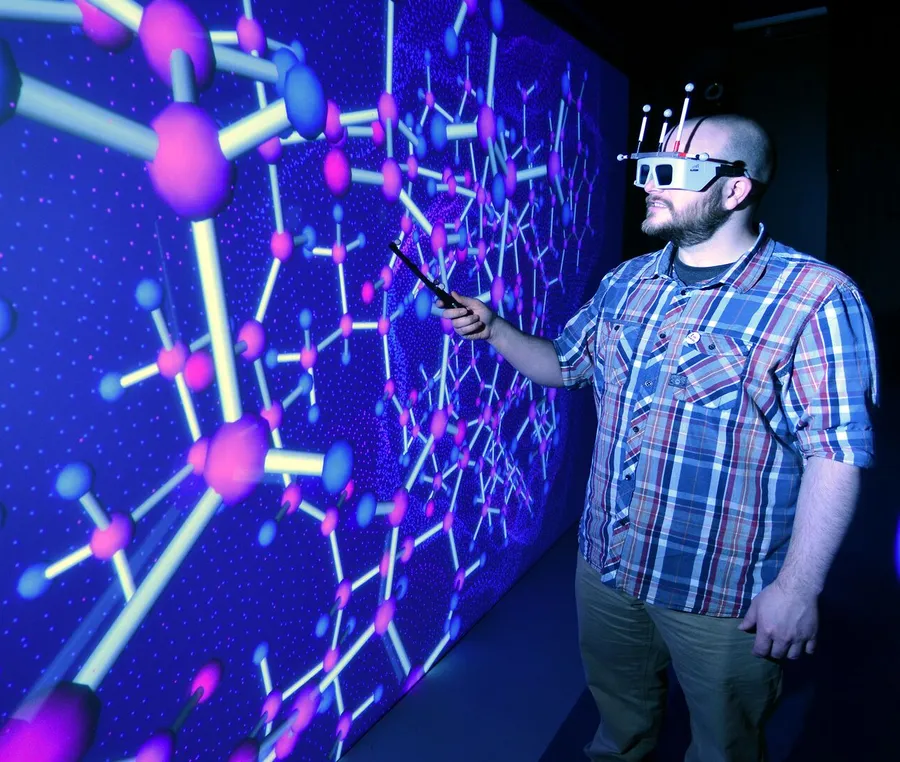
Discover how robots work and how to program them in our robotics lab. Where you’ll also digitally fabricate 3D models and parts for your robotic systems. You’ll have access to our other industry-standard equipment too, including high-performance workstations, gigabit networking, a 3D immersive cube, motion capture, AR, VR and MR.
Benefit from our strong industry links with frequent talks by experts in the trade. And boost your skills in the real world by taking a paid placement year as part of your course.
Get involved with our extra-curricular opportunities and compete in international events like the Microsoft Imagine Cup. Or rise to the challenge of creating a computer game over a weekend in our Three Thing Game.
It takes a human to harness the power of AI.
Module options
Our five undergraduate Computer Science courses share the same compulsory modules in the first year. This gives you a foundation of knowledge across the whole subject area and the chance to explore what really interests you. You're then better placed to choose your modules in the later years of our BSc Computer Science, or switch to a different pathway to specialise in games programming, software engineering, robotics or AI.
No filters selected
Programming Portfolio
Core tools: C#
Whether you've never written a line of code or you've been tinkering for years, this module meets you where you are. You'll learn to think like a programmer — breaking problems down, writing clean logic, and building working software in C#. By the end of the year you'll have moved from your very first program to designing with classes, objects and inheritance.
You'll explore:
- Core programming building blocks — variables, loops, functions and data types
- Searching, sorting and working with arrays, stacks and queues
- Object-oriented programming — classes, inheritance and encapsulation
- Reading, writing and managing code like a professional, using source control
core
40 credits
Algorithms and Data Structures
Every great piece of software starts with a great idea for how to solve the problem — that's what this module teaches you to find. You'll step away from the screen and learn to think in code before you write it, exploring the algorithms and data structures that separate software that merely works from software that works brilliantly.
You'll explore:
- Pseudocode and state machines for planning before you program
- Core data structures, and how to choose the right one for the job
- Sorting and searching algorithms, and how to measure their efficiency
- Design thinking that carries into every other module on your degree
compulsory
20 credits
Computational Thinking
Core tools: programming platforms and mathematical software
Computing is bigger than any one programming language — this module is about how to think as a computer scientist. Drawing on a genuinely global history of innovation, you'll build the mathematical and logical foundations that everything else on your degree rests on.
You'll explore:
- Abstraction and computational methods
- The maths behind computing — algebra, number systems and statistics
- Logic, Boolean algebra and set theory
- Vectors and matrices, and their uses in graphics, AI and data
- Practical aspects of how computers handle different number types and the way that mathematical libraries and tools can help to do the actual calculations
compulsory
20 credits
Databases and the Cloud
Core tools: C#, Microsoft SQL Server
Modern software rarely stores its data on just one machine anymore — this module shows you how databases and the cloud work together to make that possible. You'll learn how cloud computing and virtualisation actually work, then design and build real databases, from relational systems through to NoSQL, before bringing the two together to build a working application backed by a database hosted in the cloud.
You'll explore:
- Designing and implementing relational and NoSQL databases
- Virtualisation, containers, and the cloud service models behind them — IaaS, PaaS and SaaS
- Connecting a real application to a cloud-hosted database
- Cloud security, reliability and disaster recover
compulsory
20 credits
Professional Development
A computer science degree is about more than code — this module helps you build the career to go with it. You'll explore the ethical, legal, social and sustainability challenges facing the sector, and the professional skills that set graduates apart. A hands-on team project puts those skills into practice straight away, while you start building a portfolio that showcases your work.
You'll explore:
- Sector challenges — ethics, diversity, sustainability and cybersecurity
- Communication, research and self-presentation skills
- Real teamwork on a programme-specific group project
- Building your own professional portfolio
compulsory
20 credits
Robotic Foundations
Robotics brings together software, mechanics and electronics to create autonomous systems. You’ll learn the principles and technologies used to design, model and program them.
You’ll study robotics architecture, the sense-plan-act paradigm, and the mechanics that govern movement and force. You’ll also learn about system modelling, 3D CAD design, rapid prototyping and actuator selection.
Using industry-standard tools such as ROS 2 and Gazebo, you’ll simulate and control robots, modelling and testing robotic behaviours in virtual environments. Through practical projects using 3D printers and robotic systems, you’ll develop technical, programming and teamwork skills for robotics engineering.
core
40 credits
Artificial Intelligence
Learn to build the kind of intelligent systems that are reshaping every industry and understand the ethics behind them. You'll get a practical grounding in how AI actually works, from the history of the field to the algorithms powering it today, building your own solutions to real problemsolving challenges along the way.
You'll explore:
- The history and ethics and trustworthy of artificial intelligence
- Pathfinding and problem-solving search algorithms
- Supervised and unsupervised learning, and neural networks
- Reasoning under uncertainty with Bayesian methods, and an introduction to reinforcement learning
- A brief introduction of fairness, explainability and AI Safety
compulsory
20 credits
Connected Devices and IoT
From smart homes to industrial sensors, the Internet of Things is everywhere — learn to build the systems that connect it all. You'll explore the communication technologies that let devices talk to each other and to the cloud, and learn to choose the right one for a given real-world application.
You'll explore:
- Wired and wireless interfacing technologies, from Bluetooth to Ethernet
- Publish/subscribe architectures and real-time communication
- Edge and cloud computing for connected devices
- Security and business considerations for IoT systems
compulsory
20 credits
Data Analysis and Visualisation
Data is only powerful once someone can make sense of it — this module teaches you to be that person. You'll work with real-world data from cleaning and wrangling it through to building and evaluating models, finishing with the skills to turn numbers into a story that's clear, compelling and honest.
You'll explore:
- Data cleaning, exploration and dimensionality reduction with pandas, scikit-learn and NumPy
- Classification, regression and clustering algorithms
- Rigorous experimentation, evaluation and hyperparameter tuning
- Spotting and mitigating bias in data and models
- Visualising data for maximum impact
compulsory
20 credits

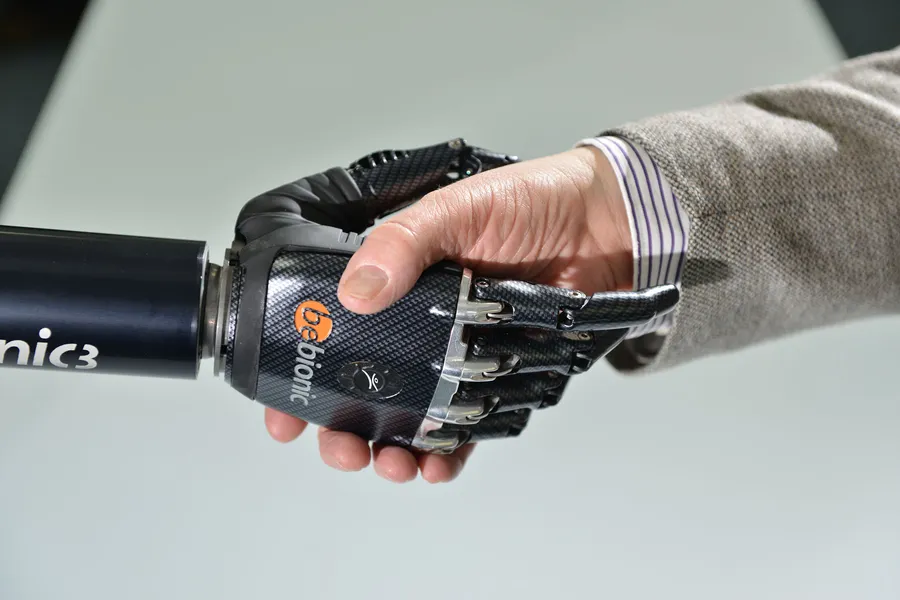
Ready to get hands-on with robotics? This is where you start...
 Featured module
- core
- 40 credits
Robotics brings together software, mechanics and electronics to create autonomous systems. You’ll learn the principles and technologies used to design, model and program them.
You’ll study robotics architecture, the sense-plan-act paradigm, and the mechanics that govern movement and force. You’ll also learn about system modelling, 3D CAD design, rapid prototyping and actuator selection.
Using industry-standard tools such as ROS 2 and Gazebo, you’ll simulate and control robots, modelling and testing robotic behaviours in virtual environments. Through practical projects using 3D printers and robotic systems, you’ll develop technical, programming and teamwork skills for robotics engineering.
Our facilities

Watchlist
BSc Robotics and Artificial Intelligence
Course overview
2 mins
The impact of AI
Course Highlight
2 mins
Rand Nessif
Unsame Stories
2 mins
See our incredible labs
Course Highlight
2 mins
Featured academics
Our teaching is linked to our research in simulation, visualisation, dependable systems, robotics, 3D printing and mobile and distributed computing.
You’ll be at the forefront of developments in this rapidly growing field.

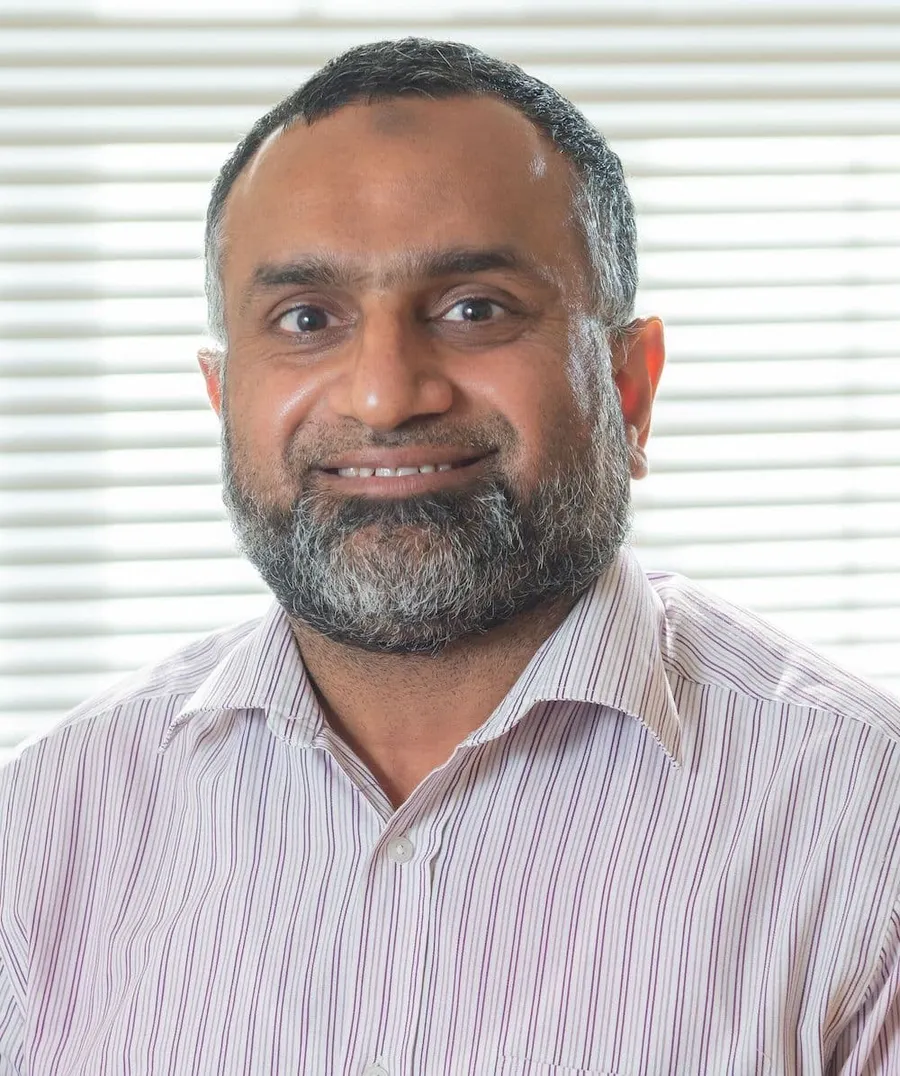
Dr Jamshed Iqbal
Senior Lecturer
Jamshed’s technical expertise, industrial research and teaching experience lay within the fields of robotics, mechatronics and control systems. He leads our Mechatronics and Robotics programme.

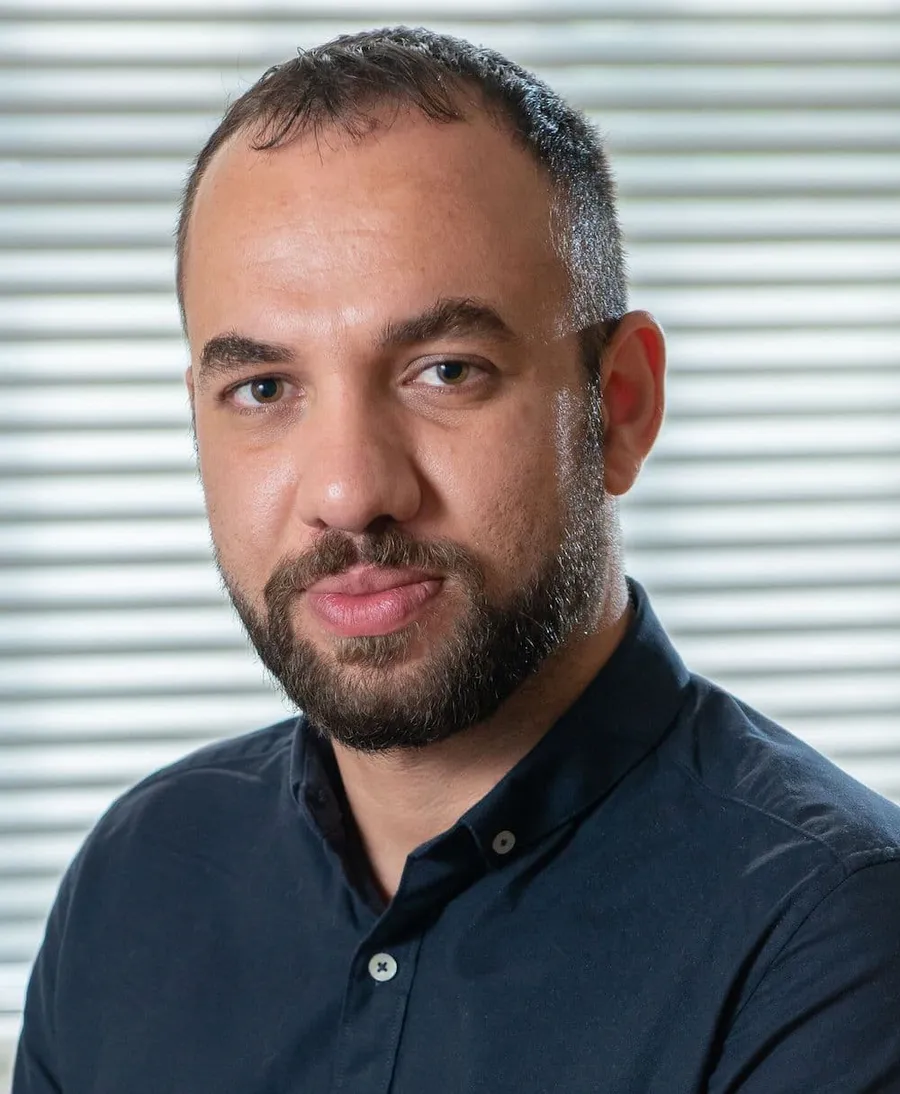
Dr Muhammad Khalid
Lecturer
Muhammed previously worked on a project aimed at improving safety in agriculture utilising autonomous robotic systems. As well as robotics, his research interests include autonomous vehicles and AI-based decision making in IoT devices.
Entry requirements
How to apply for this course
At Hull, you're a name, not a number. It's not just about the grades - we'll look at your whole application.
If you're not eligible for direct entry to this course, we may recommend a foundation year as an alternative route to studying for a degree.
To discuss your options, send us an enquiry or call us from 8am on Results Day on 01482 466100.
Every year, hundreds of students join the University of Hull through Clearing for all sorts of reasons and go on to achieve great things. Learn more about Clearing.
Qualification types
We accept a wide range of qualifications and combinations of qualifications, including A levels, BTECs and other accepted qualifications.
We don’t just see what you’re like on paper, we see you. All of you. Your achievements, work experience, music and sport qualifications and the projects you’ve been involved in. We want to hear it all.
Fees & funding
How much is it?


Future prospects
The experience and technical expertise you’ll gain will put you in high demand when it’s time to enter the job market in this fast-moving industry. You’ll create a professional portfolio of work throughout your degree to demonstrate your skills to employers.
Robotics and AI touch upon almost every aspect of modern life, creating a variety of career opportunities. You could go on to develop the latest technology – from driverless cars to drones, space vehicles to automated production lines and technology-assisted clothing.
Graduate careers include robotics software developer, robotics and embedded software engineer, AI developer, simulation engineer, autonomous vehicles architect and R&D.
Become part of the next generation of futuremakers
Like what you've seen? Then it's time to apply.
The standard way is to apply through UCAS. This will give you the chance to showcase your skills qualities and passion for the subject, as well as providing us with your academic qualifications.
Not ready to apply yet?
Visit our next Open Day, and see all that the University of Hull has to offer. Talk to our lecturers about your subject, find out what university is really like from our current students, and take a tour of our beautiful campus and amazing facilities.
You may also be interested in...
BSc (Hons) Computer Science
Undergraduate
AI, VR, 3D: the new normal. Not just for tech, but for every industry. Want to help develop the next big thing? Start here…
G400
BSc (Hons) Artificial Intelligence
Undergraduate
Explore how artificial intelligence is rapidly transforming the way we live in this career-driven degree at the University of Hull. Apply now.
G700
BSc (Hons) Computer Science for Games Programming
Undergraduate
Learn how to develop games for a living. Then step inside them in our 3D immersive cube. All while training to be a chartered IT professional.
G495
BSc (Hons) Software Engineering
Undergraduate
Specialise in software development on this British Computer Society accredited BSc degree at the University of Hull. Apply now.
G600
All modules presented on this course page are subject to availability and this list may change at any time.