

Zoology is all about animals, whether you just want to understand them better or work to protect the amazing biodiversity of our planet.
This can’t just be done in a classroom so this course focuses on a blend of laboratory and field-based practical teaching, as we recognise the need to work across disciplinary boundaries to solve global issues.
You can also opt to take a year abroad, studying overseas at one of our partner universities. Gain new skills, build international contacts, and immerse yourself in a different culture and environment.

7th in the UK
for 'How often do teaching staff make the subject engaging'
National Student Survey (NSS) 2026, HEIs only
2nd in the North of England
for Student Voice
National Student Survey (NSS) 2026, HEIs only

Dive in
and train to become a PADI-certified diver1

Field trips
in the UK and overseas2

Award-winning
academics teach on this course 3

Integrated Masters option
Undergraduate and postgraduate study combined
Study abroad
to gain International experience
About this course
Explore all aspects of animal life, from subcellular level to ecosystems, in a course designed for 21st-century scientists.
You’ll control the emphasis of your studies with opportunities to focus on species that interest you across a range of contexts including conservation, ecology, behaviour, evolution, environmental management, physiology, cell biology and genetics – allowing you to build a course to suit your passions and ambitions.
Our teaching takes place in a friendly, supportive environment – and is led by award-winning academics – but our degree is also career-focused with lots of opportunities to learn in the field so that you develop the practical experience to complement your theoretical knowledge.
Recent overseas trips have included Mallorca, Malaysia and Brazil, and you’ll also be spending time on residential field trips in the UK. There's also the option to spend a year studying abroad at one of our partner universities to gain new skills, build international contacts, and immerse yourself in a different culture and environment.
Plus, our programme is built around skills requested by bioscience employers, including genomic technologies, field survey techniques, GIS, and science communication skills. You can even become a PADI-certified Advanced Open Water Diver as part of your degree, putting you one step ahead of the competition when you graduate.1
Start a field trip that never ends
Foundation year
A foundation year at the University of Hull gives you a solid grounding of knowledge and boosts your academic skills, so you can progress on to your chosen programme with confidence.
The foundation course you enrol on may not be an exact match to your chosen degree, but don’t worry. Our foundation courses combine content from multiple related courses in the same subject area, giving you more flexibility and choice about the degree path you take.
For example, if you apply for a Music Foundation Year, you’ll join our Media Foundation course. So, if you decide to switch - say, from Music to Graphic Design - you can do so without restarting your foundation year.
Module options
Each year, you’ll study modules worth a certain number of credits, and you need 120 credits per year. Most modules are 20 credits – so you’ll study six modules each year. Some longer modules, such as a dissertation, are worth more. In these cases, you’ll study fewer modules - but the number of credits will always add up to 120. Some modules are compulsory, some are optional, so you can build a course that’s right for you.
No filters selected
Preparing for Learning in Higher Education
This module is designed to give you the best possible start to your university studies, making sure you have all the essential skills you need to succeed. Through lectures and workshops we will teach you how to write in an academic style, how to find quality sources, and how to reference work, culminating in writing up a mini-research project.
core
20 credits
Introduction to Biological Sciences 1
This module will provide you with the basic biological science knowledge that will enable you to transition successfully into the certificate stage of your chosen programme of studies. You will gain basic knowledge of cell biology, biological molecules, energy processes like respiration, neurobiology and many other topics. Alongside the theoretical knowledge, you will also have the opportunity to learn how to use a microscope and how to collect data in the laboratory, in a specialist sport science facility or using psychological techniques. You will also learn how to present and write about those data professionally. The teaching team for this module consists of lecturers in the disciplines connected to your programmes of study, so there will be a strong connection to your chosen subject area.
core
20 credits
Group Challenge
In a group, you'll formulate questions that can be tested by scientific investigations and take part in weekly workshops with academics.
core
20 credits
Introduction to Biological Sciences 2
Explore a range of biological topics relating to whole organism biology, diversity and adaptations. Through lectures, workshops and practical sessions you will delve in to the world of classification and identification, natural selection and evolution, food security, population biology, environmental monitoring and human impacts.
core
20 credits
Foundation Maths Skills
This module delivers core mathematics skills at level two and three to give a solid basis for future studies. You will study the following topics: manipulation of numerical data and converting between different units of measurement; exponentials and logarithms; and standard form and problems involving ratio, proportion and percentages.
optional
20 credits
Foundation Mathematics A
You will study pure mathematics topics, including proof, algebra, trigonometry, differentiation, integration, exponentials, logarithms, sequences and series. The applied topic is probability and statistics.
optional
20 credits
Foundation in Data Analysis
You'll be introduced to different ways of analysing qualitative and quantitative data, learn how to code qualitative data and use descriptive and inferential statistics to analyse quantitative data.
compulsory
20 credits
Cells and Organelles
Explore the fascinating inner workings of cells, giving you a foundation in areas such as cell biology, molecular biology and biochemistry.
compulsory
20 credits
Diversity of Life
Through practical workshops, this module introduces you to the diversity of life and the fascinating adaptations that enable organisms to inhabit nearly all conceivable ecological niches.
compulsory
20 credits
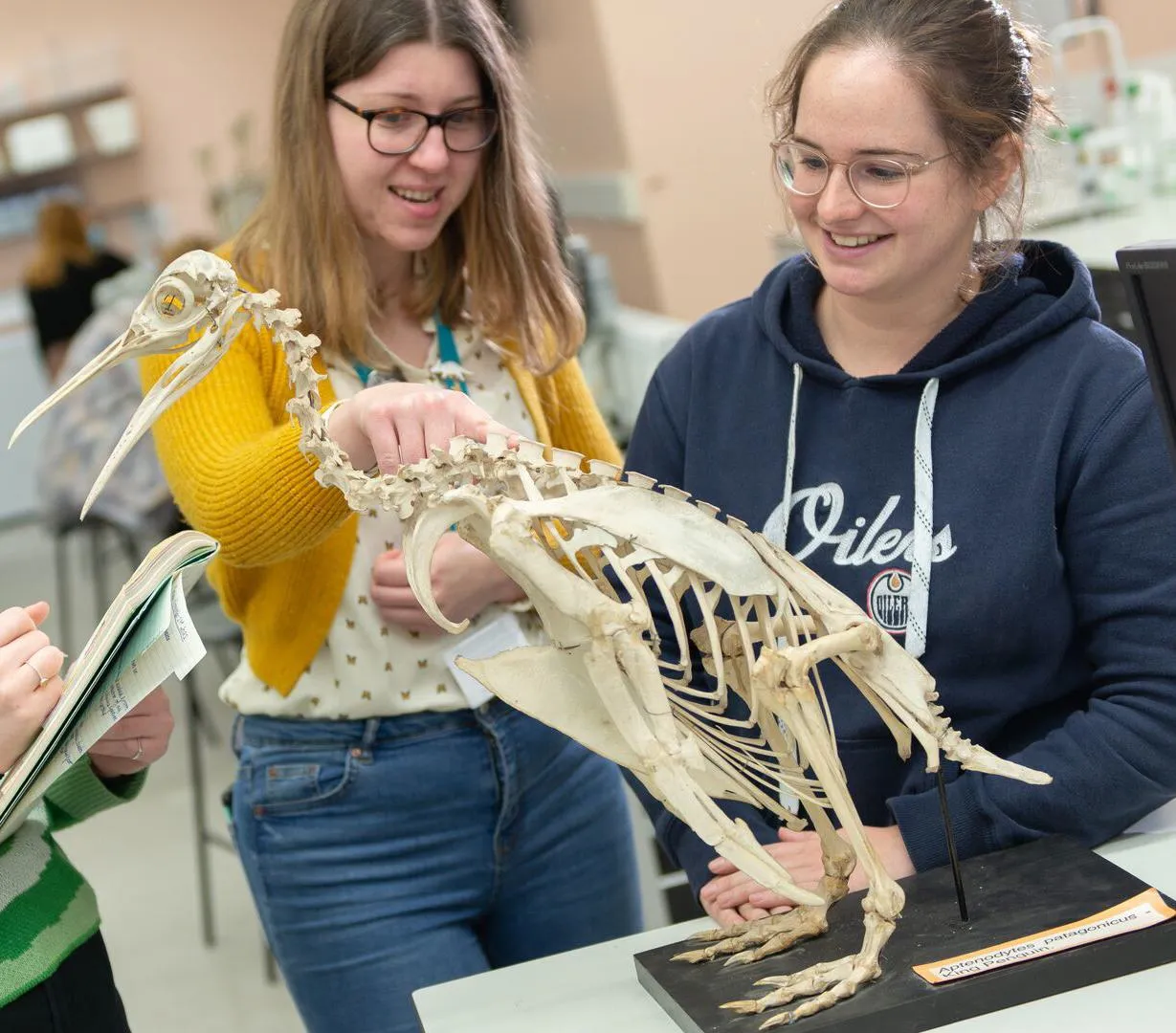
Want to protect animals? This is where you start.
 Featured module
- optional
- 40 credits
How can you help protect species at risk of extinction? This unique module gives you the opportunity to contribute to one of the world’s most important conservation tools: the global Red List of threatened species.
You’ll investigate the conservation status of a chosen species or group, analysing scientific evidence to assess threats, population trends, and survival prospects.
Working with internationally recognised criteria used by the International Union for Conservation of Nature (IUCN), you can work towards becoming a qualified Red Lister while developing advanced research and conservation skills.
Turn your passion for wildlife into real conservation impact and help shape the global effort to protect our planet’s biodiversity.
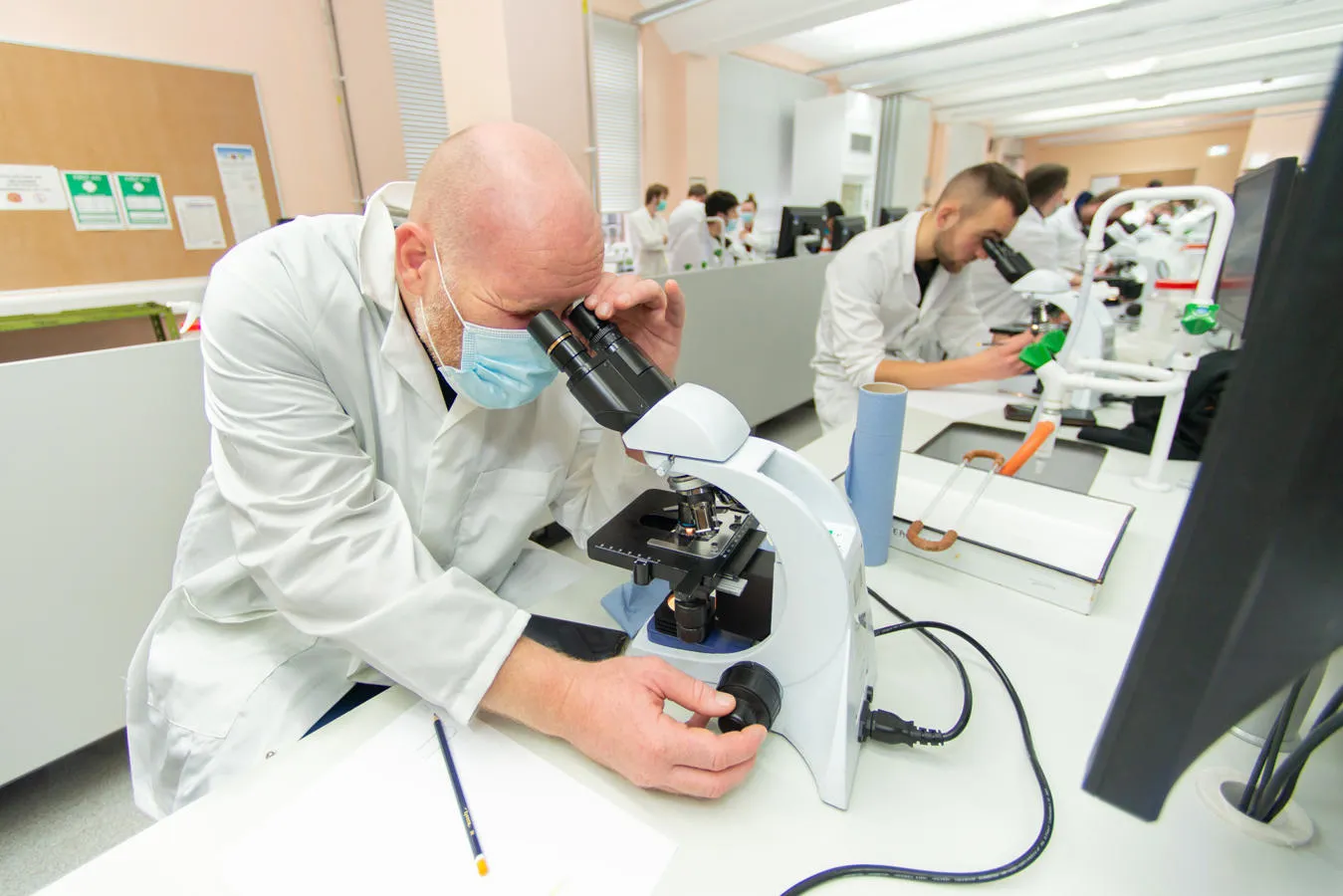
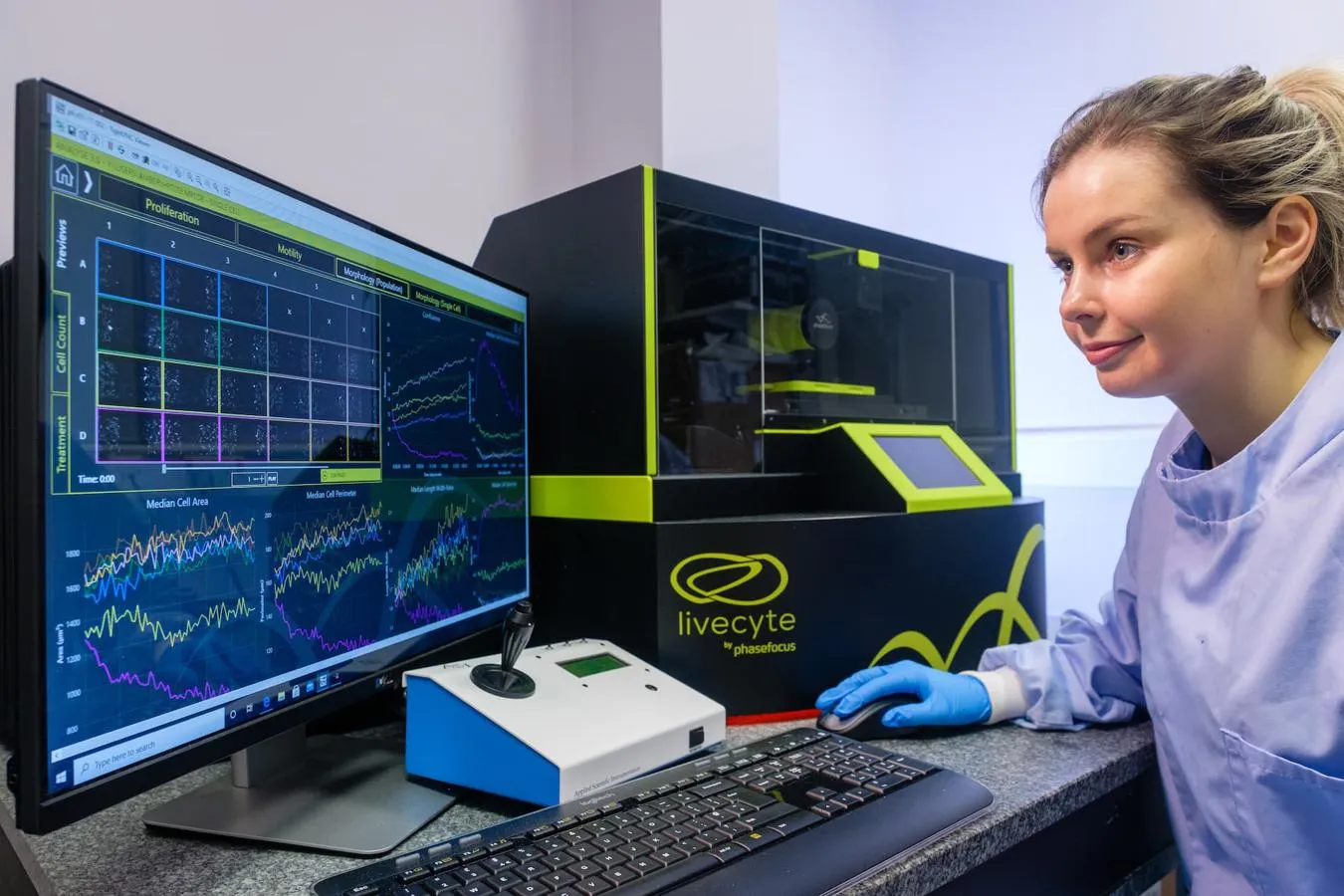
Our facilities
Watchlist
Dr Dom Henri
Course overview
2 mins
Zoology Close-Up
Course Highlight
3 mins
The Gold Standard for Teaching
University life
1 min
Featured academics
We have three Higher Education Bioscience Teacher of the Year winners in our department and a reputation for world-leading research.5
This makes for a wide choice of final year projects, with particular specialisms in the evolution of behaviour and the monitoring, management and conservation of wildlife.

Professor Robert Knell
Professor of Zoology
Rob is a Professor of Zoology and an active researcher with interests in a variety of different aspects of ecology and evolution, mainly to do with either parasites, immune systems, sex or all three.
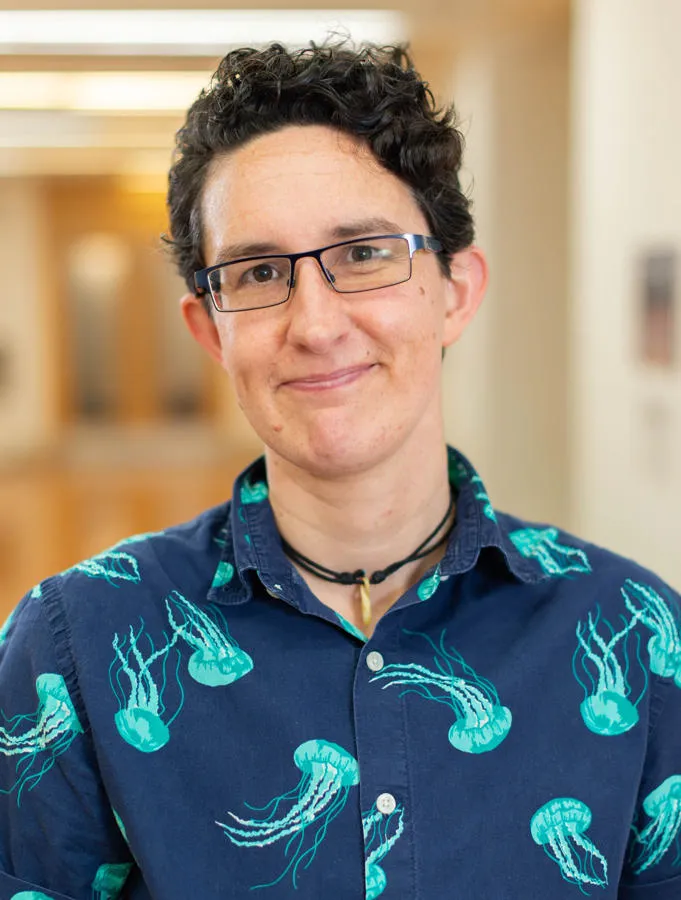
Dr Jen Bright
Lecturer in Zoology
With a background in palaeontology and geology, Jen became interested in Biological Science because it's "easier to study living dinosaurs (birds) than it is to study extinct ones". Jen is now a lecturer in Zoology able to draw on those experiences.
Entry Requirements
What do I need?
This course has a range of tariffs for entry. Use the interactive slider to choose a number of points and see the course entry requirements.

Slide to set your points
A levels
EEE
BTEC
PPP
Equivalent qualifications and grades are accepted.
How to apply for this course
Most importantly, you need ambition. Together with our support and opportunities, you can go further than you ever thought possible.
Our typical offer for this course is 48 UCAS points from level 3 qualifications (A levels, BTEC, or other equivalent qualifications).
If you don’t have level 3 qualifications, we welcome you to apply for an advisory meeting with our Admissions team. We’ll look at your circumstances, give you personalised guidance, and help you understand your entry options.
Remember, we look at your whole application – not just grades. Achievements, work experience, extracurricular activities: they all count here. So remember to tell us what makes you tick in your personal statement.
We also consider qualifications and experience from the UK and worldwide that may not exactly match those listed.
Have questions? Talk to our Admissions team today.
Fees & Funding
How much is it?
Tuition fees for 2028 entry have not been confirmed. Please use 2027-28 information as a guide.
For UK students, our standard course fee is £10,050 per year. Keep in mind that some courses are longer - for example, spending your third year abroad will make your degree four years in total.
If you choose to study a foundation year as part of your course, the fee is £10,050.
Thinking about a year in industry? This is £2,010 for UK students.
Planning a year abroad? This costs £1,505 for UK students.
Standard Tuition Fee
£10,050 / year
Foundation Year Fee
£10,050
The amount you pay may increase each year, in line with inflation - but capped to the Retail Price Index.
How do I pay for it?
You can take out a tuition fee loan to cover the full cost of your course. Once you’ve successfully applied for this, you don’t need to do anything else – the money is sent straight to us.
You can also take out a maintenance loan of up to £10,544 a year to cover your living costs, depending on your household income.
Remember, you won’t start paying your loans back until you’ve left university and earn more than £25,000 per year.
See our full fees and funding information for more details and to find out what support we can offer.
Future prospects
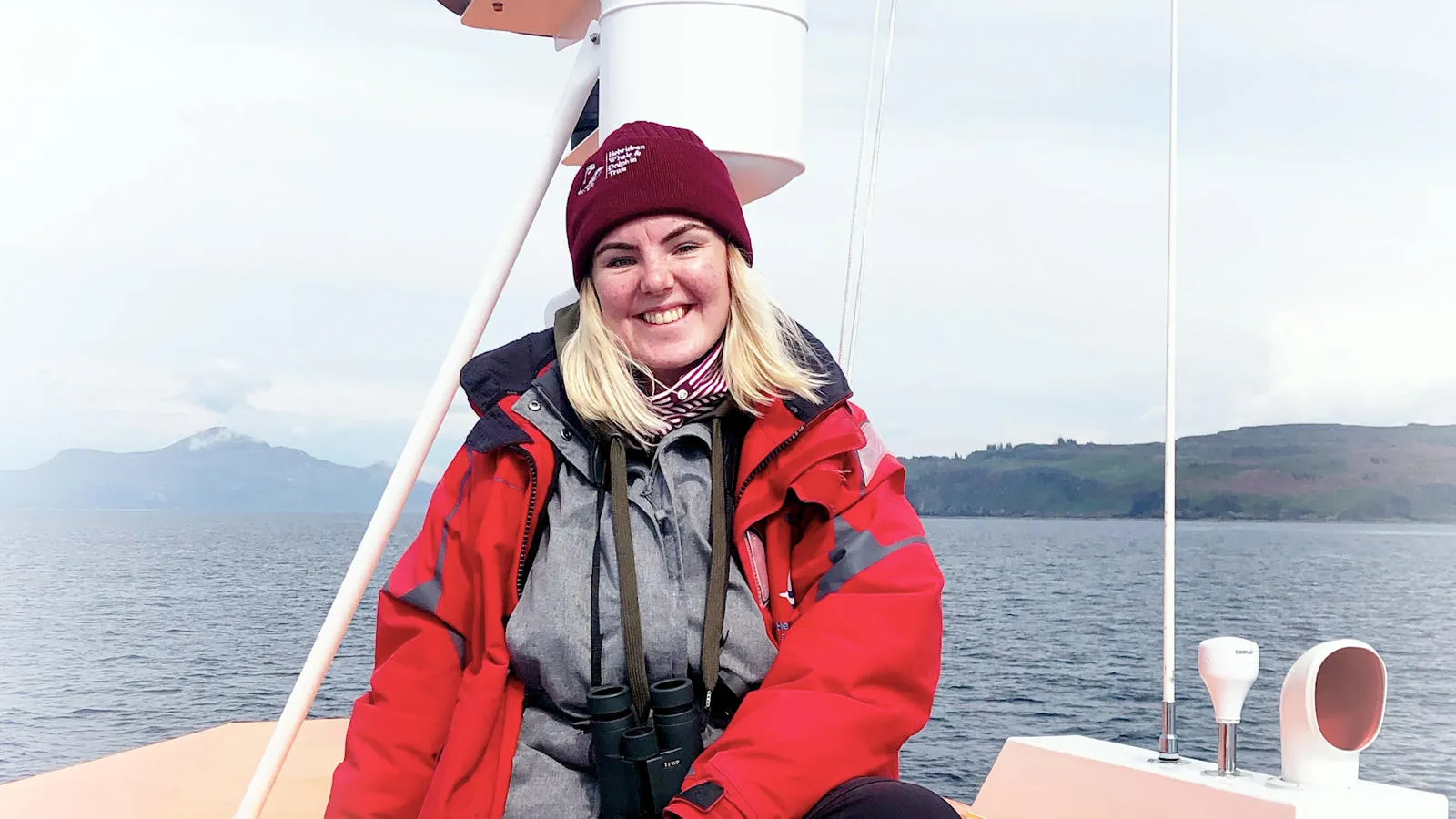
Our graduates go on to a wide-range of careers including professional biologists, laboratory officers, environmental consultants and microbiologists working for employers such as Reckitt, the Environment Agency, Natural England, wildlife trusts and conservation agencies.
Many of our students also go into postgraduate study, including enrolling onto a range of our taught Masters programmes, research Masters programmes, or even PhDs.
Learn more about BSc Zoology
Become part of the next generation of futuremakers
Like what you’ve seen? Then it’s time to apply.
The standard way to apply is through UCAS. This will give you the chance to showcase your skills, qualities and passion for the subject, as well as providing us with your academic qualifications.
Not ready to apply yet?
Visit our next Open Day, and see all that the University of Hull has to offer. Talk to our lecturers about your subject, find out what university is really like from our current students, and take a tour of our beautiful campus and amazing facilities.
You may also be interested in...
BSc (Hons) Biology
Undergraduate
Develop professional skills in industry-standard labs and enjoy field trips abroad on a BSc Biology degree at the University of Hull. Apply now.
C100
BSc (Hons) Marine Biology
Undergraduate
The North Sea + The Deep + scuba dive training + field trips to locations like Brazil and Egypt + world-leading researchers = the perfect place to study.
C160
BSc (Hons) Environmental Science
Undergraduate
Study global issues with environmental experts on our IES-accredited BSc Environmental Science degree at the University of Hull.
F751
Module options include PADI-certified Advanced Open Water Diver training (extra fee may be payable).
Most overseas trips run in the summer between the second and third year. There is an extra charge but the trips are subsidised. Destinations listed are currently included in our list of field trip opportunities but may be subject to change.
Royal Society of Biology’s 'Higher Education Bioscience Teacher of the Year Award
All modules on this course page are subject to availability and this list may change at any time. All field trips on this course page are indicative and locations may change at any time.