



Love the thrill of being on stage? Explore and develop your talent through live performances, studio recordings, and broadcasts.
At Hull, you’ll work on major creative projects – both on your own and with like-minded creatives. Surrounded by a tight-knit community of performers, composers, songwriters and producers.
You’ll use industry-standard recording studios and performance spaces. And you’ll get the chance to gain work experience at local live events. So by the time you graduate, you’ll have the skills, knowledge and confidence to become the performer you want to be.

1st in the UK
for Student Experience
Music, The Times Good University Guide 2027
5th in the UK
for Learning Opportunities
National Student Survey (NSS) 2026, HEIs only
6th in the UK
for Student Voice
National Student Survey (NSS) 2026, HEIs only

Professional software
such as Pro Tools and Ableton

Hit the right note
in our state-of-the-art concert hall

Industry-standard
studios and rehearsal rooms

Close links
with Opera North and the Royal Philharmonic Orchestra

Industry alliance
with RPO musicians
About this course
BA Music (Performance) is a variant of the BA Music programme. So you’ll share the same modules as other BA Music students. But when it comes to options within modules, you’ll focus on performance.
To thrive in today’s music culture, you’ll need a range of musical and technical skills. And to be able to work confidently with others across a range of professional contexts. You'll study a range of technical skills to enable you to realise your best work. Project management, music theory and analysis. Fluency with key pieces of music software. Research skills, curriculum design, and festival programming.
You'll receive robust training in the critical and contextual dimensions of the study of music. Working with expert staff to explore, interrogate and challenge received wisdom about the value, status and significance of music in our society. Your practical work will culminate in a large-scale project that will be a stepping stone into your career.
And you can tap into our partnerships with the Royal Philharmonic Orchestra (RPO) and Opera North. RPO will hold masterclasses and offer career advice. As well as ensemble coaching, one-to-one tuition and opportunities to get work experience.
Life's not a rehearsal. But rehearsals are vital
Module options
Each year, you’ll study modules worth a certain number of credits, and you need 120 credits per year. Most modules are 20 credits – so you’ll study six modules each year. Some longer modules, such as a dissertation, are worth more. In these cases, you’ll study fewer modules - but the number of credits will always add up to 120. Some modules are compulsory, some are optional, so you can build a course that’s right for you.
No filters selected
Creating Recorded Music
Writer? Performer? Producer? Whatever your focus, you’ll work with fellow musicians to fully realise a musical recording. You’ll learn how to collaborate with others, each with different skills and roles, to create original music (including songwriting, instrumental works, electronic tracks and anything in-between) or to capture performance as a recorded artefact. You’ll finish the module with a portfolio-ready work.
core
20 credits
Creating Live Music
Channel your creativity into a live music event to develop your technical and artistic skills whatever your musical interests. You’ll collaborate with music and music production students to create a unique and original live music event, alongside developing core skills in project management, repertoire development and artistic presentation.
core
20 credits
Core Music Techniques
How does music work? How is it put together? Providing you with an essential proficiency in music theory and enabling you to realise your creative projects, you will develop your understanding of notation, harmony, melody, rhythm, alongside listening skills. You will form a portfolio for your final assessment from tasks across a variety of musical styles and techniques.
core
20 credits
Applied Music Skills
Get an in-depth understanding of how music is put together, along with how and why harmonic provides such a powerful force in music’s structure. Based on a range of musical styles, you’ll be given the tools and techniques to analyse structural and harmonic perspectives, and develop crucial listening skills for practical musicianship.
core
20 credits
Music, Criticism and Culture
Music can be profoundly significant for individuals in their daily lives, for politically-charged movements, and for entire cultures. This module will teach you different ways to ask such questions of music, and will help you to apply ideas derived from core literature to contemporary case studies.
core
20 credits
Music and its Histories
This introduces you to narratives that characterise histories of music across different historical periods, technologies, and styles. You will explore these while also pursuing specialist studies relevant to your degree pathway. Through a range of different music, you will look at their histories and the assumptions behind the construction of such histories.
core
20 credits
Individual Creative Project
What would you like to create? This module gives you the time, space, and expert support that you need to bring your individual project to life. You’ll be supported through planning, executing, and completion – which may be a performance, composition, recording, songwriting EP, educational practical project, or piece of sound design
core
20 credits
Collaborative Creative Project
Creative project management will explore the key methods used in a broad range of creative industries to organise and manage complex projects.
core
20 credits
Music and Its Objects
Explore how music has been shaped by the objects we associate with it: instruments, technologies, sound recordings, and notations. You will develop a critical approach to thinking about these, helping you to deepen your understanding of the historical context and critical significance of your own music-making activities.
core
20 credits
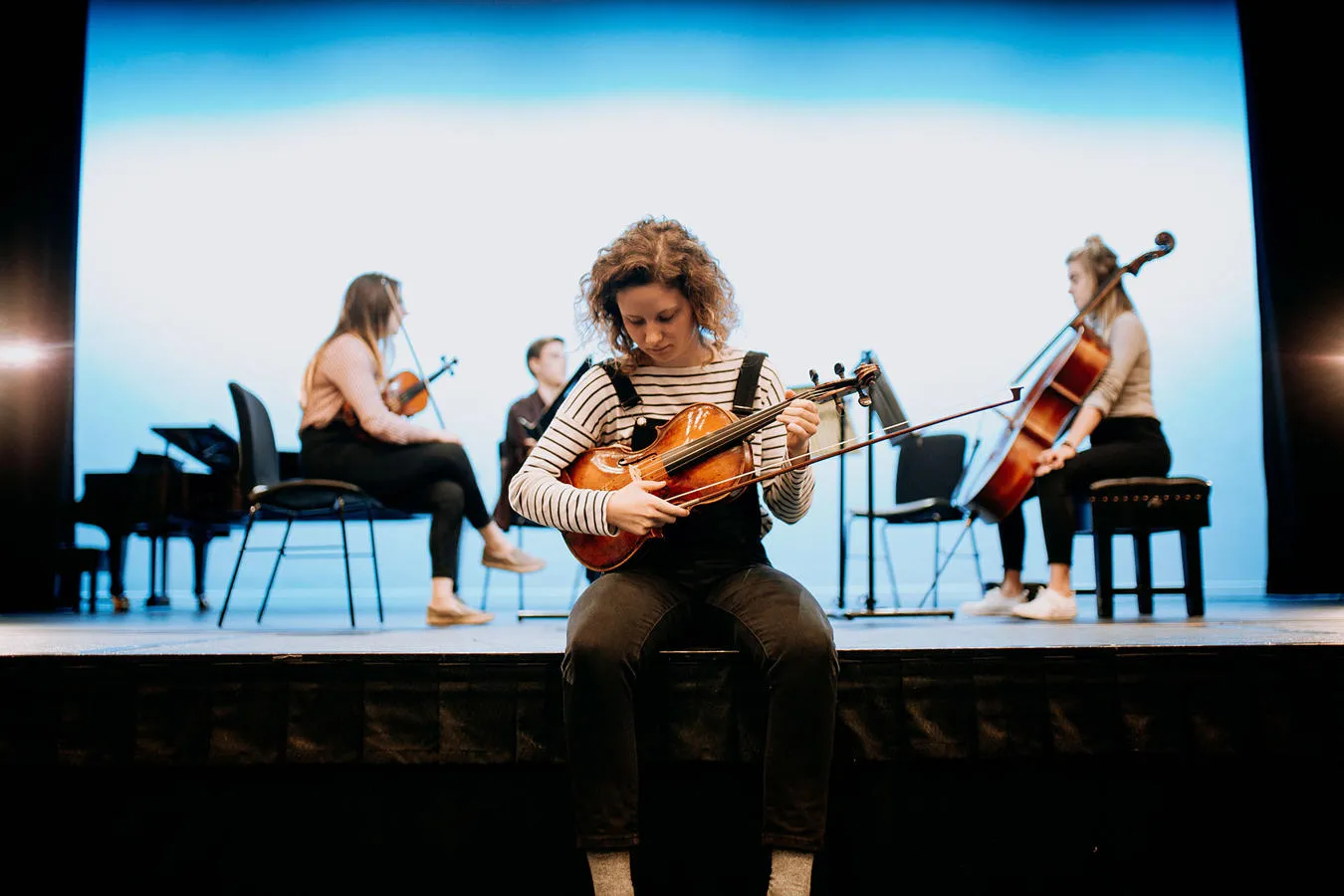
Can you make a living from music? You can here.
 Featured module
- optional
- 20 credits
How do you turn your passion for music into a successful career? This module helps you explore the many professional pathways within today’s vibrant and growing music industry.
You’ll investigate the roles that interest you, gain insight into what professionals in the sector actually do, and learn how to position yourself for future opportunities.
Through research and reflection, you’ll develop a clear understanding of your chosen field and the steps needed to pursue it.
Plan your path, build your confidence, and take the first step towards your future in the music industry.
Our facilities
Watchlist
Dr Elaine King
Course overview
2 mins
The Future of Music
Course Highlight
7 mins
Humber Street Sesh
Course Highlight
2 mins
Featured academics
From DJs to band members, stage performers to session musicians, our performance-led staff are active in making music themselves. And they bring their passion and experience into everything you learn.
So you can be sure you’re getting a great education.
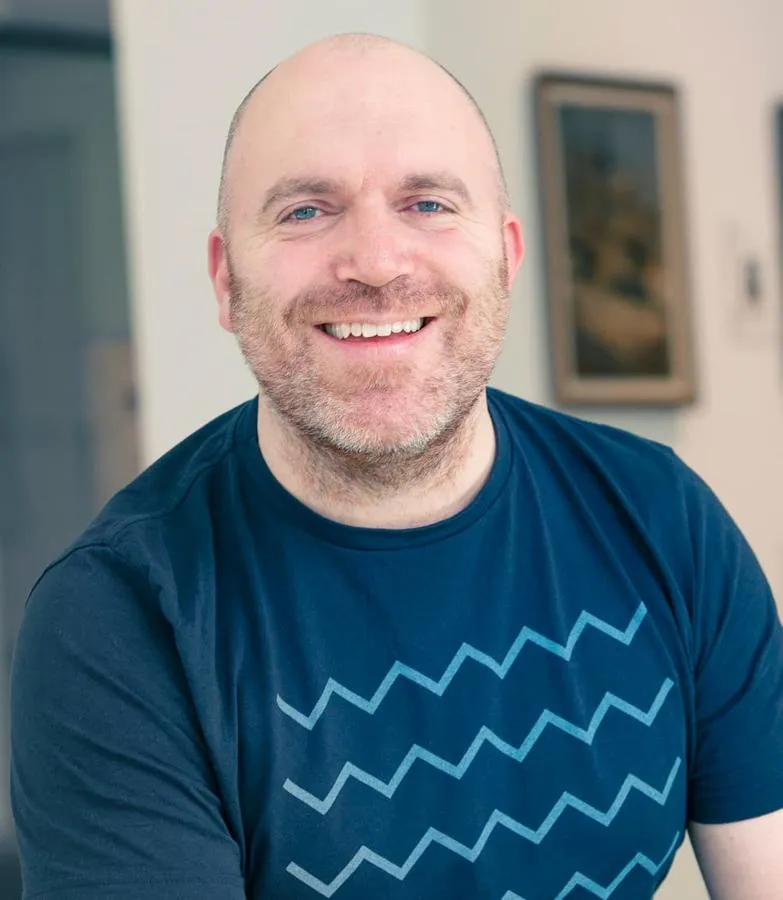
Dr Rowan Oliver
Senior Lecturer
Before joining the University of Hull, Rowan spent several years touring the world as the drummer in Goldfrapp (among various other musical exploits). He continues to record and perform internationally as a session musician.

Dr Elaine King
Senior Lecturer
Elaine is a cellist, pianist and conductor. She directs the University of Hull Camerata and is involved in other regional chamber ensembles and orchestras, including Hull Philharmonic Orchestra.
Entry Requirements
What do I need?
This course has a range of tariffs for entry. Use the interactive slider to choose a number of points and see the course entry requirements.

Slide to set your points
A levels
BBC
BTEC
DMM
Equivalent qualifications and grades are accepted.
How to apply for this course
Most importantly, you need ambition. Together with our support and opportunities, you can go further than you ever thought possible.
Our typical offer for this course is 96–112 UCAS points. Our contextual offer is 96 points. But there’s no ceiling on ambition.
At least 80 points must come from A levels, BTEC, or other equivalent qualifications.
Remember, we look at your whole application – not just grades. Achievements, work experience, extracurricular activities: they all count here. We also consider qualifications and experience from the UK and worldwide that may not exactly match those listed.
Not sure if you’ll meet the entry requirements?
Talk to our Admissions team today. We’ll look at your circumstances, give you personalised guidance and help you understand your options, one of which could be a Foundation Year.
Fees & Funding
How much is it?
Tuition fees for 2028 entry have not been confirmed. Please use 2027-28 information as a guide.
For UK students, our standard course fee is £10,050 per year. Keep in mind that some courses are longer - for example, spending your third year abroad will make your degree four years in total.
If you choose to study a foundation year as part of your course, the fee is £10,050.
Standard Tuition Fee
£10,050 / year
The amount you pay may increase each year, in line with inflation - but capped to the Retail Price Index.
How do I pay for it?
You can take out a tuition fee loan to cover the full cost of your course. Once you’ve successfully applied for this, you don’t need to do anything else – the money is sent straight to us.
You can also take out a maintenance loan of up to £10,544 a year to cover your living costs, depending on your household income.
Remember, you won’t start paying your loans back until you’ve left university and earn more than £25,000 per year.
See our full fees and funding information for more details and to find out what support we can offer.

Future prospects
You’ll graduate with essential skills for the music industry, plus, a professional portfolio of material for your CV. You’ll learn how to communicate confidently, both through your craft and face-to-face. You’ll also have access to our network of professional partners, providing opportunities for live projects, work experience, masterclasses, and more.
Some students set up record labels before they graduated. Others carve out their own careers in the industry. Our graduates go on to become musicians, conductors, and orchestral players and managers. They also pursue careers as producers, live sound engineers, and events managers, as well as music therapists, teachers and journalists.
Become part of the next generation of futuremakers
Like what you've seen? Then it's time to apply.
The standard way is to apply through UCAS. This will give you the chance to showcase your skills qualities and passion for the subject, as well as providing us with your academic qualifications.
Not ready to apply yet?
Visit our next Open Day, and see all that the University of Hull has to offer. Talk to our lecturers about your subject, find out what university is really like from our current students, and take a tour of our beautiful campus and amazing facilities.
You may also be interested in...
BA (Hons) Music
Undergraduate
Forge your musical future – with pathways in Performance, Songwriting, Popular Music, and Community and Education.
W300
BA (Hons) Music (Popular Music)
Undergraduate
Become part of a creative community of performers, composers, songwriters, producers, music psychologists, and writers.
W305
BA (Hons) Music (Songwriting)
Undergraduate
As a songwriter, learn the ropes as a practitioner in the music industry.
W304
BA (Hons) Music Production
Undergraduate
Get music-industry ready with a degree designed to build your skills, experience and portfolio of production projects.
W370
BA (Hons) Music (Community and Education)
Undergraduate
Gain the skills to become a peripatetic music teacher, a classroom specialist, an animateur, or an arts practitioner working with diverse communities.
W306
All modules presented on this course page are subject to availability and this list may change at any time.