 Available in Clearing



Illuminate the past. Tackle the present. Shape the future. Join us on a journey to gain historical knowledge and take on today’s most pressing challenges.
Our understanding of History influences how we live our lives today. At Hull, we balance the thrill of fresh discoveries with familiar topics. Along the way, you’ll develop key techniques for historians and gain transferable skills all employers value.
You’ll also get the chance to work with local museums, archives and galleries. And take part in voluntary work placements with the Hull History Network.

4th in the UK
for Satisfied with Feedback
The Guardian University Rankings, 2026
Joint 8th in the UK
for Graduate Prospects
The Complete University Guide, 2027
Joint 8th in the UK
for Satisfied with Teaching
The Guardian University Rankings, 2026
10th in the UK
for Teaching Quality
The Times Good University Guide, 2026

Access to Rare Books Collection
including titles published between 1473 and 2002

Boost your CV
on a Hull History Network placement

Top grade
for research impact1
Archive access
at Hull History Centre

90+ years of teaching History
since 1928
About this course
You’ll engage with social and cultural history. With war and politics. With the powerful and the underdog. With sudden events. And with long-term change. You’ll uncover the historical roots of contemporary social, political and environmental challenges. From classical civilisations to modern communities, you’ll explore how all different periods of history continue to influence our world, and to help us understand it better.
Our assessments aim to reflect the real world. Instead of a series of exams, you'll be encouraged to express your ideas in a variety of ways. To criticise sources of historical information from newspapers to computer games. And to develop your own ideas through channels such as podcasts and online exhibitions. That way, you gain the range of skills you’ll need for the workplace.
You’ll benefit from the resources of a city steeped in history. Explore the Hull History Centre and the world renowned Wilberforce Institute. And, of course, there’s the Brynmor Jones Library. Here, we have more than a million books, journals and periodicals. As well as extensive digital resources drawn from libraries and archives across the world.
Look back to the past to see into the future.
Foundation year
A foundation year at the University of Hull gives you a solid grounding of knowledge and boosts your academic skills, so you can progress on to your chosen programme with confidence.
The foundation course you enrol on may not be an exact match to your chosen degree, but don’t worry. Our foundation courses combine content from multiple related courses in the same subject area, giving you more flexibility and choice about the degree path you take.
For example, if you apply for a Music Foundation Year, you’ll join our Media Foundation course. So, if you decide to switch - say, from Music to Graphic Design - you can do so without restarting your foundation year.
Module options
No filters selected
Preparing for Learning in Higher Education
This module is designed to give you the best possible start to your university studies, making sure you have all the essential skills you need to succeed. Through lectures and workshops we will teach you how to write in an academic style, how to find quality sources, and how to reference work, culminating in writing up a mini-research project.
core
20 credits
Introduction to Study in the Humanities
This module equips you with a suite of analytical and theoretical tools to support you as you progress along your academic journey. You'll develop an interdisciplinary understanding of approaches to study in the humanities by working with a variety of resources, including novels, films and aspects of the visual arts.
core
20 credits
Research in the Humanities, Social Sciences and Education
This module will equip you with the necessary skills to conduct and analyse research in a specific interest, supported by academics within your subject. You'll navigate through the research process, from identifying an area of interest to presenting findings to your peers.
core
20 credits
Group Challenge (Humanities)
Formulate and execute a group led enquiry into texts, cultural artefacts, film, music or dance. You'll explore their topics in groups at supervised workshops and develop questions on the cultural object relates to the living world of human experience, as well as developing your own methods to answer these questions.
compulsory
20 credits
Foundation in Data Analysis
Develop a strong foundation in data collection and analysis. This module will introduce you to qualitative and quantitative data and how to analyse it; the collection of primary and secondary data; the production of high-quality graphics; and report writing.
compulsory
20 credits
Academic Writing Skills
Developing confidence in expression, oral as well as written, is a key feature of this module, which aims to familiarise you with university submission and assessment procedures. This is a clear building block towards your degree programme and places you at a distinct advantage when you move into the following year.
compulsory
20 credits
History of Freedom
What does it mean to be free and how has the answer to this question changed over time? In ancient and medieval times, there was no expectation of individual freedom as we understand it today, rather there were degrees of ‘unfreedom’ such as slavery, serfdom, or vassalage. Later, in the age of empire, race determined who could be enslaved, and the slave trade’s legacies of racism persist into the present day: the civil rights movements and the struggle against apartheid are known as some of the most prominent recent fights for freedom. Nonetheless, the idea of freedom has far broader connotations, and you will also have the flexibility to explore diverse issues such as religious, cultural or personal freedoms.
compulsory
20 credits
Revolutions: Continuity and Change
Revolutions are processes and events of profound and enduring change, but they are not just about politics. Before the great revolutions in America, France, Haiti and Russia, global history experienced sweeping changes in society, ideas and technology. Revolutions are not modern phenomena, and they do not belong strictly to Europe: they are ancient and they have taken place all over the globe since the beginning of ‘recorded’ history. This module will widen your perspective on ‘revolutions’ by examining a number of revolutionary moments in world history, from ancient times to the present. These will range across technological, social, religious and political revolutions.
compulsory
20 credits
All Roads Lead from Rome: the Classical Present
No matter how modern we think we are, we’re still shaped by the classical past. In every age, the classical world has been used as a benchmark for good taste and has been re-invented for present purposes. Using the artworks, archaeology and artefacts of material and visual culture, this module will explore topics such as how the classical world provided a blueprint for the projection of power through imagery and architecture. From the posturing of great leaders, such as the portraits of Napoleon, to the grand civic buildings of Washington DC or Albert Speer’s designs for Hitler’s Berlin, the classical world has been influential throughout history.
compulsory
20 credits
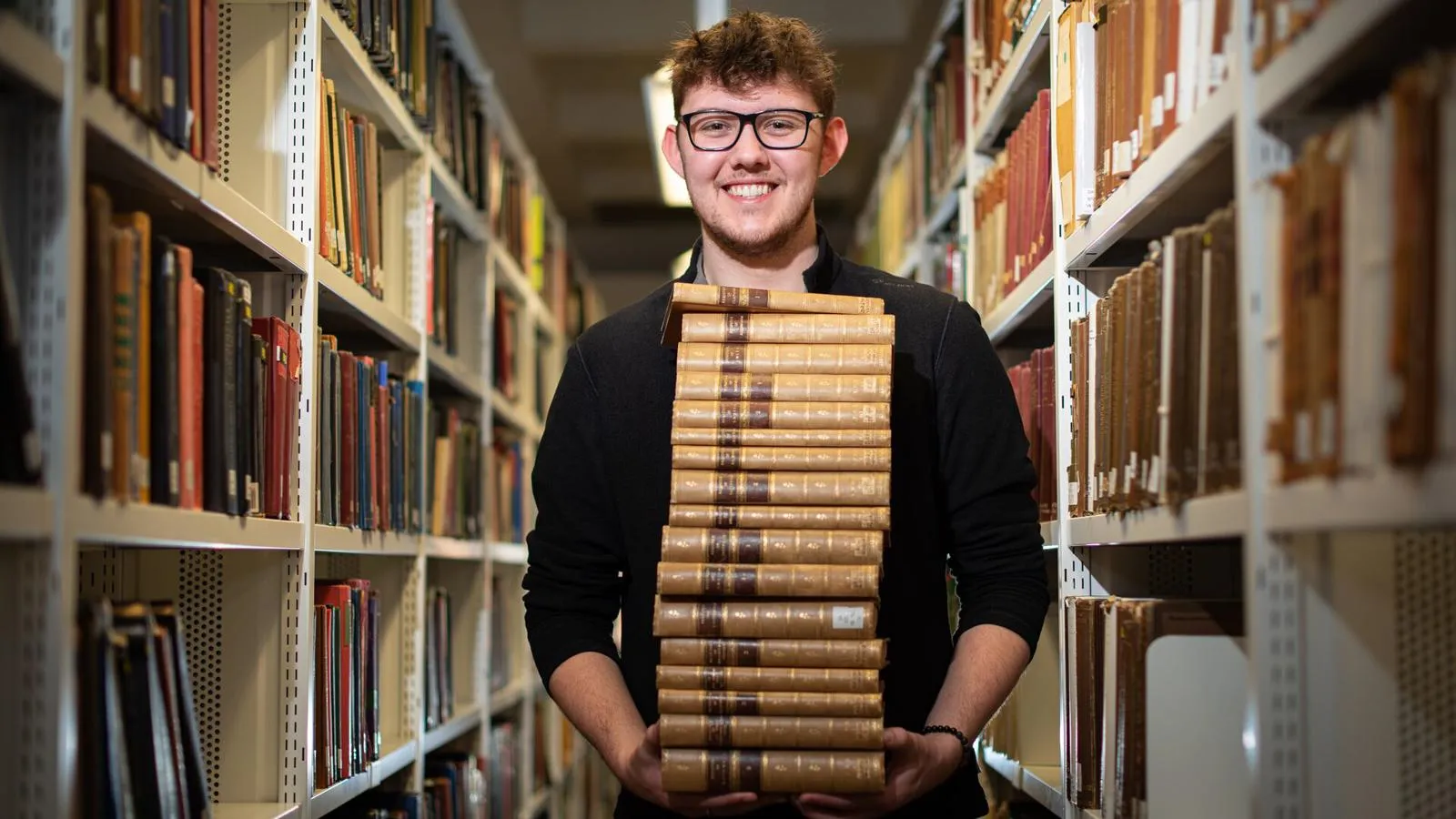
Study a module, or create one? Be free to shape your degree
 Featured module
- compulsory
- 20 credits
What if you could help design the module you study? This unique module places students and staff in true partnership, sharing control over the topics, themes, and learning experience.
Working together, you’ll identify areas of interest and shape the direction of the module, drawing on a wide range of academic sources and materials. Within the chosen themes, each student will lead a workshop on their own specialist topic, designing activities and guiding discussion.
Along the way, you’ll build confidence in research, leadership, and collaborative learning while exploring subjects you are genuinely passionate about.
Don’t just study a module. Help to create it.
Our facilities
Watchlist
Dr Jenny Macleod
Course overview
1 min
History at Hull
Course Highlight
5 mins
Life on campus
University life
2 mins
Featured academics
Our historians are leaders in their research fields, which range in time from prehistory to the late twentieth century, and in space from Hull to New Zealand and the Americas.
We have particular expertise in medieval history, women’s history, indigenous history, maritime history, and the history of migration and diasporas.
Together we form a lively, approachable and welcoming group, and seek to bring our expertise and passion for our subject into the classroom.
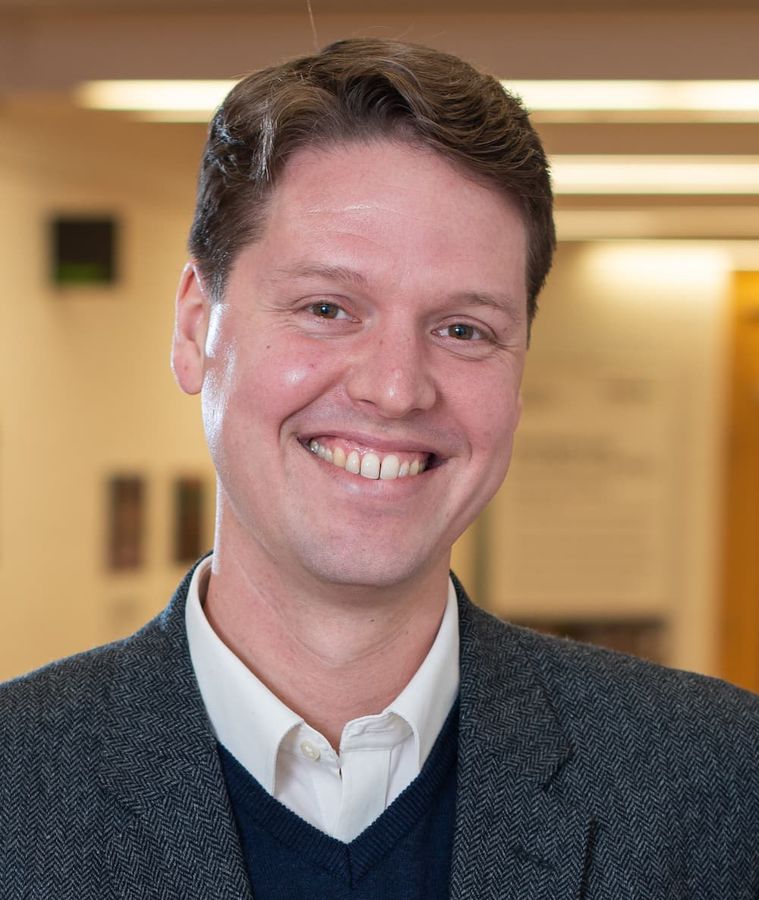
Dr Colin Veach
Reader in Medieval History
Colin’s research investigates the articulation of power in medieval Britain and Ireland, placed in the context of Europe. He’s a Fellow of the Royal Historical Society, and a member of the peer review college for the Irish Research Council (IRC).
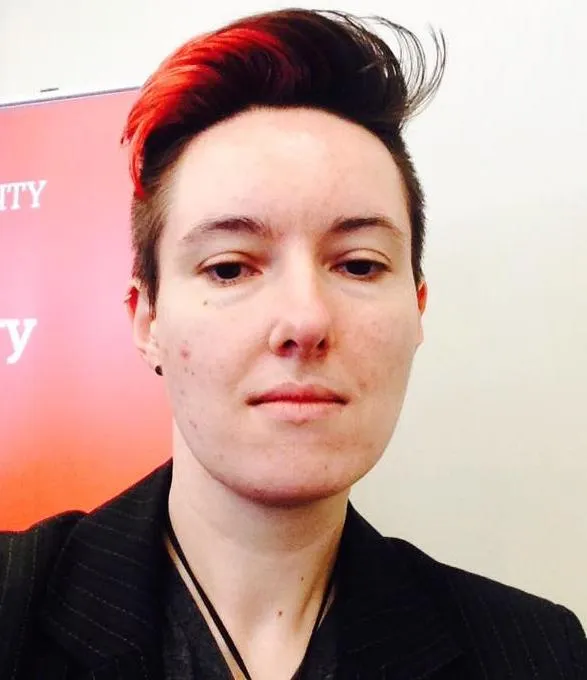
Dr Catherine Baker
Reader in 20th Century History
A specialist in post-Cold War history, international relations and cultural studies, Dr Baker’s initial research explored the politics of national identity and popular music during and after the Yugoslav Wars.
Entry Requirements
What do I need?
At Hull, you're a name, not a number. It's not just about the grades - we'll look at your whole application.
If you're not eligible for direct entry to this course, we may recommend a foundation year as an alternative route to studying for a degree.
To discuss your options, send us an enquiry or call us from 8am on Results Day on 01482 466100.
Every year, hundreds of students join the University of Hull through Clearing for all sorts of reasons and go on to achieve great things. Learn more about Clearing.
Qualification types
We accept a wide range of qualifications and combinations of qualifications, including A levels, BTECs and other accepted qualifications.
We don’t just see what you’re like on paper, we see you. All of you. Your achievements, work experience, music and sport qualifications and the projects you’ve been involved in. We want to hear it all.
Fees & Funding
How much is it?
Tuition fees for 2027 entry have not been confirmed. Please use 2026-27 information as a guide.
For UK students, our standard course fee is £9,790 per year. Keep in mind that some courses are longer - for example, spending your third year abroad will make your degree four years in total.
If you choose to study a foundation year as part of your course, the fee is £5,760.
How do I pay for it?
You can take out a tuition fee loan to cover the full cost of your course. Once you’ve successfully applied for this, you don’t need to do anything else – the money is sent straight to us.
You can also take out a maintenance loan of up to £10,544 a year to cover your living costs, depending on your household income.
Remember, you won’t start paying your loans back until you’ve left university and earn more than £25,000 per year.
See our full fees and funding information for more details and to find out what support we can offer.
Foundation Year Fee
£5,760
Standard Tuition Fee
£9,790 / year
The amount you pay may increase each year, in line with inflation - but capped to the Retail Price Index.

Future prospects
The way we teach history gives you skills that employers value. You’ll learn how to analyse complex data. How to present clear and coherent arguments to diverse audiences. And by explaining, supporting and defending your ideas, you’ll become a better communicator.
You'll also gain teamworking skills through presentations and seminar discussions. And you'll learn how to plan, research and manage your own time through essays.
With a History degree, you can pursue a range of careers, such as historian, heritage manager, archaeologist, museum conservator, researcher, auctioneer, archivist or teacher. Hull graduates also work in journalism, the Civil Service, marketing, law, and politics.
Become part of the next generation of futuremakers
Like what you've seen? Then it's time to apply.
The standard way is to apply through UCAS. This will give you the chance to showcase your skills qualities and passion for the subject, as well as providing us with your academic qualifications.
Not ready to apply yet?
Visit our next Open Day, and see all that the University of Hull has to offer. Talk to our lecturers about your subject, find out what university is really like from our current students, and take a tour of our beautiful campus and amazing facilities.
You may also be interested in...
BA (Hons) History and Politics
Undergraduate
Examine the history of government, with placements in Westminster available, on a BA History and Politics degree at the University of Hull. Apply now.
LV21
BA (Hons) Secondary Teaching Studies (History)
Undergraduate
This degree is a direct route into entry-level secondary school teaching. You'll benefit from our excellent links with Primary Partnership schools.
X133
100% of History at Hull received the top grade of 4* for Research Impact, and is also 18th for Historical Research in the UK, according to the Research Excellence Framework (REF) 2021.
All modules presented on this course page are subject to availability and this list may change at any time.