




Discover how people shape the planet and how the planet shapes us. Expand your horizons and take part in inspiring field trips, to destinations such as Málaga in Spain.
Explore some of today's biggest global challenges, from sustainability and climate change to urban transformation. Learn from expert academics, engage with the latest research and develop a deeper understanding of the relationships between people, places and environments.
With a strong focus on employability, BA Geography at Hull combines real-world projects, practical experience and dedicated careers support to help you build the skills and confidence for a wide range of careers.

100% of students
in work or further study 18 months after graduating
HESA Graduate Outcomes, 2026
This course is accredited by


Field trips
in the UK and overseas1

Boost your CV
with a placement or by studying abroad

The Map Room
holds around 500 drawn and printed maps

Accredited
by the Royal Geographical Society

Personal supervisor
and small study groups

Flume Laboratory
for studying the bodies of water that dominate our planet
About this course
BA and BSc Geography students share a common first year, studying both human and physical geography alongside core geographical skills. You'll explore how people, places and environments interact, while building the research, analytical and fieldwork skills geographers use to understand global challenges. This shared foundation gives you the flexibility to discover where your interests lie before shaping your degree around them.
As you progress through the course, you'll have the freedom to tailor your studies to the areas of geography that inspire you most. While the BA places a stronger emphasis on human geography, you'll still have opportunities to explore physical geography, creating a degree that reflects your interests and future ambitions.
Choose from a wide range of modules covering topics such as sustainability, climate change and cities, alongside opportunities to gain specialist expertise in areas such as Advanced GIS. You can also broaden your horizons with a Placement Year or Study Abroad year, gaining valuable experience and new perspectives beyond the University.
Alongside your academic studies, you'll have opportunities to build the professional skills employers value. Options include undertaking a consultancy project with an external organisation, gaining teaching experience in schools, and strengthening your GIS and data analysis capabilities. These experiences help you graduate with both subject knowledge and practical skills that can set you apart in the job market.
Fieldwork is at the heart of studying Geography at Hull, giving you the opportunity to apply your learning beyond the classroom. From local day trips to residential field courses, you'll explore geographical concepts in real-world settings while gaining valuable research and fieldwork experience. Previous residential field trip destinations have included Málaga in Spain, Barcelona, Berlin, Rome, Hong Kong and Malawi¹. With all core field trips included in your course fees, you'll have the chance to make the most of these unforgettable experiences.
Start a field trip that never ends
Module options
Each year, you’ll study modules worth a certain number of credits, and you need 120 credits per year. Most modules are 20 credits – so you’ll study six modules each year. Some longer modules, such as a dissertation, are worth more. In these cases, you’ll study fewer modules - but the number of credits will always add up to 120. Some modules are compulsory, some are optional, so you can build a course that’s right for you.
No filters selected
Human Geography: Worlds of Connection and Difference
This module will introduce you to key perspectives in contemporary human geography. It uses the themes of difference and connection to explore a wide range of case studies.
compulsory
20 credits
Planet Earth
Develop an understanding of the Earth as a planet – the atmosphere and oceans working together to create global patterns of climate and ocean circulation; plate tectonics and the movement of continents; living systems evolving over time and forming the global biosphere; and the surface processes of accumulation and erosion shaping the landscapes around us. The module will help you to see how ideas in physical geography can be used to understand patterns observed in the natural environment at a global and continental scale.
compulsory
20 credits
Exploring Worlds Around Us
You’ll find out about many different ways of studying the world around us by exploring a specific field trip location.
compulsory
20 credits
Interpreting Environments
This module introduces you to some key tools we use to interpret the environments around us, such as computer mapping and data analysis.
compulsory
20 credits
Development and Change
Our changing world faces many challenges, especially in developing countries. Learn how geographers approach development, inequality, sustainability and governance.
compulsory
20 credits
Environmental Problems and Solutions
Discover the fundamental principles of environmental systems and the interconnectedness of humankind with the environment.
compulsory
20 credits
Research Design in Geography, Earth and Environment
A key skill for investigating the challenges of the world today is to learn how to ask questions and design a strategy for answering them. This module provides you with a chance to practice that skill in a group project before you design the questions for your dissertation.
You will also start to consider career options for after your degree and you will start to explore what you can do now to help improve your employability.
core
20 credits
Placement Year (HUBS)
Gain valuable experience outside the classroom through a placement opportunity. You’ll have the chance to apply what you’ve learned in a professional environment, develop your skills and gain a broader perspective on your subject and future career.
core
120 credits
Geographic Information Systems
he fourth industrial revolution is underway: finding, downloading, transforming and visualising data are key skills for graduates in the environmental sciences. This module introduces students to key concepts about spatial data and gives a hands-on practical course in using industry-leading GIS software to produce report-quality maps and to present spatial data analysis.
compulsory
20 credits

How do you build a better city? Think beyond its borders.
 Featured module
- optional
- 20 credits
Explore how cities and regions grow, change and respond to the challenges of an urbanising world. You’ll examine the key concepts and policies that shape urbanisation and regional development, drawing on examples from across the globe.
You’ll study patterns of urban growth and regional change, alongside the theories used to understand these processes. Topics include urban planning, regional governance, regeneration, economic development, suburbanisation and urban inequalities.
Using real-world case studies, you’ll investigate the social, economic and environmental challenges facing cities and regions. You’ll also evaluate the policy responses designed to address them.
Our facilities
Watchlist
Dr Hannah Worthen
Course overview
2 mins
Your course in their words
Student Story
2 mins
Iceland field trip
Course Highlight
3 mins
Tenerife field trip 2023
Course Highlight
2 mins
Teaching Facilities
University life
2 mins
Featured academics
Teaching on our geography degrees is research-led, skills-based and geared towards employability.
Our recognised experts introduce you to the cutting-edge of emerging geographical arguments. And they give you the freedom to follow your own research interests for your final-year dissertation.
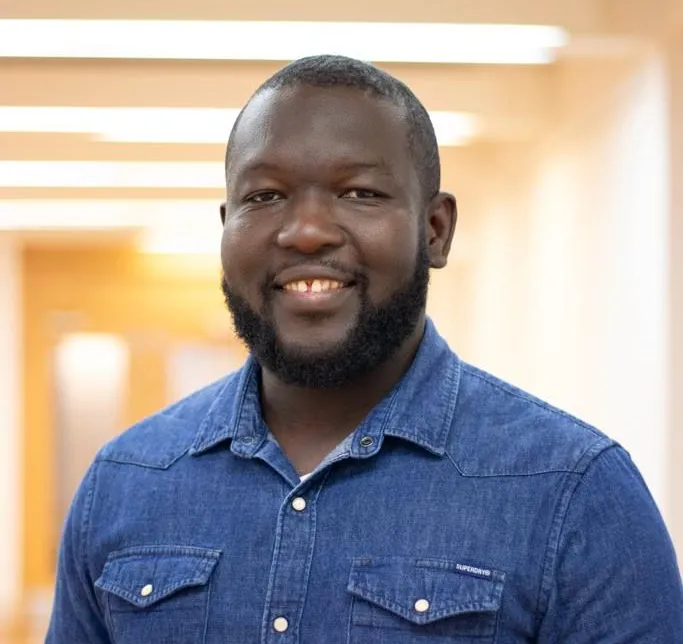
Dr Divine Asafo
Lecturer in Human Geography
Divine’s research focuses on urban/peri-urban development and change in Africa, particularly the politics of peri-urban land, everyday experiences of housing development, and urban disaster risks and vulnerabilities.

Dr Hannah Worthen
Lecturer in Environmental Humanities
Hannah specialises in environmental and spatial histories, particularly early modern floods. She combines historical research, innovative storytelling, and arts- and humanities-led community engagement to support climate resilience.
Entry Requirements
How to apply for this course
At Hull, you're a name, not a number. It's not just about the grades - we'll look at your whole application.
If you're not eligible for direct entry to this course, we may recommend a foundation year as an alternative route to studying for a degree.
To discuss your options, send us an enquiry or call us from 8am on Results Day on 01482 466100.
Every year, hundreds of students join the University of Hull through Clearing for all sorts of reasons and go on to achieve great things. Learn more about Clearing.
Qualification types
We accept a wide range of qualifications and combinations of qualifications, including A levels, BTECs and other accepted qualifications.
We don’t just see what you’re like on paper, we see you. All of you. Your achievements, work experience, music and sport qualifications and the projects you’ve been involved in. We want to hear it all.
Fees & Funding
How much is it?
Future prospects
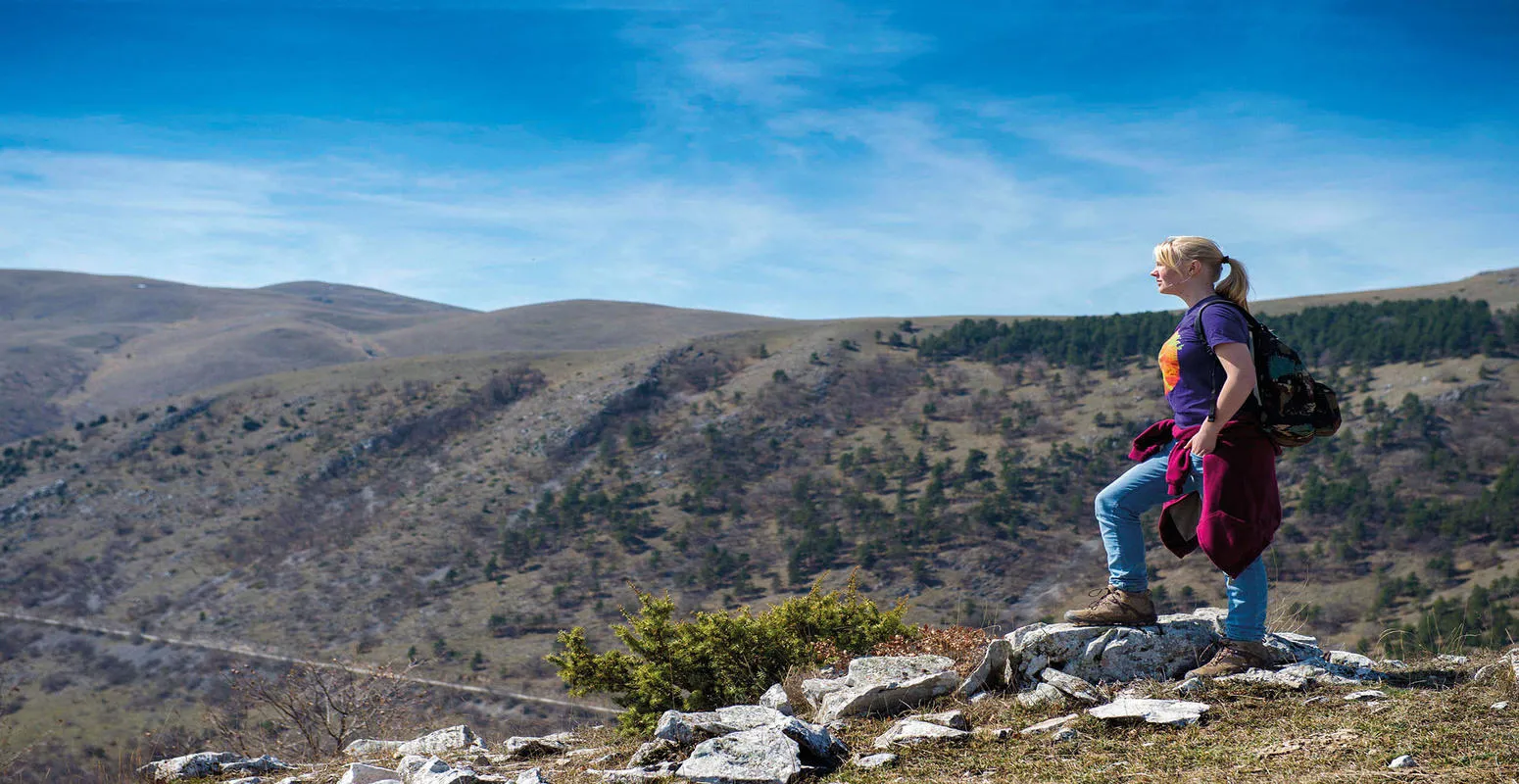
You’ll have the knowledge to help tackle the planet’s biggest issues. To look at places with an expert and critical eye. And you'll gain a range of transferable skills. Add all these together, and you’ll be highly employable.
Recent graduates have gone on to become net zero officers, town planners, environmental consultants, GIS technicians, teachers and some enter the worlds of marketing, banking and accountancy. You’ll find them working in places like Siemens, Burberry, Lincolnshire County Council, the Met Office, American Express, the British Army, the Yorkshire Wildlife Trust, and KPMG.
Become part of the next generation of futuremakers
Like what you've seen? Then it's time to apply.
The standard way is to apply through UCAS. This will give you the chance to showcase your skills qualities and passion for the subject, as well as providing us with your academic qualifications.
Not ready to apply yet?
Visit our next Open Day, and see all that the University of Hull has to offer. Talk to our lecturers about your subject, find out what university is really like from our current students, and take a tour of our beautiful campus and amazing facilities.
You may also be interested in...
BSc (Hons) Geography
Undergraduate
Uncover the dynamic processes allied with human & physical geography with our BSc Geography degree. Apply today to begin developing your new skills.
F800
BSc (Hons) Environmental Science
Undergraduate
Study global issues with environmental experts on our IES-accredited BSc Environmental Science degree at the University of Hull.
F751
All core field trips are included in the cost of your tuition. Extra fees may be payable for optional trips. The destinations listed above are examples of previous field trip opportunities and may be subject to change.
All modules on this course page are subject to availability and this list may change at any time. All field trips on this course page are indicative and locations may change at any time.