



Ready to shape the future? Our Civil Engineering degree is designed for hands-on learners eager to innovate sustainable infrastructure.
Dive into practical projects while harnessing cutting-edge technology with our state-of-the-art labs, featuring 3D printing and advanced material testing facilities. Our programme encompasses essential areas such as structural engineering, design, geotechnics, hydraulics, building information modelling (BIM), construction, and resilient-smart infrastructure.
With a strong focus on innovative design, you'll cultivate the vital skills that are increasingly sought after worldwide. Moreover, learning in the UK's 'Energy Estuary' offers you strong industry partnerships and valuable real-world experience through placements and site visits, keeping you connected to the latest trends in the field.

Boost your CV
with an industry placement

Industry standard facilities
like our Turing and Superlab

Live project
based learning and site visits

Innovation
and sustainability are a key focus

Industry connections
learn in the UK's Energy Estuary and benefit from industry connections
About this course
Learn the heart of the UK’s rapidly growing ‘Energy Estuary’ and unlock solutions that improve lives through Hull's Civil Engineering degree. With a focus on sustainability, resilience, and innovation, you’ll gain the skills needed to address the challenges of modern infrastructure, from climate change to urbanisation. The course covers key areas such as structural engineering, geotechnics, hydraulics, and building information modelling (BIM), providing a solid technical foundation alongside practical, hands-on experience.
From day one, you’ll be treated as a trainee engineer, gaining all the benefits of a civil engineering degree apprenticeship but with even more expertise. You'll engage in project-based learning where you can plan, build, and test your own prototypes. You’ll have access to resources such as the Ken Swift Manufacturing Centre, the Mechanical Engineering Workshop, and the Material Lab for materials testing. The Acoustic Wind Tunnel Lab allows practical learning in fluid dynamics, while the Robotic Lab and HIVE immersive technologies provide cutting-edge tools for project-based work and simulations. These state-of-the-art facilities ensure you gain the practical experience needed for a successful career in civil engineering.
The programme’s emphasis on real-world applications means you’ll gain experience through laboratory work, industry collaborations, and optional placement opportunities. Our industry connections and partnerships with key industry leaders including Spencer Group, ABP, ARUP, Sewell Group, Mott MacDonald, Siemens, Orsted, McKinsey & Company, Smith & Nephew, and Alan Wood & Partners mean students can gain invaluable insights into the engineering industry, embarking on live projects and site visits.
With a curriculum designed to meet the demands of the modern workforce, you’ll graduate equipped with both technical expertise and practical experience in sustainable design, project management, and resilient infrastructure, ready to shape the world’s future.
Learn by getting your hands dirty and clean.
Module options
Each year, you’ll study modules worth a certain number of credits, and you need 120 credits per year. Most modules are 20 credits – so you’ll study six modules each year. Some longer modules, such as a dissertation, are worth more. In these cases, you’ll study fewer modules - but the number of credits will always add up to 120. Some modules are compulsory, some are optional, so you can build a course that’s right for you.
No filters selected
Engineering Design Challenge
Develop and enhance a range of professional skills as a basis for professional registration as an Incorporated or Chartered Engineer.
compulsory
20 credits
Programming and Digital Logic
Communication of mathematical problems and solutions, as well as logic simulation and C programming results for academic, specialist and non-specialist audiences.
compulsory
20 credits
Mathematics for Engineers
Gain knowledge of the characteristics of a range of functions and techniques appropriate to engineering, developing expertise in analysis, interpretation and problem solving.
compulsory
20 credits
Fundamentals of Engineering
Introducing the key principles and concepts of mechanical, and electrical and electronic engineering, ranging from digital electronics to basic stress analysis concepts.
compulsory
20 credits
Practical Skills for Engineers
An introduction to key experiments and construction skills required for electrical and electronic engineers, as well as hands-on experience in the mechanical engineering manufacturing workshop.
compulsory
20 credits
Engineering Thermodynamics and Fluid Mechanics
Gain knowledge, comprehension and hands-on experience of using a range of mathematical functions and techniques appropriate to the application of Engineering Thermofluids to engineering processes.
compulsory
20 credits
Stress Analysis and FEA for Civil Engineers
This module builds on the 1st year analytical principles to deepen understanding of structural systems essential for civil engineering. It covers stress analysis techniques such as beam deflection, combined stress systems, and buckling, alongside thick cylinder stress and strain evaluation. Additionally, it introduces finite element analysis (FEA), focusing on practical modelling, mesh design, and solving stress problems in complex structures.
compulsory
20 credits
Structural Design and Materials
Both the structural design process and materials science relevant to engineering systems are covered, including the analysis and design of various structural systems under different loading conditions. The module includes calculations around statically determinate and indeterminate structures, deflection methods, and ISO/BS standards for structures. The materials section explores mechanical properties, failure mechanisms, traditional and emerging materials, and sustainability considerations.
compulsory
20 credits
Sustainable Engineering and Construction
This module covers sustainable engineering and construction practices, focusing on green building design, energy strategies, and environmentally responsible site development. It also includes sustainable construction methods, material selection, financial considerations, and the integration of low-carbon technologies. Additionally, students learn about carbon management in infrastructure, including emissions monitoring, carbon neutrality standards, and optimisation strategies in civil engineering.
compulsory
20 credits
Our facilities
Watchlist
Dr Mark Walker
Course overview
3 mins
Who's shaping your future? Engineering at Hull
Course Highlight
3 mins
Engineering a freer future
Course Highlight
2 mins
Engineering Facilities
Course Highlight
1 min
The Gold Standard for Teaching
University life
1 min
Life on campus
University life
2 mins
Featured academics
At Hull, you'll be taught by expert engineering lecturers who bring real-world industry links into the classroom. You’ll learn from practising engineers whose cutting-edge research directly shapes our courses.
Their dedication to advancing the profession ensures you'll be at the forefront of emerging engineering trends. A part of this is our strong female presence in our engineering faculty, who empower the next generation of diverse leaders in the field.
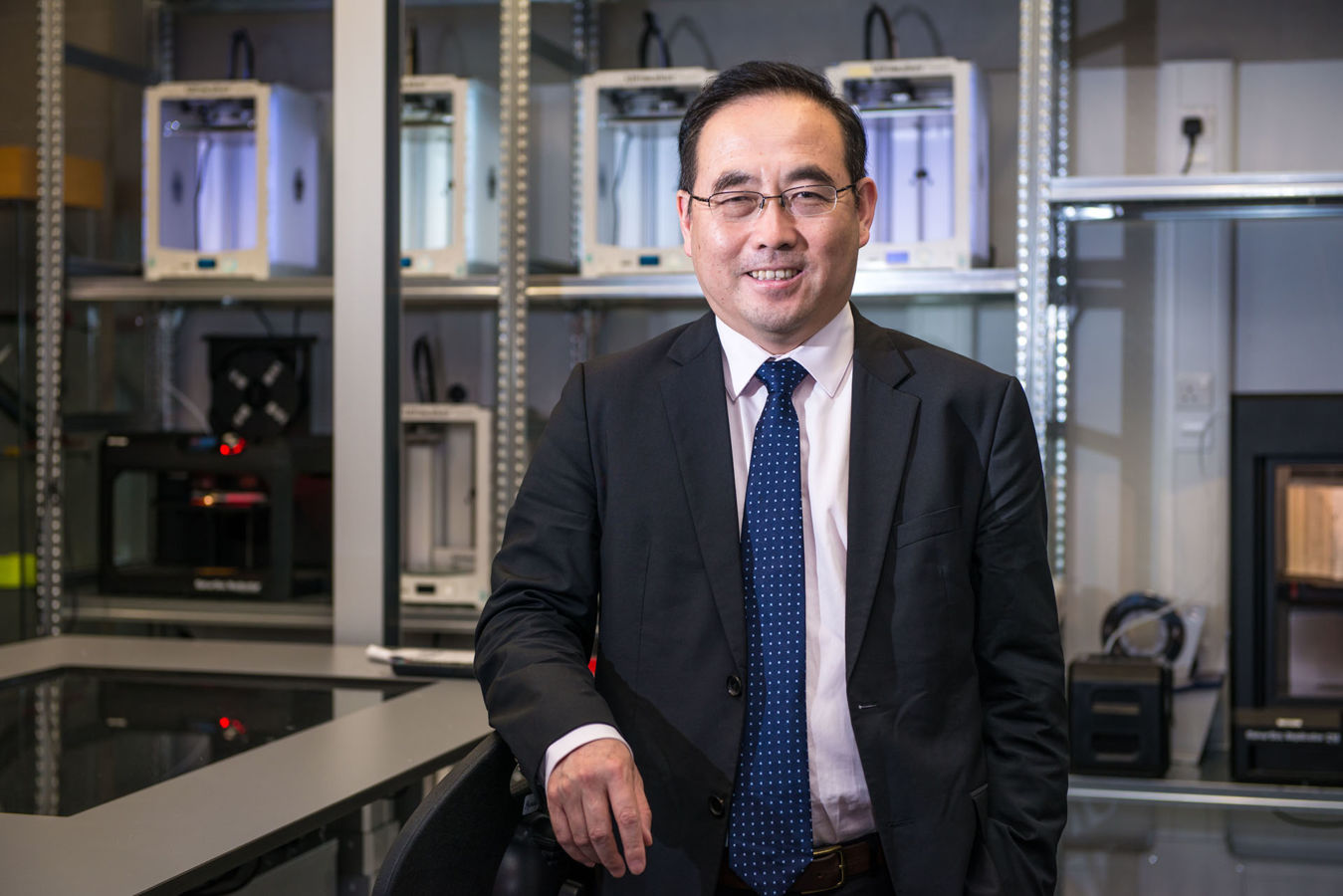
Professor Xudong Zhao
Professor of Engineering / Director of Research
Xudong is a globally recognised energy researcher with a focus on sustainable building services, renewable energy and energy efficiency technologies. He’s published hundreds of research papers and completed over 40 engineering consultancy projects.

Dr Vicky Skoulou
Graduate Research Director (GRD) of School of Engineering / Assoc. Professor (Senior Lecturer) in Chemical Engineering
Vicky is passionate about biomass and waste, resilient low carbon waste-to-energy, hydrogen and net zero energy solutions. Her expertise covers a range of areas from designing thermochemical reactors to biomass waste pretreatments to solid fuels.
Entry Requirements
How to apply for this course
At Hull, you're a name, not a number. It's not just about the grades - we'll look at your whole application.
If you're not eligible for direct entry to this course, we may recommend a foundation year as an alternative route to studying for a degree.
To discuss your options, send us an enquiry or call us from 8am on Results Day on 01482 466100.
Every year, hundreds of students join the University of Hull through Clearing for all sorts of reasons and go on to achieve great things. Learn more about Clearing.
Qualification types
We accept a wide range of qualifications and combinations of qualifications, including A levels, BTECs and other accepted qualifications.
We don’t just see what you’re like on paper, we see you. All of you. Your achievements, work experience, music and sport qualifications and the projects you’ve been involved in. We want to hear it all.
Fees & Funding
How much is it?
For UK students, our standard course fee is £NaN per year. Keep in mind that some courses are longer - for example, spending your third year abroad will make your degree four years in total.

Future prospects
Civil engineers are behind the infrastructure that shapes our world—designing and building everything from bridges and highways to sustainable urban spaces and water treatment systems. Your skills will be in high demand across a wide range of industries, from construction and transportation to environmental management and beyond. With a national shortage of engineers, you'll have excellent career prospects in an ever-growing field.
Potential Careers include: Structural Engineer, Transportation Engineer, Environmental Engineer, Geotechnical Engineer, Construction Project Manager and many more.
Become part of the next generation of futuremakers
Like what you’ve seen? Then it’s time to apply.
The standard way to apply is through UCAS. This will give you the chance to showcase your skills, qualities and passion for the subject, as well as providing us with your academic qualifications.
Not ready to apply yet?
Visit our next Open Day, and see all that the University of Hull has to offer. Talk to our lecturers about your subject, find out what university is really like from our current students, and take a tour of our beautiful campus and amazing facilities.
You may also be interested in...
BEng (Hons) Mechanical Engineering
Undergraduate
Taught by industry professionals and practising engineers, you'll develop skills that can be applied to a range of engineering-related industries.
H300
BEng (Hons) Chemical Engineering
Undergraduate
Further your knowledge and boost career prospects by applying for our BEng Chemical Engineering degree, and learn alongside industry leaders.
H810
BEng (Hons) Biomedical Engineering
Undergraduate
This accredited biomedical science degree equips you with the knowledge to work at the cutting edge of health research, driving innovation that saves lives
H160
BEng (Hons) Electrical and Electronic Engineering
Undergraduate
Tailor your degree through a wide variety of work placements or by choosing one of our optional pathways in youth work, special needs & inclusion or TESOL.
H604
All modules on this course page are subject to availability and this list may change at any time.