 Available in Clearing



Close to industry giants. Access to some of the UK’s best training facilities. A friendly, supportive department. This is why Hull is the ideal place to study a chemical engineering degree.
We’re in a region with a high concentration of process industry companies. BP, Total, Phillips 66, Smith & Nephew, Reckitt, INEOS, Centrica Storage, Croda, and many more are right on our doorstep.
Our accredited course is a recognised qualification towards Chartered Engineer status. Plus, we offer an integrated Masters (MEng) option. So a degree from Hull will open doors to even more opportunities.

1st in the UK
for Value Added
The Guardian University Rankings, 2026
7th in the UK
for Assessment and Feedback
National Student Survey (NSS) 2026, HEIs only
7th in the UK
for Satisfied with Teaching
The Guardian University Rankings, 2026
Joint 9th in the UK
for Student Satisfaction
The Complete University Guide, 2027
This course is accredited by


Train at CATCH
one of the UK's best facilities1

Boost your CV
with a placement year

Direct route
to Chartered Engineer status

Fully accredited
including the IChemE, the IMechE, the IET and the IPEM

Integrated Masters option
Undergraduate and postgraduate study combined

Train in virtual
and physical control rooms
About this course
Chemical engineering applies science to the design, construction and operation of processes used to change raw materials into useful everyday products. Food and drink. Pharmaceuticals. Fertilisers. Energy. Fuels.
Ranked 4th out of 34 institutions for student satisfaction4, Hull provides you with everything you need to excel after graduating. In your first year, you get the chance to do process safety training, including visits to CATCH, one of the UK's best training facilities. There, you can experience life as a chemical engineer, using real equipment and operating procedures to identify the type of hazards you could come across in your career. Back on campus, you can oversee a real-time 3D simulation of a chemical process plant in our virtual control room.
Our third-year design project is sponsored by some of the biggest names in the industry. Croda, Cristal, INEOS, Vivergo and BP Acetyls have all supported it and awarded prizes for the best project.
As well as our three-year course, we offer four- and five-year options with the chance to transfer anytime in your degree. Choose from a built-in placement year or an integrated Masters (MEng) – or both. And like all our engineering courses, Chemical Engineering shares a common first year. That means you can switch degrees in second year if you want to choose a different pathway.
Learn by getting your hands dirty and clean.
Foundation year
A foundation year at the University of Hull gives you a solid grounding of knowledge and boosts your academic skills, so you can progress on to your chosen programme with confidence.
The foundation course you enrol on may not be an exact match to your chosen degree, but don’t worry. Our foundation courses combine content from multiple related courses in the same subject area, giving you more flexibility and choice about the degree path you take.
For example, if you apply for a Music Foundation Year, you’ll join our Media Foundation course. So, if you decide to switch - say, from Music to Graphic Design - you can do so without restarting your foundation year.
Module options
Each year, you’ll study modules worth a certain number of credits, and you need 120 credits per year. Most modules are 20 credits – so you’ll study six modules each year. Some longer modules, such as a dissertation, are worth more. In these cases, you’ll study fewer modules - but the number of credits will always add up to 120. Some modules are compulsory, some are optional, so you can build a course that’s right for you.
No filters selected
Preparing for Learning in Higher Education
This module is designed to give you the best possible start to your university studies, making sure you have all the essential skills you need to succeed. Through lectures and workshops we will teach you how to write in an academic style, how to find quality sources, and how to reference work, culminating in writing up a mini-research project.
core
20 credits
Group Challenge
Address one of the 21 key global challenges in engineering set out by the United Nations. Work in teams to identify key stakeholders, end users and potential funding sources, as well as producing an engineering solution for topics such as clean water, reusable energy, access to medical treatment and cleaner cities.
core
20 credits
Foundation Mathematics A
You will study pure mathematics topics, including proof, algebra, trigonometry, differentiation, integration, exponentials, logarithms, sequences and series. The applied topic is probability and statistics.
compulsory
20 credits
Foundation Mathematics B
This module extends the knowledge gained in the Foundation Mathematics A - pure mathematics topics. You will also study functions and vectors. The applied topic is mechanics.
compulsory
20 credits
Introduction to Physics 1
This is the first of two foundation year modules that prepare you for studying physics or mathematics at degree level. You will study the basics of mechanics, properties of matter, electricity and magnetism.
compulsory
20 credits
Introduction to Physics 2
This is the second of two foundation year modules that prepare you for studying physics or mathematics at degree level. You will study the basics of oscillations, waves, and quantum and nuclear physics.
compulsory
20 credits
Mathematics for Engineers
Gain knowledge of the characteristics of a range of functions and techniques appropriate to engineering, developing expertise in analysis, interpretation and problem solving.
compulsory
20 credits
Fundamentals of Engineering
Introducing the key principles and concepts of mechanical, and electrical and electronic engineering, ranging from digital electronics to basic stress analysis concepts.
compulsory
20 credits
Practical Skills for Engineers
An introduction to key experiments and construction skills required for electrical and electronic engineers, as well as hands-on experience in the mechanical engineering manufacturing workshop.
compulsory
20 credits
Our facilities
Watchlist
Dr Martin Taylor
Course overview
3 mins
Engineering a freer future
Course Highlight
2 mins
Teaching Facilities
University life
2 mins
The Gold Standard for Teaching
University life
1 min
Life on campus
University life
2 mins
Featured academics
We pride ourselves on the friendly, supportive atmosphere we create for our students.
Our open-door policy makes it easier for you to speak to your lecturers and get help with your studies. Your personal supervisor is your main point of contact, and there to help you throughout your studies.
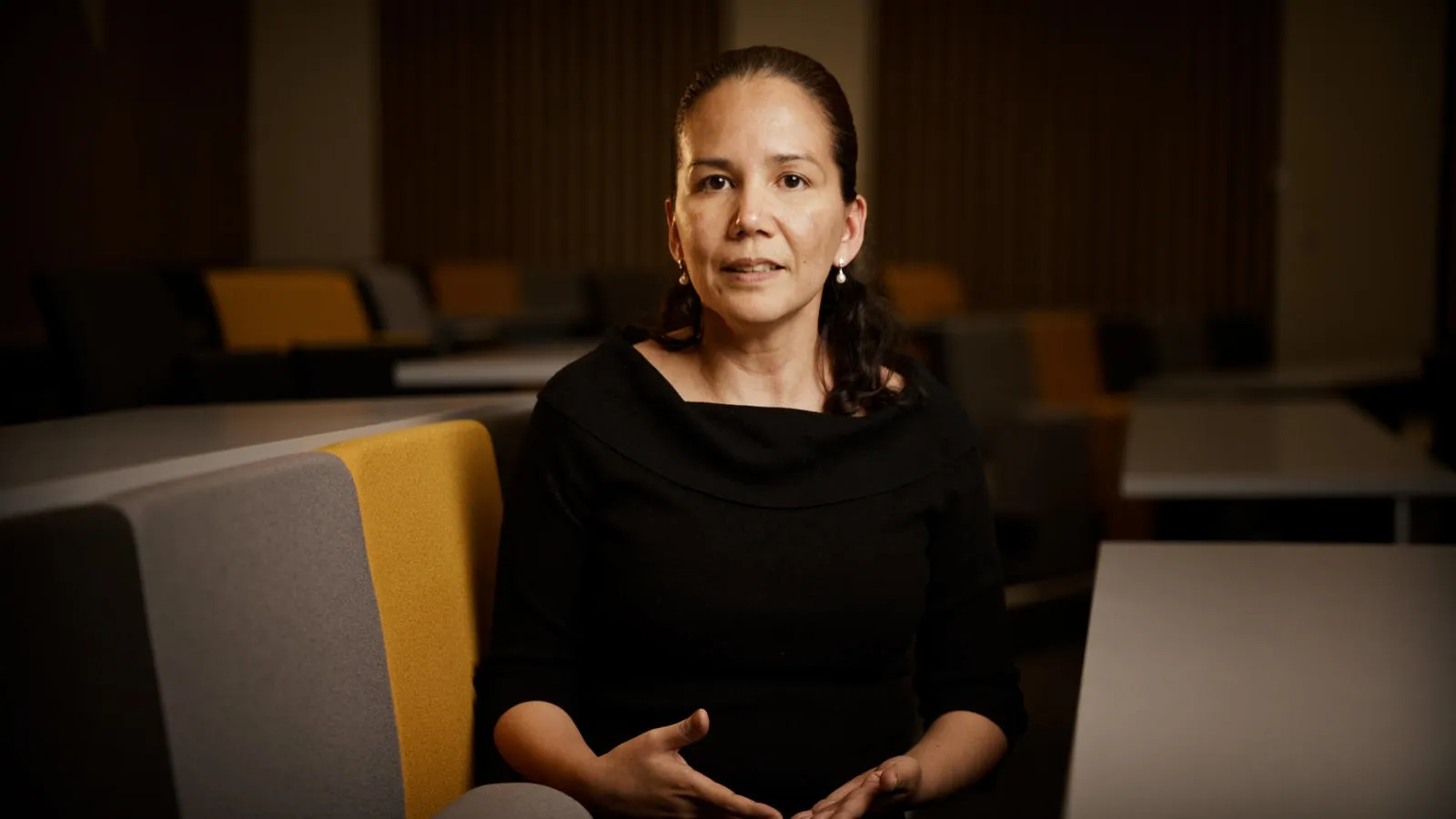
Dr Carolina Font Palma
Senior Lecturer in Mechanical Engineering
Dr Font Palma is Lecturer and Programme Director of Chemical Engineering. Carolina was awarded the prestigious RAEng/The Leverhulme Trust Research Fellowship 2020/2021.

Dr Martin Taylor
Lecturer
Martin earned an MChem in Chemistry from the University of Hull in 2013, then a PhD in Chemical Engineering from Aston University’s Energy and Bioproducts Institute. After British Steel, he returned to Hull in 2018 and became Lecturer in 2022.
Entry Requirements
What do I need?
At Hull, you're a name, not a number. It's not just about the grades - we'll look at your whole application.
If you're not eligible for direct entry to this course, we may recommend a foundation year as an alternative route to studying for a degree.
To discuss your options, send us an enquiry or call us from 8am on Results Day on 01482 466100.
Every year, hundreds of students join the University of Hull through Clearing for all sorts of reasons and go on to achieve great things. Learn more about Clearing.
Qualification types
We accept a wide range of qualifications and combinations of qualifications, including A levels, BTECs and other accepted qualifications.
We don’t just see what you’re like on paper, we see you. All of you. Your achievements, work experience, music and sport qualifications and the projects you’ve been involved in. We want to hear it all.
Fees & Funding
How much is it?
Tuition fees for 2027 entry have not been confirmed. Please use 2026-27 information as a guide.
For UK students, our standard course fee is £9,790 per year. Keep in mind that some courses are longer - for example, spending your third year abroad will make your degree four years in total.
If you choose to study a foundation year as part of your course, the fee is £9,790.
Thinking about a year in industry? This is £1,955 for UK students.
How do I pay for it?
You can take out a tuition fee loan to cover the full cost of your course. Once you’ve successfully applied for this, you don’t need to do anything else – the money is sent straight to us.
You can also take out a maintenance loan of up to £10,544 a year to cover your living costs, depending on your household income.
Remember, you won’t start paying your loans back until you’ve left university and earn more than £25,000 per year.
See our full fees and funding information for more details and to find out what support we can offer.
Foundation Year Fee
£9,790
Standard Tuition Fee
£9,790 / year
The amount you pay may increase each year, in line with inflation - but capped to the Retail Price Index.

Future prospects
As the site of Britain’s ‘energy estuary’, the Humber is a hotbed of placement and career opportunities. It’s home to 350+ engineering and process companies. Our students go on to work for Associated British Foods, Croda, Smith and Nephew, Ineos, RB (formerly Reckitt Benckiser), BP, Siemens Gamesa, and more.
Our degrees are accredited by the Institution of Chemical Engineers (IChemE) and meet the academic criteria for registration as a Chartered Engineer. Our students get free membership of the IChemE and the Energy Institute. This gives you the chance to visit local employers, listen to expert speakers and network with local employers.
Become part of the next generation of futuremakers
Like what you’ve seen? Then it’s time to apply.
The standard way to apply is through UCAS. This will give you the chance to showcase your skills, qualities and passion for the subject, as well as providing us with your academic qualifications.
Not ready to apply yet?
Visit our next Open Day, and see all that the University of Hull has to offer. Talk to our lecturers about your subject, find out what university is really like from our current students, and take a tour of our beautiful campus and amazing facilities.
You may also be interested in...
BEng (Hons) Biomedical Engineering
Undergraduate
This accredited biomedical science degree equips you with the knowledge to work at the cutting edge of health research, driving innovation that saves lives
H160
BEng (Hons) Electrical and Electronic Engineering
Undergraduate
Tailor your degree through a wide variety of work placements or by choosing one of our optional pathways in youth work, special needs & inclusion or TESOL.
H604
BEng (Hons) Mechanical Engineering
Undergraduate
Taught by industry professionals and practising engineers, you'll develop skills that can be applied to a range of engineering-related industries.
H300
BEng (Hons) Civil Engineering
Undergraduate
Ready to shape the future? Our Civil Engineering degree course is designed for hands-on learners eager to innovate sustainable infrastructure. Apply now.
H201
The Centre for Assessment of Technical Competency Humber (CATCH) offers realistic equipment, physical environment and operating procedures.
All modules on this course page are subject to availability and this list may change at any time.