 Available in Clearing



This course is currently awaiting final validation. Applications will open once this has happened. Check back regularly for further updates.
Artificial intelligence (AI) is rapidly transforming the way we live and work. This degree gives you the knowledge and skills you need to be part of the AI future.
Gain a rock-solid grounding in the fundamentals of computing, information science and informatics. Then gain specialist knowledge and experience in the development of intelligent systems, including machine learning, algorithms and complexity and visual computing.
The experience and technical expertise you’ll gain will put you in high demand when it’s time to enter the job market in this fast-moving industry.

93% of students
in work or further study 18 months after graduating
HESA Graduate Outcomes, 2026

1st in the UK
for 'To what extent are students' opinions about the course valued by staff'
Artificial Intelligence, National Student Survey (NSS) 2026, HEIs only

Get paid
on an optional placement year in industry

Five specialist labs
including high spec machines, dedicated for Computer Science students

Compete in events
like Hull’s unique “Three Thing Game", or the UK and Ireland Programming Competition

Integrated Masters option.
Undergraduate and Postgraduate study combined

Robotics Lab
with humanoids, Nano robots and drones
About this course
Explore how AI is rapidly transforming the way we live on this career-driven degree.
From self-driving cars to medical diagnosis, AI and machine learning systems are helping people make better decisions, improve safety and reduce our carbon footprint.
Learn within industry-standard facilities, develop advanced Python programming skills and create your own software. You’ll study essential areas such as databases and networks, operating systems and cloud – as well as the increasing impact of AI on everyone in society.
You’ll benefit from studying in a School with active research in responsible and trustworthy AI. Through the University of Hull’s Centre for Responsible AI, our expertise spans areas such as explainability, safety and fairness, with applications in healthcare, sustainability, law, defence and finance. This means your learning is informed by current research and real-world challenges, helping you understand how AI can be developed and used responsibly.
Compete in international events like the Microsoft Imagine Cup. Or rise to the challenge of creating a computer game over a weekend in our Three Thing Game. You’ll also benefit from our strong links with companies like EA, Sony and Black Marble with frequent talks by experts in the trade.
Designed with your future in mind, you’ll take a professional development module in your first year. Bolster your experience further by choosing to spend a paid year in industry, all thanks to our strong connections with some of the biggest names in the business. And you’ll develop your own project in your final year, so you can demonstrate your skills to potential employers.
Is AI humanity’s friend or end? It’s up to us to decide.
Foundation year
A foundation year at the University of Hull gives you a solid grounding of knowledge and boosts your academic skills, so you can progress on to your chosen programme with confidence.
The foundation course you enrol on may not be an exact match to your chosen degree, but don’t worry. Our foundation courses combine content from multiple related courses in the same subject area, giving you more flexibility and choice about the degree path you take.
For example, if you apply for a Music Foundation Year, you’ll join our Media Foundation course. So, if you decide to switch - say, from Music to Graphic Design - you can do so without restarting your foundation year.
Module options
Our five undergraduate Computer Science courses share the same compulsory modules in the first year. This gives you a foundation of knowledge across the whole subject area and the chance to explore what really interests you. You're then better placed to choose your modules in the later years of our BSc Computer Science, or switch to a different pathway to specialise in games programming, software engineering, robotics or AI.
No filters selected
Preparing for Learning in Higher Education
This module is designed to give you the best possible start to your university studies, making sure you have all the essential skills you need to succeed. Through lectures and workshops we will teach you how to write in an academic style, how to find quality sources, and how to reference work, culminating in writing up a mini-research project.
core
20 credits
Group Challenge
In a group, you'll formulate questions that can be tested by scientific investigations and take part in weekly workshops with academics.
core
20 credits
Foundation Mathematics 1
This module delivers core mathematics skills to build a solid basis for future studies. You will study the following topics: factors, multiples, indices, fractions and standard form; algebra, linear and quadratic equations; averages and spread; functions, exponentials and logarithms; and right-angled triangles and trigonometry.
compulsory
20 credits
Introduction to Computing
This module will promote and support your development of learning in Computer Science as you prepare for progression to the following year. It teaches fundamental computer programming techniques and knowledge and enhances wider conceptual awareness of the discipline.
compulsory
20 credits
Foundation Mathematics 2
This module delivers core mathematics skills to build a solid basis for future studies.You will study the following topics: polynomials; sequences and series; complex numbers and trigonometry; and differentiation and integration.
compulsory
20 credits
Foundation in Data Analysis
Develop a strong foundation in data collection and analysis. This module will introduce you to qualitative and quantitative data and how to analyse it; the collection of primary and secondary data; the production of high-quality graphics; and report writing.
compulsory
20 credits
Programming Portfolio
Gain the practical knowledge to design, implement and test algorithms. The module uses lectures to deliver concepts, a practice lab to apply the programming concepts learnt by developing programs to solve problems. You will take part in hands-on practical assessments, which will enable you to acquire extensive programming skills in an industry standard programming language. We will support you whether you are new to programming or have existing skills.
core
40 credits
Computational Thinking
This module, Computational Thinking, is essential for developing computer-based solutions. This module will enable you to develop your knowledge and understanding of the key mathematical underpinnings of computer science, to aid you in problem solving and programming. The development of your competence in logic, mathematics and statistics will also provide evidence of your numeracy and more advanced skills and is valued by employers.
compulsory
20 credits
Algorithms and Data Structures
Start to think like a computer. This module explores logic, data storage and algorithms with the use of practical demonstrations and activities. Operating in parallel with programming-focused modules, we will develop a toolkit of key concepts from a theoretical (non-code) perspective, facilitating a better understanding of these fundamentals. Topics to expect include pseudocode, state machines, essential keywords, common data structures, sort algorithms and search algorithms. You will learn methods to analyse and compare algorithms and their constituent parts in order that you may better design, evaluate and develop effective, efficient and performant software solutions.
compulsory
20 credits
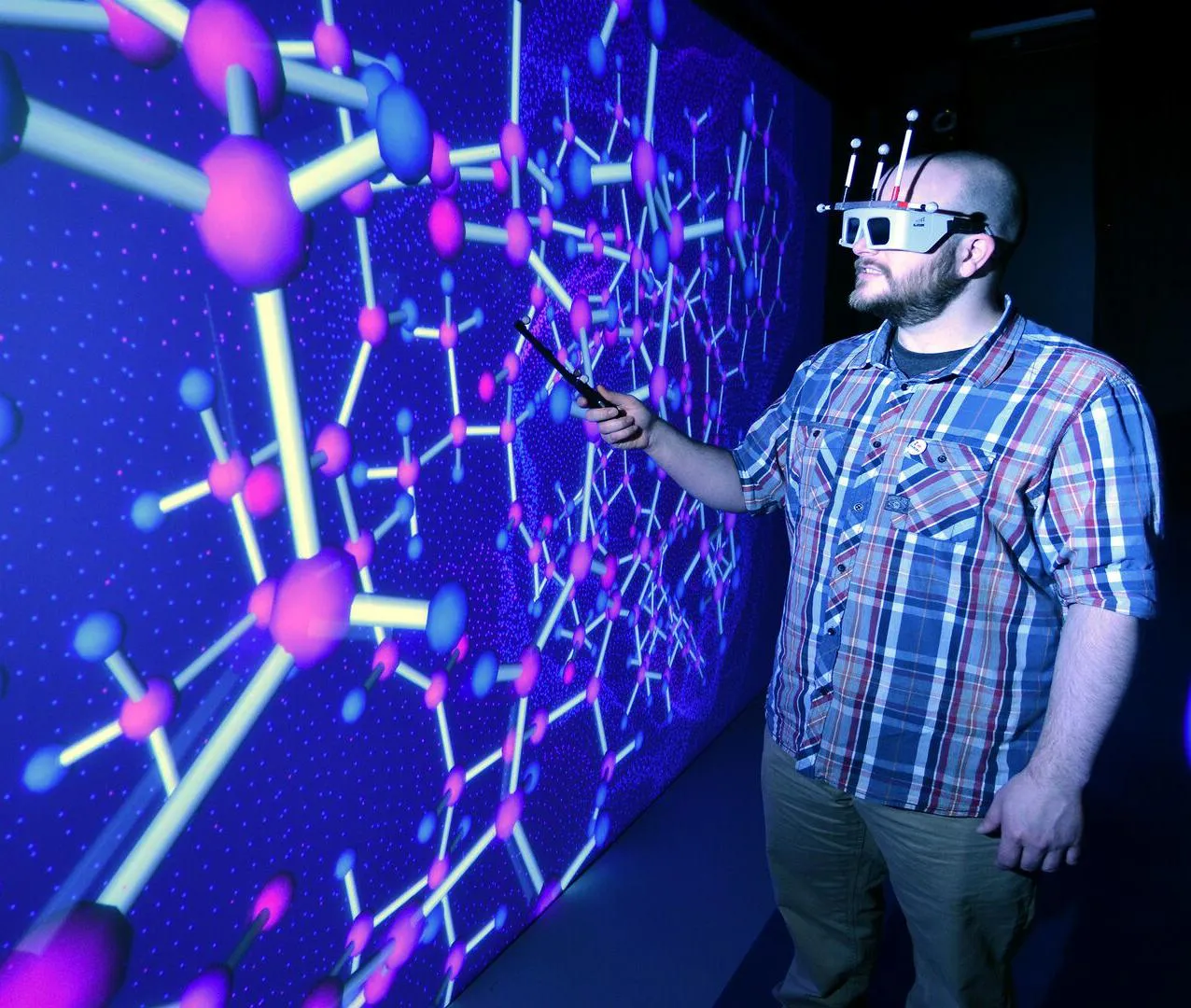
Our facilities
Watchlist
BSc Computer Science (Artificial Intelligence)
Course overview
2 mins
The impact of AI
Course Highlight
2 mins
Rand Nessif
Unsame Stories
2 mins
See our incredible labs
Course Highlight
2 mins
Featured academics
You’ll be taught by talented researchers who carry out world-leading research in areas such as artificial intelligence and machine learning, intelligent and interactive systems, robotics, simulation, visualisation, and mobile and distributed computing.
Our courses are shaped by their expertise.

Professor Dhaval Thakker
Professor of Artificial Intelligence
Dhaval’s expertise focuses on how Artificial Intelligence and the Internet of Things can be used to improve society. His research exploring the role of these technologies in the circular economy, digital health and smart cities.
Dr David Parker
Lecturer in Computer Science
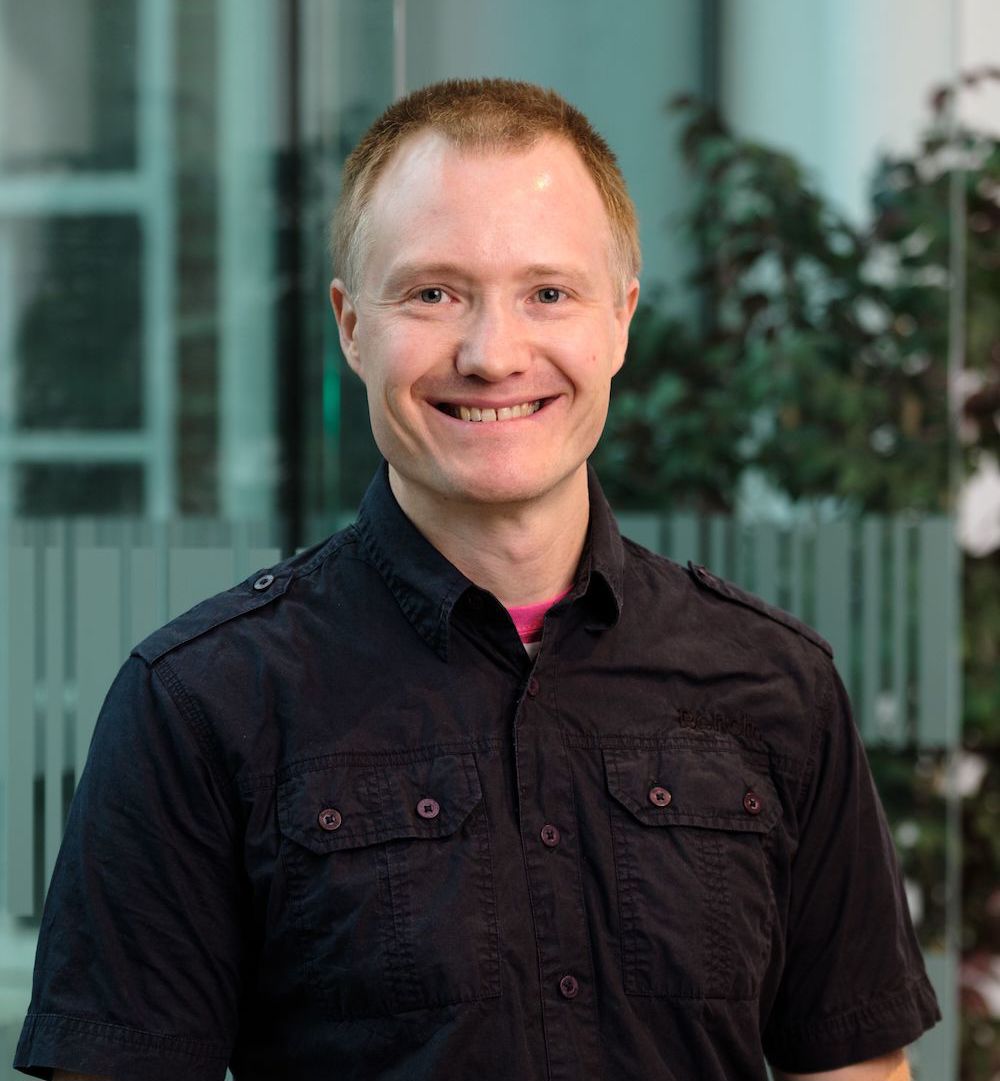
David loves using software to solve problems and oversees many of our game jams and programming competitions such as the Three Thing Game and the Global Game Jam. His research focuses on improving characteristics of safety-critical systems.
Entry Requirements
What do I need?
At Hull, you're a name, not a number. It's not just about the grades - we'll look at your whole application.
If you're not eligible for direct entry to this course, we may recommend a foundation year as an alternative route to studying for a degree.
To discuss your options, send us an enquiry or call us from 8am on Results Day on 01482 466100.
Every year, hundreds of students join the University of Hull through Clearing for all sorts of reasons and go on to achieve great things. Learn more about Clearing.
Qualification types
We accept a wide range of qualifications and combinations of qualifications, including A levels, BTECs and other accepted qualifications.
We don’t just see what you’re like on paper, we see you. All of you. Your achievements, work experience, music and sport qualifications and the projects you’ve been involved in. We want to hear it all.
Fees & Funding
How much is it?
Tuition fees for 2027 entry have not been confirmed. Please use 2026-27 information as a guide.
For UK students, our standard course fee is £9,790 per year. Keep in mind that some courses are longer - for example, spending your third year abroad will make your degree four years in total.
If you choose to study a foundation year as part of your course, the fee is £9,790.
Planning a year abroad? This costs £1,465 for UK students.
Thinking about a year in industry? This is £1,955 for UK students.
How do I pay for it?
You can take out a tuition fee loan to cover the full cost of your course. Once you’ve successfully applied for this, you don’t need to do anything else – the money is sent straight to us.
You can also take out a maintenance loan of up to £10,544 a year to cover your living costs, depending on your household income.
Remember, you won’t start paying your loans back until you’ve left university and earn more than £25,000 per year.
See our full fees and funding information for more details and to find out what support we can offer.

Future prospects
Computer Science and AI graduates are highly employable. It’s hard to imagine a sector of the modern economy where AI is not used. That means you could go on to a range of job roles in a diverse range of sectors including finance, gaming, telecommunications, retail, information technology, advertising and marketing.
Many of our Computer Science graduates go on to work for industry giants such as Sony, Microsoft, Electronic Arts, Rockstar Games, Dell, Fujitsu and Capita as well as not-for-profit businesses and public sector organisations. Some move on to further study with an MSc or PhD – or even set up and grow their own tech businesses.
Become part of the next generation of futuremakers
Like what you've seen? Then it's time to apply.
The standard way is to apply through UCAS. This will give you the chance to showcase your skills qualities and passion for the subject, as well as providing us with your academic qualifications.
This course is currently awaiting final validation. Applications will open once this has happened. Check back regularly for further updates.
Not ready to apply yet?
Visit our next Open Day, and see all that the University of Hull has to offer. Talk to our lecturers about your subject, find out what university is really like from our current students, and take a tour of our beautiful campus and amazing facilities.
You may also be interested in...
BSc (Hons) Biology
Undergraduate
Develop professional skills in industry-standard labs and enjoy field trips abroad on a BSc Biology degree at the University of Hull. Apply now.
C100
BSc (Hons) Marine Biology
Undergraduate
The North Sea + The Deep + scuba dive training + field trips to locations like Brazil and Egypt + world-leading researchers = the perfect place to study.
C160
BSc (Hons) Earth and Environmental Science
Undergraduate
From climate change to clean water, geohazards to green energy: sustainability is at the core of our BSc Earth & Environmental Science degree.
F640
BSc (Hons) Environmental Science
Undergraduate
Study global issues with environmental experts on our IES-accredited BSc Environmental Science degree at the University of Hull.
F751
BSc (Hons) Zoology
Undergraduate
Explore all aspects of animal life, from a subcellular level to entire ecosystems. Then focus on a specialist area that could become your career.
C300
All modules presented on this course page are subject to availability and this list may change at any time.