Background
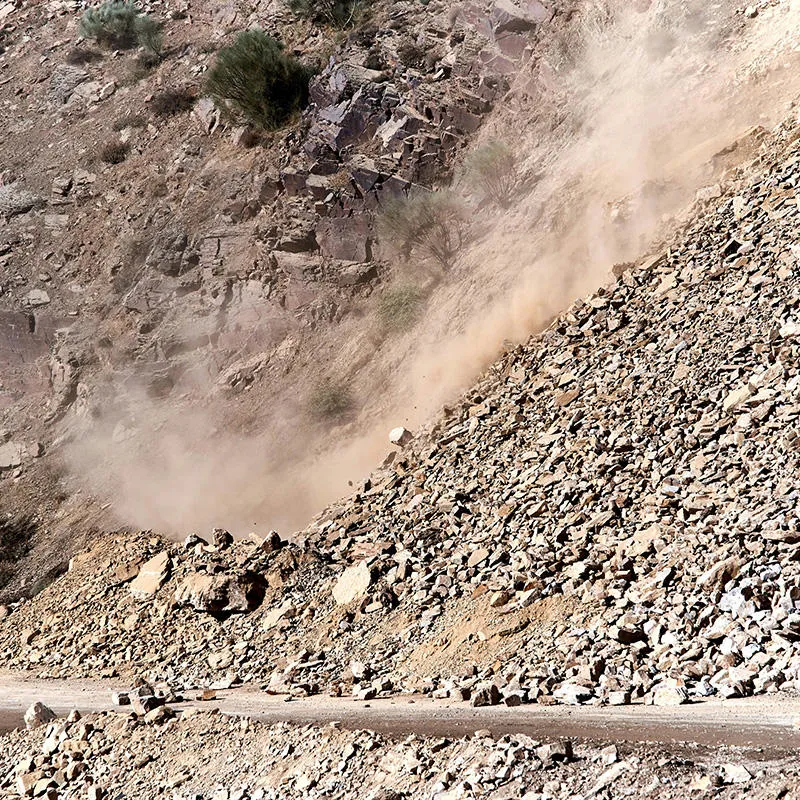
As the UK’s climate continues to change, its coasts are becoming increasingly dynamic and hazardous environments. The combined pressures of more frequent storm events and sea-level rise, linked to climate change, are increasing the risk of coastal landslides. These events, which are natural geological processes, tend to be sudden and often unpredictable, and their impacts on homes, agricultural land, infrastructure, and heritage assets can have profound social, economic, and cultural consequences. Entire communities can be displaced or affected by the ongoing anxiety of living with unstable cliffs and recurring landslip activity. As climate change accelerates these processes, there is a compelling need to address how communities can live with both the risk and the reality of coastal landslides.
Existing scientific datasets, such as those held by the British Geological Survey (BGS), provide valuable records of landslide events. However, they rely on landslides being reported to and recorded by the BGS and as such are not always comprehensive or systematic. Crucially, these datasets also lack the social and human stories that accompany the physical record of landslide occurrence. As a result, the lived experience of communities affected by coastal instability—how people remember, respond to, and adapt to these events—is often missing from discussions of coastal change.
This project addresses this gap. It seeks to bridge geological and social perspectives, situating coastal landslides within broader questions of how people live with water, risk, and change. By combining the BGS GeoCoast dataset with archival research and community-derived narratives, the project will produce a richer, more inclusive understanding of coastal landslide histories and their implications for resilience in the context of climate change.
Project aims
This doctoral research project will:
- Add value and depth to the existing BGS coastal landslide dataset, by analysing its spatial and temporal coverage to identify clusters, gaps, and biases in reporting.
- Enrich the historical record of coastal landslides by incorporating stories and evidence from historical archives, media reports, and community narratives.
- Integrate social history and lived experience into our understanding of coastal instability, ensuring that future research, policy, and management discussions of coastal erosion include the human dimension.
- Explore how communities have experienced and adapted to the risks and realities of landslides, contributing to broader interdisciplinary debates on living well with environmental change.
In doing so, the project will make a vital contribution to both scientific knowledge and societal resilience, helping to reframe landslides not only as hazards to be mitigated but as processes to be understood and lived with.
Methods and approach
The project will adopt a mixed-method, interdisciplinary approach that combines quantitative geoscientific analysis with qualitative historical and social-science research.
Geological and spatial analysis
- The research will begin by analysing the BGS GeoCoast dataset for coastal landslides (https://www.bgs.ac.uk/datasets/geocoast-open/), examining chronological and spatial patterns across the UK coastline. Preliminary support for the project has been given by the BGS project team.
- Using GIS tools, the data will be mapped to identify clusters, absences, and trends in landslide distribution.
- This stage will help pinpoint potential case study areas where data gaps coincide with active or historically significant sites of coastal change, providing a foundation for subsequent qualitative research.
Historical research and archival analysis
- Building on the BGS dataset, the project will use historical archives and online newspaper databases to trace records of past coastal landslides.
- The analysis will work in two directions:
- By taking landslide events recorded in the BGS dataset and seeking to extend their historical context through archival evidence (such as newspaper reports, photographs, or local government records).
- By using the archives to identify previously unrecorded landslides that are missing from the dataset, thereby enhancing its completeness and historical depth.
- This process will not only strengthen the empirical record of coastal landslides but will also reveal how these events were understood, represented, and experienced by the people who lived through them.
Community research and oral histories
- Once a case study area has been identified, the project will conduct interviews and focus groups with residents, community groups, and other stakeholders to capture lived experiences of landslides.
- These oral histories and community narratives will help illuminate how people perceive coastal change, how they remember specific events, and how such experiences shape local identity, place attachment, and adaptive strategies.
- The integration of these human stories into the scientific dataset will help ensure that future approaches to coastal management and resilience planning reflect the realities of those most directly affected.
Interdisciplinary relevance and impact
This project aligns closely with the goals of the Living Well with Water DTP by combining environmental science with arts and humanities perspectives to address one of the UK’s most pressing climate challenges. The interdisciplinary methodology—linking geological data, historical archives, and community storytelling—will:
- Produce a richer, multi-layered understanding of coastal landslides as both geomorphological and social phenomena.
- Inform policy and practice by providing insights into how risk communication, community engagement, and heritage management can better reflect lived experience.
- Contribute to cultural and scientific narratives of adaptation, highlighting the importance of emotional, historical, and social dimensions in living well with water.
By working across disciplinary boundaries, the project will demonstrate how scientific and cultural knowledge systems can be brought together to reimagine resilience. Coastal landslides, rather than being seen solely as destructive forces, can be understood as part of a broader dynamic between people, place, and environment—one that demands care, creativity, and collaboration. By integrating the scientific, historical, and social dimensions of coastal landslides, this project will contribute to building a more inclusive, adaptive, and empathetic approach to coastal resilience in the UK.