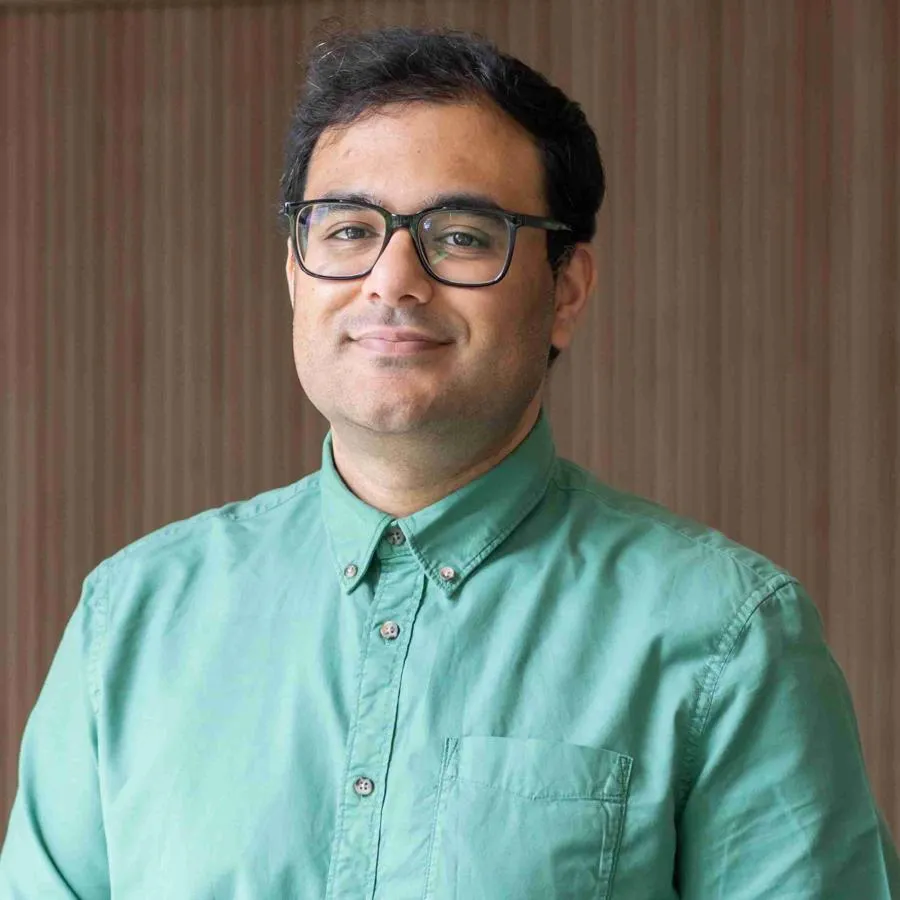
Dr Wasim Ahmed

About Dr Wasim Ahmed
Dr Ahmed’s specialism lies in combining computational social science with applied business analytics, using data science and AI to study online harms in health, sports marketing, and marginalised groups, and to support the uptake of these methods within organisations. He is a world-leading expert in infodemiology (the scientific study of how information spreads and behaves online) extending its application to sports marketing, and consumer domains.
Dr Ahmed has authored over 50 impactful journal articles, which have often led to engagements with industry and government. These included invited talks and engagements with organisations such as the World Health Organisation (WHO), European Organization for Nuclear Research (CERN), the Department for Work and Pensions (DWP), the British Broadcasting Cooperation (BBC), Manchester United Football Club, The Office of Communications (Ofcom), and The Financial Conduct Authority (FCA).
Dr. Ahmed regularly develops funding bids with a range of recent submissions (£200k to 1.5 million) and is also keen to explore joint funding bids with industry partners. Dr Ahmed’s research has attracted over 3k citations with a i10-index of over 50 with outputs in journals with competitive acceptance rates as low as 7%. He has supervised multiple PhD students to completion and is keen to work on industry-focused PhD projects.
Dr. Ahmed has extensive media experience, with appearances across print, broadcast, and television, including The Football News Show (BBC), BBC World News, Sports Day on BBC News, a Discovery+ documentary on social media influencers, the South African Broadcasting Corporation (SABC), Lotus FM, BBC Radio Newcastle, and Metro Radio.
Dr. Ahmed is particularly keen to support organisations and work on collaborative research in the following domains:
•Investigation of online harms, including misogyny, harassment, toxicity, and risks affecting sport, health, and marginalised communities.
•Application of business analytics and data science to marketing performance (including digital marketing), customer behaviour, and societal trends.
•Research on health communication, misinformation, conspiracy narratives, and public behaviour in digital environments.
•Assessment of AI readiness, barriers to technology adoption, organisational capability, and human–AI collaboration to support digital transformation.
•Strategic communication of insights to executive, industry, and policy audiences, translating complex data into actionable recommendations.
Sample of Published Research in this Research Track:
•Das, R., Ahmed, W., Sharma, K., Hardey, M., Dwivedi, Y. K., Zhang, Z., ... & Filieri, R. (2024). Towards the development of an explainable e-commerce fake review index: An attribute analytics approach. European Journal of Operational Research, 317(2), 382-400. (CABS/AJG 4).
•Ahmed, W., Önkal, D., Das, R., Krishnan, S., Olan, F., Hardey, M., & Fenton, A. (2023). Developing techniques to support technological solutions to disinformation by analyzing four conspiracy networks during COVID-19. IEEE Transactions on Engineering Management, 71, 13327-13344. (CABS/AJG 3).
•Fenton, A., Ahmed, W., Hardey, M., Boardman, R., & Kavanagh, E. (2024). Women’s football subculture of misogyny: the escalation to online gender-based violence. European Sport Management Quarterly, 24(6), 1215-1237. (CABS/AJG 3).
•Ahmed, W., Vidal-Alaball, J., Downing, J., & Seguí, F. L. (2020). COVID-19 and the 5G conspiracy theory: social network analysis of Twitter data. Journal of medical internet research, 22(5), e19458. (1k citations, Journal Impact Factor 6).
•Olan, F., Spanaki, K., Ahmed, W., & Zhao, G. (2025). Enabling explainable artificial intelligence capabilities in supply chain decision support making. Production Planning & Control, 36(6), 808-819. (CABS/AJG 3).
•Khan, I. M., Edwards, E., Ianicelli, B. M., Ahmed, W., Hardey, M., & Eremionkhale, G. (2025). University-industry collaboration for academic success and employability: a connectivist perspective. Studies in Higher Education, 1-21. (CABS/AJG 3)
Key Skills & Methodological Expertise
•Machine-learning pipelines for classification, sentiment, stance, and toxicity analysis.
•Text mining, NLP, semantic networks, and topic modelling (e.g., BERTopic).
•Explainable AI (XAI) for transparent and accountable modelling.
•ETL workflows and cloud-based data integration for scalable analytics.
•Simulation, forecasting, and algorithmic modelling for strategic planning.
•Integration of quantitative, qualitative, and AI-driven insights for mixed-methods research.
•Social Network Analysis (SNA) for centrality detection and community clustering.
•Netnography, qualitative analysis, and digital ethnography for community and culture analysis.
•Dashboard development and data storytelling using Python, Power BI and Tableau.