Moving on from modern slavery
Helping Hestia establish new needs-based criteria to inform support for modern slavery survivors
Project summary
The Challenge
Modern slavery survivors are usually discharged from support once Home Office criteria are met, risking instability or re-trafficking despite ongoing, unmet needs.
The Approach
A programme of trauma‑informed research with survivors, practitioners and policymakers sought to assess how readiness to move on should be defined.
The Outcome
The research informed Hestia’s services and influenced national policy debate, supporting a shift towards needs based support for modern slavery survivors.
Institutes and centres

Lead academics
Project funded by
Project Partners

Redefining support for modern slavery survivors
Our trauma‑informed research is providing Hestia with the evidence it needs to strengthen the case for needs‑based, survivor‑led support in the national policy debate.
The Challenge
Hestia is the largest provider of modern slavery support in London and the South East. As part of its commitment to amplifying survivor voices and improving practice, Hestia commissions the Underground Lives annual research series to explore the lived experience of people exiting modern slavery support services.

Hestia has supported more than 7,000 modern slavery survivors since 2011
Support for survivors in England is governed by the Home Office’s Modern Slavery Victim Care Contract, delivered through the National Referral Mechanism (NRM, which sets out standards to address immediate needs linked to exploitation. Hestia observed that once those criteria were met, and the individual had received their “Conclusive Grounds” decision from the Home Office, confirming they were a likely victim of modern slavery, they were required to be ‘moved on’ from services, regardless of their wider readiness for independent living.
Hestia had received feedback from people with lived experience, raising serious concerns that survivors could face instability, renewed vulnerability, or even re‑trafficking after leaving support. They identified a critical need to understand what a successful “move‑on” looks like from the survivor perspective, and whether the current criteria for continued support adequately reflects their complex and ongoing needs.
The Approach
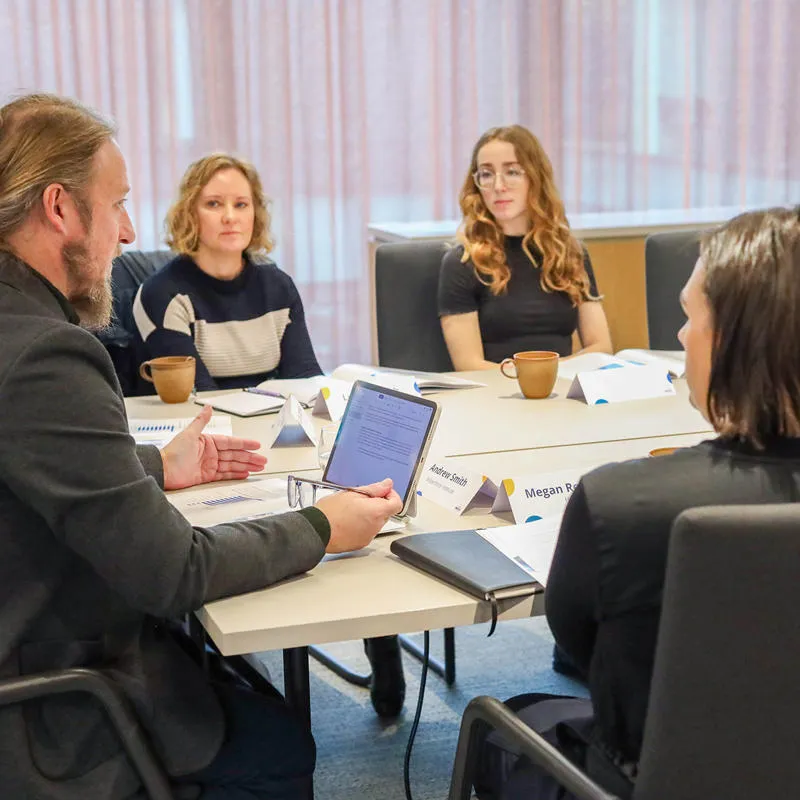
Hestia commissioned a research project led by QA Research, with specialist academic support from Andrew Smith, a modern slavery expert at the University of Hull’s Wilberforce Institute.
Andrew contributed academic and practice‑based expertise to the project, developing a trauma‑informed research framework that included:
- A literature review examining long‑term outcomes for survivors of modern slavery
- Trauma‑informed surveys and in‑depth interviews with survivors
- Engagement with frontline practitioners and policymakers
- Input from approximately 100 Members of Parliament on perceived survivor priorities.
This research explored what a positive Conclusive Grounds decision really means for survivors of modern slavery and aimed to highlight their most pressing recovery needs at that point. It also examined what can realistically be achieved during the short move-on period and identified the key enablers and barriers to progress. The collaborative approach between QA Research, Hestia and the Wilberforce Institute ensured that survivor voices sat alongside policy and practice insights, leading to clear, evidence-based recommendations.
The Impact
We really valued having Andrew deliver the findings in a clear and impartial way, laying the groundwork for a valuable discussion about how the NRM might be developed to further support modern slavery survivors to build new and independent lives.Natasha Perry
Head of Research Evaluation, Hestia Housing & Support
The research provided Hestia with robust evidence to inform service development and challenge the assumptions embedded in current victim support models. Recommendations were provided for enhancing Hestia’s provision and reframing move‑on decisions around needs.
The findings also strengthened Hestia’s engagement with policymakers. The evidence was used to demonstrate to the Home Office that rigid, decision‑based thresholds did not reflect survivor readiness or safety. This aligned with emerging changes to the victim support system, which is now shifting toward a more needs‑based model.
At the Underground Lives report launch on 8 December 2025, Andrew presented key findings to an audience that included the Home Office Modern Slavery Unit and the Independent Anti‑Slavery Commissioner, Eleanor Lyons. The research introduced a tiered framework of survivor needs, identifying foundational requirements – such as secure housing, mental health support, immigration status and financial stability – that are necessary to a safe and successful move‑on.
By grounding policy discussion in survivor experience and independent analysis, the project helped lay the groundwork for more sustainable, person‑centred support for modern slavery survivors across the UK.
Publications
Underground Lives Research 2025:
Enables and barriers for successful move on from the National Referral Mechanism
QA Research & Wilberforce Institute, November 2025
Access our modern slavery expertise
Share your research challenge today with our Knowledge Exchange team.