Cultures of Incarceration Centre
Bringing together scholars in Criminology, Humanities and Arts to explore creative responses to the experience of incarceration across cultures and continents.

Overview
About the Cultures of Incarceration Centre
Established in 2021, the Centre brings together multidisciplinary scholars, cultural practitioners, activists, and professionals to explore critical and creative responses to experiences of incarceration across cultures and continents.
Incarceration is often associated with imprisonment in a jail or prison, but we are concerned with an expanded field of historical and contemporary contexts, encompassing wartime internment camps, immigration detention centres, modern-day trafficking, and situations of domestic abuse or pandemic lockdowns. Within such diverse carceral environments, creativity has flourished in the form of songs, poetry, art or memoirs.
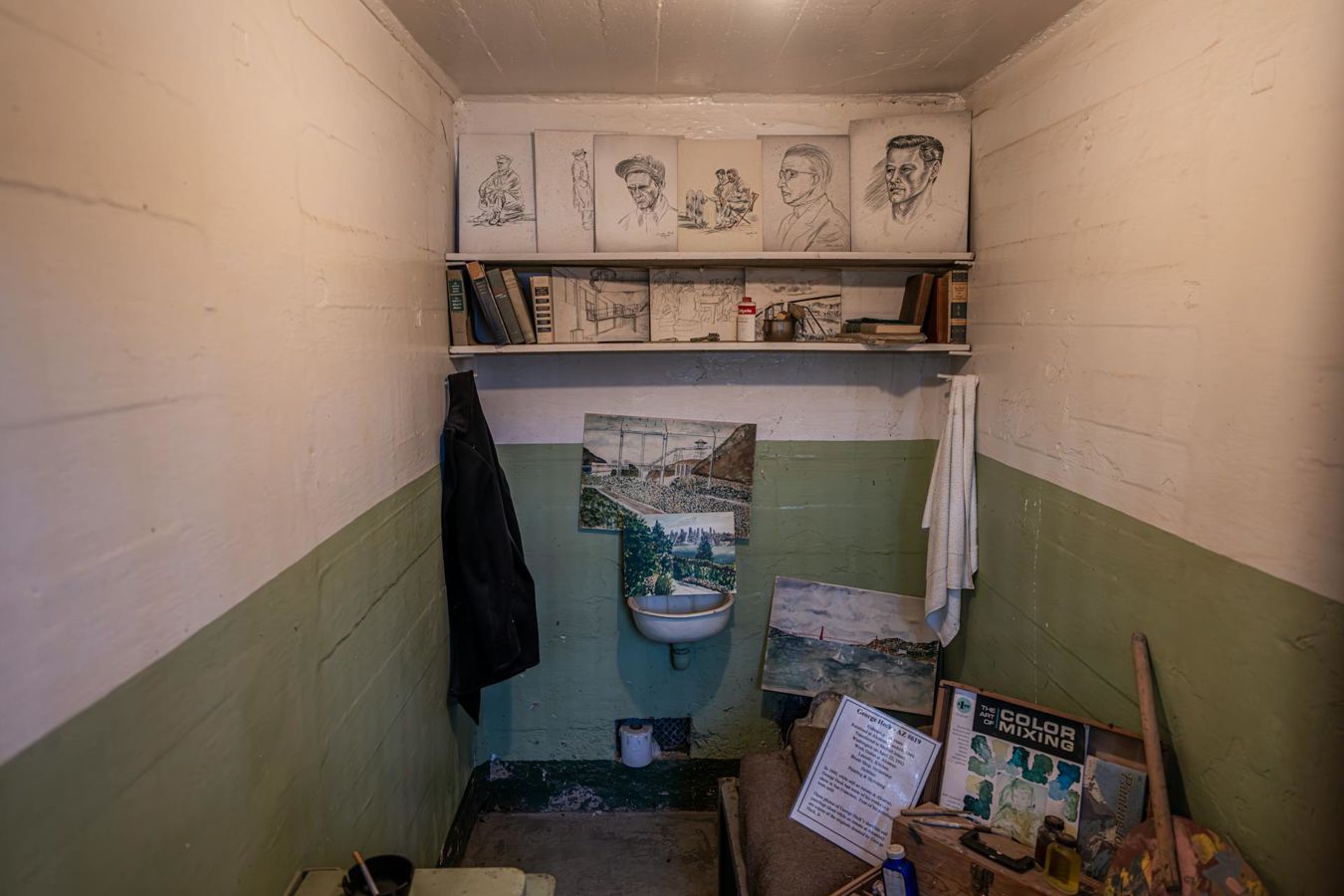
Spotlighting the experiences and expressions of incarcerated people
We seek to understand and ameliorate experiences of incarceration through collaborative and innovative research, engaging with marginalised and precarious communities in prisons and other carceral environments and situations in the UK and globally.
The Centre is developing a portfolio of multidisciplinary projects across its four research activities: Culture, Criminology, Creative-Critical Practices, and Community. From exhibitions to poetry volumes, our projects facilitate and guide creative practice and critical, contextual learning by incarcerated individuals and groups.
Our partnerships
We have a range of collaborative and community partnerships with external organisations, including schools, prisons in both the UK and the US, local community groups, and artists, photographers and authors. We are particularly interested in working with those who have lived experience of incarceration.
We have research ties with interdisciplinary partners in the UK and beyond. Those interested in the work of the CIC may also wish to consult the research done by affiliated centres at the University of Hull, including the Wilberforce Institute and the Larkin Centre of Writing in the Humanities.
Our Team
Our research
Our research expertise spans multiple disciplines, reflecting the complexity of incarceration and its cultural and social dimensions. We explore how experiences of confinement intersect with identity, representation, and community, drawing on insights from the humanities, social sciences, and the arts.
These perspectives converge across the four overlapping areas that shape our work: Culture, Criminology, Creative-Cultural Practices, and Community. Together, they provide a framework for understanding incarceration not only as a legal or physical reality but as a lived experience that influences creativity, wellbeing, and social change.

Culture
In recent decades, Cultural Studies has become ever more fascinated with issues of ‘difference’ and identity, power and politics, showing particular concern with marginalised peoples and the ways in which they are represented in (pop) cultural texts.

Criminology
Working on both individual and social (wider) levels to consider the implications of crime, its management and prevention, and the experience of incarceration.

Creative/Cultural Practices
The Arts and Creative Writing have a long history in prisons as well as wider systems of incarceration with a range of benefits (including mental wellbeing and desistance).

Community
The Centre is committed to the importance of “learning communities” in both traditional / non-traditional settings and the ways in which we should all promote an inclusive desire to learn.
We are leading creative projects in prisons that help incarcerated individuals express, reflect on, and critically examine their experiences of incarceration through cultural practice.
We are dedicated to nurturing creativity in carceral environments to enhance wellbeing, literacy, and visual literacy, and to increase public understanding and awareness through events and publications.
We welcome visiting scholars into the Centre as part of our commitment to multi-institutional networking and exchange. We enjoy a lively and diverse research seminar series that includes international speakers from scholarly, creative, and professional backgrounds.
Our funded doctoral scholarships have fostered a new generation of thinkers who have benefitted from studying within a close-knit and supportive postgraduate research community.
Carceral Spaces Network
A multidisciplinary research community at the University of Hull, bringing together academics engaged in exploring the concept and realities of carceral spaces.
Beyond physical confinement, the Network also examines forms of psychological or social incarceration.
Writings by people with lived experience of prison
The Cultures of Incarceration Centre has established a writing corner dedicated to publishing short works by people with lived experience of prison (both incarcerated and formerly incarcerated people).
We are interested in both prose and poetry, whether directly about incarceration or otherwise. Please contact culturesincarceration@hull.ac.uk for more information.
The University of Hull Digital Book Club for Readers and Writers
A fully digital educational outreach programme aiming to nurture and facilitate reading for pleasure and creative writing for those in prison.
The book club is available in 90 prisons across the UK, supporting literacy and rehabilitation outcomes for incarcerated individuals.
The University of Hull Freedom Festival Book Club
Our themed reading and creative writing group ran at HMP Hull and HMP Full Sutton, exploring the ideas of isolation and loneliness with incarcerated readers and writers.
Creative writing produced by the prisoners was exhibited in Hull city centre as part of the Freedom Festival.
Get in touch