Scientists urge regulators to consider new evidence on bait use in UK fisheries management
Scientists from the University of Hull are urging policymakers to take new evidence into account when considering fisheries management for crab and lobster and how bait use can influence future efforts.
Potting - where baited traps are placed on the seabed to catch crabs and lobsters - has grown rapidly in recent decades, yet despite its widespread use, the ecological impact of the bait itself has been overlooked.
New research finds that at least ten times more crabs and lobsters enter pots than are brought ashore, suggesting many animals are attracted to pots to feed on the bait, which is therefore acting as a nutritional subsidy for wider crustacean populations.
Crabs and lobsters are naturally drawn to bait scent, which spreads with the tides and currents. Bait can be commonly sourced from waste products from other fisheries such as mackerel and farmed salmon. With large numbers of pots deployed in concentrated areas, significant quantities of bait is added to the marine environment each year. However, the amount of bait used in UK fisheries is currently unrecorded, making it difficult to understand how this shapes local food webs, animal behaviour, or stock dynamics.
PhD student and lead author, Nick Rooke said: “This research provides a new piece of the picture which we hope will help shape the long-term sustainability of UK pot fishing. For the first time, we can quantify how bait supports crustacean populations in UK waters.
This research provides a new piece of the picture which we hope will help shape the long-term sustainability of UK pot fishingNick Rooke
PhD student
“Regulators now have a data driven basis to evaluate how bait use can influence management across a fishery. We’re urging regulators to consider these findings carefully should any future discussions arise around limiting fishing effort and reducing bait input and the knock-on effects to the wider population bait is currently supporting”
The study, focused on the internationally important Holderness inshore fishery and looked at how much bait is added to the sea each year, how much of the fishing area is reached by bait odour and how many crabs and lobsters are likely feeding on that bait.
These fisheries are unusual because crabs and lobsters are caught alive and, if returned to the sea, have a high chance of survival. This means existing protections, such as bans on landing undersized animals and egg-bearing females are highly effective at safeguarding part of the stock.
Many of the animals protected by these rules will have fed on the bait inside the pots before being released. Smaller individuals can also move in and out of pots through the mesh or escape gaps and may return repeatedly to feed. As a result, fishing with baited traps unintentionally provides a food source to the wider ecosystem A common term used by pot fishers, is that they “farm the sea” through providing nutrients to animals beyond those they capture for market.
Crab and lobster fisheries were identified as one of the first fisheries for the UK’s new Fisheries Management Plans. This study can provide key information and further enhance our understanding of crab and lobster fisheries in the wider ecosystem and contribute to the development of actions under this new plan.
Mike Roach, co-author and Deputy Chief Executive of the National Federation of Fishermen’s Organisations said: “The scientific understanding of crab and lobster fisheries in the UK is not as sound as for other fisheries such as white fish, making effective management of them challenging.
“This research sheds light on a previously under-studied area and highlights the importance of empirical evidence underpinning fisheries management. The fact that the use of bait can feed many more animals than it aims to capture highlights how there can be wider benefits of crustacean fisheries to the ecosystem when well managed.”
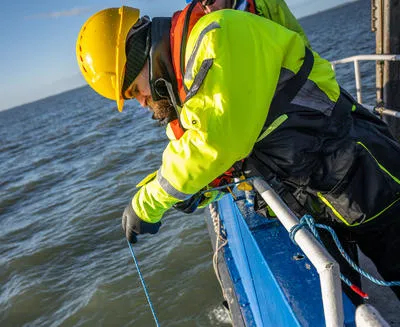
Image courtesy of Jenny Price.
Share this story


Last updated 03 September 2026, 10.42
 Research and knowledge exchangeSustainable worldFaculty of Science and EngineeringEnergy and Environment Institute
Neil Trotter
Corporate Communications
What to read next
 Hull and the region
Icy waters? University of Hull scientists believe Yorkshire seas to be the warmest ever
14 August 2025
 Research & KE
University of Hull student joins leading oceanographers on voyage of discovery
11 August 2025
Media enquiries
For all enquiries, please get in touch with our press office.