Apprenticeship
BSc (Hons) Occupational Therapy Apprenticeship
Get in touch
Get in touch
Ready to turn compassion into a career that changes lives? Our Occupational Therapy Apprenticeship will equip you with the professional knowledge, practical skills and clinical reasoning needed to support people across a wide range of health, social care and community settings.
Through simulation, practical workshops, learning and 1,000 hours of placement experience, you'll explore areas including mental health, long-term conditions, paediatrics, older adult care, leadership and occupational justice. You'll develop the skills to assess needs, design interventions and help people participate in the activities that matter most to them.
Built around evidence-informed practice, inclusivity, professionalism and sustainability, this accelerated two-year programme will prepare you for a rewarding career helping people overcome barriers, regain independence and improve their health and wellbeing, and build social justice amongst diverse communities.
Foundations of Anatomy, Physiology, Psychology and Sociology for Occupational Participation - 40 credits
How do the body and mind influence the way we live, learn and work? Explore human movement, development, behaviour and social influences, and discover how they affect everyday activities and wellbeing.
Foundations of Occupational Therapy - 20 credits
Discover what occupational therapy is all about and how it helps people live fuller, more independent lives. Explore wellbeing, everyday activities and the ways people and their environments shape health and participation.
Foundations of Professional Practice - 20 credits
As an Interprofessional Education (IPE) module, this module develops your communication and person-centred practice skills, enhances your understanding of professional standards, and introduces evidence-informed practice.
Occupational Therapy Practice Skills - 20 credits
Get hands-on experience through practical workshops and simulated scenarios. Develop skills in assessment, communication, assistive technology and clinical decision-making as you prepare for placement.
Practice Placement 1 - 20 credits
How do occupational therapists put learning into practice? Gain real-world experience in a supervised placement, building confidence as you work with service users, families and healthcare teams.
Enabling Occupation in Mental Health and Learning - 20 credits
Explore how occupational therapists support people with mental health conditions and learning disabilities to live meaningful, fulfilling lives and take part in the activities that matter to them.
Practice Placement 2 - 20 credits
Take your learning further through a supervised placement. Build your confidence, independence and professional skills while working with real service users in practice settings.
Applied Research Methods - 20 credits
How do health professionals know what works? Develop the skills to find, understand and evaluate research, learning how evidence shapes effective occupational therapy practice.

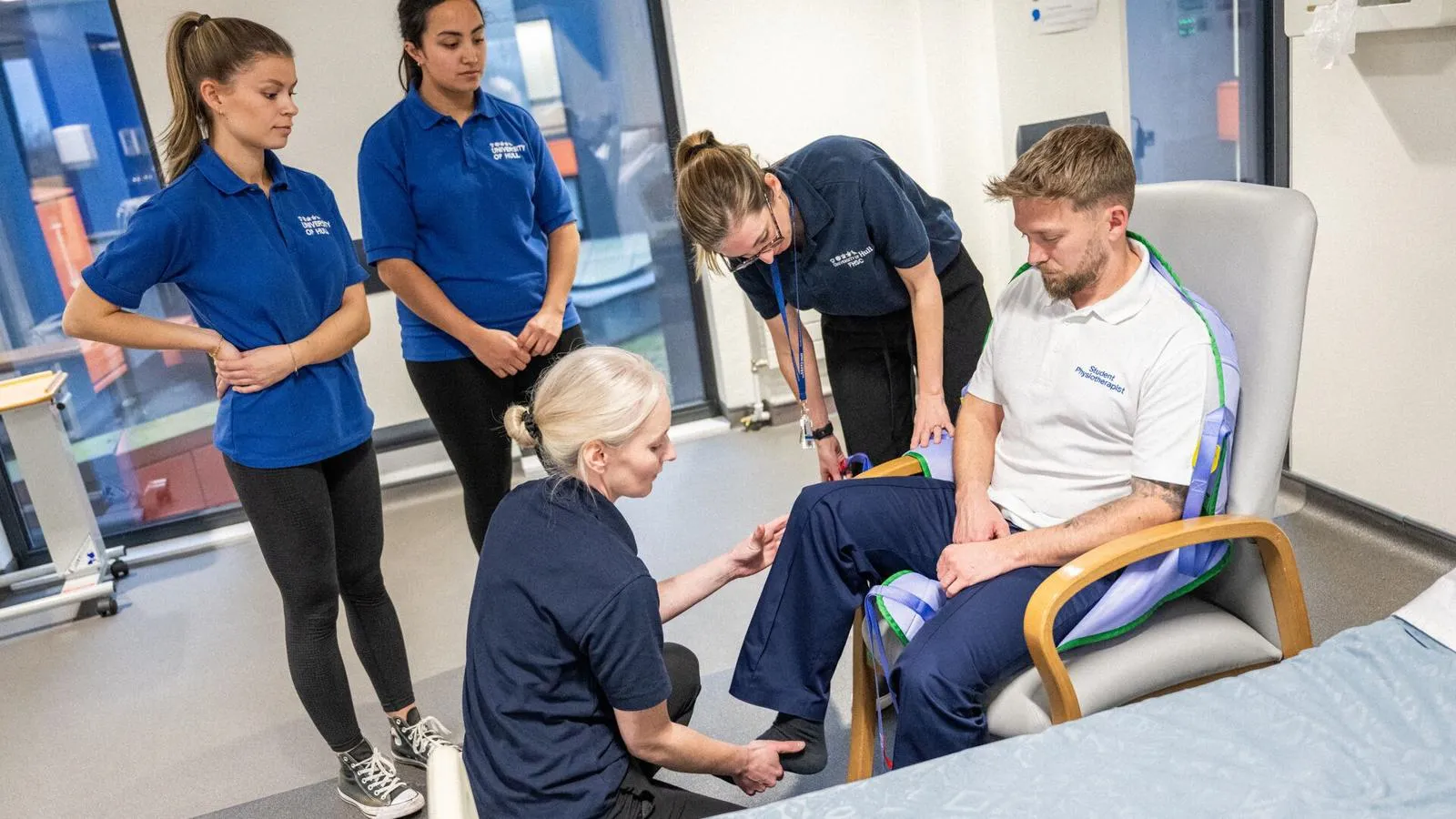
Occupational therapists work across health, social care and community settings. They support people of all ages to overcome challenges, build independence and improve their wellbeing. By combining academic study with workplace learning, you'll graduate with the knowledge, skills and experience needed to take the next step in a rewarding and impactful career.
When it comes to applying to university, you'll need a certain number of UCAS points. Different qualifications and grades are worth a different amount of points. For this course, you'll need 120 UCAS points.
40 points must come from either a science subject (Biology, Chemistry, Physics, or Physical Education), or a social science subject (Psychology or Sociology).
We consider experience and qualifications from the UK and worldwide which may not exactly match the combinations above.
But it's not just about the grades - we'll look at your whole application. We want to know what makes you tick, and about your previous experience, so make sure that you complete your personal statement.
Have questions? Our admissions team will be happy to help.
Apprentices will be employed full-time throughout the programme, combining workplace learning with their studies.
Applications can only be made with employer support. Applicants should speak to their employer first. Once support is confirmed, they can email apprenticeships@hull.ac.uk for details on how to apply.